Toyooka Jinya (Hyogo Prefecture): The site of the Kyogoku family’s encampment, which marked the history of Tajima Province, and its present state
Located in Kyomachi, Toyooka City, Hyogo Prefecture, the Toyooka Jinya is a historical building that functioned as the administrative center of the Toyooka Domain, which ruled Kinosaki District in Tajima Province during the Edo period. Built at the foot of Mt. Jinmu after the abandonment of Toyooka Castle, this encampment played an important role as the center of the Kyogoku family’s rule until the Meiji Restoration. Although it now houses a municipal library, its historical value remains undiminished, making it an indispensable historical site for understanding the history of the Tajima region.
Historical Background of Toyooka Jinya
Transition from Toyooka Castle to Jinya
To understand the history of Toyooka Jinya, it is necessary to first understand the history of Toyooka Castle. Toyooka Castle was built during the Sengoku period by the Kakiya clan, vassals of Yamana Sozen, the daimyo of Tajima Province. Later, Miyabe Tsuguyoshi, a subordinate of Toyotomi Hideyoshi, entered the castle and extensively renovated it. The Miyabe clan was dispossessed of their domain for siding with the Western Army in the Battle of Sekigahara, and subsequently, the castle lords changed hands to the Sugihara and Kyogoku clans.
In 1617 (Genna 3), Toyooka Castle was abandoned due to the “One Castle Per Province” decree. While the castle buildings were demolished, the stone walls and other remains were preserved. Even after the castle’s abandonment, Mount Jinmu (Shiroyama) remains a symbol of Toyooka and is cherished by the local people.
The Arrival of Kyogoku Takamori and the Construction of the Jinya
In 1668 (Kanbun 8), Kyogoku Takamori was transferred from the Tanabe Domain in Tango Province to the Toyooka Domain. However, since Toyooka Castle had already been abandoned, the Kyogoku clan ruled Toyooka as a daimyo without a castle. Takamori built a jinya (fortified residence) at the foot of Mount Jinmu, at the base of the former Toyooka Castle, and made it the center of the domain’s administration.
The Kyogoku family was a prestigious branch of the Omi Genji clan. During the Sengoku period, Kyogoku Takatsugu married Hatsuhime, the sister of Asai Nagamasa, demonstrating the family’s close ties to figures like Oda Nobunaga and Toyotomi Hideyoshi. During the Edo period, they served the shogunate as a fudai daimyo, ruling over 15,000 koku in the Toyooka Domain.
The jinya (fortified residence) served as both the lord’s residence and an office for conducting the domain’s affairs. While lacking the defensive capabilities of a castle, it possessed the formality of a samurai residence, with the residences of retainers located around it.
Structure and Scale of the Toyooka Jinya
Layout and Architectural Style of the Jinya
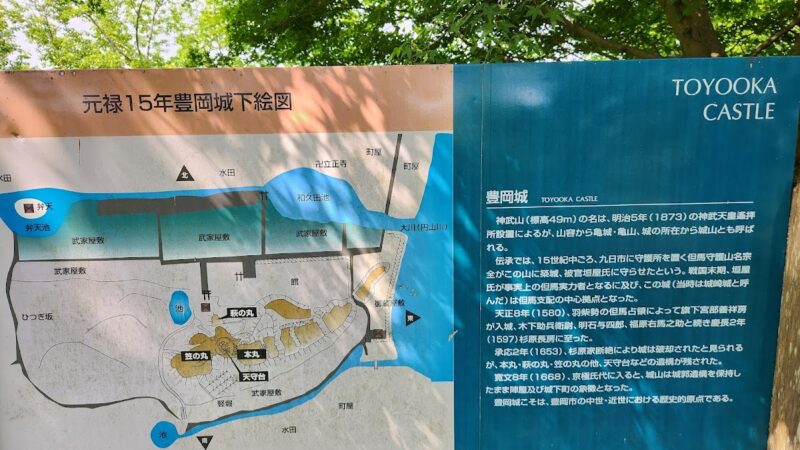
The Toyooka Jinya was built at the southern foot of Mount Jinmu, in what is now Kyomachi, Toyooka City. The jinya grounds consisted of the “Goten” (lord’s residence), the “Yakusho” (administrative office), and the offices of retainers. The surrounding area was lined with samurai residences, forming the landscape of a castle town.
The architectural style of the Jinya (fortified residence) exhibited characteristics of samurai architecture from the mid-Edo period. The main hall was based on the Shoin-zukuri style, with a clear separation between the lord’s living space and the official reception area. The administrative section housed rooms for the samurai, from the chief retainer downwards, where the practical administration of the domain was carried out.
The Jinya’s main gate was a dignified Yakui-mon gate, a magnificent structure made entirely of zelkova wood, standing 7.6 meters tall. This gate, a symbol of the Jinya’s prestige, must have left a strong impression on visitors.
Formation of the Castle Town
Samurai residences were systematically arranged around the Jinya. In the present-day Kyomachi district of Toyooka City, traces of the original town layout remain, maintaining the characteristic narrow frontage and deep depth of samurai residences. The streetscape, adorned with the greenery of garden trees visible over walls and fences, still evokes the atmosphere of a samurai district. The merchant district was formed a short distance from the jinya (feudal lord’s residence) and became the center of commercial activity. While many of the townhouses have been rebuilt or remodeled into modern, signboard-style buildings, the narrow frontages and deep plot shapes remain, preserving remnants of the Edo period town layout.
The castle town of Toyooka is characterized by stone walls and buildings constructed using basalt. The basalt, produced from the unique basalt caves of the Tajima region, adds a distinctive character to the townscape, creating a landscape that reflects the region’s geological features.
The Governance of the Toyooka Domain and the Kyogoku Family
Domain Administration by the Kyogoku Family
The Kyogoku family ruled the Toyooka Domain for approximately 200 years, from 1668 (Kanbun 8) until the Meiji Restoration. Although a relatively small domain with a stipend of 15,000 koku, the Kyogoku family’s prestigious status and geographical importance in Tajima Province allowed them to play a significant role in the local community.
The Toyooka Domain’s finances were primarily dependent on agricultural production. Rice cultivation flourished in the fertile plains of the Maruyama River basin, which was the domain’s main source of income. Furthermore, timber and mineral resources, unique to the Tajima region, also supported the domain’s economy.
In domain administration, the samurai corps, led by the chief retainer, worked at the domain’s headquarters, managing administration, justice, and taxation within the territory. The Kyogoku family, as a hereditary daimyo, faithfully served the shogunate and fulfilled their obligation of sankin-kotai (alternate attendance).
From the End of the Edo Period to the Meiji Restoration
During the end of the Edo period, the Toyooka domain was also caught up in the turmoil of the times. During the Boshin War, they sided with the new government and cooperated in the establishment of the Meiji government. Following the return of the domains to the emperor in 1869, the Kyogoku family was appointed governors of the Toyooka domain and continued to govern the domain.
With the abolition of the feudal domains and establishment of prefectures in 1871, the Toyooka domain was abolished, and Toyooka Prefecture was established. Subsequently, after merging with Kumihama Prefecture, it was finally incorporated into Hyogo Prefecture. During this process, the Jinya (fortified residence) was used as the prefectural office, continuing to serve as the center of regional administration.
Toyooka Jinya Site After the Meiji Era
Use as Kumihama Prefectural Office and Toyooka Prefectural Office
After the Meiji Restoration, the Toyooka Jinya building was used as the Kumihama Prefectural Office (later the Toyooka Prefectural Office). In 1870 (Meiji 3), a new gate was built as the main gate of the prefectural office. This gate was a magnificent Yakui-mon style gate made entirely of zelkova wood, standing 7.6 meters tall with side doors.
Although Toyooka Prefecture was merged into Hyogo Prefecture in 1876 (Meiji 9), the Jinya building continued to be used as a local public facility. Throughout the Meiji era, the Jinya building was utilized as an educational and administrative facility, maintaining its role as the center of the local community.
The Current Toyooka City Library
Currently, the Toyooka City Library stands on the site of the former Toyooka Jinya (feudal lord’s residence). The library’s grounds largely utilize the original site of the former Jinya, preserving its historical continuity.
The main gate of the library is a Yakui-mon gate, built in 1870 (Meiji 3) as the main gate of the Kumihama Prefectural Office. This magnificent gate, constructed entirely of zelkova wood and standing 7.6 meters tall, is designated as a cultural property of Hyogo Prefecture and is one of the most important remaining structures from the Toyooka Jinya site. Its dignified construction, including side doors, showcases the pinnacle of early Meiji-era architectural technology.
Around the library, remnants of the former samurai residences, such as the layout of the grounds and parts of the stone walls, remain. Furthermore, explanatory signs about the Toyooka Jinya are installed on the grounds, conveying its historical background to visitors.
Remains and Highlights of Toyooka Jinya
Existing Remains
The most important remaining relic of Toyooka Jinya is the Yakui-mon gate, which is currently used as the main gate of the Toyooka City Library. This gate was built in 1870 (Meiji 3) as the main gate of the Kumihama Prefectural Office. It is a highly formal structure, made entirely of zelkova wood, standing 7.6 meters tall, and featuring side doors.
The Yakui-mon gate is a type of gate with a main pillar, supporting pillars behind it, and beams spanning between them. It is a formal gate style used in samurai residences and temple architecture. The Yakui-mon gate at the Toyooka Jinya site is a robust structure made of zelkova wood, and even after more than 150 years, it retains much of its original appearance.
While the Jinya building itself no longer exists, the site layout and parts of the stone walls remain, allowing us to infer the size and layout of the former Jinya. Furthermore, the surrounding samurai residences still retain the town layout from that time, allowing visitors to experience the atmosphere of an Edo-period castle town.
Jinmuyama Mountain and Toyooka Castle Ruins
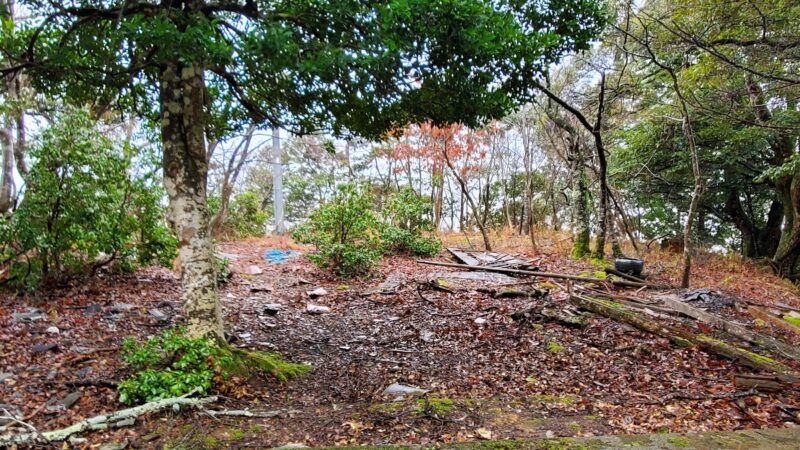
Behind the Toyooka Jinya (fortified residence), Jinmuyama Mountain (Castle Mountain) holds the remains of Toyooka Castle. The summit features the remains of the main keep, where stone walls and baileys can be seen. From the top of Jinmuyama Mountain, one can enjoy a panoramic view of Toyooka town, the plains of the Maruyama River basin, and even the Sea of Japan.
Toyooka Castle was abandoned in 1617, but the castle’s remains were preserved even when the Kyogoku clan built the Toyooka Jinya. Therefore, the castle ruins from the early Edo period are well-preserved on Jinmuyama Mountain, making it a valuable historical site for understanding castle construction techniques from the Sengoku period to the early Edo period.
The view of Toyooka town from the main keep ruins offers a spectacular panorama of the plains of the Maruyama River basin stretching to the south. The lords of Toyooka Castle and the Kyogoku family, who resided in the jinya (fortified residence), must have contemplated governing their territories while gazing upon this view.
Surrounding Historical Landscape
Around the site of the Toyooka Jinya, remnants of the Edo-period castle town are scattered. The former samurai residences retain streetscapes adorned with the greenery of garden trees visible over walls and fences, allowing visitors to experience the atmosphere of the samurai district at that time.
The street in front of Toyooka Elementary School was once lined with samurai residences known as “Goken Nagaya” (five-house row houses). Although the buildings no longer exist, the narrow frontage and deep layout of the plots remain, preserving the remnants of the Edo-period town planning.
The townscape is characterized by stone walls and buildings constructed using basalt. Basalt, produced from the unique basalt caves of the Tajima region, is a beautiful stone with black columnar jointing, adding a distinctive charm to the townscape of Toyooka. This basalt was also used in the stone walls of Toyooka Castle, forming a historical landscape that reflects the region’s geological characteristics.
Access and Visiting Information for Toyooka Jinya
Access Method
To access the Toyooka Jinya Ruins (Toyooka City Library), it’s about a 15-minute walk from Toyooka Station on the JR San’in Main Line. Head northwest from the station, cross the Maruyama River, and enter the city center. You’ll see the library building at the southern foot of Mt. Jinmu.
If traveling by car, it’s about a 10-minute drive from the Toyooka Minami Interchange on the Kita-Kinki Toyooka Expressway. The library has ample parking, making it convenient to visit by car.
Toyooka City is the central city of the Tajima region and is known as a stork sanctuary. In addition to visiting the Toyooka Jinya Ruins, it’s recommended to also visit nearby tourist spots such as the Stork Sanctuary Park and Kinosaki Onsen.
Visiting Points
Toyooka City Library is a public facility and is open to the public free of charge. The library’s main gate, the Yakui-mon, can be viewed from the outside, and its imposing appearance makes it a popular spot for photography.
Within the library grounds, there are information boards explaining the history of Toyooka Jinya. The boards provide detailed explanations of the Jinya’s layout and historical background, offering visitors an opportunity to deepen their understanding of history.
The hiking trail to Jinmu-yama (Shiroyama) begins near the library, and it takes about 20 minutes to reach the Toyooka Castle ruins at the summit. The view from the summit is magnificent, offering a panoramic view of Toyooka town and the plains of the Maruyama River basin. On clear days, you can even see the Sea of Japan, allowing you to relive the view enjoyed by the former castle lords and feudal lords.
Historical Significance of Toyooka Jinya
Role in Tajima Province
Throughout the Edo period, Toyooka Jinya functioned as the political and administrative center of Kinosaki District in Tajima Province. Although a relatively small domain with a stipend of 15,000 koku, Toyooka Jinya was a crucial strategic point in the Tajima region, located at a key transportation hub along the Maruyama River.
The Kyogoku family, a prestigious branch of the Omi Genji clan, enjoyed high prestige within the local community. As a fudai daimyo (hereditary vassal lord), they faithfully served the shogunate, contributing to the stability and development of the region. The Toyooka Jinya was recognized by the local people as a symbol of the Kyogoku family’s rule.
Forms of Governance for Castleless Daimyo
The Toyooka Jinya is an important example of the forms of governance for castleless daimyo who were unable to possess castles due to the “One Castle Per Province” decree. Many castleless daimyo existed during the Edo period, operating their domains from jinya (fortified residences).
While jinya lacked the defensive capabilities of a castle, they effectively served as both the lord’s residence and the domain’s administrative offices, fulfilling their governing functions. The Toyooka Jinya serves as a valuable historical document illustrating the diversity of daimyo governance during the Edo period.
Continued Use After the Meiji Restoration
The Toyooka Jinya (fortified residence) site continued to be used as a prefectural office after the Meiji Restoration, and subsequently remained a central facility in the community as an educational institution and library. This continued use demonstrates that Toyooka Jinya is not merely a historical building, but remains an important place for the community even today.
The fact that the Yakui-mon gate, built in 1870 (Meiji 3), is still used as the main gate of the library is a good example of achieving both the preservation of historical remains and modern use. This attitude of cherishing past heritage while utilizing it in modern life represents an ideal form of cultural property protection.
Related Historical Buildings and Historic Sites
Jinya with Existing Buildings
Several jinya with existing buildings remain throughout Japan. Representative examples include the Yamauchi family’s lower residence in Kochi Castle town, Kochi Prefecture; the Matsushiro Domain’s Bunbu School in Nagano Prefecture; and the samurai residences in Sasayama Castle town, Hyogo Prefecture.
Although the main building of the Toyooka Jinya no longer exists, the Yakui-mon gate, built during the Meiji era, remains, conveying the historical atmosphere of the Jinya site. The materials related to the Toyooka Jinya also hold an important position in the study of Jinya architecture.
Castles and Jinya in the Tajima Region
Besides the Toyooka Jinya, many other castle and Jinya remains exist in the Tajima region. Izushi Castle is a representative castle of the Tajima region, and its turrets and gates still remain today. Takeda Castle ruins, known as the “Castle in the Sky,” is a mountain castle with well-preserved stone walls.
These castles and Jinya are important historical sites that tell the story of the Tajima region’s history from the Sengoku period to the Edo period. Visiting them together with the Toyooka Jinya will allow for a deeper understanding of the Tajima region’s history.
Summary
The Toyooka Jinya is the site of an Edo-period Jinya located in Toyooka City, Hyogo Prefecture, which functioned as the administrative center of the Toyooka Domain for approximately 200 years. The jinya (fortified residence) built by Kyogoku Takamori in 1668 at the foot of Mount Jinmu after the abandonment of Toyooka Castle is an important historical example of the form of governance of a daimyo without a castle.
After the Meiji Restoration, it was used as the prefectural office and is now the Toyooka City Library. The Yakui-mon gate, constructed entirely of zelkova wood in 1870, is the most important remaining structure from the jinya site and is still used as the library’s main gate.
Around the Toyooka Jinya site, historical landscapes are scattered, including town layouts that retain the atmosphere of an Edo-period castle town and the ruins of Toyooka Castle on Mount Jinmu. As an indispensable historical site for understanding the history of the Tajima region, Toyooka Jinya continues to attract many history enthusiasts and tourists.
The example of the Toyooka Jinya site, which preserves historical remains while utilizing it as a modern public facility, demonstrates an ideal model for balancing cultural property protection with the development of the local community. Efforts to cherish past legacies and pass them on to future generations offer important insights for community development going forward.