Nanbu Clan Mororan Jinya: A Complete Overview of the Fortress Ruins for Northern Guard in the Late Edo Period and a National Historic Site
Introduction
The Nanbu Clan Mororan Jinya is a site of a late Edo period fort located in Jinya-cho, Muroran City, Hokkaido. Built in 1856 by the Morioka Nanbu Clan, this fort played an important role as an outpost for coastal defense in eastern Ezo (Hokkaido). Currently preserved as Muroran City’s only nationally designated historic site, it is highly regarded as a representative example of late Edo period castle ruins in Hokkaido.
This article comprehensively introduces the charm of this valuable historical site, from its historical background and structure to its highlights and a visitor’s guide.
History of the Nanbu Clan Mororan Jinya
Background and Purpose of Construction
In the mid-19th century, foreign ships began to frequently appear in Japanese waters, forcing the shogunate to strengthen its northern defenses. In 1849 (Kaei 2), the shogunate seized Ezo (present-day Hokkaido) from the Matsumae Domain and began managing it as a directly controlled territory. At this time, the Tohoku domains were ordered to guard Ezo, and the Morioka Nanbu Domain was assigned the task of guarding eastern Ezo.
Initially, the Nanbu Domain established its main headquarters in Hakodate, but to cover the vast area to be guarded, in 1856 (Ansei 3), it built three branch headquarters in Mororan (Muroran), Oshamanbe (Oshamambe), and Sunahara. The Mororan headquarters played a particularly important role in coastal defense at the eastern end of Funka Bay.
Construction and Operation of the Headquarters
The Mororan headquarters was built on a hill approximately 20 meters high overlooking Muroran Bay. This location was ideal for monitoring Muroran Port from a vantage point overlooking the sea. Approximately 100 Nanbu samurai were permanently stationed at the encampment, responsible for coastal defense and the management of the fortifications.
The encampment’s structure was based on a square, double-layered earthen rampart, surrounded by a moat. Inside, there were living quarters, warehouses, and wells for the samurai, who lived a self-sufficient lifestyle. Cedar trees were planted around the encampment, some of which still remain today.
The Boshin War and the End of the Encampment
In 1868 (Keio 4), the Boshin War broke out, and the flames of war spread to the Oshu region. The Nanbu domain initially joined the Ouetsu Reppan Alliance and sided with the former shogunate, but later surrendered to the new government forces. However, the Nanbu samurai stationed at the Mororan encampment refused to allow the new government forces to take over the encampment. They set fire to the encampment where they had stayed for 12 years and retreated to Morioka.
This event is recounted as an episode demonstrating the pride and dignity of the Nanbu samurai. After the encampment burned down, the site was left neglected for a long time, but its historical value was recognized, and it was designated a national historic site on May 1, 1934.
Structure and Features of the Encampment
Double Earthen Embankment and Moat
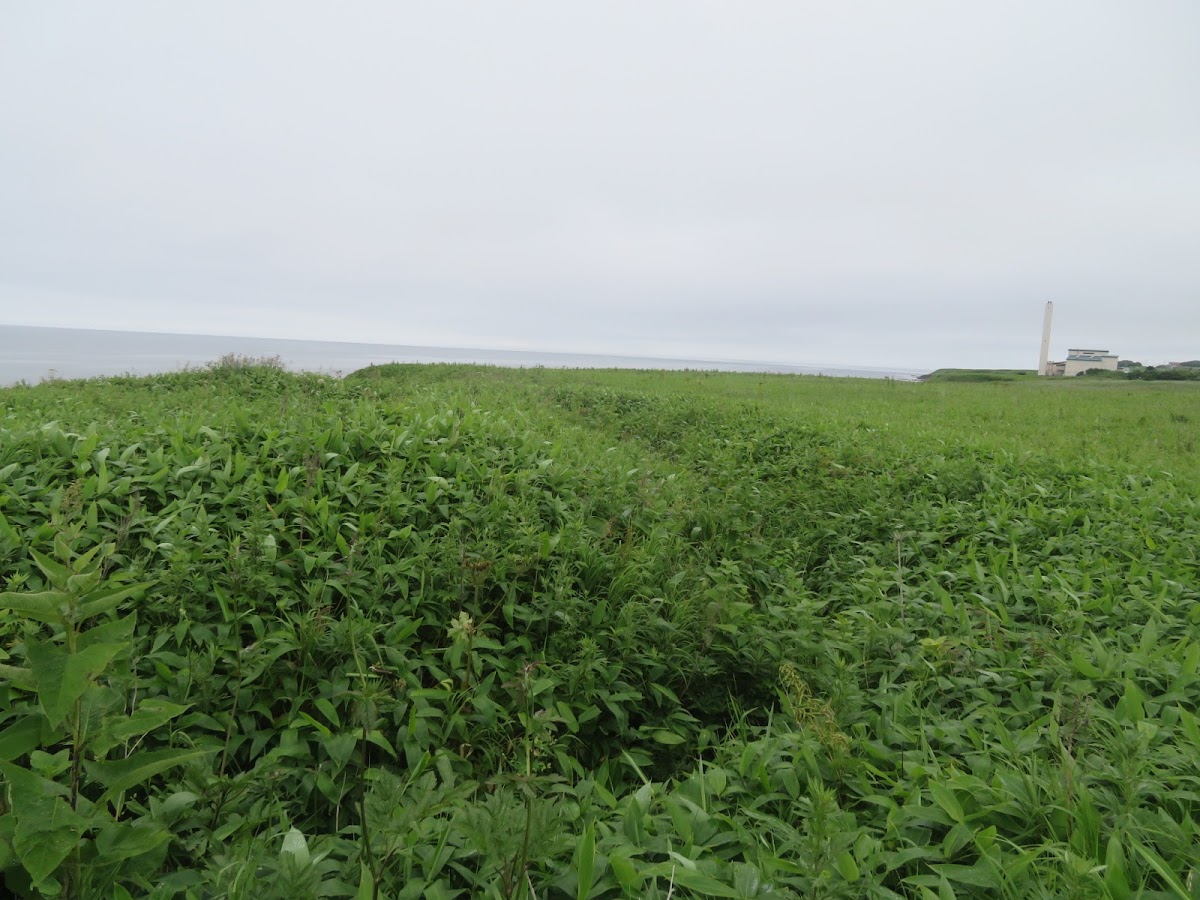
The most distinctive feature of the Mororan encampment is its defensive structure: a double, square earthen embankment. Earthen embankments were built on both the outer and inner sides, with a moat positioned between them. This double structure was a clever design to effectively prevent enemy intrusion.
Even today, parts of the embankment remain in good condition, allowing us to confirm its original height and shape. Traces of the moat can also be seen around the embankment, and its overall structure has been understood through plan reconstruction. The height of the embankment varied depending on the location, but it is estimated that the highest parts reached several meters.
Site of the Daiba Guardhouse
Near the encampment, the site of the Daiba Guardhouse also remains. A “daiba” (fort) is a gun battery located on the coast, equipped with cannons to defend against approaching foreign ships. The “kinbansho” (guardhouse) was the facility where the samurai responsible for managing these forts were stationed.
While the forts were located along the coastline, the area around present-day Muroran Port has undergone significant land reclamation, resulting in a significantly different coastline from that time. In its heyday, the encampment offered a direct view of the sea, facilitating easy coordination with the forts.
Wells and Living Facilities
Several wells were dug within the encampment. These wells were essential for securing water for the samurai stationed there. The remains of the wells still exist, allowing us to infer the layout of the encampment’s facilities from their locations.
Furthermore, some foundation stones remain, providing clues to the building’s layout and scale. These remains indicate that residential buildings, warehouses, stables, and other facilities were systematically arranged within the encampment.
Legacy of the Cedar Forest
A cedar forest stretches behind the encampment. These cedar trees are said to be the result of trees planted by the Nanbu clan samurai when they built their encampment, and they have grown from those trees. These cedars, some over 150 years old, can be considered living witnesses to the life of that time.
The cedar forest is also thought to have served as a windbreak for the encampment. It was an important element in protecting the lives of the samurai in Hokkaido’s harsh climate.
Value as a National Historic Site
History of Designation
The Nanbu Clan Mororan Encampment Site was designated a National Historic Site on May 1, 1934. This is the only National Historic Site in Muroran City and holds an extremely important position as a late Edo period castle site in Hokkaido.
After the designation, Muroran City became the managing body, and the preservation and maintenance of the remains have been carried out. In 1975 (Showa 50), the Mororan Jinya site, along with the Oshamanbe Jinya site and the Sunahara Jinya site (both managed by Oshamanbe Town), was designated as a single historical site under the name “Eastern Ezo Southern Domain Jinya Site.”
Historical Significance
The Mororan Jinya is a valuable historical site that demonstrates the Shogunate’s northern policy during the late Edo period and the activities of the various domains that cooperated with it. It is considered particularly historically significant for the following reasons:
- The Reality of the Northern Guard System: This site concretely illustrates how the guarding of Ezo (Hokkaido) was conducted during the late Edo period.
- The Life of the Domain Samurai: It provides clues to the environment in which domain samurai, dispatched to distant locations, carried out their duties.
- A Witness to the Turmoil of the Late Edo Period: This site demonstrates that the repercussions of the Boshin War extended even to Hokkaido.
- Evolution of Early Modern Castles: This is a new type of castle ruin, a jinya (fortified residence) primarily intended for coastal defense, distinct from traditional castles.
Preservation and Maintenance
As a nationally designated historical site, the Mororan Jinya Ruins are well-preserved. Some of the earthworks and moat remains have been partially restored, making it easier to imagine their original appearance.
Explanatory boards and information boards are installed within the historical site to allow visitors to learn about its history. Regular mowing and tree management are also carried out to protect the remains and maintain the landscape.
Highlights and Tourist Guide
Main Points of Interest
1. Double Earthworks
This is the most distinctive feature of the jinya. Walking along the outer and inner earthworks allows you to experience its defensive structure. From the top of the earthworks, you can overlook the surrounding area and relive the perspective of the samurai of the time.
2. Moat Remains
You can see the remains of the moat that was located between the earthworks. Although some parts are now filled in, the layout of the moat can be deciphered from the topography.
3. Foundation Stones and Well Remains
The foundation stones and well remains scattered throughout the fortified residence give us a glimpse into the building’s layout and the lives of the samurai. Visiting while referring to the explanatory signs will deepen your understanding.
4. Cedar Forest
The cedar forest behind the fortified residence is a historical witness planted by the Nanbu samurai. A stroll through the quiet forest allows you to feel the atmosphere of that time.
5. Stone Monument and Explanatory Sign
A stone monument marking the site as a nationally designated historical site stands at the entrance. Detailed explanatory signs are also installed within the site, allowing you to learn about its history and structure.
A Famous Cherry Blossom Spot
The Mororan Fortified Residence Site is also known as a famous cherry blossom spot from mid-May to early June. Numerous cherry trees are planted within the site, offering a beautiful landscape during the blooming season.
The combination of historical remains and cherry blossoms provides visitors with a special experience. It’s a popular spot for spring strolls among locals.
Nearby Facilities
Muroran City Folk Museum (Tontenkan)
Located near the site of the former Jinya (fortified residence), this museum displays exhibits on Muroran’s history and culture. It also exhibits materials related to the Mororan Jinya, and visiting in conjunction with a historical site tour will deepen your understanding.
Jinya Town Hall
This is a community meeting facility, but you may also be able to obtain information about the Jinya. It also functions as a place for interaction with local residents.
Photo Spots
The Mororan Jinya site is a suitable spot for taking historical and landscape photographs. The following points are especially recommended:
- The contrast between the earthen rampart’s ridge and the sky
- Light and shadow in the cedar forest
- A panoramic view of the historical site during cherry blossom season
- Close-ups of the stone monument and explanatory sign
- Details of the remains such as foundation stones and well remains
When taking photographs, please be careful not to damage the remains and be considerate of other visitors.
Access Information
Location
2-5-1 Jinyacho, Muroran City, Hokkaido 051-0011
Access by Train
Approximately 15 minutes on foot from Higashi-Muroran Station on the JR Muroran Main Line. Head northwest from the station and walk along the railway tracks; you will see the stone monument marking the entrance to the historical site. The entrance can also be seen from the train window.
Access by Car
Approximately 10 minutes from Muroran IC on the Hokkaido Expressway. Proceed along National Route 36 towards Muroran city center, then turn towards Jinyacho. There is parking available around the historical site, but spaces are limited, so please consider using public transportation.
Visiting Hours and Fees
- Free Visit: The historical site is always open and can be visited freely.
- Free Admission: There is no fee for visiting.
- Recommended Visiting Time: Approximately 30 minutes to 1 hour
Precautions During Your Visit
- Although the historical site is well-maintained, please be careful where you step.
- Please do not climb on or touch the earthworks or foundation stones to avoid damaging the remains.
- Please take all your trash with you.
- Insect repellent is recommended during the summer.
- Visiting may be difficult in winter due to snow.
Nanbu Domain’s Administration of Ezo (Hokkaido)
Three Outpost Offices
The Nanbu Domain established three outpost offices in Mororan, Oshamanbe, and Sunahara, based at its main office in Hakodate. Each office was responsible for guarding its assigned coastline.
Mororan Office: Responsible for guarding the eastern end of Funka Bay. Its main task was monitoring Muroran Port.
Oshamanbe Office: Responsible for coastal defense around Oshamanbe. It is still preserved as a historical site today.
Sunahara Jinya: Responsible for guarding the Sunahara area at the southern foot of Mount Komagatake. Parts of the remains still exist.
These three jinya (fortified residences) demonstrate the strategic placement of the Nanbu clan in its administration of Ezo (Hokkaido), establishing a system to efficiently cover a vast area.
Life of the Samurai
The Nanbu clan samurai dispatched to Ezo carried out their duties in a harsh environment. Life in a place far from Morioka presented many difficulties, including differences in climate, food, and culture.
The samurai were dispatched in shifts, returning to Morioka after completing their several-year terms. Records indicate that they lived a self-sufficient life within the jinya, cultivating fields and engaging in fishing.
Furthermore, historical documents confirm that there was interaction with the local Ainu people, and cultural exchange took place. The Nanbu clan samurai were involved not only in security but also in the development and governance of Ezo.
Preservation and Utilization in the Modern Era
Management as a Cultural Property
Muroran City, as the managing body for the nationally designated historical site, is working on the preservation and utilization of the Mororan Jinya Ruins. Regular surveys and maintenance are conducted to protect the remains.
In recent years, digital technology has been used for record-keeping, and detailed data on the remains has been accumulated through 3D scanning and drone photography. This data is planned to be used for future preservation, repair, and research.
Educational Activities
Local elementary and junior high schools provide opportunities for students to visit the Mororan Jinya Ruins as part of their local history studies. By actually visiting the historical site, children learn about local history and understand the importance of cultural property protection.
In addition, history lectures and tours for citizens are regularly held to deepen local residents’ understanding of history.
Utilization as a Tourism Resource
Muroran City positions the Mororan Jinya Ruins as an important tourism resource and utilizes it for tourism promotion. Activities are underway to develop tourist routes combining historical site visits with surrounding attractions, and to create brochures.
Amidst tourism trends such as “castle tours” and “historical exploration,” the Muroran Jinya Ruins are attracting attention as a historical site from the late Edo period in Hokkaido, drawing history enthusiasts from all over Japan.
Related Historical Sites and Spots
Late Edo Period Historical Sites in Hokkaido
Goryokaku (Hakodate City)
A star-shaped fortress that was the stage of the Hakodate War. This was the site of the final resistance by the former shogunate army led by Enomoto Takeaki.
Matsumae Castle (Matsumae Town)
Hokkaido’s only Japanese-style castle. It was renovated as a coastal defense base during the late Edo period.
Shiryokaku (Hakodate City)
A fortress of earthworks built to provide rear support for Goryokaku.
Historical Spots in Muroran City
Sokuryozan
A mountain overlooking Muroran Port, offering panoramic views of the city and port from its observation deck.
Muroran Port
Known as a natural harbor, it developed as an industrial port after the Meiji era.
Hakucho Bridge
A beloved symbol of Muroran, it is the largest suspension bridge in eastern Japan.
Summary
The Mororan Jinya (fortified residence) of the Nanbu clan is a valuable historical site that conveys the northern defense system of the late Edo period. Although it existed for only 12 years, from its construction in 1856 until its destruction during the Boshin War, this fort was the stage for the dedicated missions of the Nanbu samurai.
The remains, including the double earthworks, moats, foundation stones, and well remains, are well-preserved and have been passed down to future generations as a nationally designated historical site. As the only nationally designated historical site in Muroran City, and as a representative late-modern castle site in Hokkaido, its historical value is extremely high.
The Mororan Jinya site is a popular cherry blossom viewing spot in spring and a quiet place for strolling throughout the year, beloved by locals. This spot is recommended not only for history buffs, but also for those who want to enjoy nature and photography.
When you visit Muroran, we highly recommend visiting this historical site and reflecting on the history while imagining the scenery seen by the Nanbu samurai during the late Edo period. Standing on the site of the encampment, you can almost picture the samurai guarding the northern front while overlooking the sea.
We, living in the modern age, have a responsibility to carefully preserve such valuable cultural assets and pass them on to future generations. We hope that your visit to the Muroran encampment site will allow you to feel the weight of history and the importance of cultural property preservation.