Complete Guide to the History and Highlights of Shiryokaku | A Thorough Explanation of the Remains of the Hakodate War
What is Shiryokaku?
Shiryokaku is an important historical site related to the Hakodate War, located in Jingawa-cho, Hakodate City, Hokkaido. Built in 1869 (Meiji 2) by the Ezo Republic (Hakodate government) as a hastily constructed Western-style fort for the northern defense of Goryokaku, it is now designated a national historical site.
With its unique shape resembling a butterfly with its wings spread, Shiryokaku is built on a hill approximately 3 kilometers north-northeast of Goryokaku, offering a strategic location overlooking Hakodate Bay and the city. Also known as Shindaiba, Kamiyamadaiba, and Shin-Goryokaku, it is preserved to this day as an important military relic in modern Japanese history.
Historical Background of Shiryokaku
The Hakodate War and the Ezo Republic
The construction of Shiryokaku was set against the backdrop of the turbulent period from the end of the Edo period to the early Meiji era. The Battle of Hakodate, which took place from 1868 (Meiji 1) to 1869 (Meiji 2), was the final battle of the Boshin War.
The former shogunate forces, led by Enomoto Takeaki, landed in Ezo (Hokkaido) in October 1868, occupied Goryokaku, and established the Republic of Ezo. However, as the new government forces advanced northward, they determined that Goryokaku alone would be insufficient for defense and decided to construct Shiryokaku as a subsidiary fortress to protect their rear.
Hastily Constructed Defensive Facility
Records indicate that Shiryokaku was completed in late April 1869 (Meiji 2) in just a few days, with approximately 200 former shogunate soldiers and about 100 local residents mobilized and working day and night. This fact of hasty construction illustrates the desperate situation the former shogunate forces found themselves in at the time.
There is a theory that it was designed by Army Commissioner Keisuke Otori, and it shows an effort to construct a practical defensive facility within limited time and resources, while incorporating Western fortification techniques.
Role in the Hakodate War
Shiryokaku was also built to protect the Hokkaido Toshogu Shrine, which was enshrined as the guardian deity of Goryokaku. Taking advantage of its elevated position, it played a role in monitoring and preventing attacks on Hakodate city and the Goryokaku area.
In actual combat, it was attacked by the New Government forces on May 11, 1869, and a fierce artillery battle ensued. However, faced with the overwhelming numerical superiority and modern equipment of the New Government forces, the former Shogunate forces were forced to abandon Shiryokaku. Afterward, Goryokaku also fell, and the Hakodate War ended.
Structure and Characteristics of Shiryokaku
Unique Quadrilateral Shape
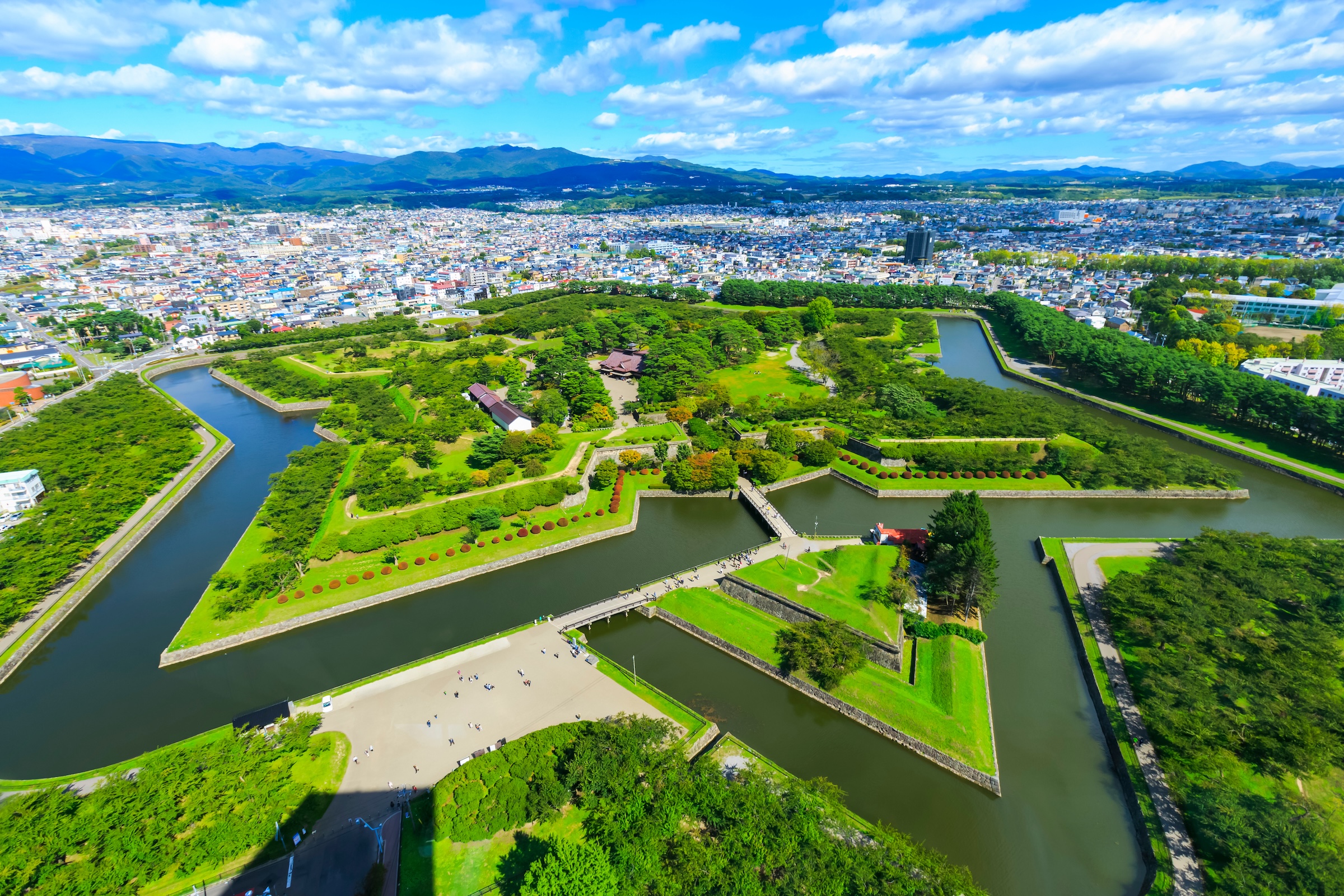
The most distinctive feature of Shiryokaku is its star-shaped structure with four bastions, as its name suggests. A rampart, 5.4 meters wide and 3 meters high, surrounds the area, which measures approximately 100 meters east-west and 70 meters north-south.
Its elegant shape, resembling a butterfly with outstretched wings, combines practicality and beauty, and is heavily influenced by Western fortification techniques. While Goryokaku has five bastions, Shiryokaku has a simplified design with four bastions, yet its defensive functions were fully considered.
Arrangement of the Ramp and Moat
A moat, 2.7 meters wide and 0.9 meters deep, is dug around the rampart. This moat was an important defensive structure that prevented enemy approaches. However, it is located on the outside, excluding the section in front of the rampart to the right of the main entrance, reflecting a practical design that takes into account the constraints of the terrain and construction time.
Gun emplacements were provided on the four bastions, allowing for firing in all directions. The interior of the enclosure was relatively flat, providing a suitable space for garrisoning soldiers and storing supplies. ### Comparison with Goryokaku
Compared to Goryokaku, Shiryokaku is smaller in scale and simpler in construction. While Goryokaku was planned and built over several years, Shiryokaku was hastily constructed in just a few days. This difference in background is reflected in the difference in scale and level of completion between the two.
However, the basic principles of Western-style fortification are common; the design philosophy of minimizing blind spots and enabling efficient defense through a bastion structure is the same. The Matsumae Domain Tokkiri-chi Jinya site in Hokuto City also has a four-cornered star structure, making it a valuable example demonstrating the spread of Western-style fortification in Hokkaido at that time.
Preservation and Current Status of Shiryokaku
The Road to National Historic Site Designation
Recognizing its historical value, Shiryokaku was designated a National Historic Site on May 1, 1934. It holds significant academic importance as a valuable relic of the Hakodate War and as an example of military facilities from the Meiji Restoration period.
The designation as a historical site has protected the remains of the earthworks and dry moats, ensuring their preservation for future generations. Even today, the basic structure from the time of its construction is well-preserved, allowing visitors to imagine its original appearance.
Current Shirokaku
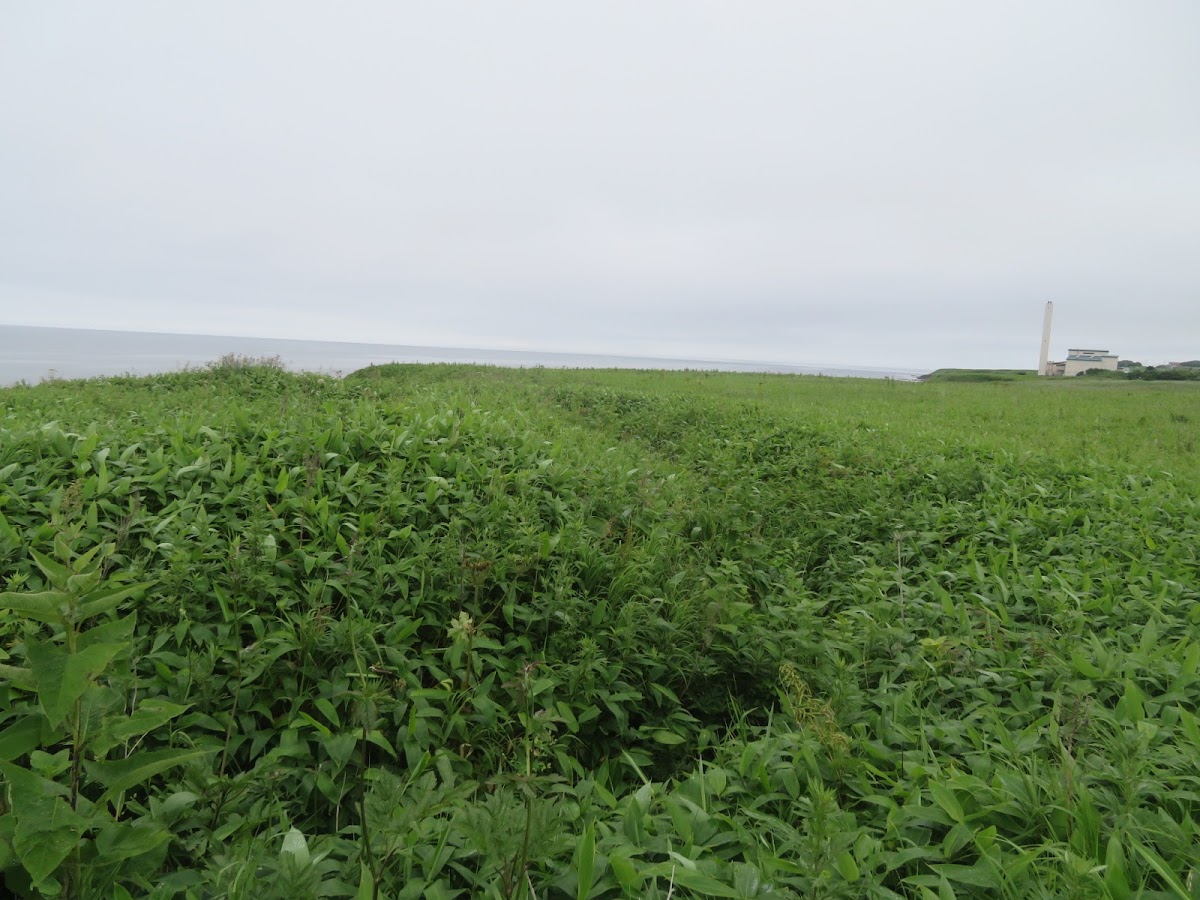
Currently, no buildings remain at Shirokaku; the main attractions are the remains of the earthworks and dry moats. The area within the fort is grassland, offering a lush green landscape from spring to autumn.
Under appropriate management by Hakodate City, the site is preserved to maintain its historical value. Although the surrounding area is residential, the historical site is clearly demarcated, and information boards are installed.
Preservation Status and Challenges
While the earthworks and dry moats are relatively well-preserved, some erosion and deformation are visible due to years of exposure to wind, rain, and vegetation. Maintaining the historical site requires continuous effort, and Hakodate City carries out regular grass cutting and earthwork repairs.
More than 150 years have passed since the Battle of Hakodate, and efforts to pass on its historical value to future generations are crucial. Preservation activities are being carried out by local residents and history enthusiasts, and efforts to protect its value as a historical site continue.
Highlights of Shiryokaku
View from the Earthworks
One of Shiryokaku’s greatest attractions is the magnificent view from its elevated location. Standing on the earthworks, you can see Hakodate Bay to the east and the open sea to the west, giving you a real sense of why the former shogunate army chose this location during the Battle of Hakodate.
On a clear day, you can even see the city of Hakodate and the Goryokaku area, allowing you to feel the strategic importance of the time. You can also enjoy the changing seasons: cherry blossoms in spring, lush greenery in summer, and vibrant autumn leaves.
Experience the Quadrilateral Structure
Visiting Shiryokaku allows you to experience the unique spatial configuration created by its four bastions. Walking along the earthworks allows you to understand the butterfly-winged shape of the fortress in three dimensions.
Examining the remains of gun emplacements on each bastion and the layout of the dry moats provides a valuable opportunity to learn about the practical aspects of Western-style fortification. Comparing it with Goryokaku will lead to a deeper understanding.
Connection to Hokkaido Toshogu Shrine
Shiryokaku was built to protect Hokkaido Toshogu Shrine. The current Hokkaido Toshogu Shrine is located close to Shiryokaku, and visiting both together will allow you to gain a deeper understanding of the ideology and strategies of the former Shogunate army during the Hakodate War.
Imagining the feelings of the former Shogunate army who sought to protect the Toshogu Shrine, which enshrines Tokugawa Ieyasu, will allow you to feel the weight of history.
Access to Shiryokaku
Access by Public Transportation
Shiryokaku can be accessed using the Hakodate City Tram or Hakodate Bus. It is about a 10-minute walk from the nearest bus stop. However, since the number of services may be limited, it is recommended to check the timetable in advance.
Since it’s a bit of a distance from JR Hakodate Station and Goryokaku Park, taking a taxi is a good option. It’s especially convenient if you’re short on time or want to efficiently visit multiple historical sites.
Access by Car and Parking
Access by private car or rental car is possible. From downtown Hakodate, head north on National Route 5 and follow the signs to reach it. It’s about a 10-minute drive from Goryokaku Park.
Regarding parking, there isn’t a large dedicated parking lot for the historical site, but there are some parking spaces nearby. However, since it’s also a residential area, consideration for nearby residents is necessary.
Nearby Tourist Attractions
When visiting Shiryokaku, we recommend combining it with visits to nearby tourist attractions such as Goryokaku Park, Goryokaku Tower, and the Hakodate City Northern Seas Museum. This will allow for a more comprehensive understanding of the Hakodate War and the history of Hakodate.
Furthermore, it’s relatively close to other representative Hakodate tourist spots such as Mount Hakodate and the Motomachi area, making it a convenient addition to your Hakodate sightseeing.
Precautions for Visiting Shiryokaku
Manners for Historical Site Preservation
Shiryokaku is a valuable cultural property designated as a national historic site. Please observe the following points when visiting:
- Do not dig or climb on the earthworks or moats to avoid damaging them.
- Take all your trash with you and keep the historic site clean.
- Do not collect plants or capture animals.
- The use of fire is strictly prohibited.
- Handle information boards and explanatory signs with care.
Safety Precautions During Visits
Shiryokaku is an outdoor historic site and not a well-maintained tourist facility. Please observe the following points for safe visits.
- The earthen ramparts are high, so please be especially careful if you are with small children.
- Wear appropriate footwear as the ground can become slippery during and after rain.
- Take adequate insect repellent in summer and warm clothing in winter.
- Plan your visit according to your physical condition and the weather.
Regarding Photography
Photography at Shiryokaku is generally permitted, but please consider the following points:
- As the surrounding area is a residential area, please be mindful of privacy when taking photographs.
- For commercial photography, prior confirmation with the Hakodate City Board of Education may be required.
- When using drones, please comply with aviation laws and various regulations.
Historical Significance of Shiryokaku
Value in Hakodate War Research
Shiryokaku is an indispensable historical site for studying the Hakodate War. The existence of Shiryokaku, built as a subsidiary fortress of Goryokaku, provides important clues to understanding the strategies of the former shogunate army and the military technology of the time.
Despite being a hastily constructed defensive structure, its design, based on the principles of Western fortification techniques, is highly regarded academically as an example of the adoption and application of military technology in early Meiji Japan.
A Turning Point in Modern Japan
The Battle of Hakodate symbolized the transition from the Edo period to the Meiji era. Shiryokaku occupies an important position in modern Japanese history as a relic that tells the story of the last resistance of the former shogunate forces at this historical turning point.
Although the former shogunate army was defeated, Shiryokaku remains a historical memory as one of the places where they fought to the very end.
The Spread of Western Fortification Techniques
Shiryokaku is also a valuable example of the spread of Western fortification techniques in Japan. Star-shaped fortresses remaining throughout Hokkaido, such as Goryokaku, Shiryokaku, and the Matsumae Domain’s Tokiri-chi encampment, tell the story of the modernization of military technology from the late Edo period to the early Meiji era.
These relics are important evidence of Japan’s rapid adoption of Western technology and its transformation into a modern nation.
Things to Know Before Visiting Shiryokaku
Best Time to Visit
Shiryokaku is open year-round, but each season offers a different charm.
Spring (April-May) is beautiful with fresh greenery, and the surrounding scenery is especially enjoyable during cherry blossom season. Summer (June-August) offers lush greenery and excellent views, but insect repellent is necessary. Autumn (September-October) boasts beautiful autumn foliage and mild weather, making it ideal for visiting. Winter (November-March) is covered in snow, creating a magical landscape, but caution is needed regarding footing.
Estimated Time Required
A visit to Shiryokaku usually takes 30 minutes to an hour. This is sufficient time to walk around the earthworks, examine each bastion, and enjoy the views.
Those interested in history or who want to take their time taking photographs are advised to allow more than an hour. If combining a visit with other historical sites such as Goryokaku, be sure to factor in travel time.
Recommended Prior Learning
Before visiting Shiryokaku, acquiring basic knowledge about the Hakodate War and the Ezo Republic will make your visit more fulfilling. We recommend checking information in advance on the Hakodate City official website and the tourist information site “Hakobura.”
Facilities such as Goryokaku Tower and the Hakodate City Northern Seas Museum also have exhibits on the Hakodate War, and combining a visit to Shiryokaku with these exhibits will provide a deeper understanding.
Hakodate City’s Initiatives and Future Prospects
Historical Site Preservation Activities
The Hakodate City Board of Education is continuously working on the preservation and utilization of Shiryokaku. Efforts to protect its value as a historical site continue through regular grass cutting, maintenance of the earthworks, and the installation and updating of information boards.
A cooperative system has also been established with local residents and history enthusiasts, and citizen-participatory preservation activities such as cleaning and guiding visitors are being carried out.
Utilization as a Tourism Resource
Hakodate City positions Shiryokaku as an important tourism resource and is promoting its use as a base for conveying the history of the Hakodate War, along with Goryokaku. Efforts are being made to let more people know about the value of Shiryokaku through information dissemination on tourist information websites and its inclusion in tourist routes.
With the 150th anniversary of the Hakodate War (2019), related events and special projects were held, increasing interest in Shiryokaku.
Utilization in Educational Activities
Shiryokaku also plays an important role as a place for local history education. Schools in Hakodate City provide opportunities for students to visit Shiryokaku as part of their local history studies, making it a valuable place for children to learn about local history.
Further utilization as a learning resource is expected, including the enrichment of educational programs and the development of explanatory materials.
Summary
Shiryokaku is a valuable historical site that conveys to the present day a turning point in modern Japanese history: the Hakodate War. Although hastily constructed as a subsidiary fortress of Goryokaku, its design, based on the principles of Western fortification techniques, speaks volumes about the technological level of the time and the valiant efforts of the former shogunate forces.
Understanding its unique butterfly-wing-like shape, the views from its elevated position, and the historical context of the Hakodate War makes a visit to Shiryokaku even more meaningful. When visiting Hakodate, we highly recommend visiting Shiryokaku in addition to Goryokaku.
As a nationally protected historical site, it is our responsibility to respectfully observe proper etiquette when visiting Shiryokaku and to pass on its historical value to future generations. We hope that this precious historical site will be preserved for generations to come through the efforts of Hakodate City and the cooperation of its citizens.