Terao Castle: The Complete History and Remains of a Medieval Mountain Castle in Tsurumi Ward, Yokohama City
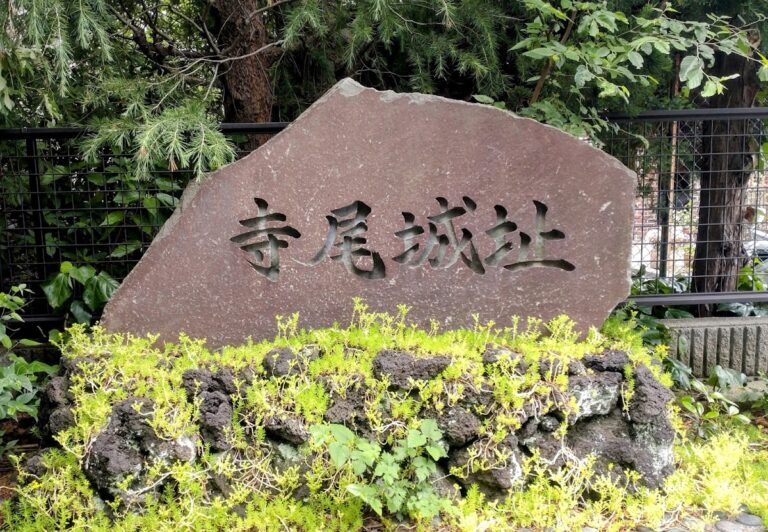
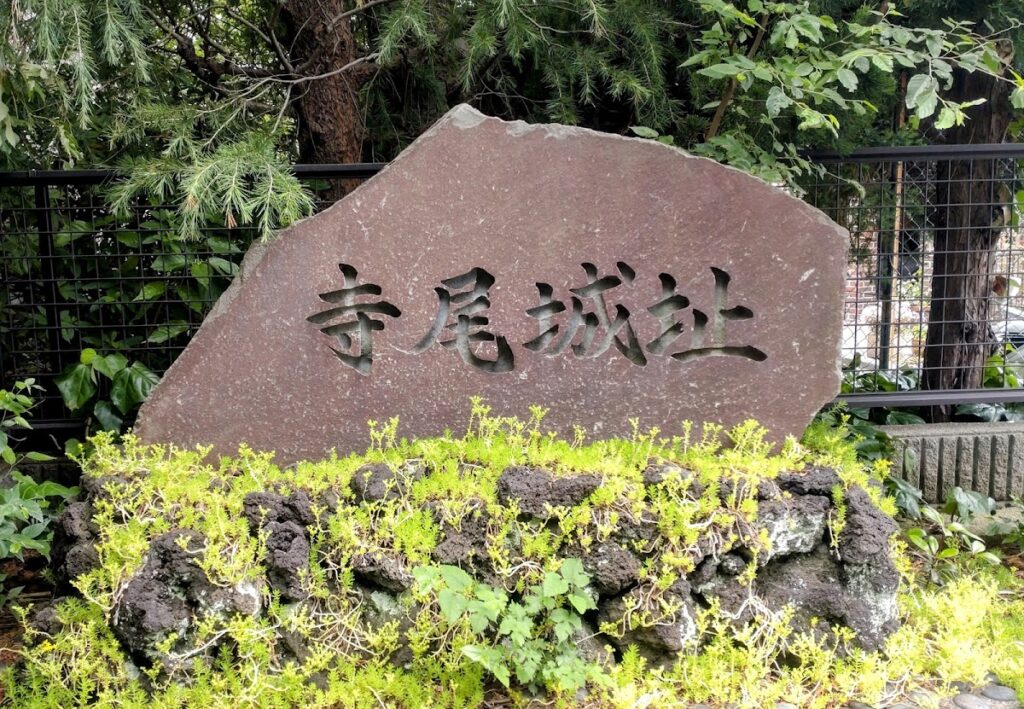
A monument marking the “Terao Castle Site” stands in a residential area of Tsurumi Ward, Yokohama City, Kanagawa Prefecture. Despite being swallowed up by the waves of modern urbanization, traces of a medieval mountain castle from approximately 600 years ago still remain. Terao Castle was built by the Suwa clan, a prominent family of Shinano Province, and was an important fortress that played a significant role in the turbulent Sengoku period.
This article provides a comprehensive explanation of this mysterious medieval mountain castle, covering its history from its construction to its fall, the lineage of the Suwa clan, the details of the remaining structures, and even the differences between it and other castles of the same name.
Overview and Location of Terao Castle
Basic Information
Terao Castle (Terao-jō) was a Japanese castle (mountain castle) located near Baba 3-chome, Tsurumi Ward, Yokohama City. Built on the edge of a plateau commonly known as “Tonoyama,” it is now protected as a Yokohama City Registered Regional Cultural Property (Regional Historic Site).
The castle’s form was not that of a modern castle with a keep, but rather a medieval fort-like mountain castle surrounded by earthworks and dry moats. Although its elevation is relatively low, it is located on a hill overlooking the surrounding area and served as a strategically important military point.
Geographical Importance
From the west exit of Tsurumi Station on the JR Keihin-Tohoku Line, take the Kawasaki Tsurumi Rinko Bus and get off at the Tonoyama bus stop. The castle site monument stands in a residential area at the top of the slope in Baba 3-chome. This location was a key transportation point connecting the Tokaido road and Kamakura in the medieval period, occupying a strategically important position.
The hill known as Tonoyama overlooks the Tsurumi River basin, making it an ideal location for monitoring enemy movements. Furthermore, it is believed to have played an important role as a branch castle within the Hojo clan’s sphere of influence, as it was located on the route connecting Odawara Castle, the base of the Odawara Hojo clan, and the Edo area.
History of Terao Castle
Construction History and Period
There are various theories regarding the construction period of Terao Castle, but the most widely accepted theory places it around Eikyo 8 (1436). The builder was a member of the Suwa clan, a prominent family from Shinano (present-day Nagano Prefecture).
It is speculated that the Suwa clan built this castle in Terao, Tachibana District, Musashi Province (present-day Tsurumi Ward, Yokohama City), far from Shinano, with the intention of expanding their influence in the Kanto region. The first half of the 15th century was a politically unstable period in the Kanto region, a time when local powerful families were scrambling to secure their spheres of influence.
Suwa Clan Rule
Terao Castle served as the residence of the Suwa clan for approximately 140 years, starting with Suwa Mikawa-no-kami as its first lord, and continuing through five generations. The Suwa clan later became vassals of the Odawara Hojo clan (later the Hojo clan), who would become the rulers of the Kanto region, and played an important role as part of the Hojo clan’s retainers.
Serving the Hojo clan, the Suwa clan controlled the surrounding area from Terao Castle and contributed to the expansion of the Hojo clan’s power. It is believed that the retainers resided in the castle town, forming a small, castle-town-like settlement centered around the castle.
Attack and Fall of Terao Castle by Takeda Shingen
The fate of Terao Castle was determined by a series of military actions, including Takeda Shingen’s attack on Odawara Castle in October 1569, the so-called “Battle of Mimase Pass.”
The lord of the castle at the time was Suwa Manosuke (also known as Suwa Umanosuke), but he was away defending Odawara Castle to protect his lord, Hojo Ujiyasu. It is said that the Takeda army attacked Terao Castle while he was away, and the castle fell.
According to historical sources such as the *Hojo-ki*, this attack led to the abandonment of Terao Castle and the end of the Suwa clan’s rule. While some sources suggest the Suwa clan survived until 1575, there is no doubt that the Takeda army’s attack in 1569 marked the de facto end of Terao Castle.
About the Suwa Clan
Origins and Genealogy of the Suwa Clan
The Suwa clan, who were the lords of Terao Castle, were a branch of the prestigious Suwa clan, based in Suwa County, Shinano Province (present-day Suwa region, Nagano Prefecture). Known as a family of Shinto priests serving as the Ohoori (chief priest) of Suwa Grand Shrine, the Suwa clan was one of the powerful local clans in Shinano.
The circumstances surrounding the Suwa clan’s relocation to Musashi Province remain shrouded in mystery, as no clear historical records exist. One theory suggests that a family forced to leave Shinano due to political strife and internal conflicts during the Muromachi period migrated to the Kanto region in search of a new life.
Successive Lords of Terao Castle
The successive lords of Terao Castle are not fully understood due to a lack of detailed records. However, based on the family registers and records of Kenkoji Temple (a temple in Tsurumi Ward), the following lineage has been estimated:
- First Lord: Suwa Mikawa-no-kami (Eikyo era, around 1429-1441)
- The Suwa clan served as lords of the castle for five generations thereafter.
- Last Lord: Suwa Umanosuke (Suwa Umanosuke, Eiroku era)
Specific details about the achievements of each lord are scarce, and further research is needed.
Historical Sites Associated with the Suwa Clan
The following historical sites associated with the Suwa clan and related to Terao Castle still exist:
Baba Inari Shrine
Located on the northwestern slope of the highest point of Tonoyama, where the castle ruins monument stands, Baba Inari Shrine (Baba, Tsurumi Ward, Yokohama City) is said to be an Inari shrine enshrined within the castle by the Suwa clan. The widely leveled terrain conveys the former appearance of the castle grounds.
Kenkoji Temple
Kenkoji Temple, located in Tsurumi Ward, preserves ancestral registers and records related to the Suwa clan, making it a valuable historical resource for understanding the history of Terao Castle and the Suwa clan.
Structure and Remains of Terao Castle
Castle Structure
Terao Castle had the structure of a typical medieval mountain castle. It is believed that the main enclosure (honmaru) was located on the highest point of the plateau called Tonoyama, and defensive structures such as earthworks and dry moats were arranged around it.
The castle grounds are estimated to have been the area centered around the present-day Tonoyama Park, measuring approximately 200 meters east-west and 150 meters north-south. There were no large structures like a keep; it is believed that wooden buildings such as residences, turrets, and barracks lined the area.
Existing Remains
Currently, most of the remains of Terao Castle have been lost due to residential development, but the following remains partially remain within Tonoyama Park:
Dry Moat
In a part of the park, traces of the former dry moat remain as topographical features. Although the depth has decreased, the layout of the dry moat as a defensive structure of the castle can be confirmed.
Earthwork
Along with the dry moat, a portion of the earthwork also remains. Earthworks, typical defensive structures of medieval mountain castles, are earthen walls built to prevent enemy intrusion.
Leveled Area
A wide, leveled area remains on the plateau, allowing for the inference of the former layout of the castle’s baileys (kuruwa).
Terao Castle Ruins Monument and Information Board
A stone monument marking the “Terao Castle Ruins” stands in Tonoyama Park, informing visitors of the castle’s existence. An information board, installed by the Yokohama City Board of Education, explains the history and overview of Terao Castle.
These information facilities allow the general public to learn about the history of Terao Castle, ensuring its preservation and utilization as a local historical heritage site.
Archaeological Excavation and Excavated Artifacts
Discovery of Coins from Beneath the Kannon-do Hall
In 1973 (Showa 48), a significant discovery related to Terao Castle was made. Approximately 2,000 Northern Song dynasty coins were unearthed from beneath the Kannon-do Hall at the foot of Kannon-yama Mountain, contained in a Seto ware ash-glazed inscribed jar.
These coins are estimated to have been buried in the first half of the 15th century and are thought to have been stored as military funds for Terao Castle. They are valuable archaeological materials for understanding economic activities and military fund management methods in medieval castles.
The Reality of the Castle as Seen from Excavated Artifacts
The discovery of these coins indicates that Terao Castle was not merely a military facility, but a fortress with a certain economic base. The large quantity of approximately 2,000 coins suggests considerable wealth for the time, confirming that the Suwa clan held a certain degree of influence in the region.
Differences from Other Castles with the Same Name
There are actually several castles named “Terao Castle” in Japan. To avoid confusion, we will clarify the main Terao Castles.
Terao Castle in Matsushiro-cho, Nagano City
There is also a Terao Castle in Higashi-Terao, Matsushiro-cho, Nagano City. This castle was built by the Terao clan and is located on a ridge jutting out along the Chikuma River, at a key transportation point leading from Omuro to the Zenkoji Plain, over the Kako Pass, and towards Kagai, Jizo Pass, and Ueda.
When Takeda Shingen gained control of Shinano Province, after the construction of Kaizu Castle (present-day Matsushiro Castle), it functioned as an important subsidiary castle, along with Kanaiyama Castle, to secure eastern and northern Shinano. The Terao clan belonged to the Murakami clan during the Sengoku period, but along with the Seino clan, they are said to have quickly switched allegiance to the Takeda.
Terao Castle (Sugaterao Castle) in Tama Ward, Kawasaki City
There is also a Terao Castle (Sugaterao Castle) near 2-30 Sugababa, Tama Ward, Kawasaki City, Kanagawa Prefecture. Its remains are located on the end of a tongue-shaped plateau jutting out into the Tama River alluvial plain to the north, now designated as the “Sugababa Valley Forest Preservation Area.”
This castle, like the Terao Castle in Tsurumi Ward, Yokohama City, is also located in Kanagawa Prefecture and is often confused with it, but it is a different castle.
How to Identify Each Terao Castle
- Terao Castle in Tsurumi Ward, Yokohama City: A castle of the Suwa clan, located on Tonoyama, fell during an attack by Takeda Shingen.
- Terao Castle in Matsushiro-cho, Nagano City: A castle of the Terao clan, an important base for the Takeda clan’s control of Shinano Province.
- Terao Castle in Tama Ward, Kawasaki City: Also known as Suga Terao Castle, located on a plateau along the Tama River.
When reading historical documents or conducting castle research, it is necessary to clearly distinguish between these differences.
Access and Visiting Information for Terao Castle Ruins
Access Methods
Using Public Transportation
- Take the Kawasaki Tsurumi Rinko Bus from the west exit of Tsurumi Station on the JR Keihin-Tohoku Line.
- Get off at the “Tonoyama” bus stop.
- Walk towards Baba 3-chome and go up the hill.
- The castle ruins monument and Tonoyama Park are located within a residential area.
Using a Private Car
There is no dedicated parking lot, so you will need to use a nearby coin-operated parking lot. Please avoid street parking as it is located in a residential area.
Points to Note When Visiting
Terao Castle Ruins is maintained as a park and is open for free visits 24 hours a day. To gain a deeper understanding of the castle’s history, keep the following points in mind during your visit:
- Castle Site Monument: First, reflect on the castle’s history in front of the monument.
- Information Board: Check the historical background using the information board provided by the Yokohama City Board of Education.
- Topographical Observation: Realize the importance of the castle’s location by observing the elevation difference of Tonoyama Hill and the surrounding terrain.
- Confirmation of Remains: Look for traces of remaining dry moats and earthworks.
- View: Look out over the surrounding area from the castle and experience the perspective of a medieval castle lord.
Related Historical Sites in the Surrounding Area
When visiting Terao Castle Ruins, visiting the following related historical sites will deepen your understanding:
- Baba Inari: An Inari shrine associated with the Suwa clan.
- Kenkoji Temple: A temple where the Suwa clan’s ancestral registers and records are preserved.
- Kannon-do: Near the site where Northern Song dynasty coins were discovered.
Historical Significance of Terao Castle
Position in Medieval Kanto History
Terao Castle holds historical significance as a castle of a local powerful family in medieval Kanto in the following respects:
- Nexus between Shinano and Kanto: As a base for the Suwa clan, a prominent family from Shinano, to expand into Kanto, it serves as evidence of inter-regional exchange.
- Network of Later Hojo Clan Castles: As one of the branch castles within the sphere of influence of the Odawara Hojo clan, it demonstrates the governing system of a Sengoku daimyo.
- Stage of the Takeda-Hojo Conflict: As a target of Takeda Shingen’s siege of Odawara, it represents a significant moment in the military history of the Sengoku period.
Importance in Local History
In the local history of Tsurumi Ward, Yokohama City, Terao Castle has the following significance:
- Center of Medieval Regional Governance: The political and military center of this region during the medieval period.
- Origin of Place Names: Place names such as “Baba” and “Tonoyama” are highly likely to originate from the castle.
- Regional Identity: As a historical symbol of the region, it is the core of the residents’ sense of local identity.
Value in Castle Research
Terao Castle holds the following value in the study of medieval mountain castles:
- Typical Example of a Medieval Mountain Castle: It demonstrates the structure of a medieval mountain castle, primarily consisting of earthworks and dry moats.
- Urbanization and Preservation of Historical Sites: A case study for considering how castle remains should be preserved in the context of modern urbanization.
- Integration of Historical Documents and Archaeology: The importance of research combining limited historical documents with archaeological discoveries.
Mysteries of Terao Castle and Future Research Topics
Unsolved Mysteries
Many mysteries remain regarding Terao Castle:
- Exact Date of Construction: It is believed to be around Eikyo 8 (1436), but there is no conclusive evidence.
- Reason for the Suwa Clan’s Migration: Why did the Suwa clan of Shinano Province build a castle in Musashi Province?
- Detailed Structure of the Castle: The arrangement of baileys and the specific appearance of the buildings.
- Post-Fall History: How was this land used after the castle was abandoned?
- The Later Life of the Suwa Clan: The activities of the Suwa clan after the castle’s fall.
Potential for Future Research
The following research approaches are expected to fully unravel the history of Terao Castle:
Archaeological Investigation
Large-scale excavations are difficult due to ongoing residential development, but new remains and artifacts may be discovered through surveys of the park area and preliminary surveys related to development.
Re-examination of Historical Documents
Besides the Kenkoji Temple’s register and the Hojo-ki, there may be undiscovered historical documents. Furthermore, known historical documents require reinterpretation from new perspectives.
Topographic Analysis
Topographic analysis using modern surveying techniques and GIS (Geographic Information System) may allow for the estimation of the layout of lost remains.
Comparative Research
Comparative research with other castles related to the Suwa clan and medieval mountain castles in the Kanto region of the same period will clarify the characteristics of Terao Castle.
Significance of Visiting Terao Castle
Visiting the ruins of Terao Castle, buried within a modern residential area, offers the following significance:
Dialogue with History
Standing before the castle monument and imagining the castle, people living here, and battles fought here approximately 600 years ago, is a dialogue with the past. You can truly feel that a turbulent history lies dormant beneath the peaceful landscape of today’s residential area.
Deepening Local Understanding
Learning the history of your own area, or the areas you visit, deepens your understanding of and affection for that land. Knowing the history of Terao Castle will give you a more three-dimensional view of Tsurumi Ward.
Awareness of Historical Heritage Preservation
This provides an opportunity to consider the importance of preserving historical heritage that is being lost amidst urbanization. Even with just a few remains and a monument, as in the case of Terao Castle, you can recognize the significance of properly preserving and passing it on to future generations.
Summary
Terao Castle was a medieval mountain castle built on Tonoyama Hill in Tsurumi Ward, Yokohama City. It was ruled by the Suwa clan, a prominent family from Shinano Province, for approximately 140 years. It is said to have been constructed around 1436 and fell in 1569 to an attack by Takeda Shingen.
Currently, most of the castle’s remains have been lost due to residential development. However, some dry moats and earthworks remain in Tonoyama Park, where a castle site monument and information board have been erected. In 1973, approximately 2,000 Northern Song dynasty coins were discovered beneath the Kannon Hall, providing important archaeological evidence illustrating the castle’s economic base.
Many mysteries remain in the history of Terao Castle, and there are many issues that require further research, such as the detailed circumstances of its construction, its structure, and the activities of the Suwa clan. However, even from limited historical materials and remains, we can learn about the nature of castles belonging to local powerful families in the medieval Kanto region and glimpses of the turbulent history of the Sengoku period.
The Terao Castle ruins, quietly standing in a modern residential area, are a precious historical heritage site connecting the past and the present. Visiting this small historical site and reflecting on the castle and the lives of the people who once lived here will teach us the weight of history and the importance of its preservation.