Teraiike Castle, Tome City (Miyagi Prefecture) | Complete Guide to History, Remains, and Access
Teraike Castle, located in Teraiike, Tome-cho, Tome City, Miyagi Prefecture, is a castle that played an important role as a strategic point in Mutsu Province from the medieval to the early modern period. Also known as “Teraike-kan” and “Gagyu-jo,” it was called “Tome Yogai” (Tome Fortress) under the control of the Date clan during the Edo period. This article comprehensively explains all information about Teraiike Castle, including its detailed history, existing remains, points of interest, and access methods.
Overview of Teraiike Castle
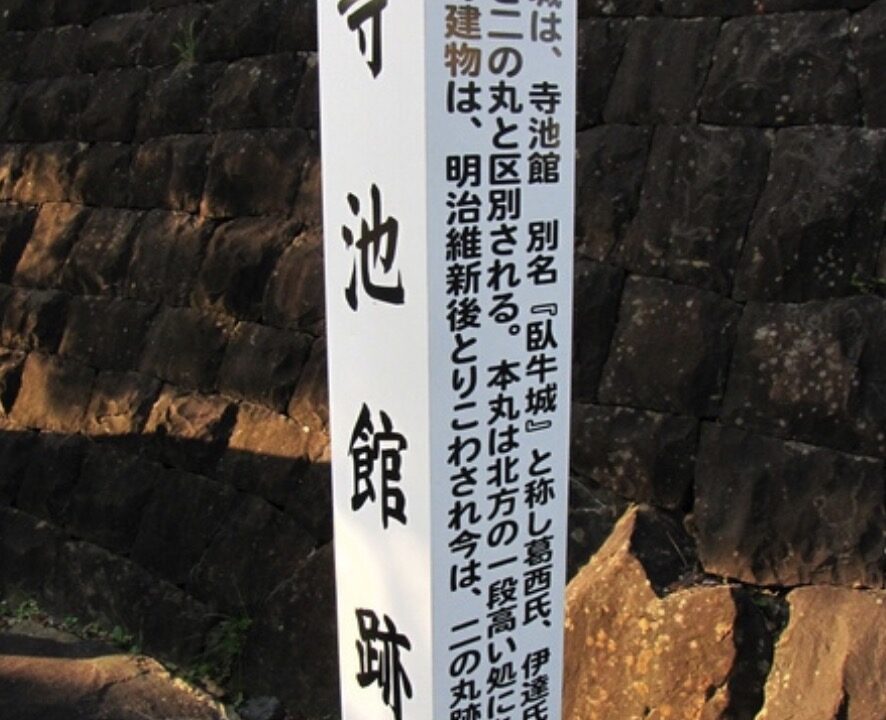
Teraike Castle is a flatland castle built on a plateau approximately 20 meters high overlooking the city of Tome. Currently, the castle site houses the Tome Kaikokan (Tome Historical Museum) and the Tome Branch of the Sendai District Court, and visitors can see the stone walls, baileys, and dry moats that retain traces of its former glory.
The castle’s layout featured a linear structure consisting of the main keep, second bailey, and third bailey, and it was a robust structure that utilized the Hazama River, a tributary of the Kitakami River, as a natural moat. Its alternative name, Gagyūjō (臥牛城), is said to derive from the castle’s shape resembling a reclining ox.
History
Medieval Period: The Kasai Clan Era
The exact construction date of Teraiike Castle is unclear, but it is known to have been within the sphere of influence of the Kasai clan, who entered central Mutsu Province during the Kamakura period. The Kasai clan were retainers granted the six districts of Mutsu Province for their service in Minamoto no Yoritomo’s conquest of Oshu, and they built a powerful force in this region.
Initially, the Kasai clan was based at Terasaki Castle in Ishinomaki, but it is believed that they later developed Teraiike Castle as their main residence. During the Sengoku period, Kasai Harunobu resided there as the castle lord, and it served as a base for controlling the surrounding area. At its peak, the Kasai clan flourished as a powerful daimyo (feudal lord) controlling a vast territory stretching from northern Miyagi Prefecture to southern Iwate Prefecture.
Toyotomi Hideyoshi’s Pacification of Oshu and the Dispossession of the Kasai Clan
In 1590, Toyotomi Hideyoshi launched the Odawara Campaign, and the daimyo of Oshu who did not participate suffered the fate of having their territories confiscated. Kasai Harunobu also had his territory confiscated as part of this Pacification, marking the end of the Kasai clan’s rule.
However, dissatisfied former Kasai retainers and subjects launched the “Kasai-Osaki Rebellion” between 1590 and 1591. This rebellion became large-scale, and Hideyoshi’s dispatches, Kimura Yoshikiyo and Kiyohisa, were unable to suppress it. Ultimately, Date Masamune stepped in to quell the uprising.
The Era of the Kimura and Shiraishi Clans
After the suppression of the uprising, Kimura Yoshikiyo entered Teraiike Castle. However, the Kimura clan was held responsible for the Kasai-Osaki uprising and was dispossessed of their domain. Later, in 1593, Shiraishi Munenao became the lord of the castle, but Shiraishi’s rule did not last long.
Edo Period: The Residence of the Tome Date Clan
In 1601, Date Muneyasu, the fourth son of Date Masamune, was granted 21,000 koku and entered Teraiike Castle, marking the beginning of the Tome Date clan’s era. From this time, the castle was officially called “Tome Fortress.”
The Tome Date clan, as an important branch of the Sendai Domain, was counted as one of the 21 fortresses of the Sendai Domain and played a role as a northern defense base. Throughout the Edo period, the Tome Date clan ruled this area for 12 generations, striving to develop the castle town and promote industry. The castle town of Tome flourished as the political, economic, and cultural center of the region, with its orderly arrangement of samurai residences and the development of a merchant district. Even today, Tome town retains samurai residences and Western-style buildings from the Meiji era, preserving a historical townscape known as “Miyagi’s Meiji Village.”
After the Meiji Era
After the Meiji Restoration, the rule of the Tome Date clan came to an end with the abolition of the feudal domains and the establishment of prefectures. In 1871 (Meiji 4), the castle abolition decree was issued, and many of the buildings of Teraiike Castle were dismantled. Part of the main keep was relocated to Younji Temple, where it is still used as the main hall. The back gate was also relocated and still exists, a valuable historical relic that conveys the architectural style of the time.
The castle site has been developed into public facilities and a park since the Meiji era, and remains so to this day. Part of the main keep site is now farmland, the Sendai District Court Tome Branch is built on the site of the second bailey, and the third bailey is now Teraiike Castle Ruins Park, a popular spot for local residents.
Remains
Enclosures and Layout
Teraike Castle’s layout is a series of interconnected enclosures, with the main keep at the center and the second and third baileys connected to it. Each enclosure was demarcated by earthworks and moats, resulting in a highly defensible design.
The main keep was the core enclosure of the castle, where the lord’s residence was located. Currently, part of it is farmland, and no original buildings remain, but the outline of the enclosure and the topography allow us to estimate its size at the time.
The second bailey is located east of the main keep and is now the site of the Sendai District Court Tome Branch. Slight traces of earthworks can be seen around the courthouse building.
The third bailey is now developed as Teraiike Castle Ruins Park, a place of relaxation for local residents. Information boards about the castle are installed within the park, allowing visitors to learn about its history.
Stone Walls
The stone walls of Teraiike Castle are believed to have been constructed by the Tome Date clan during the Edo period. Stone walls remain in various parts of the castle site, and particularly well-preserved sections can be seen around the courthouse and within the park.
The stonework of the walls is a mix of rough-hewn and fitted stonework, indicating that repairs were carried out over time. These stone walls are valuable resources for understanding the stonework techniques of the time.
Earthworks and Dry Moats
Partial remains of earthworks and dry moats remain within the castle grounds. Especially around the Teraiike Castle Ruins Park in the third bailey, the rises of earthworks and depressions in the moats can be observed. These remains are important traces that tell the story of the changes in castle structure from the medieval to the early modern period.
Relocated Structures
Yōunji Temple Main Hall: Part of the main bailey palace was relocated here and is still used as the temple’s main hall. The building’s interior retains the characteristics of a dignified Shoin-zukuri architectural style, conveying the vestiges of castle architecture to this day. Yōun-ji Temple is also the family temple of the Tome Date clan, and the tombs of successive feudal lords are located within its grounds.
Teraike Castle Rear Gate: The castle’s rear gate has been relocated and preserved, and still exists in Teraike Sakurakoji, Tome Town. This gate is designated as a local cultural property, a valuable relic that conveys the style of Edo period castle gate architecture.
Tome Kaikokan (Tome Historical Museum)
The Tome Kaikokan (Tome Historical Museum) has been built on the castle site, exhibiting materials related to the Tome Date clan and Teraike Castle. The museum houses weapons, ancient documents, and furnishings, allowing visitors to learn in detail about the history of the castle and its surrounding town. The Tome Kaikokan also distributes castle-related stamps, making it a popular souvenir for castle enthusiasts.
Structure and Features
Teraike Castle is a flatland castle characterized by its layout that skillfully utilizes the natural terrain. The castle utilized the Hazama River, part of the Kitakami River system, as an outer moat, and by arranging the baileys on a plateau, it achieved a structure that was difficult to attack but easy to defend.
The castle measured approximately 400 meters east-west and 300 meters north-south, exhibiting characteristics of a transitional period from medieval to early modern castles. It is believed to have been remodeled from a medieval earthen castle during the Kasai clan’s era to an early modern castle using stone walls during the Tome Date clan’s era, and this transformation can be seen in the remains.
As its nickname, Gagyūjō (臥牛城), suggests, the overall shape of the castle is arranged along the gently undulating terrain, and it was named because, when viewed from a distance, it resembles a reclining ox. This layout, which takes advantage of the terrain, was designed not only for defensive purposes but also to harmonize with the surrounding castle town.
Highlights and Photo Spots
Teraiike Castle Ruins Park
A park developed on the site of the third bailey, also known as a cherry blossom viewing spot. In spring, the area is bustling with cherry blossom viewers, and the combination of the castle ruins and cherry blossoms makes for an excellent photo spot. Information boards and guides explaining the castle are installed throughout the park, allowing visitors to learn about its history while strolling around.
Stone Walls and Earthworks
The stone walls remaining around the courthouse and within the park are a valuable point of interest for observing Edo-period stonework techniques up close. You can particularly see the technical ingenuity, such as the san-gi-zumi (a type of stonework) at the corners. The earthworks are also partially well-preserved, allowing visitors to experience the defensive structures of the time.
Tome Historical Museum
This facility is essential for gaining a deeper understanding of the castle’s history. Exhibits include items related to the Tome Date clan and old maps of the castle town, allowing visitors to concretely imagine what it was like at the time.
Younji Temple
The main hall, which was relocated from the main keep, is a valuable building that retains the appearance of castle architecture. The temple grounds also contain the tombs of successive generations of the Tome Date clan, allowing visitors to reflect on the history of the castle lords. This is a place where you can reflect on the former appearance of the castle in a tranquil atmosphere.
Relocated Back Gate
The back gate, still standing on Sakurakoji Street, is a valuable relic that conveys the Edo period castle gate architecture. From the gate’s structure and decorations, you can glimpse the architectural techniques and aesthetic sensibilities of the time.
Tome Castle Town
When visiting Teraiike Castle, a stroll through the surrounding castle town is also recommended. Tome Town boasts a group of historical buildings known as “Miyagi’s Meiji Village,” with samurai residences, Meiji-era Western-style buildings, and merchant houses scattered throughout.
In particular, the Meiji-era architecture such as the Educational Materials Museum (former Tome Higher Elementary School), the Police Museum (former Tome Police Station), and the Mizusawa Prefectural Government Memorial Hall are must-sees. These buildings are designated as important national cultural properties or registered tangible cultural properties, and they strongly retain the characteristics of Meiji-era Western-style architecture.
The samurai residence street retains the former homes of samurai, offering a glimpse into the life of the samurai class during the Edo period. The entire castle town maintains a historical atmosphere, giving you the feeling of stepping back in time.
Access
Public Transportation
Train: The nearest station is JR Tohoku Main Line’s “Nitta Station.” From Nitta Station, take the Tome City Bus bound for “Toyoma Meiji Village” and get off at either the “Tome City Hall” or “Toyoma Meiji Village” bus stop. Teraiike Castle Ruins are approximately a 5-minute walk from there. Since bus services are limited, it is recommended to check the timetable in advance.
Express Bus: Express buses also operate from Sendai Station towards Tome City. Getting off at “Tome City Hall” is convenient.
By Car
Tohoku Expressway: Approximately 30 minutes from Tsukidate IC via National Route 398, or approximately 25 minutes from Wakayanagi-Kannari IC via Prefectural Road 1 and National Route 346.
Sanriku Expressway: Approximately 15 minutes from Tome IC via National Route 342 and Prefectural Road 1.
Parking: There are parking lots at the Tome Kaikokan Museum and public parking lots around the Teraiike Castle ruins. Since it’s in the heart of Tome Town’s tourist area, you can easily explore various locations on foot after parking.
Address
Teraike, Tome-cho, Tome City, Miyagi Prefecture
Nearby Tourist Spots
Sanuma Castle
Sanuma Castle, located in Hazama-cho, Tome City, is a castle associated with the Kasai clan, similar to Teraiike Castle. It is currently maintained as Shiroyama Park, and remnants of earthworks and moats remain. Visiting both Teraiike Castle and Sanuma Castle allows you to understand the Kasai clan’s sphere of influence and castle network.
Tsukiwa-kan
Another castle site located within Tome City, known as a medieval castle site.
Izunuma and Uchinuma
Izunuma and Uchinuma, known as a Ramsar Convention wetland, are famous as a stopover point for migratory birds. Especially in winter, many waterfowl, including Greater White-fronted Geese, migrate here, making it a popular birdwatching spot.
Ishinomori Shotaro Hometown Memorial Museum
A memorial museum dedicated to Ishinomori Shotaro, a manga artist from Tome City. Original drawings and materials from his representative works are on display, making it a must-see spot for fans.
Best Season to Visit
While Teraiike Castle Ruins can be visited year-round, there are particularly recommended times.
Spring (Early to Mid-April): The cherry blossoms at Teraiike Castle Ruins Park are in full bloom, offering a beautiful contrast between the castle ruins and the blossoms. The “Toyoma Cherry Blossom Festival” is also held in Tome Town, attracting many tourists.
Autumn (late October to early November): This is a beautiful season for autumn foliage. The trees around the castle ruins change color, creating a tranquil atmosphere perfect for a stroll.
Summer: The Toyoma Summer Festival is held in Tome Town, enveloping the entire castle town in a festive atmosphere.
Winter: The castle ruins are also charming in a snowy landscape, offering a peaceful environment to reflect on history. However, caution is needed when walking on snow.
Related Historical Figures
Kasai Harunobu
He was the head of the Kasai clan during the Sengoku period and the lord of Teraiike Castle. He was dispossessed of his domain by Toyotomi Hideyoshi’s pacification of Oshu, marking the end of the Kasai clan’s rule.
Kimura Yoshikiyo
A retainer of Toyotomi Hideyoshi, he was granted the former Kasai territory, including Teraiike Castle, after the pacification of Oshu. However, he was dispossessed of his domain for his responsibility in the Kasai-Osaki Rebellion.
Date Masamune
The first lord of the Sendai Domain. He distinguished himself in suppressing the Kasai-Osaki Rebellion and was granted much of the former Kasai territory. He placed his fourth son, Muneyasu, in Tome, making him the founder of the Tome Date clan.
Date Muneyasu
The fourth son of Date Masamune and the founder of the Tome Date clan. In 1601, he was granted 21,000 koku and entered Teraiike Castle, laying the foundation for the Tome Date clan, which would last for 12 generations.
Summary
Teraike Castle is a castle with a long history, spanning from the medieval Kasai clan to the early modern Tome Date clan. Although many of the buildings have been lost, remnants such as stone walls, earthworks, and baileys remain, allowing us to imagine its former appearance. Furthermore, the relocated main keep and back gate remain as valuable examples of castle architecture.
The entire town of Tome preserves its historical streetscape, and when visiting the Teraiike Castle ruins, a historical exploration that includes strolling through the castle town is highly recommended. Known as “Miyagi’s Meiji Village,” Tome’s townscape boasts well-preserved buildings from the Edo and Meiji periods, making it a valuable place to experience the history of Japan’s modernization.
For castle enthusiasts, history buffs, architecture lovers, and anyone seeking a peaceful setting to reflect on history, Teraiike Castle and Tome are well worth a visit. It’s also relatively easy to access from Sendai, making it suitable for a day trip. Why not consider visiting Tome as a base for exploring the history of northern Miyagi Prefecture?