
Complete Guide to Damine Castle | A Thorough Explanation of a Sengoku Period Mountain Castle and the Tragedy of the Suganuma Clan
Damine Castle, located in Damine, Shitara-cho, Kitashitara-gun, Aichi Prefecture, is a valuable mountain castle that conveys the history of the Sengoku period. Also known as Jazugajo or Ryunojo, this castle, built on the slopes of Sasagashira Mountain at an altitude of approximately 387 meters, was an important base in the Okumikawa region during the Sengoku period.
This article will introduce the charm of Damine Castle in its entirety, from its history and the events from its construction to its abandonment, to the highlights of its restored structures, and even the tragic episode related to the Battle of Nagashino.
History and Background of Damine Castle’s Construction
Construction in Bunmei 2 (1470)
Damine Castle was built in Bunmei 2 (1470) by Suganuma Sadanobu. The Suganuma clan was a powerful local lord in the Okumikawa region, and they ruled this area for generations as the Tamamine Suganuma clan. The castle was built during the late Muromachi period, a time of turmoil following the Ōnin War (1467-1477). Local samurai needed to build strong mountain castles to protect their territories.
Sasagashira Mountain, where Tamamine Castle was built, is a strategically important location overlooking the Kansagawa River and offering panoramic views of the surrounding mountains. This geographical advantage is one of the reasons why the Tamamine Suganuma clan prospered with this site as their main castle for five generations.
The Yamaga Sanpōshū and the Tamamine Suganuma Clan
During the Sengoku period, the Suganuma clan of Tamamine allied with the Okudaira clan of Tsukude and the Nagashino Suganuma clan to form a force known as the Yamaga Sanpōshū. These three families controlled the Okumikawa region, skillfully navigating the complexities of powerful forces such as the Imagawa, Takeda, and Tokugawa clans, while striving to maintain their independence.
The Tamamine-Suganuma clan, in particular, played a central role in Okumikawa, playing a vital role in regional politics and military affairs. However, due to their geographical location, they became embroiled in the major conflicts of the Sengoku period.
The Battle of Nagashino and the Tragedy of Tamamine Castle
The Incident of May 1575
The most dramatic event in the history of Tamamine Castle occurred immediately after the Battle of Nagashino on May 21, 1575. In this battle, the combined forces of Oda Nobunaga and Tokugawa Ieyasu decisively defeated the Takeda army led by Takeda Katsuyori.
The then-lord of Tamamine Castle, Suganuma Sadatada, belonged to the Takeda side and participated in the Battle of Nagashino. Sadatada returned to Tamamine Castle, battered and bruised, accompanied by the defeated Takeda Katsuyori, but an unexpected situation awaited him there.
Betrayal and Refusal of Entry by the Caretakers
Suganum Sadao, a relative who had been left in charge of the castle, and Imaizumi Dozen, a chief retainer, had decided to side with the Tokugawa after witnessing the Takeda’s defeat. They refused entry to Sadatada and Takeda Katsuyori.
This betrayal forced Katsuyori to flee with only a small force. Sadatada, too, was locked out of his own castle, suffering the tragedy of a family split.
Execution of Dozen and His Burial Mound
However, the consequences of this betrayal were also tragic for Sadao and Dozen. In the changing circumstances following the fall of the Takeda clan, Imaizumi Dozen was executed. Currently, near Tamamine Castle, the site of Dozen’s execution and the burial mound remain, preserving traces of the ruthless power struggles of the Sengoku period.
This series of events forms the core of Tamamine Castle’s history, symbolizing the suffering of samurai during the Sengoku period and the harsh choices they made for survival.
Abandonment of the Castle in 1582
Following the chaos after the Battle of Nagashino, Tamamine Castle was abandoned in 1582. This was also a turbulent year, marked by the fall of the Takeda clan and the Honnoji Incident. With the end of the Sengoku period, Tamamine Castle’s role came to an end.
Highlights of the Restored Tamamine Castle
Restoration Project in 1994
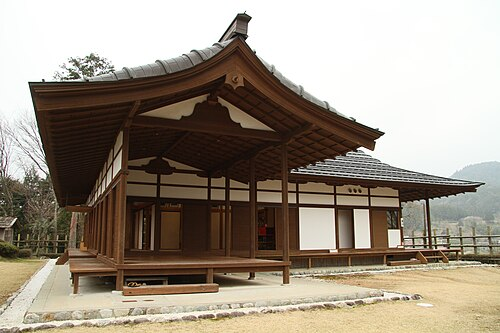
Approximately 400 years after its abandonment, in 1994, Shitara Town undertook a restoration project of the castle, creating “Tamamine Castle, a Historic Village.” However, due to the extremely limited historical materials concerning Tamamine Castle, it is not a complete restoration. Instead, it was built in the Shoin-zukuri style, reminiscent of a samurai residence of the time, while referencing other medieval castles.
Honmaru Palace
The restored Honmaru Palace is the central building of Tamamine Castle. The palace, incorporating the Shoin-zukuri style, recreates the lord’s living quarters and the area where administrative affairs were conducted.
Inside the palace, visitors can catch a glimpse of the lifestyle of a samurai during the Sengoku period. Tatami-floored rooms, alcoves, shoji screens, and other architectural elements of the time are faithfully reproduced, conveying the atmosphere of the Sengoku period to visitors.
Honmaru Otemon Gate
The Honmaru Otemon Gate, the main entrance to the castle, welcomes visitors with its imposing presence. The Otemon Gate is a crucial defensive structure, considered the “face” of the castle, and incorporates various measures to prevent enemy intrusion.
The gate’s structure follows the typical style of medieval mountain castles, and is built to be robust, anticipating actual combat. Passing through the gate, one can imagine the samurai of the Sengoku period marching out into battle through this gate.
Karametemon Gate
While the Otemon Gate is the main entrance, the Karametemon Gate is the castle’s back entrance. The Karametemon Gate was used as an emergency escape route and a supply entrance.
After the Battle of Nagashino, when Takeda Katsuyori and Suganuma Sadatada were denied entry to the castle, the existence of this Karametemon Gate evokes a sense of historical romance, as one wonders how it influenced their fate.
Spectacular Views from the Observation Deck
The observation deck of Tamamine Castle was an extremely important facility for the castle’s defense. Located at an altitude of approximately 387 meters, it offers panoramic views of the Kansagawa River and the surrounding mountains.
While the view from the observation deck served a military function in the Sengoku period (Warring States period) to monitor enemy movements, it is now a superb spot to enjoy the beautiful natural scenery of Okumikawa. You can enjoy the changing expressions of the mountains throughout the seasons: the fresh green of spring, the deep green of summer, the autumn foliage, and the snowy landscape of winter.
Enclosures and Remains
In addition to the restored structures, Tamamine Castle retains remains such as enclosures (flat areas), earthworks, and moats from a medieval mountain castle. These are valuable historical sites that convey the appearance of the castle at the time of its construction and are designated as historical sites by Shitara Town.
Enclosures are flat areas located throughout the castle grounds, used as garrisons for soldiers and storage for supplies. Walking around the site allows you to truly appreciate the defensive systems that utilize the unique terrain of mountain castles.
Basic Information and Access to Tamamine Castle
Facility Information
- Official Name: Historical Village Tamamine Castle
- Location: 9, Jō, Tamamine, Shitara-cho, Kitashitara-gun, Aichi Prefecture
- Type of Castle: Mountain Castle (Hilltop Castle)
- Year of Construction: Bunmei 2 (1470)
- Builder: Suganuma Sadanobu
- Year of Abandonment: Tenshō 10 (1582)
- Year of Restoration: Heisei 6 (1994)
- Designation: Shitara Town Designated Historic Site
Opening Hours and Fees
- Opening Hours: 9:00 AM – 4:30 PM
- Closed Days: Mondays (or the following day if Monday is a public holiday), New Year holidays
- Admission Fee: Admission: 220 yen for adults, 110 yen for elementary and junior high school students (group discounts available)
- Parking: Free parking available (approximately 20 spaces for regular cars)
Access Methods
Access by Car
- Approximately 40 minutes from Shinshiro IC on the Shin-Tomei Expressway via National Route 151
- Approximately 60 minutes from Toyokawa IC on the Tomei Expressway via National Route 151
- For car navigation, search for “Tamamine Castle” or phone number.
Access by Public Transportation
- Approximately 30 minutes by bus from Hon-Nagashino Station on the JR Iida Line, get off at the “Tamamine” bus stop, then approximately 15 minutes on foot.
- However, since the number of buses is limited, it is necessary to check the timetable in advance.
- We recommend considering taking a taxi.
Notes on Access
Tamamine Castle is located in a mountainous area, so the roads are narrow and winding in places. Especially in winter, there is a possibility of road freezing, so it is necessary to use studless tires and check the weather forecast. Also, since there are areas where cell phone signals are weak, it is recommended to check maps and access information in advance.
Tourist Spots Around Tamine Castle
Tamine Kannon (Tamineyama Koshōji Temple)
Tamine Kannon, located about a 5-minute walk from Tamine Castle, is an ancient Shingon Buddhist temple known as a sacred site for Kannon in Okumikawa. In particular, the “Tamine Dengaku” performance held every February is designated as a National Important Intangible Folk Cultural Property and is a traditional performing art with a history of approximately 1300 years.
Within the grounds of Tamine Kannon, there are also historical sites related to the Suganuma clan, and visiting them together with Tamine Castle will allow you to gain a deeper understanding of the history of this region.
Site of Dozen’s Execution and Head Mound
Near Tamine Castle are the site of the execution and head mound related to Imaizumi Dozen, a chief retainer who was executed after the Battle of Nagashino. These are historical sites that convey the harsh realities of the Sengoku period, and places where you can truly feel the tragic history of Tamamine Castle.
Nature and Hot Springs of Shitara Town
Shitara Town is blessed with the rich natural beauty of Okumikawa. Before or after visiting Tamamine Castle, we recommend hiking along the clear waters of the Kansagawa River and in the surrounding mountains, as well as relaxing at nearby hot spring facilities. Especially during the autumn foliage season, the combination of the mountain castle and the autumn leaves is beautiful, offering a photogenic landscape.
Points to Note When Visiting Tamamine Castle
Estimated Visiting Time
To visit Tamamine Castle, including the interior of the main keep and surrounding ruins, you should allow approximately 1 hour to 1 hour 30 minutes. If you want to enjoy the view from the observation deck or take photographs, we recommend adding more time.
Recommended Time to Visit
Tamamine Castle has different charms in each of the four seasons.
- Spring (March-May): Beautiful fresh greenery and pleasant weather.
- Summer (June-August): Enjoy the atmosphere of the mountain castle enveloped in deep green.
- Autumn (September-November): Stunning autumn foliage, the most popular season.
- Winter (December-February): The snow-covered mountain castle is fantastic, but be careful of icy roads.
Especially during the autumn foliage season (early to mid-November), the mountains of Okumikawa are ablaze with color, and the view from the observation deck is at its most beautiful.
Photography Tips
Tamamine Castle has many photogenic shooting spots.
- An angle capturing the main gate of the inner citadel from the front.
- A 360-degree panorama from the observation deck.
- The interior of the inner citadel’s shoin-zukuri style building.
- A distant view of the entire castle with the surrounding mountains in the background.
Taking photos from these points will allow you to capture wonderful pictures that evoke the atmosphere of the Sengoku period. ### Clothing and Items to Bring
As this is a mountain castle, we recommend the following preparations:
- Comfortable walking shoes: Sneakers or trekking shoes are ideal as there are unpaved areas.
- Comfortable clothing: There are stairs and slopes.
- Hat and sunscreen: There are areas without shade, such as observation decks.
- Drinks: Heatstroke prevention is especially necessary in summer.
- Warm clothing: It gets cold in winter and early mornings.
Cultural Value of Tamamine Castle
A Typical Example of a Medieval Mountain Castle
Tamamine Castle holds an important position in castle research as a typical example of a medieval Sengoku period mountain castle. Unlike flatland castles, its defensive system, which skillfully utilizes the mountainous terrain, demonstrates the high level of castle-building technology of the time.
The arrangement of the baileys, the design of the moats, and the location of the observation decks were all strategically calculated, indicating that it was a practical castle designed with actual combat in mind.
Telling the History of Okumikawa
Tamamine Castle is an indispensable historical site for understanding the Sengoku period in the Okumikawa region. This castle tells the history of the Tamamine Suganuma clan, who played a key role in the Yamaga Sanpo-shu (three powerful clans of Yamaga), the Battle of Nagashino and the subsequent turmoil, and the lives of local samurai.
Shitara Town is developing the area around Tamamine Castle as a “historical village,” undertaking efforts to pass on the region’s history and culture to future generations.
Significance of Restored Structures
The main keep and main gate, restored in 1994, were built based on other medieval castles due to the scarcity of historical records. However, they are valuable facilities that allow visitors to experience the atmosphere of a Sengoku period mountain castle.
While not a complete historical reconstruction, their educational value in visually understanding the architectural style and living spaces of the time is high, making them popular with many history enthusiasts and tourists.
Summary: The Charm and Significance of Visiting Tamamine Castle
Tamamine Castle is a valuable mountain castle ruin from the Sengoku period, located in Shitara Town, Aichi Prefecture. Built in 1470 by Suganuma Sadanobu, it served as the main castle for five generations of the Tamamine Suganuma clan and was central to the history of Okumikawa.
In particular, the betrayal and tragedy within the family that occurred after the Battle of Nagashino in 1575 conveys the ruthless reality of the Sengoku period. The series of events—the refusal of entry by the castle lord Suganuma Sadatada and Takeda Katsuyori, and the execution of the chief retainer Imaizumi Dozen—symbolize the harshness of power struggles and the suffering of samurai.
Currently, the main keep, main gate, rear gate, and observation platform, restored in 1994, are valuable facilities where visitors can experience the atmosphere of a Sengoku period mountain castle. From the observation deck, you can enjoy a panoramic view of the Kansagawa River and the mountains of Okumikawa, appreciating the beautiful scenery throughout the seasons.
Tamamine Castle is not merely a tourist spot; it is a “living history textbook” where you can learn about the history of the Sengoku period and reflect on the lives of the people of that time. By visiting this mountain castle nestled in the rich nature of Okumikawa, you can gain a deeper understanding of a part of Japanese history.
When you visit Shitara Town, be sure to visit Tamamine Castle and the surrounding Tamamine Kannon Temple and the site of Dozen’s execution to experience the history of Okumikawa during the Sengoku period. It is a recommended tourist spot not only for history buffs, but also for castle enthusiasts, photography lovers, and families.
