Takayama Castle (Gifu Prefecture, Takayama City) Complete Guide | The Charm of Hida’s Famous Castle Built by Kanamori Nagachika and Shiroyama Park
Takayama Castle, built on Shiroyama (elevation 686.6m) in the heart of Takayama City, Gifu Prefecture, is a famous castle that flourished as the center of Hida Province from the Sengoku period to the early Edo period. Built by Kanamori Nagachika, a renowned general who served Oda Nobunaga and Toyotomi Hideyoshi, this castle, hailed as “one of Japan’s finest mountain castles,” is now a Gifu Prefecture-designated historical site and has been developed into Shiroyama Park, a historical spot visited by many tourists.
This article comprehensively introduces useful information for visitors to Hida Takayama, including the history of Takayama Castle, the achievements of its builder Kanamori Nagachika, the castle’s structure and remains, the highlights of the current Shiroyama Park, and surrounding tourist attractions.
About Takayama Castle | A Mountain Castle that Flourished as the Center of Hida Province
Basic Information about Takayama Castle
Takayama Castle is a fortress built on Shiroyama (also known as Gagyūzan or Tomoeyama), located at the confluence of the Miyagawa and Enakogawa rivers in the southeastern part of Takayama City, Gifu Prefecture. While its elevation is 686.6m, its height from the ground is only about 100m, giving it a distinctive location that classifies it as both a hilltop castle and a mountain castle.
Overview of Takayama Castle
- Location: Hachiken-cho, Takayama City, Gifu Prefecture (present-day Shiroyama Park)
- Year of Construction: Around 1588 (Tensho 16)
- Builder: Kanamori Nagachika
- Castle Structure: Hilltop castle/Mountain castle
- Elevation: 686.6m (Relative height approximately 100m)
- Designation: Gifu Prefecture Designated Historic Site
- Main Remains: Enclosures, stone walls, earthworks, moats
Location and Strategic Value of Takayama Castle
Takayama Castle was built on a strategically important site between two rivers, the Miyagawa and Enakogawa, boasting a robust defensive system that skillfully utilized the natural terrain. It functioned as the political, economic, and cultural center of Hida Province and greatly contributed to the development of the castle town.
From Shiroyama, the Takayama Basin could be seen in its entirety, and its excellent location for monitoring the entire Hida region made it a militarily crucial base. This advantageous location is one of the reasons why it is called “one of Japan’s finest mountain castles.”
History of Takayama Castle | From Construction by Kanamori Nagachika to its Abandonment
Kanamori Nagachika and the Construction of Takayama Castle
Takayama Castle was built by Kanamori Nagachika (1524-1608), a samurai who served Oda Nobunaga and Toyotomi Hideyoshi. Nagachika was granted 33,000 koku of land in Hida Province for his achievements in Toyotomi Hideyoshi’s subjugation of Sasa Narimasa in 1585.
Initially, Nagachika resided at Masujima Castle (present-day Furukawa-cho, Hida City), but he judged that Takayama, a more strategically important location, was more suitable as the administrative center of Hida Province. He began construction of Takayama Castle around 1588.
Nagachika was also known as a master castle builder, and at Takayama Castle, he skillfully arranged defensive structures such as stone walls and moats, creating an impregnable mountain castle. Simultaneously, he developed the castle town, gathering merchants and craftsmen to lay out the town, thus establishing the foundation of Hida Takayama.
The Kanamori Clan’s Rule
The Kanamori clan ruled Hida Province for three generations, succeeding Kanamori Nagachika, Kanamori Yoshishige, and Kanamori Shigeyori. During this period, Takayama Castle functioned as the political center of Hida Province, and the castle town flourished greatly.
The Kanamori clan also made significant contributions to culture, bringing Kyoto culture such as the tea ceremony and Noh theater to Hida, and fostering the festival culture that forms the basis of the current Takayama Festival. This forms the cultural foundation of Takayama, which is known as “Little Kyoto of Hida.”
Transfer of Domain and Abandonment of Takayama Castle during the Genroku Era
In 1692 (Genroku 5), during the time of the third lord, Kanamori Yoriyoshi, the Kanamori clan was transferred to the Kaminoyama Domain in Dewa Province (present-day Kaminoyama City, Yamagata Prefecture). There are various theories regarding the reason for this transfer, but the most likely explanation is that it was part of the shogunate’s policy of making Hida a direct territory.
After the Kanamori clan’s transfer, Hida Province became a shogunate territory, and the Takayama Jinya (fortified residence) was established. Takayama Castle was demolished in 1695 (Genroku 8) by order of the shogunate, bringing its approximately 100-year history to an end. Although the castle buildings were demolished and some of the stone walls were destroyed, the basic remains such as baileys, earthworks, and moats still exist today.
Structure and Remains of Takayama Castle | Traces of the Sengoku Period Still Remaining
Castle Structure
Takayama Castle has a linear layout with the main bailey at the summit of the castle mountain, surrounded by other baileys such as the second and third baileys. By skillfully utilizing the mountain’s terrain and partitioning each bailey with moats and earthworks, a strong defensive system was constructed.
Main Enclosure Structure
- Honmaru: Located at the highest point of the castle hill, believed to have housed the keep and palace.
- Ninokuruwa: The main enclosure located northwest of the Honmaru.
- Sannomaru: A group of enclosures located further out.
- Obi-kuruma: Defensive enclosures surrounding each main enclosure.
Existing Remains
Even more than 300 years after its abandonment, many remains of Takayama Castle remain in good condition.
Stone Walls
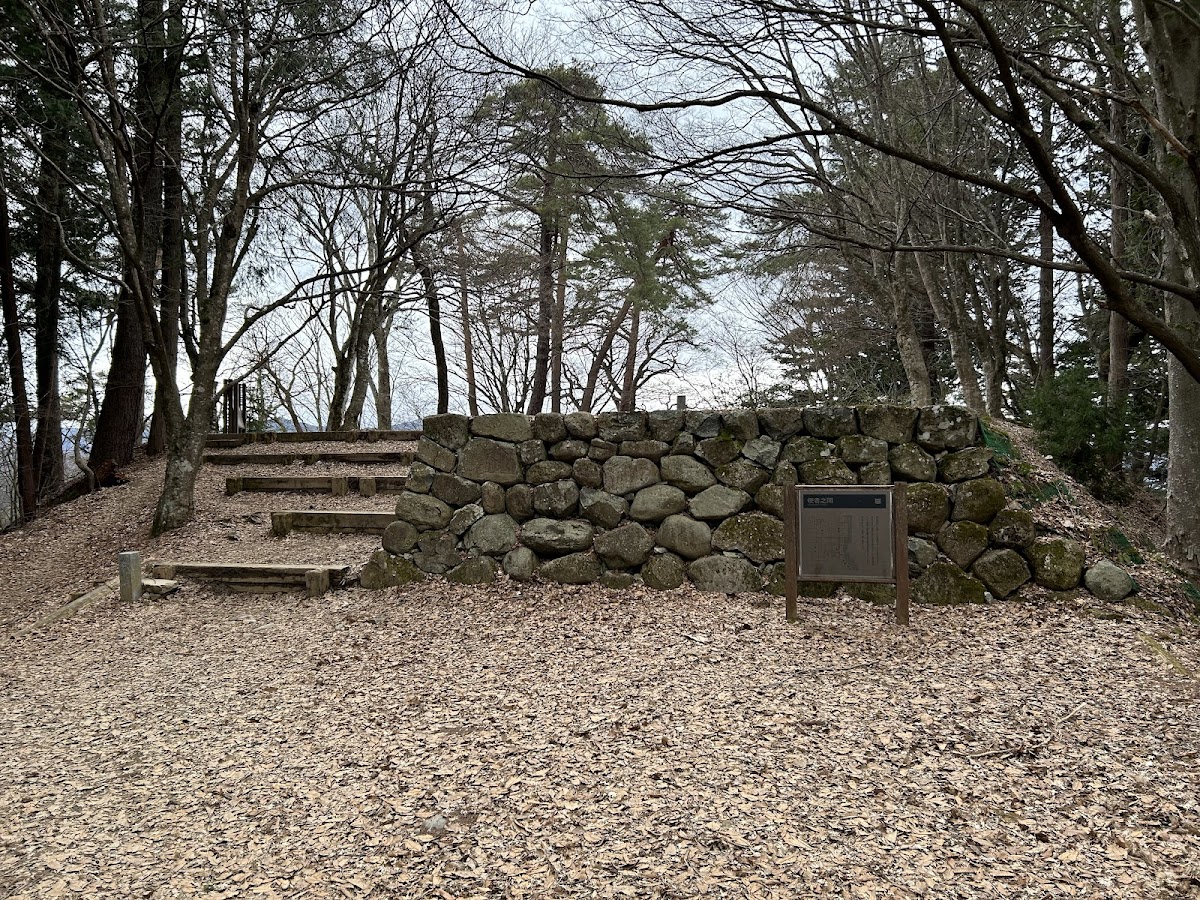
Partially remaining stone walls built during the Kanamori clan era still exist around the Honmaru and Ninokuruwa. Although partially destroyed during the castle’s abandonment, these are valuable remains that convey the stone-laying techniques of the time.
Earthworks
Earthworks surround each enclosure, and the earthworks around the Honmaru, in particular, are relatively well-preserved, reaching a height of 2-3 meters.
Moat
Moat, a defensive feature unique to mountain castles, is clearly visible between each enclosure. These moats served as an important defensive line to prevent enemy intrusion.
Enclosure
The flat areas of each enclosure, including the main enclosure (Honmaru) and the second enclosure (Ninmaru), are still clearly visible today. The Honmaru, in particular, is a vast flat area, evoking the image of the castle tower and palace that once stood there.
Archaeological Excavations and Research
The Takayama City Board of Education and others have conducted multiple archaeological excavations, unearthing building remains, well remains, and artifacts such as pottery. These investigations are gradually revealing the structure of Takayama Castle and the lifestyle of the time.
Highlights of Shiroyama Park | Enjoying Historical Walks and Nature
Overview of Shiroyama Park
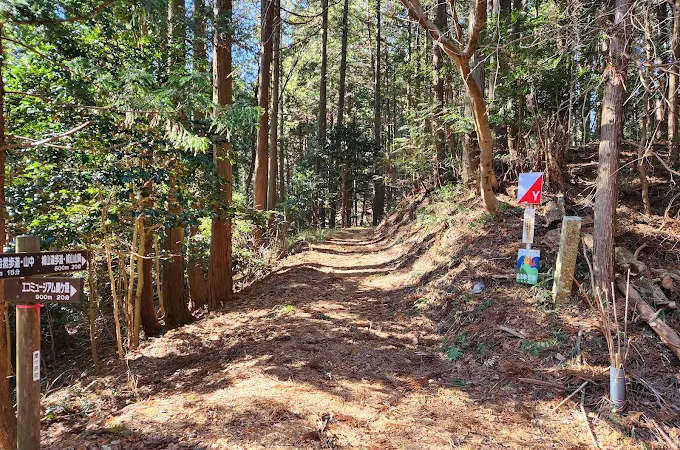
Currently, the Takayama Castle ruins have been developed into Shiroyama Park, a popular recreational area and tourist spot for citizens. The park has well-maintained walking paths, allowing visitors to easily enjoy a stroll through the castle ruins.
Basic Information about Shiroyama Park
- Location: Hachiken-cho, Takayama City, Gifu Prefecture
- Opening Hours: Always open
- Admission Fee: Free
- Parking: None (Use nearby paid parking)
- Access: Approximately 15 minutes on foot from JR Takayama Station
Observation Spot
The greatest attraction of Shiroyama Park is its view. From the main keep ruins, you can enjoy a panoramic view of Takayama city and even see the Northern Alps in the distance. The scenery is especially spectacular during the cherry blossom season in spring and the autumn foliage season.
From the observation deck, you can enjoy the beautiful landscape of Takayama Jinya, the old townscape, the Miyagawa River, and the Hida Mountains. It is likely that Kanamori Nagachika once looked down on the castle town from this spot, contemplating the governance of Hida Province.
Famous Cherry Blossom and Autumn Foliage Spot
Shiroyama Park is also known as a famous cherry blossom spot, with approximately 1,000 Somei Yoshino cherry trees blooming in spring. The best time to see them is from mid- to late April, attracting many visitors. The trees are also illuminated at night, allowing visitors to enjoy the magical sight of cherry blossoms after dark.
In autumn, the autumn foliage is beautiful, with maple and other trees changing color from late October to early November, adorning the castle ruins. The contrast between the historical remains and the autumn leaves captivates visitors.
Walking Course and Model Plan
For a leisurely stroll through Shiroyama Park, allow approximately 1 to 1.5 hours.
Recommended Walking Course
- Start from the entrance to Shiroyama Park (Takayama city side)
- Climb the walking path to the site of the third bailey (approx. 10 minutes)
- Proceed to the site of the second bailey, checking the moat along the way (approx. 10 minutes)
- Enjoy the view from the site of the main bailey (approx. 20 minutes)
- View the remains such as stone walls and earthworks (approx. 20 minutes)
- Descend via a different route (approx. 15 minutes)
The hiking trail is relatively well-maintained, but we recommend wearing comfortable shoes or clothing suitable for walking.
History of Takayama Castle Town | Townscape that Developed Alongside the Castle
Town Planning by Kanamori Nagachika
Kanamori Nagachika proceeded with the planned construction of the castle town simultaneously with the construction of Takayama Castle. He placed the samurai residences on the northwest side of the castle, and the merchant district outside of that, creating an orderly grid-like town layout.
This town layout forms the basis of the current Takayama city center, and the areas around Kami-Sannomachi, Kami-Ninomachi, and Kami-Ichinomachi, known as the “old townscape,” retain a strong resemblance to the merchant town of that time.
Takayama Jinya and the Tenryo Era
After the Kanamori clan was transferred, Hida Province became a shogunate territory, and the Takayama Jinya was established. The Takayama Jinya was a magistrate’s office/district office established by the Edo shogunate to govern directly controlled territories. While there are said to have been over 60 such offices nationwide, the Takayama Jinya is the only one whose building still exists.
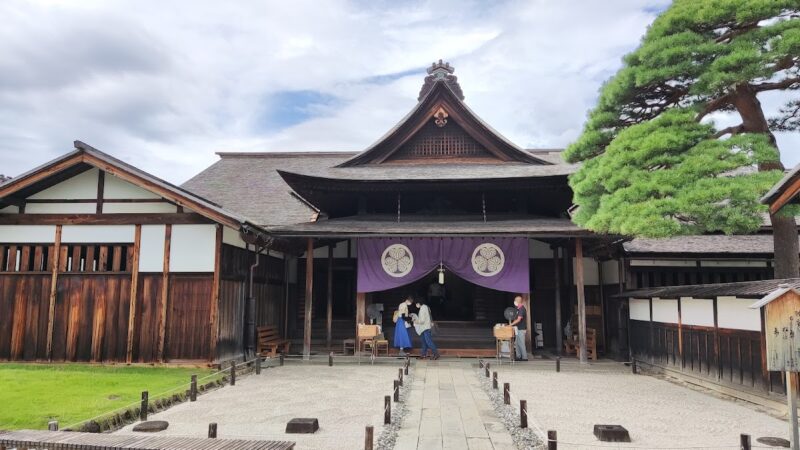
The Takayama Jinya was built on the site of the third bailey of Takayama Castle, and the relationship between the castle and the Jinya allows us to understand Takayama’s historical transformations. It is currently designated a national historical site and is open to the public.
Old Townscape and Traditional Culture
The area within Takayama Castle town that developed as a merchant town is the current “old townscape.” Underneath the eaves lined with projecting latticework, water flows, and cedar balls hang from the sake breweries, preserving the atmosphere of the Edo period.
In this region, the culture inherited from the time of the Kanamori clan, including traditional townhouse architecture, sake brewing, and the skills of Hida craftsmen, is carefully preserved. The Takayama Festival (Sanno Festival in spring and Hachiman Festival in autumn) is also a development of the festival culture encouraged by the Kanamori clan and is designated as a National Important Intangible Folk Cultural Property.
Tourist Spots Around Takayama Castle | Enjoy the Charms of Hida Takayama
Takayama Jinya
Located about a 10-minute walk from Takayama Castle, Takayama Jinya is the only remaining structure of an Edo-period magistrate’s office and district magistrate’s office. The offices, laboratories, and storehouses have been restored and preserved, allowing visitors to learn about the administrative practices of the time.
Highlights of Takayama Jinya
- Historical buildings such as the Great Hall and the Judging Room
- Beautiful Japanese garden
- Historical materials displayed in the storehouse
- Morning market (held daily in front of the Jinya)
Old Town (Sanmachi Street)
Located about a 15-minute walk from Takayama Castle, the “Old Town” is a representative tourist spot of Hida Takayama. Edo-period townhouses line the streets, and traditional craft shops, sake breweries, cafes, and restaurants line the streets.
How to Enjoy the Old Town
- Appreciating traditional townhouse architecture
- Sake tasting (brewery tour)
- Enjoying Hida beef gourmet food
- Shopping for traditional crafts (Ichii Ittobori wood carvings, Sarubobo dolls, etc.)
Takayama Festival Float Museum
This facility permanently exhibits floats actually used in the Takayama Festival. You can see the magnificent floats pulled out during the spring Sanno Festival and the autumn Hachiman Festival up close and appreciate the finest craftsmanship of Hida artisans.
Hida no Sato
Located about 10 minutes by car from Takayama city center, this open-air museum features traditional Hida houses, including gassho-zukuri style houses, that have been relocated and preserved. It’s a valuable spot to experience Hida’s lifestyle and culture.
Higashiyama Teramachi
This temple district, located east of Takayama Castle, is home to 13 temples. You can stroll along the quiet cobblestone paths and visit the historic temples. The Higashiyama walking trail is particularly popular as a walking course.
Access and Sightseeing Information for Takayama Castle
Access Methods
Access by Train
- Get off at Takayama Station on the JR Takayama Line, approximately 15 minutes on foot.
- Approximately 2 hours and 20 minutes from Nagoya Station by JR Limited Express Wide View Hida.
- Approximately 1 hour and 30 minutes from Toyama Station by JR Limited Express Wide View Hida.
Access by Car
- Approximately 10 minutes from Takayama IC on the Chubu Jukan Expressway.
- Approximately 30 minutes from Hida Kiyomi IC on the Tokai Hokuriku Expressway.
Parking Information
There is no dedicated parking lot at Shiroyama Park. We recommend using paid parking lots in Takayama city center and accessing the park on foot. Major parking lots are located around Takayama Station and the old town area.
Best Season for Sightseeing
Spring (Mid-April to May)
Shiroyama Park is bustling with cherry blossom viewers during the cherry blossom season. Also, the Spring Takayama Festival (Sanno Festival) will be held on April 14th and 15th.
Summer (June-August)
The fresh greenery is beautiful, and the cool weather makes it ideal for strolling. However, rain gear is necessary during the rainy season.
Autumn (October-November)
The autumn leaves are beautiful, and Shiroyama Park is dyed in autumn colors. The Autumn Takayama Festival (Hachiman Festival) will be held on October 9th and 10th.
Winter (December-March)
The snow-covered Takayama Castle ruins are fantastic, but be careful as the hiking trails can become slippery due to the snow.
Nearby Accommodations
Takayama City has a variety of accommodations, including inns, hotels, and guesthouses.
Recommended Areas
- Around Takayama Station: Convenient access and many business hotels
- Around the Old Town: Many traditional inns, offering a charming stay
- Hot Spring Areas: Enjoy famous hot springs with a short trip to places like Okuhida Onsenkyo
Points to Note and Manners When Visiting Takayama Castle
Clothing and Equipment
Since Shiroyama Park is a mountain castle, we recommend the following clothing and equipment for your visit:
- Footwear: Athletic shoes or trekking shoes (heels and sandals are unsuitable)
- Clothing: Comfortable clothing, appropriate warmth for the season
- Items to Bring: Drinking water, towel, rain gear (weather can change quickly)
Manners for Historical Site Preservation
Takayama Castle Ruins are a Gifu Prefecture designated historical site and a valuable cultural asset. Please observe the following manners.
- Do not damage or climb the stone walls or earthworks.
- Do not enter the ruins.
- Always take your trash with you.
- Do not collect plants or animals.
- The use of fire is strictly prohibited.
Safety Precautions
- Be careful as the ground can be slippery during and after rain.
- Be careful of snow and ice in winter.
- Avoid climbing the castle alone; climb in groups whenever possible.
- Complete your descent before sunset.
Cultural Value and Preservation Activities of Takayama Castle
Historical and Cultural Significance
Takayama Castle possesses high historical and cultural value in the following respects:
- A typical example of a mountain castle from the Sengoku period to the early Edo period: Well-preserved remains such as stone walls, earthworks, and moats.
- Kanamori Nagachika’s castle-building techniques: An example of planned castle construction by a renowned general.
- The center of Hida Province’s governance: An important base in regional history.
- Connection to the formation of the castle town: Formed the foundation of the current Takayama city area.
Efforts for preservation and utilization
The Takayama City Board of Education is leading efforts to preserve and utilize the Takayama Castle ruins.
Main initiatives
- Regular archaeological excavations and academic research
- Preservation and maintenance of remains and installation of explanatory signs
- Environmental development as Shiroyama Park
- Utilization as a tourist resource and PR activities
- Cleaning and preservation activities by local residents
Deepening knowledge of the history and culture of Hida Takayama
History of Hida Province
Hida Province is a region that has cultivated its own unique culture since ancient times. During the Nara period, Hida produced numerous skilled woodworkers known as “Hida no Takumi” (Hida Craftsmen), who contributed significantly to the construction of the capital.
During the Sengoku period (Warring States period), powerful local families such as the Miki and Anegakoji clans held sway over the region. However, with Toyotomi Hideyoshi’s unification of Japan, Kanamori Nagachika became the lord of Hida Province, establishing a unified system of rule centered around Takayama Castle.
The Tradition of Hida no Takumi
The woodworking techniques known as “Hida no Takumi” are still passed down as a traditional industry in Takayama today. It is believed that these excellent techniques were also utilized in the construction of Takayama Castle.
Throughout Takayama city, you can see the skills of Hida no Takumi in various places, including traditional crafts such as Ichii Ittobori (wood carving), the elaborate floats of the Takayama Festival, and traditional townhouse architecture.
Takayama Festival and Festival Culture
The Takayama Festival, a combination of the spring Sanno Festival (Hie Shrine) and the autumn Hachiman Festival (Sakurayama Hachimangu Shrine), is considered one of Japan’s three most beautiful festivals. The Kanamori clan’s encouragement of festivals as a cultural promotion strategy for the castle town formed the foundation of the current Takayama Festival.
The magnificent and opulent floats (yatai) are the culmination of Hida’s craftsmanship and are so beautiful they are sometimes called “moving Yomeimon Gates.”
Summary | A Journey to Experience Historical Romance at Takayama Castle
Takayama Castle, built by Kanamori Nagachika, served as the center of Hida Province and watched over the region’s history for approximately 100 years. Even more than 300 years after its abandonment, the remains of the stone walls, earthworks, and baileys remain well-preserved, conveying the atmosphere of the Sengoku period.
The current Takayama Castle ruins, now developed as Shiroyama Park, are popular not only for historical walks but also as a scenic spot for cherry blossoms and autumn leaves, and as a viewpoint offering panoramic views of Takayama city.
When visiting Hida Takayama, be sure to visit the Takayama Castle ruins and experience the grandeur of the mountain castle built by Kanamori Nagachika. Furthermore, exploring the surrounding spots closely related to Takayama Castle, such as the old town that developed as a castle town, Takayama Jinya (government office), and Takayama Festival Float Museum, will allow you to gain a deeper understanding of Hida Takayama’s history and culture.
Enjoy a journey to fully experience the historical romance that spans from the Sengoku period to the Edo period at Takayama Castle, a historical heritage site that Gifu Prefecture is proud of.