Takatenjin Castle completion guide: Tokugawa Ieyasu and Takeda’s victory dispute, history and highlights of Yamashiro castle
Is that Takatenjin Castle?
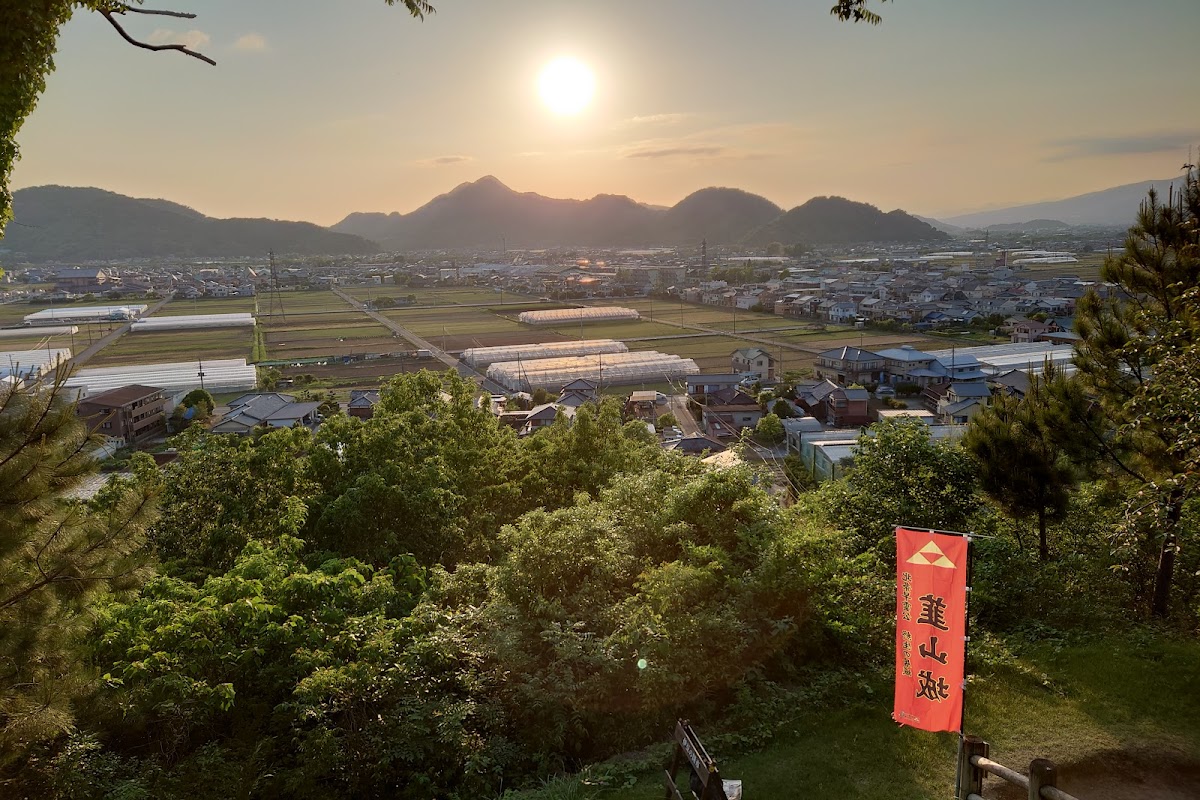
Takatenjin Castle is a mountain castle in the era of one country, and is located in the upper and lower Hijikata areas of Weichuan City.它偎在海拔132American 鹤尾山Physical construction, Zhengyo’s “restraint high heavenly god, restraint far sea” method, is restraint A key fortress in the Far Sea Province (western part of the Far Sea Province), which was also a battleground during the war between Tokugawa Ieyasu and Takeda.
Takatenjin Castle, also known as “Yamai Castle”, is located at the tip of the mountain spine extending east and south of Mt. Takatenjin Castle’s strategy was to stop, and the northern extension of Mt.
Nowadays, Takatenjin Castle has been designated as a nationally designated historic site and has been perfectly preserved. It is a representative historical tourist and scenic spot for Gyecheon City, and is a must-see for many history lovers and Japanese mountain climbing enthusiasts.
History of Takatenjin Castle
Construction origin and Imagawa era
This is a story about the time when Takatenjin Castle was built during the Genpei War (Genpei War), but there are still some documents and archaeological references that have not yet been published. The earliest known document in existence today was traced back to the 16th century, during which time a vassal of the Imagawa clan, Sukeharu Fukushima, was the lord of the castle, and the castle was occupied by the lord of the castle, Hijikata Castle.
During the Muromachi period, the Imagawa clan, the feudal lord of Iga Province, installed a general and built a castle fort, which was used as a base to invade and enrich the country. Under the reign of the Imagawa clan, the Fukushima clan was the lord of the castle, and the castle was established in the western part of the Imagawa clan.
The decline of the Imagawa clan and the rise of the Yotokugawa clan
In 1560 (Eiroku 3rd year), the Imagawa clan’s strength rapidly declined after the Imagawa clan was defeated during the war. During this period, Tokugawa Ieyasu (then known as Matsudaira Motoyasu) started an invasion of Tokugawa Province in Mikawa Province.
In 1568 (Ei 61), Tokugawa Ieyasu completely invaded the Far East and Takatenjin Castle was taken by Tokugawa Ieyasu. At this time, the lord of the castle, Yui, was a vassal of the Imagawa clan, a vassal of the Tokkawa clan, and the lord of the castle, Ogasawara Chotada Tototo, was in charge of the castle. According to Tokugawa Ieyasu, Takatenjin Castle’s status is important, and it is a key point in the Far Sea Province, which is also the defensive fortress of the Takeda clan in the west.
Takatenjin Castle Battle (1574)
In 1574 (Tensho 2), Kai Province’s Takeda army attacked Takatenjin Castle, historically known as Takatenjin Castle Battle.
Takeda’s victory was due to his father, Takeda Shingen’s title as head of the household, and his military activities and military power. Takatenjin Castle was located in the heart of the Tokugawa shogunate, and was the most important fortress in the city. Takeda won the victory and conquered this castle, and Tokugawa Ieyasu, the commander of the castle, created a heavy attack.
At that time, the lord of Takatenjin Castle was Chotada Ogasawara, and the number of guardians was approximately 1,000. Under Sobin, Takeda’s victory ended with a multi-branch army with many people, and the attack on Tenjin Castle. Tokugawa Ieyasu strengthened his strength, but the Takeda army was unable to attack.
As the battle continued, Takatenjin Castle fell within a few days. The Takeda army surrendered to Ogasawara Nagatada, who was the guardian of the castle, and the Takeda family surrendered to Takatenjin Castle. When Ieyasu Tokugawa came here, Ieyasu Tokugawa’s visit was a major attack, and the Tokugawa family had great prestige over the country.
Takeda’s victory was appointed as the lord of Abe Motoshin, the commander of Takatenjin Castle, and the land of the Tokugawa family in Fukairi.
Ieyasu Tokugawa’s construction of a castle and pond against the opposition
The disappearance of the Empress of Takatenjin Castle and the death of Tokugawa Ieyasu were immediately followed by a trial. In addition to the deep knowledge of Takeda’s strong military performance, the reason for this is how to think about the long-distance angle of the castle pond.
In 1575 (Tensho 3), the Takeda army had a great victory during the war, and the Takeda clan’s strength began to rise and fall. Tokugawa Ieyasu had an opportunity to visit the residence, and to prepare for the return of Takatenjin Castle.
Ieyasu’s strategy and non-direct attack meant that the castle was in trouble. From 1578 (6th year of Tensho) to 1580 (8th year of Tensho), Ieyasu completed the construction of the surrounding area of Takatenjin Castle, Rokuza Castle (Rokujo), completed the formation of one of the castle walls, and completed the cutting of the perimeter of Takatenjin Castle.
Rokuza Castle Bonyoshita:
- Yokohama Castle: The main fortress on the south side of Iyu Gao Tenjin Castle
- Mitsuiyama Castle: East and north side of Takatenjin Castle
- Shoji Flower Castle: Futon Takatenjin Castle northwest side
- Nakamura Castle: East side of Takatenjin Castle
- Higashine Castle: West side of Takatenjin Castle
- Ogasayama Castle: Futon Takatenjin Castle north side
The defender of Takatenjin Castle is completely isolated. Takeda’s success was greatly improved, but since the collision between Yuyu and Shintada, there were internal problems within the castle, and other effective assistance was provided. ### Second Takatenjin Castle Battle and Fall (1581)
In about 1580 (9th year of Tensho), Takatenjin Castle’s food supply short list was the chief of staff. The Tokugawa Army’s secret attack was cut off and the security lines outside the castle were cut off, and the barbarians spread inside the castle.
The castle lord, Motoshin Tako, sought support from Takeda for victory, but under the power of the Takeda clan and the Tokugawa alliance, they were powerless to provide effective support. Takeda’s victory over Tenjin Castle.
On the night of March 22, 1581 (Tensho 9), Takatenjin Castle fell. Motonobu Abe’s total number was approximately 700, and the number of Takeda warriors raised was the last to be fought, but the number of soldiers was estimated to be the highest in Tokugawa Army. Motonobu Abe himself died during the war, and Takatenjin Castle was destroyed by Tokugawa Ieyasu.
The fall of Takatenjin Castle resulted in a heavy attack and the prestige of the Takeda clan. There are four rumors about “Takeda’s victory and defeat as an ally.” One year after the fall of Takatenjin Castle, in March 1582 (10th year of Tensho), Takeda clan troops invaded Tokugawa’s army and died.
Fallen castle
The administration of Tokugawa Ieyasu Shige’s new return to Takatenjin Castle, however, there were no other castles to protect. The Takeda clan’s prestige was suddenly lifted, and Takatenjin Castle’s war strategy fell, resulting in the demand for Yamashiro’s large amount of manpower and physical strength. Inko, Ieyasu decided to release high-pitched Tenjin Castle.
By 1582 (10th year of Tensho), the height of Takatenjin Castle was at its base, and the function of the castle fort disappeared. After this, during the Edo era, Takatenjin Castle was rebuilt, and was finally buried in the middle of nature.
Special features of Takatenjin Castle
Utilization of topography and construction
Since Takatenjin Castle, it has been nicknamed `坚無摧'' and `the most solid fortress in the East Sea region”, and its clever layout in U.S.A. It has been fully utilized by Mt. Zionwei (132 meters in height), has a landform similar to that of the cliffs, and has been reinforced with artificial defenses and natural barriers, and has become the pinnacle of fort construction technology at the time.
From the fort to the main tower, the distance from east to west is approximately 500 meters, and the distance from north to south is 300 meters. Due to the unique terrain, the mountains, mountains and valleys of the mountains and valleys, the attackers can continue to set up difficult obstacles.
“狗归猴归”险隘
The extension of the fort and the narrowing of the mountain range outside the fort are also known as “Dog’s Eye”. This name reflects the topography of the slope and the steep slope, leading to the dog and the monkey walking in the city.
In fact, the narrowing of the spine in this mountain, and the fact that it is a mountain in a big place, has been promoted by a large army. When the defense comes here, there is only a small amount of soldiers in demand, and the number of soldiers is available.
Main venue and other locations
The central part of Takatenjin Castle is the main castle grounds (honmaru), where the owner resides and where important defensive facilities are located. Other shells, such as the second shell, the third shell, and the main shell with a concentric array, forming a multilayer defense system.
Each time, the ground construction and trenches were opened between the two camps, ensuring that one camp was attacked, and the second camp was also capable of providing effective defense. In addition, the transportation route between the fields is also carefully designed, the reinforcement is strengthened, and the attacker’s progress is hindered.
Mizui Yodonsui
One of the weak points of mountain forts is the water source, but Taka Tenjin Castle has a large water well. However, the ultimate cause of the fall of the fortress is the end of water, and the long-term attack is limited.
Takatenjin Castle Ruins
Main castle ruins
The ruins of the main castle are now perfectly preserved, and are the core of Takatenjin Castle, as well as the most important scenic spot. The main city can be seen from far away in Weichuan City and Yuanzhouhai.
In the ruins of the main castle, it is possible to see the history of Hijikata construction, and it is possible to imagine the scale of defense construction in the past. In addition to this, the foundation stone and pillars of the earth have been laid down since then.
Hijikata process
It is understood that the construction of Kawa Hijikata’s process for each of the various castle forts is an important monument in the defense system of Takatenjin Castle. In particular, the idea behind the construction of a separated main castle is that the construction of a separate main castle is currently being advanced in civil engineering engineering technology.
Unfortunately, some parts of Hijikata’s process were eroded by the wind and rain, but many parts were perfectly preserved.
Mizui Ryokei
The fortress in the castle was seen in the ruins. This is the lifeline of the fort guard, and it is also an important development during the battle. Nowadays, if you look at the water well, you can still see it clearly, and if you go to the same place in general, the listener can feel the truth about the water source in the mountain fortress.
Stone monument Japanese information tile
A stone monument with information about the construction of the castle fort, the history of Takatakatenjin Castle, and a memorial to the fall of the castle. If you are visiting the same place at the same time, you will receive some trivial information.
Of course, it is a stone monument commemorating Motonobu Motonobu and his last military commander, an important memorial monument to the troupe, and a demonstration of the life style of samurai during the war period.
scenery
A magnificent view of the ruins of Tenjin Castle. Mt.Fuji in sunny weather. The east side is the beautiful scenery of Gecheon City and its villages, the south side is the Jianju Sea, the west side is Ogasayama, and a 360-degree panoramic view.
As you can see, this is a beautiful scenery, and the height of Tianjin Castle is a strategic strategic point in the Far East.
Takatenjin Castle Ruins Transportation Guide
Point
Towards Kamimifangmine, Jinghuan, Weichuan City
Public transportation
Departure from JR Eichuan Station
- Bashi: Justline “ten directions” sitting at station 2, North Exit of Juwei River Station, walking distance approximately 20 minutes.
- Exit Tax Car: Take the exit car from the south exit of Yuweichuan Station and sit at the exit taxi (approx. 15 minutes, car cost: 2,500 yen).
Public transportation team limited, pre-construction timetable.节假日类次减小,请请证识别 Beware.
Self-drive route
Departing from Tomei Expressway
- Departing from the East/Mei-Chun Interchange Road, approximately 15 minutes by car
- National Highway No. 1 line, returning to the northbound route on Route 37 (Yichuan East Line)
- Place a sign indicating the front and back gate or the front gate of the parking lot.
Stop
Takatenjin Castle will be located in the parking lot, and after the separation, the gate will be next to the main gate. Each stop can accommodate 10 standard cars. The tour will be held at the end of the period, and the construction will be completed soon.
Precautions for viewing
- The road in the fort is in good condition, but the mountain road is well designed, and the construction is suitable for wearing.
- About 20-30 minutes before leaving the castle tower. As a result, visit the castle fortress site, and visit the castle for about 2-3 hours.
- Summer construction water supply for mosquitoes and drinking water.
- There is a washroom near the parking lot, but it is inside the castle fort, and it is used before transportation.
Takatenjin Castle ruins walking route
Takatianjin Castle does not remain here, but it is also a hot gate for historical travelers, and it is also a temple for those who love walking. The route is safe and easy to walk, so if you are a beginner, you can also take advantage of the natural scenery.
Recommended route
Travel route (accounting time: about 2 hours)
- Parking area near the back gate → Stopping area near the back gate → Nishinomaru → Tenshu Gate → Ninomaru → Ote Gate → Stopping area near the main gate
This is the main scenic spot of the city fortress on the high-efficiency road, which is very suitable for first-time visitors.
Applicable physical strength improvement route (account time: 3-4 hours)
- Back gate parking lot → Tourist gate → Dog route, Huzi route → Main gate → Main gate parking lot
This route requires a deeper exploration of the castle grounds, but he himself has physical ability and is a religious visitor.
Zhoujian scenic spot
Keigawa Castle
It is about a 20-minute train ride from Ogawa Castle to Takatenjin Castle, and it is Japan’s first fully built wooden castle tower. Yodaka Tenjin Castle is not the same, and the construction of the castle fort is diverse.
Yokohama Castle Ruins
You can visit the ruins of the castle on the side, which is Tokugawa Ieyasu’s attack on Takatenjin Castle and the six castles in Ikenoichi. While I was building the site, I also visited the local area, so I would like to go deeper into the history of Takatenjin Castle.
Eikawa City Ninomaru Beauty Museum
This museum of art is located in Yucheon City Park, where the main exhibits are contemporary Japanese paintings. After reading the complete history, there will be no interruptions in this work, and the body and mind will be free.
The best season to visit Tenjin Castle
Takatenjin Castle ruins have been open for many years, but each season has its own unique charm.
Spring (March to May)
The season of blooming, the colors of the fortress surrounding the castle, the beauty and victory. The natural scenery is also a pleasure for everyone, and the weather is very suitable for this trip.
Autumn (October to November)
Autumn is the best season for visiting Tenjin Castle, with beautiful red leaves and warm weather. The scenery in early November and mid-November is especially confusing.
Summer (June to August)
The castle was completely abandoned, and the fortress was in the forest. However, the temperature is high, the mosquito insects are high, and the demand is well prepared.
Winter season (December to February)
The number of visitors is small, and the feeling of calmness and calmness in history is overwhelming. The air is fresh, the envoy has completed the winter season, and the beautiful scenery has been completed.
Takatenjin Castle’s cultural center
Takatenjin Castle Ruins was designated as a national historical monument in 1975. It is a rare historical site of mountain castle construction during the war, which has been perfectly preserved, and has been revered in the academic world.
In recent years, Oikawa City has completed the comprehensive improvement of roads, and the security information label has been included in the internal protection measures. The local volunteers also participated in the Qing Dynasty Japanese Guide’s work, and the mission area was a rare sight of the citizens.
AR/VR Item
The content of Oikawa City’s correct location is AR (增强现实) and VR (增强现实), which utilizes the latest technology for viewing and uses the latest technology to present the appearance of Takatenjin Castle in its heyday. This is how you plan to use the military to transport intelligent machines, watch the construction of ancient Japanese castle soldiers and soldiers, create a new kind of historical education, travel and travel promotion methods, and take notes on how to move forward.
Historical influences of Takatenjin Castle
Takatenjin Castle’s battle is different from the one in the battle, and the castle’s fortress is the restraint of the battle, and the history of the city’s castle continues to live and has a deep impact.
Prelude to the decline of the Takeda clan
The victory of the First Takatenjin Castle Battle was achieved by Takeda’s victory and honor, and his father, Takeda Shingen’s military accomplishment. However, since the defeat of the Second Takatenjin Castle, the defenders of the castle had lost their trust, and the Takeda vassals who had been introduced to the castle had lost their trust.
This incident was the key turning point in the decline of the Takeda family, and it can be seen as the beginning of the decline of the Takeda family. Takatenjin Castle was taken down, Takeda vassals rebelled, and a year later, the Takeda clan was completely destroyed.
The growth of Ieyasu Tokugawa
On the other hand, the words of Ieyasu Tokugawa, Takatenjin Castle’s battle is the first important military training, and the development of other works as a military strategist. During the defeat of the first Takatenjin Castle, Akechi Ieyasu chose the land and used a non-direct offensive strategy, successfully implemented the castle for many years, and later arrived at a Japanese road.
overview
Takatenjin Castle, Zheng Rui “Restraining High Heavens God, Immediately restraining Far Sea” is the phrase that is said, this is the most important point in the Far Sea country during the time of the war. The history of this castle fort was full of battles, and the feudal lords of the time of the war, Tokugawa Ieyasu and Takeda, were victorious.
Immediately, the messenger was unable to see the fort, and the last thing he could do was escape from the fort, and the fortress was a stratagem. This is the history of history, determined victory is not the power of the military, and the strategy is strong.
Today, the ruins of Takatenjin Castle sit quietly and peacefully, embracing Gunsan’s surroundings, with traces of ancient Japan’s brilliance. Castles, castles, rivers, etc., magnificent scenery, visitors who visit Buddha in the country and time, feel the spirit of the time.
If you are a history lover, you can just enjoy walking and walking around nature. When we visited Gyeongcheon City, we had to visit the ancient mountain castle fort. Experience the experience of forgetting the first time when the commander was in charge, feel the country’s historical atmosphere, and think about Tokugawa Ieyasu’s victory at the time.