
Takamine Castle: An explanation of the history and highlights of Yamashiro, the last castle of the Ouchi clan
Konomine Castle (Konomine-jo) is located at Konomine-jo, Shangyun-ling Komine, Yamaguchi City, 338 meters of sea, and a mountain of Konomine-jo. This castle was built by the last landlord of the Ouchi clan, Chief Ouchi, and is currently designated as a national historical monument. Takamine Castle has many different methods of copying, such as Komine Castle, Mt. Komine, Mt. Komine, Takamine Castle, etc., are typical examples of mountain castles during the time of the war, and are also important historical monuments of the decline and decline of the Ouchi clan, and are deeply loved by history lovers and Japanese mountaineers.
History of Takayoshi Castle
Construction background and Chief Ouchi
The history of Takayama Castle, the history of the war, the decisions made at the time of the war, and the survival and death of the Ouchi clan. Ouchi was a younger brother of the feudal lord of the country after the war, Otomo (Sorin). In 1551 (Tenbun 20), the vassal of Suee Takafusa (Harukata) was killed by the lord Ouchi Yoshitaka. After a long period of time, he became the owner of the Etakafusa clan and the head of the Ouchi clan.
However, in October 1555 (1st year of Koji), during the “Ushima no Tate”, Suee Harukata and Mori Motonari passed away, and the Ouchi clan’s strength rapidly declined. After the invasion of the Mori clan, Yoshinaga Yu (1556-1557) built and built Takamine Castle in Kono-mine, Yamaguchi-cho, overlooking the area.
The fall of Takamine Castle and the Mori clan’s arrangement
The construction of Takamine Castle was progressing rapidly, but the Mouri Army entered Yamaguchi before its construction was completed. In April 1557 (3rd year of Koji), Mouri Motonari was attacked and the Mori army attacked Yamaguchi. Yoshinaga Ouchi escaped from Takamine Castle, and fled to Hirosan Castle in the Changminkoku. Afterwards, Yoshinaga was in trouble, and the end of the Ouchi clan’s final self-destruction, which led to the expansion of western Japan.
The Mori clan gained control of Takamine Castle, an important position in the Suo Province, and built the castle as it progressed. Tsuneyoshi Ichikawa was appointed as the lord of the castle, and the establishment of Takayama Castle was established by the Mori clan. It was during the Mori era that the capital was built and the stone burial mound was visible.
Strike direction
Takayama Castle was an important military strategic location in Suo Province under the Mori clan, but its status changed during the Edo period. In 1600, during the Battle of Kanbara, the Mori clan joined the Western Army and the territory was significantly reduced. In 1615 (the first year of the Genna era), the Tokugawa shogunate issued the “one clan, one castle” order, which required each clan to remove castles and ponds owned by people other than the main clan.
Yuyu Mori clan’s residence changed to Hagi Castle, and Takayama Castle’s fate was this face. The history of Takamine Castle was completed in 1638 (Kane’aga 15) and lasted approximately 80 years. After this, Takamine Castle was closed for a long time, and since then it has remained quiet and quiet.
Takamine Castle’s organization and distribution office
Yamashiro Features
Takamine Castle is a typical mountain castle built by the troupe. The main castle (honmaru) is the highest point, the outer castle (car) extends along the mountain in all four directions, and the formation of a linear pattern.
The fortifications on the plains of Yojianyu are different, and the special feature of mountain fortresses is to use the advanced terrain for defense. Takamine Joya skillfully used the natural terrain of Mt. Takamine, and the envoys were able to conquer it. Its geographical location is excellent, it has a bird’s-eye view of Yamaguchi Town, it is equipped with military equipment, and it is also a defensive outpost (emergency evacuation center) where the Ouchi clan (Yamaguchi City) resides.
Main enclosure (main enclosure)
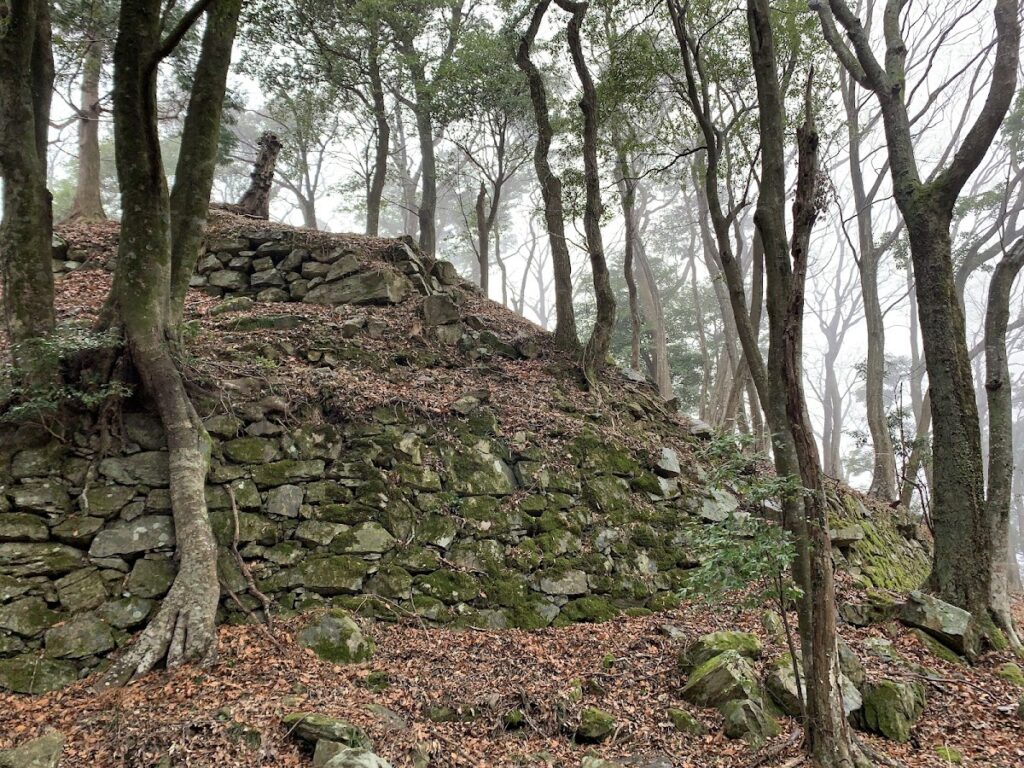
The main enclosure is the core of Takamine Castle, and the highest point on the north side of Mt. Iyu. The two stone tombs are well preserved, the southern tomb and the northern tomb are particularly well preserved. There is a stone wall on the south side of the main circle, which is a part of the primitive road that can be seen today.
Due to the flat area of the castle, the fort in the mountainous area is usually protected by the completeness of the castle, and the size of the main castle is relatively small. In this case, people should be aware of the power of the castle, and the construction of the land is under the direction of the master and his vassals, and the place where the property is located.
Features of Seishin
The highlight of Takamine Castle is its stone burial mound, which was built during the time of the Mori clan. The work is currently on display at a rare archaeological site of stonemasonry techniques from the current era of the War and the early Jiang Dynasty, and has important historical significance.
The stone burial mounds are distributed in various places, the main burial mounds are the main castle tombs, and the construction of the famous “nozurazumi” technique is used. Wildflowers are a variety of multi-processed natural stone burial methods, which are common techniques used in the construction of stone tombs during the time of the Empire. The size of the stone gap is large, the drainage performance is good, and it is not easy to break.
Castle Cloth Bureau
Extending in all directions along the four sides of the mountain along the Tado Castle. In this case, the construction of the castle is one way to defend, protect the castle, and the structure is designed to prevent the enemy from advancing. The structure of each road castle, capital and Yishan spine is a highly effective defense system.
The construction of the castle, the construction of the trench (the river that traversed the mountain and the river), and the construction of the earth, and the current topographical ups and downs, and the function of the service have been a long time ago.
Takayama Castle Ryoten
石墙や石阶
When visiting Gaoling Castle, the main castle’s stone tomb is a must-visit place. In fact, it is a stone tomb from the south, perfectly preserved, and the stonework techniques of the country’s era were observed by messengers from a distance. The original appearance of Ishi Aya is unknown, and the imaginary castle lord Japanese samurai warriors are selected, but it is a historical romantic breath that has not been forgotten.
The impression of the northern stone coffins and the rulers is profound; the confirmation of the stone citadels in the main castles is an important point in the development of Mori clan generals and Takayama castles. A look at the construction method, the stone materials used in the castle, and the time-honored fort construction techniques used by the generals.
Yumoto Castle View
A panoramic view of Yamaguchi City and the castle grounds. A sunny day in Hikori, a magnificent view of the fundus, the ruins of the Ouchi clan’s residence, a cityscape of Yamaguchi City, and a truly spectacular view of the Gunzan capital. This is one of the reasons why Takamine Castle was selected as a fortress.
At sunset, the scenery is especially lost, the setting sun is setting in the west, and the Yamaguchi Basin is illuminated. However, after the sun sets, the sky becomes brighter and darker, so it’s time to be careful during the mountain hours.
Memories of castle defense construction
Walk along the mountain path along the mountain, one of the pleasures is to travel to the castle, such as the flat ground, the construction of the castle river. Understood the layout of Yamashiro, you understood the construction techniques and defense wisdom of the war period.
During the walk, we took a detailed look at the topographical ups and downs, and took note of the fortifications and clever use of the natural terrain. The shape of Shanpo and Mountain spine in Shangyeong was completed by defensive construction.
YoŌuchi clan’s connection system
Takamine Castle, Ouchi family residence site, Chikuyama residence site, and Ryunji Temple site were jointly established as “Ouchi clan residence”, which was also designated as a national historical site. All of us visited the historical site of Sho Takamine Castle and the history of the Ouchi clan’s history and Japanese culture.
The reason for this is that the Ouchi family’s residence is located in Yamaguchi City, and Takamine Castle can be seen from above. The story is a scene of the peacetime period when the mother was living in a residence in Yoyama Castle, and the drama was played out in a scene reminiscent of the first episode.
Takamine Castle Transportation Guide
Transportation method
The main road leading to Takamine Castle was the departure from Mokko Shrine and the mountain climbing along the route. Mokko Shrine has a car wash area (washing area used before construction, washing area lost along the way up Mt. Eiwa).
As a public transportation tool, you can take the “City Health Center” station car in the morning, and it takes about 35 minutes to reach Renmokuji Shrine. Etsuya was able to leave the JR Yamaguchi station in front of the taxi.
When you go to the front of the mountain, go north to National Highway No. 9 in the center of Yamaguchi City, and go to the signboard of the shrine. Parking is free, but the number of cars is limited, so this construction will reach its end quickly.
Climbing route and trip time
It takes about 50 to 60 minutes to walk to Yumoku Shrine before going to Takamine Castle. However, the goal is to climb the mountain, and the demand for this is constant.
Walking route special points:
- First half: Shangpo road step of Sangbao Pingping. The first side of the Omokuji Shrine was completed, and the first attempt was completed.
- Middle level: After arriving at Mt., the road is slightly complicated. Caution: Wet runway surface with falling leaves.
- Later and a half: When the main castle is approaching, the beginning of the opening of the stone fortification is revealed. The history of history is so rich that the story is so exhausting that the reader climbs into oblivion.
Descending the mountain and returning along the normal route, the approximate demand is 40 minutes.
Visit Takamine Castle Precautions
When visiting Takamine Castle, please note the following items:
Kimono clothing:
- Optional clothing and anti-slip mountaineering shoes.
- Warm clothing, rain gear, and other equipment suitable for seasonal use.
- Must carry drinking water (on the mountain there is an automatic transportation machine or water source).
- In the summer, a hat and a Japanese wool cloth are a must.
Safety measures:
- Please be careful when walking on the ground in the grass.There may be snakes and other snakes that may be present.
- After sunset, the sky was clear and the construction started at 3 points in the afternoon.
- Climbing alone without exhaustion, can be accompanied by exhaustion.
- Hand signals are compatible with traffic, however, safety is observed, and traffic planning is based on the construction.
Courtesy:
- You are here in the history of the country, and you should be aware of the cultural relics and the number of people who have run the country.
- It is necessary to take part in the race.
- Prohibited fire.
Route of choice: Walking route to and from Uyamaguchi Grand Shrine
Excluding Mokuto Shrine, this is the walking route to the Yamaguchi Daijinja Shrine. The length of the road is slightly different, but the scenery along the way is not the same. Physically skilled visitors can travel back and forth without any choice.
Nearby view point
Ouchi domain residence site (Tatsufukuji Temple)
This is the residence of the Ouchi clan during the peace era, and the outer castle of Yotakamine Castle. As of now, this village is a monument to Longfu Temple, a garden park and a pond. It’s an important historical site, so we can get a glimpse of the Ouchi clan’s glitter, build it, and visit Takamine Castle.
Glass Road Five-storied Pagoda
The five-storied pagoda on the Glass Road is a representative sightseeing spot in Yamaguchi City, and is closely connected to the Yo-Ouchi clan. The five-storied pagoda is designated as a national treasure, one of Japan’s three great pagodas, and its elegant design is worth a visit. It takes 15 minutes to drive to Gaofeng Castle.
Yamaguchi City History and Folklore Museum
Please read the details of Takamine Castle, visit the Ouchi clan, and visit the Yamaguchi City Museum of History and Folklore. I understand the history of Takamine Castle and the culture of the Ouchi clan. Visit the museum where you can climb the mountain and visit the castle.
Castle Shrine
Joko Shrine is the starting point of the mountain climbing route, and is a shrine with an eternal history. The environment here is clean and quiet, making it an ideal place to visit before or after climbing a mountain. Outside of this, there is also a park, where you can take a break.
Takayama Castle Yoyamaguchi 100 Famous Mountains
The peak of Mt. Takayama Castle is one of the 100 famous mountains at Yamaguchi. The distance was 338 meters, the traffic was low, but the distance was near Yamaguchi City, which made it a hot mountain climbing area, and transportation was also very convenient.
The charm of Mt.Feng is here, and you can also visit the castle fortress and enjoy the experience of mountain climbing, which is also a pleasure for those who love history and enjoy the history of the city. At the same time as the four seasons change, the history of the country’s history, and the experience of a truly luxurious mountain climbing experience.
The best time to visit Gaoyu Castle
Gaoyu City has been open throughout the year, but each season has its own unique charm.
Spring season (March-May): The ideal season is green, natural, and natural. When the cherry blossoms are in full bloom, you can enjoy the beautiful view of the cherry blossoms in Yamaguchi City.
Summer (June-August): The green leaves are clear, the leaves are cool, the mosquitoes are abundant, the air is cool and the tide is damp, and the structure is clear and the rocks are clear. Please be careful to prevent heat and temperature drop.
Autumn (September-November): Autumn leaves are very colorful, and this is the best season for rock climbing. It’s a warm experience, and it’s a different experience when you wear it. However, be careful, the ground may be wet and slippery, so be careful.
Winter (December-February): Fresh air, beautiful scenery. Unfortunately, there was little snowfall, but the demand for cold weather measures was taken. Hirakatsu Haya, the rational and economical process.
History of Gaoyu Castle
Gaoyu City’s historical meaning is never far removed from the original site of the castle fortress.
Castle fort of the decline of the Ouchi clan
Worked in the western part of Japan, a feudal lord in the period of prosperity – the Ouchi clan’s last establishment, the conquest of Takamiya Castle, the brilliant rise and fall of the Ouchi clan. The construction work was not yet completed, and the Ouchi clan quickly declined.
Mori Clan Suo National Base
According to the Mori clan, Takayama Castle was an important military base in Suo Province. The castle’s repair department visited the castle, and the Mouri clan’s high-ranking castle was under heavy scrutiny.
Treasure historical materials for research on mountain castles from the time of war
Takamine Castle is the source of the mountain castle’s treasures, and the site has been completely preserved and the construction of the mountain castle was completed in the early Edo period. It is an important historical site for the research and performance of stone burial techniques.
Overview: Takamine Castle’s charm
Takamine Castle was a mountain castle built by the late Ouchi clan head of the Ouchi clan against the Mori clan, and was later established as a Suo province under the control of the Mori clan. 338 U.S. River Peak, a typical mountain fortress, has been preserved to this day, with perfectly preserved stone walls, Japanese castle tombs, etc.
This site has been designated as a national historical castle fort, which has important historical features, and is also a truly beautiful walking destination, allowing visitors to take in the panoramic view of Yamaguchi City that changes over the four seasons. It takes about 50 minutes to get to Takamine Castle, convenient transportation, and this is one of the reasons why visitors love it so much.
Visit Takamine Castle, experience the fierce battles between the Ouchi clan and the Yomori clan during the country’s era, understand the techniques of building mountain castles, and delve deeper into the history and culture of Yamaguchi. This is a must-visit place for people who love history, and an ideal destination for people who love hiking and hiking.
Arriving at Yamaguchi, it takes a certain amount of climbing to get to Takamine Castle, overlooking the magnificent scenery of the mountain mouth basin, and feeling the land of the era of war. In addition, you can visit other historical sites nearby, such as the five-storied pagoda on Glass Light Road, where the Ouchi clan’s residence is located, and you can go deeper into Yamaguchi’s historical past.
