Shimizuyama Castle (Shiga Prefecture) Complete Guide: History and Highlights of the Largest Mountain Castle on the West Shore
Overview
Shimizuyama Castle is a medieval mountain castle located in Kumanomoto, Shin-Asahi-cho, Takashima City, Shiga Prefecture. Known as the largest castle in the Kosei region on the western shore of Lake Biwa, it was designated a National Historic Site on February 27, 2004 (Heisei 16) as the “Shimizuyama Castle Site.”
Built on the summit of Mt. Shimizuyama, approximately 300 meters above sea level, this castle played an important role from the 13th century to the Sengoku period as the base of the Takashima clan, a branch of the Omi Genji Sasaki clan. Even today, remnants such as earthworks, ridged trenches, and stone walls remain in good condition, making it a valuable historical heritage site for understanding the structure of medieval mountain castles.
From the castle ruins, you can enjoy a panoramic view of Lake Biwa, and on clear days, you can even see as far as the eastern shore of the lake – a truly spectacular viewpoint.
History of Shimizu-yama Castle
Construction and the Rise of the Takashima Clan
Shimizu-yama Castle is said to have been built in 1235 by Sasaki Takanobu. Takanobu was a member of the prestigious Sasaki clan of the Omi Genji and the founder of the Takashima clan, which was based in Takashima County.
In the early 13th century, seven branches of the Sasaki clan, known as the “Seven Heads of Takashima,” were vying for power in Takashima County. Among them, the Takashima (Sasaki) Etchu family held the position of the head family, and the Shimizu-yama Castle ruins served as their base.
Developments in the Sengoku Period
With the arrival of the Sengoku period, Shimizu-yama Castle increased in strategic value as an important base in the western Lake Biwa region. The Takashima clan maintained their power by controlling the Lake Biwa water transport system and securing a strategic transportation hub connecting Kyoto and the Hokuriku region.
The castle’s structure underwent repeated renovations over time, with its defensive capabilities significantly strengthened, particularly during the Sengoku period. The radial layout of the castle walls and the ridged dry moats described later are thought to be the result of these renovations.
Decline and Abandonment
During the Tensho era (1573-1592), with the expansion of Oda Nobunaga’s power, the Takashima clan’s influence gradually declined. Ultimately, it is estimated that the Takashima clan fell into decline during the time of Toyotomi Hideyoshi, and Shimizu-yama Castle was abandoned.
Castle Structure and Layout
Overall Composition
The Shimizu-yama Castle site consists of three areas: the “Shimizu-yama Castle Ruins” at the mountaintop, the “Shimizu-yama Ruins (Shimizu-dera Temple and Residence Site)” on the mountainside, and the “Hondo-dani Ruins (Daiho-ji Temple and Residence Site).” The entire area is designated as a National Historic Site and is highly regarded as a typical example of a medieval castle, integrating a mountain castle, residence, and temple.
Main Enclosure (Honmaru)
Located at the mountaintop, the main enclosure is the most important section of the castle, serving as its central area. Archaeological excavations have confirmed the remains of a large, residential-like building with stone foundations, suggesting a high probability that the castle lord resided there.
The view from the main enclosure is magnificent; its location overlooking Lake Biwa suggests it served not only a military surveillance function but also a symbolic representation of the lord’s prestige.
Radial Enclosure Layout
A distinctive feature of Shimizu-yama Castle is its radial enclosure layout. Multiple enclosures (kuruwa) are arranged radially around the main enclosure, creating an efficient defensive system.
This layout is a rational design that makes maximum use of the mountain castle’s terrain, demonstrating the high level of castle-building technology during the Sengoku period.
Earthworks and Stone Walls
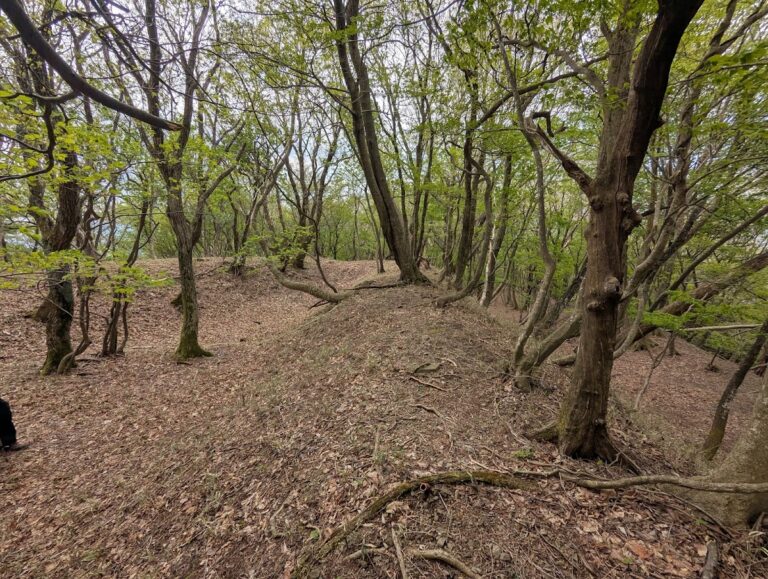
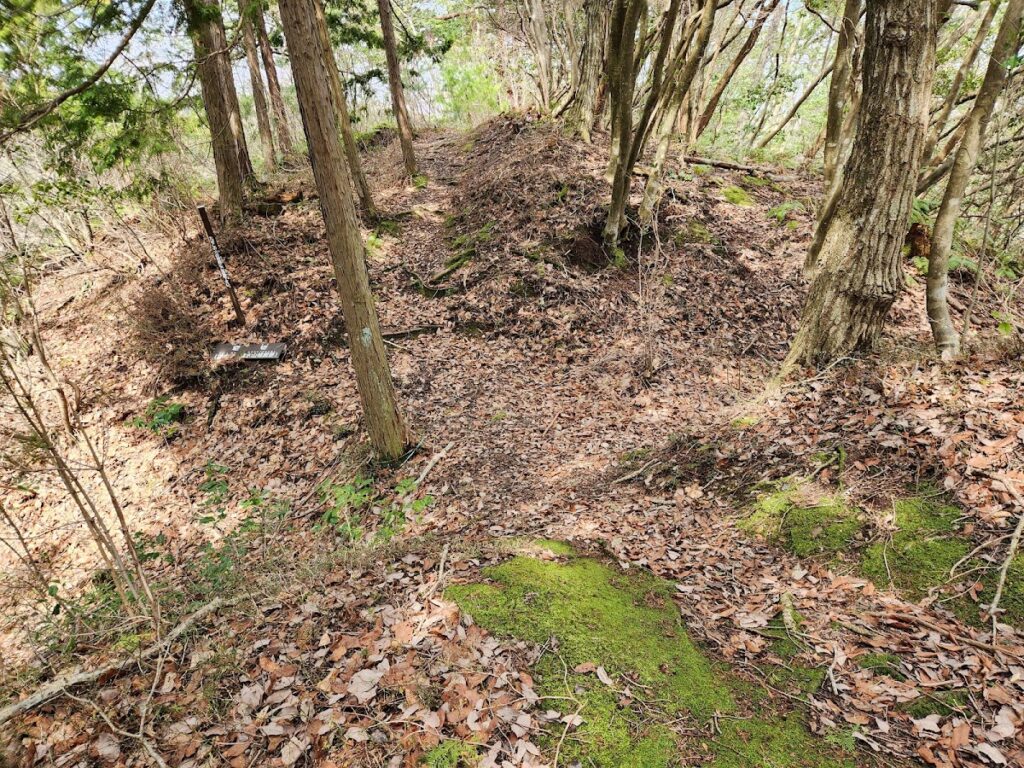
Well-preserved remains of earthworks are found throughout the castle grounds. Earthworks were a fundamental defensive structure designed to prevent enemy intrusion, and at Shimizu-yama Castle, they were primarily located around the main enclosure.
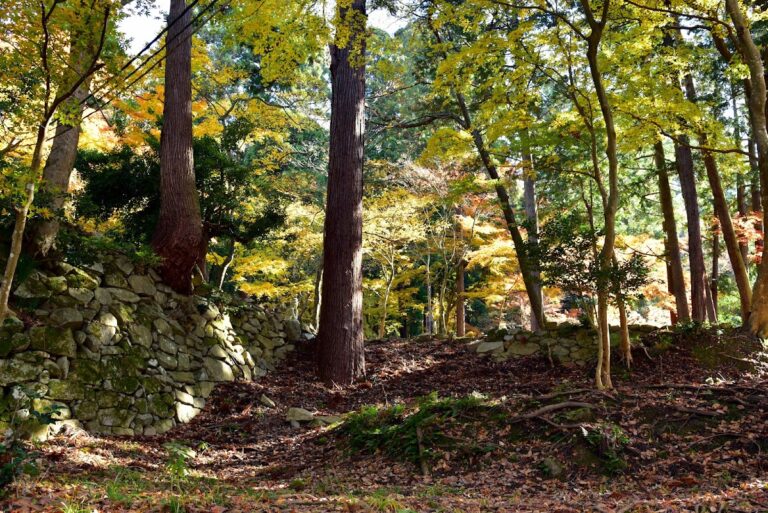
In addition, some stone walls have been identified, and their scale is beyond imagination. The presence of full-fledged stone walls, rare for a medieval mountain castle, is evidence of the Takashima clan’s economic power and technical prowess.
Ridge-shaped Dry Moats (Ridge-shaped Vertical Moats)
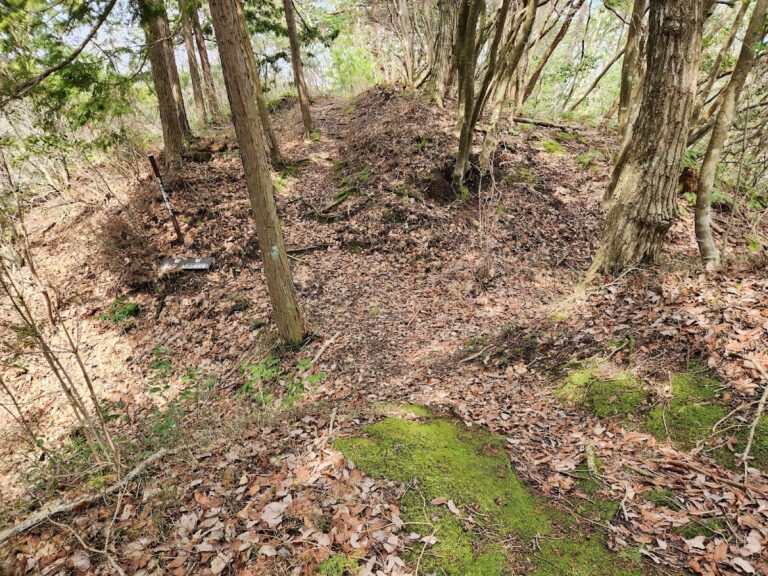
One of the greatest highlights of Shimizu-yama Castle is the ridge-shaped dry moats (ridge-shaped vertical moats). This defensive structure, consisting of multiple vertical moats dug parallel to each other on the mountain slope, was effective in preventing enemy lateral movement and making attacks difficult.
Ridge-shaped dry moats are characteristic remains of mountain castles from the late Sengoku period, and those at Shimizu-yama Castle are excellent in both scale and state of preservation, making them of significant value for castle research.
Archaeological Findings
Multiple archaeological excavations have been conducted at the Shimizu-yama Castle site, yielding many important discoveries.
From the main enclosure, numerous artifacts suggesting daily life have been unearthed, including the remains of building foundations. Ceramics, iron products, and coins have been discovered, shedding light on the daily life within the castle.
Furthermore, the remains of medieval buildings and wells have been confirmed within the residential area, confirming that the castle and residence were integrated into a complex facility.
Highlights of Shimizu-yama Castle
View from the Main Enclosure
The greatest attraction of visiting Shimizu-yama Castle is undoubtedly the view from the main enclosure. The view of Lake Biwa from the mountaintop, approximately 300 meters above sea level, is breathtaking, and on clear days, you can even see the mountains east of the lake.
The view is particularly beautiful at sunrise and sunset, allowing you to enjoy the changing expressions of Lake Biwa throughout the seasons.
The Impressive Ridge-Shaped Vertical Moats
The ridge-shaped vertical moats carved into the mountainside are truly awe-inspiring in their scale and presence. The sight of numerous parallel moats demonstrates the high level of castle-building technology during the Sengoku period.
Explanatory boards are installed on-site, allowing visitors to understand the meaning and function of the remains as they explore.
Massive Stone Walls
The remaining stone walls boast an unusual scale for a medieval mountain castle. The use of the nozurazumi technique, where natural stones are piled up, provides valuable insight into the stonemasonry techniques of the time.
Earthworks and Enclosure Arrangement
Walking along the earthworks surrounding the main enclosure and the radially arranged enclosures allows you to experience the overall structure of the castle. Bringing a castle layout map will deepen your understanding.
Access and Visiting Guide
Access Methods
Access by Car
- Approximately 60 minutes from Kyoto-Higashi IC on the Meishin Expressway via National Route 161
- Approximately 40 minutes from Kinomoto IC on the Hokuriku Expressway via National Routes 303 and 161
- Parking: Free parking available at the Shinrin-no-Mori Sports Center
Access by Public Transportation
- Approximately 40 minutes on foot from Shin-Asahi Station on the JR Kosei Line
- Approximately 10 minutes by taxi from Shin-Asahi Station
Ascent Route
The most common starting point for climbing Shimizu-yama Castle is the Shinrin-no-Mori Sports Center. We recommend stopping here first, as you can obtain a pamphlet at the management office.
The climbing path is well-maintained, but appropriate equipment is necessary as it is a mountain castle. Prepare hiking boots or trekking shoes, drinking water, a towel, etc.
The time required to reach the main enclosure is approximately 40-50 minutes one way at a leisurely pace. Along the way, you can also visit the remains of a residence on the mountainside.
Precautions for Visiting
- As it is a mountain castle, the ground can be slippery in rainy weather and during winter.
- Bringing insect repellent is recommended during summer.
- To protect the remains, please do not climb on the earthworks or stone walls.
- It is recommended to use the restrooms at the Forest Sports Center beforehand.
- Allow approximately 2-3 hours for the round trip.
Best Time to Visit
Spring (late March to May) and autumn (October to November) are the most comfortable times to visit. Especially during the seasons of fresh greenery and autumn leaves, the beauty of nature and the historical atmosphere of the castle ruins harmonize beautifully, making for a wonderful experience.
Summer requires caution due to the heat and insects, but early morning visits are relatively comfortable. In winter, there is a possibility of snow, so it is important to check the weather beforehand.
Nearby Tourist Attractions
Historical Spots in Takashima City
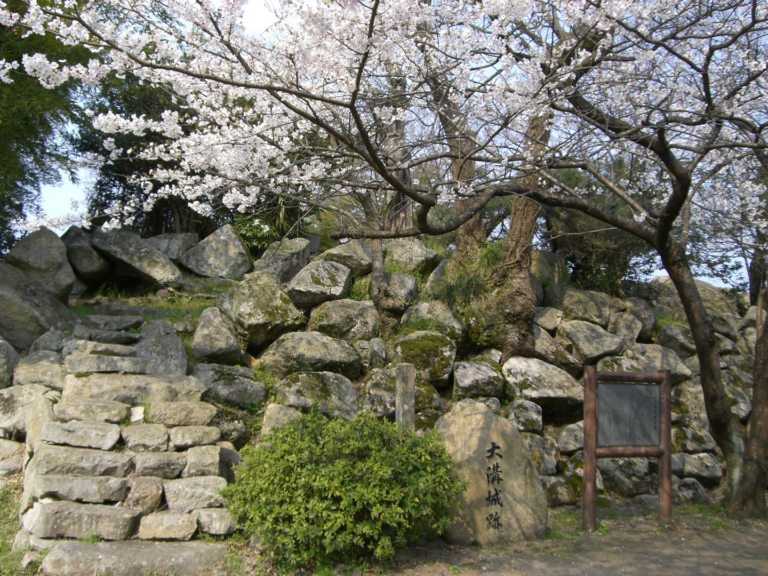
Here are some nearby spots you might want to visit in conjunction with your visit to Shimizu-yama Castle. Ōmizo Castle Ruins
Located in Katsuno, Takashima City, these are the ruins of a Sengoku period castle, showcasing the remains of a flatland castle distinct from Shimizu-yama Castle.
Shirahige Shrine
A famous ancient shrine known for its torii gate floating on Lake Biwa. Considered the oldest shrine in Ōmi Province, it’s also a popular power spot.
Kaizu-Ōsaki
A famous cherry blossom viewing spot, selected as one of Japan’s Top 100 Cherry Blossom Viewing Spots. Approximately 800 Somei Yoshino cherry trees bloom here in spring.
Nature and Leisure in Takashima City
Makino Plateau
A famous tourist destination known for its Metasequoia tree-lined avenue. Enjoy the scenery of each season.
Cycling Roads Around Lake Biwa
Enjoy the western area of Lake Biwa as part of the Biwaichi cycling route.
Cultural Influence of Shimizu-yama Castle and the Takashima Clan
The Takashima clan was not merely a military force, but also played an important role as bearers of culture. The area surrounding Kiyomizu-yama Castle was home to temples such as Kiyomizu-dera and Daiho-ji, indicating a strong emphasis on the preservation of Buddhist culture.
Furthermore, the Takashima clan, who controlled the water transport on Lake Biwa, had active cultural exchanges with Kyoto and played a role in bringing the capital’s culture to the Lake Biwa western region.
Among the ceramics unearthed during archaeological excavations, high-quality items from China were included, demonstrating the Takashima clan’s economic power and high level of cultural sophistication.
Preservation and Utilization of Kiyomizu-yama Castle
The Kiyomizu-yama Castle site, designated a National Historic Site, is being preserved and utilized through efforts led by the Takashima City Board of Education.
Regular mowing and maintenance of the remains are carried out, ensuring a safe environment for visitors. Efforts are also being made to disseminate information, including the installation of explanatory signs and the creation of brochures.
In recent years, it has also been used as a site for local history education, with field trips for elementary and junior high school students being conducted. The preservation activities carried out in cooperation with local residents can be considered a model example of cultural property protection.
The Value of Shimizu-yama Castle in Castle Research
Shimizu-yama Castle is an extremely important archaeological site for studying the evolution of mountain castles from the medieval period to the Sengoku period.
In particular, the ridged dry moat system is attracting attention from many castle researchers as a typical example of the development of defensive technology during the Sengoku period. Furthermore, the complex structure, which integrates a mountain castle, residence, and temple, is valuable material for understanding the nature of feudal lord power in the medieval period.
Omi Province was a region where many castles were built from the medieval period to the Sengoku period, but Shimizu-yama Castle is particularly noteworthy for its excellent state of preservation and large-scale remains.
Visitor Voices and Evaluations
Shimizu-yama Castle has received high praise from many castle enthusiasts and history lovers who have visited it. The following points, in particular, have been praised:
- The magnificent view of Lake Biwa from the main enclosure
- The impressive scale and state of preservation of the ridged moats
- The imposing presence of this largest mountain castle on the western shore of Lake Biwa
- The comprehensive and easy-to-understand explanatory signs
- The charming atmosphere where nature and history harmonize
On the other hand, some say that climbing the mountain castle requires a certain level of physical fitness, making it a bit challenging for beginners. However, the sense of accomplishment and the magnificent view upon reaching the summit are exceptional.
Summary
Shimizu-yama Castle (Takashima City, Shiga Prefecture) is a national historical site of high historical and academic value as the largest medieval mountain castle in the western shore of Lake Biwa. It played an important role from the 13th century to the Sengoku period as the base of the Takashima clan, a branch of the Sasaki clan.
With its stunning views of Lake Biwa from the main enclosure, impressive ridged moats, and massive stone walls, Shimizu-yama Castle offers plenty to see and is a valuable spot to experience the structure of a medieval mountain castle. Starting from the Forest Sports Center, the 40-50 minute climb offers a truly historical and romantic experience.
When visiting Takashima City, be sure to visit Shimizu-yama Castle and experience the charm of this mountain castle overlooking Lake Biwa. With appropriate equipment and ample time, it will be an unforgettable historical adventure.