Shimabara Castle Completion Guide: History, light points and travel information explanation [2025 latest edition]
Shimabara Castle is located in the center of Shimabara City, in the center of Shimabara City, with a magnificent castle fort, a white castle tower with a deep impression, a bird’s-eye view of the Ariake Sea, and a distant view of Mt. Shimabara Castle, also known as “Moritake Castle”, is a 400-year-old historical scene that dates back to the early Edo period, when the castle tower was built by Hiroya and Kazushige. The details of the main text are as follows: A comprehensive overview of the island’s history, construction features, highlights, and transportation methods.
History of Shimabara Castle: Construction now underway
Special circumstances surrounding the construction of the Songshu government and the “one country, one castle” era
The history of Shimabara Castle began in 1616, when Shigemasa, the governor of Shigemasa, was assigned to Gojo, Yamato Province (now Nara). In 1618 (Genna 4), a new castle was built on a small mountain by Takeshi, the governor of Nagoya during the reign of Shigemasa.
After the “one country, one city” order (1615 Yufu), the construction process of this place was changed. At the time of the integration of castles and castles throughout the country, we were able to see the new castles being built, and the shogunate’s control of the island half-island (Christian residence) was established as an important military strategy.
Construction process of Hongya Castle Fort in 7 years of wear and tear
It took more than seven years for Matsui to become a heavy government, and he spent a lot of money on flowers, and Shimahara Castle was built in 1622 (Volume 8 of Genna). The city’s fortifications are large, and the land of the city has 40,000 koku, which is a relatively small daimyo. This is a modern fortress completely constructed by the troupe.
The fort building group included one troupe, five levels, five levels of the castle tower, three tiers, three tiers of corner towers, 38 tiers of square towers, and the special conquest by Qi Chang was a 15-meter high solid stone burial mound. The high cost of construction was one of the reasons why the local peasants were conquered and taxed heavily.
Effects of Shimabara no Ran and Shimabara Castle
In 1637 (Kaneaga 14th year), the Shimabara Rebellion (Shimabara Amakusa Rebellion) bombed by Shiro Amakusa. This is the plan for the invasion of Shimabara Castle, the largest attack in Japanese history. However, the construction of the castle’s defenses, the collapse of Shimabara Castle, and the construction of the Shogunate’s military bases.
After the establishment of the Pyongyang, the Songshan clan was removed from the land. After this, feudal lords such as the Yuko Riki clan, the Matsudaira clan (Fukasui Matsudaira family), the Koda clan, and the Matsudaira clan (Tadafusa family) came to Shimabara. As the Meiji period arrived, Shimabara Castle became the center of politics and military affairs for the Shimabara clan.
Improvements in the Meiji period and corrections in the Showa period
In 1871 (Meiji 4), the new Meiji feudal system was abolished, prefectures were established, and Shimabara Castle was built. In 1874 (7th year of the Meiji era), the castle tower and others were constructed and removed, and the stone mounds and castle rivers of the two castles were put on hold. After that, the castle fort was once owned by a private person, and then moved to Shimahara City.
In 1964 (Showa 39), commemorating the 10th anniversary of the founding of Shimabara City, the castle tower was built with mixed steel and fertilized earth. In addition, Tatsumi-kaku was repaired in 1972 (Showa 47) and 1980 (Showa 55), Nishi-Kakuya was repaired in the same year, and the appearance of Shimabara Castle was completed as it was now. In 2006 (Heisei 18), Shimabara Castle was rated as one of the `Japan's 100 Greatest Castles''; in 2007 (Heisei 19), it was also rated as `Japan’s 100 Great Historical Parks”.
Architectural characteristics and castle ruins of Shimabara Castle
Features of concentric plain castle
Shimahara Castle is a concentric plains castle, with a rectangular layout. The deserted plains, however, the castle was built in the mountains, and the famous “Moritake” small hill was used, and the area surrounding the castle tower and Gaoyu.
The castle tower has four surrounding buildings, approximately 50 meters of the castle river, one passage, one corridor, and two layers of the castle pond. This is a highly independent defensive fortress that can be used to create a castle tower.
The technique of the high stone wall is beautiful.
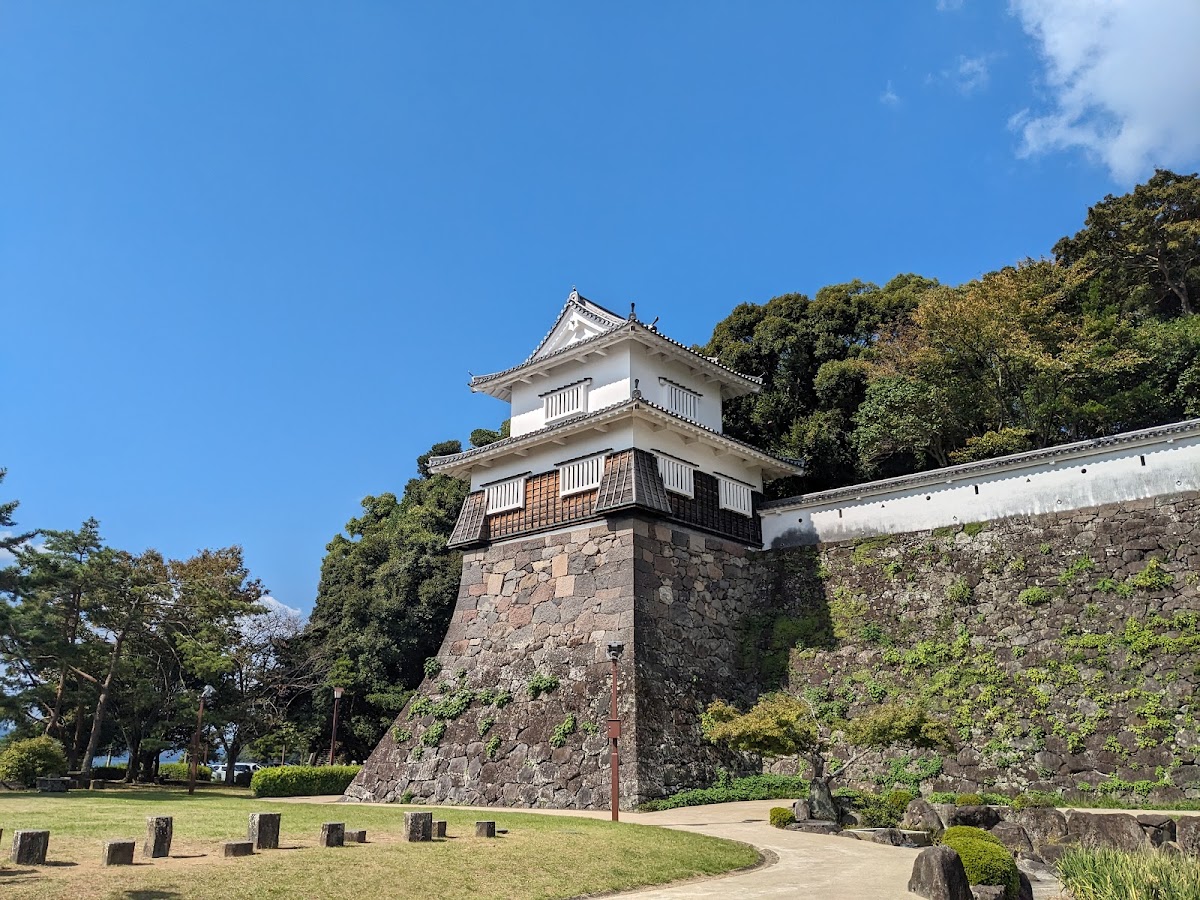
Shimabara Castle’s special expedition is a solid stone tomb. The castle tower’s stone burial mound is approximately 15 meters high, with a view of the Yuming Sea coastline and a clear view of the sea. There are two types of construction techniques for small stone mounds: `Nomi Corner'' (rough stone tile) and `Pushing” (fine stone tile), representing the peak of early stone masonry techniques in the Jiang Dynasty.
The main stone used was andesite from the surrounding area of Mt.Yunxian, and its white color also gave it the beautiful name of Shimabara Castle’s “White Fortress.” The original appearance of the stone tombs of the two castle towers has been preserved, and the history of the envoy’s development and national history has been preserved.
The layout of the castle tower and the tower
Tower type tower gate with one troupe and five levels. The main design concept of the castle tower, the missing mountain range, and its actual operation. The main castle wall is surrounded by a square building with three high corner towers.
After heavy construction, the castle tower had five outer layers and six inner layers. A magnificent panoramic view of Shimahara City, the Ariake Sea, the coast of Kumamoto Bay, and Mt. Yusen.
Shimabara Castle Ryoten: Castle Tower and Museum Exhibition
Exhibition inside the castle tower
After heavy construction, the work inside the castle tower was expanded to the outside of the museum, and the history and culture of the original island were exhibited. Each layer of the city has its own main exhibition, and visitors can fully understand the history of Shimabara Castle and the Shimabara Clan.
Roo 1 and Roo 2: Christian Church History Materials Exhibition Room
This exhibition features artifacts from the Shimabara Rebellion and the exchange of Christianity. The museum contains rare historical materials from the period of mass persecution of Christianity, a comprehensive collection of Christian religious items, and images of the mother of the Christian faith, as well as hidden Christian religious items. It is important to understand what you are thinking about the history of the people who came from the center of Christian culture in the island half-Imahara region.
3rd floor and 4th floor: Local history exhibition hall
This exhibition features cultural relics of the Shimabara clan’s Kudai lord Sokan, comprehensive weapons, and armored Japanese swords. As you can understand, the Matsushita clan changed the feudal lord of the Matsudaira clan, and since then, the circumstances of each period in the Shimabara domain.
5th floor: viewing platform
360-degree panoramic view of the top view platform. A bird’s-eye view of Shimabara City, east view of Ariake Sea, Kumamoto City, and west view of Yunxian Mountain. The sunny day in Hikori, the scenery is especially spectacular.
Seiho Memorial Museum: The world of Nagasaki sculptor Kitamura Seiho
Inside the main castle is the “Saiho Memorial Museum,” exhibiting works by Shimabara City’s famous sculptor Saiho Kitamura. Saiho is the author of the Nagasaki Peace Memorial Monument and the emblem of culture.
Approximately 120 works by Issei Saiho will be exhibited in the museum, including masterpieces such as `Shogun's Child'' and `Chun-chan”, which are based on the Comprehensive Peace Memorial Monument. Where you are in the village, you can feel the close distance and feel the ability of other sculptures, which is a first-order experience.
Tourist attraction: Shimahara 灾难YOYUNXENGAKE Walk
The interior of the Ushihu Tower is a “Traveling Memorial Museum”, and the exhibition begins in 1990, when Yuxian Mountain was built and built, and the records of the subsequent heavy construction work were recorded. Images of the volcanic debris and mud flowing through the tunnel, images of the heavy construction work after the bombing, and memories of the damage caused to nature in the area where the people of Taiwan went.
In addition, in 1792, an exhibition in the area of Shimabara’s “Shimabara Explorations” (Mayu Mountain Collapse and Sea Museum) was published, with mixed materials, and visitors understood that it was a deep source of water between Shimabara and the volcanoes.
Civil Tools Museum: Shimabara Life and Culture
Inside the west tower is a “Civil Tools Museum”, exhibiting everyday tools used by residents of Shimabara from the Edo period to the early Showa period, as well as armor and weapons. Approximately 3000 civilian tools, please understand the Japanese cultural treasure of the island lifestyle.
Main flower garden
The castle river is the main castle of the castle, and the riverside is full of flowers when it arrives. The spring sky is full of flowers, and the summer sky is full of flowers. Of course, it is the flowering season from early June to July, and the flowering season from July to August.
Autumn, the red leaves of the city, rivers and mountains; winter, the background of white snow and mountains;
Shimabara Castle Park: Tours and walking routes
Ninomaru Castle Site and Shimabara Cultural Center
Shimabara Cultural Center is currently located at the site of the U-Ninomaru (second outer fort), and the remains of the U-Ninomaru (second outer fort), Bibe Honmaru (main outer fort). Cultural Center Regular exhibitions, music clubs, music theaters, and other cultural activities are the center of Shimabara City’s cultural activities.
The Ninomaru stone citadel is perfectly preserved, allowing visitors to visit the castle, and all the people in the main enclosure feel the same way as the castle fort.
Castle town samurai residence and spring water
Shimabara Castle’s surrounding area is known as the “Samurai residence district”, which is currently the residence of samurai during the Edo period. The length of one line is approximately 700 meters, the stone wall is green and the road is lined with greenery, the three samurai residences are open to the outside, and visitors can enjoy the life of a samurai at that time.
In addition, the beauty of Shimahara Soari’s `Water Capital'', the castle town of Henfu, Yuunsenzan, and the underground water supply of water. The Shinmachi area has the beauty of Shien Yuen'', and the `Shien” and other spring scenery and flower gardens are unparalleled scenery when you visit Shimane Castle.
Rakumon Yosensui
Outside the main gate of Shimabara Castle, Yuichi’s famed “Shimizu outside the gate” spring eyes. Water pipes (ceramic cans) leading to the water supply inside the castle, water for daily life within the castle. To this day, one perforated stone head (remains of water pipes) still remains, and the Christian tombstones are located in the castle fortress, and the history of the eternal water source of the island has arrived.
Shimabara Castle Travel Information: Transportation, Expenses and Opening Time
Basic information
Land
1-1183-1 Jonai, Shimabara City, Nagasaki Address: 855-0036
Phone
0957-62-4766
Opening time
9:00 am – 5:30 pm (stops and starts at 5:00 pm)
Closing date
Open all year round (closed on December 29th and 30th)
Key vote
- Adults (high school and junior high school students and above): 550 yen
- Junior and elementary school students: 280 days
- Group ticket (15 or more people)
- The remaining injured person and one of his/her accompanying personnel can be certified and exempted from the fee.
*This is the ticket for visiting the castle tower, Saibo Memorial Museum and viewing heavy construction memorial.
Transportation method
Fire car/Tomoe
- From JR Eihaya Station, sit on Shimahara Railway, get off at Shimahara Station, and walk for about 5 minutes.
- If you are sitting on the Shimahara Railway Station at the Nagasaki Airport or you are on the Shimahara Railway Station, the ride will take approximately 90 minutes, and you will get off at the Shimahara Station.
- Departing from Ushimahara Port, the journey takes approximately 10 minutes.
Self-indulgence
- Depart from the Nagasaki Expressway “Eihaya IC” and take National Route 57 for approximately 50 minutes.
- From Kumamoto, you can drive to Shimabara Port in front of the ferry, and then drive to the port in about 5 minutes.
Stop
- Shimabara Castle has a parking lot for customers (free of charge).
- Capable of 100 yen ordinary cars.
Travel time
- Visiting the castle tower: about 30-40 minutes
- Visiting the castle tower + Kiyoho Memorial + Castle Tower: Approximately 60-90 minutes.
- Leisurely walking and organizing the fort park: about 2 hours
- Comprehensive tour of samurai residences in Izumi: Half Heaven and One Heaven
Precautions and construction review time
Shot point
Below are the recommended spots for Shimabara Castle:
- The main castle tower east side the castle river: The angle of the main tower in the water.
- The second layer of the castle tower: The altitude of the stone wall of the castle.
- View of the tower tower: A panoramic view of Mt.
- The banks of the river where the flowers bloom and the flowers are blooming: A tasteful view of the full season.
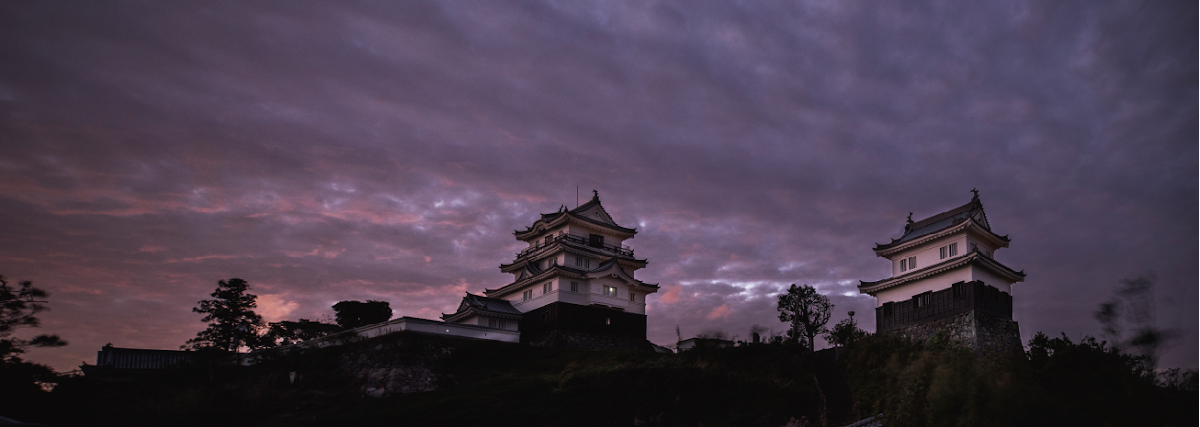
- Night Light Mitsuhide: A dreamlike white castle tower (limited time release).
Recommended tour
Spring (April-May)
When the maple blossoms were in full bloom, the decoration of the castle grounds and park was completely changed. Apart from this, from late May to early June, Hanaya Suzuo’s competition will be held.
Summer (July-August)
At this time, the castle was in full bloom on the riverside. It’s beautiful and beautiful in Qingchen, and it’s a hot spot for movie lovers.
Autumn (October-November)
Autumn leaves are beautiful, the weather is good, and this is the ideal time for sightseeing. The beautiful scenery of Mt. Yunxian in autumn is a blessing to everyone.
Winter season (December to February)
The number of visitors is small, and it is possible to travel more freely. The scenery of the castle tower in the background of Yunxian mountain with white snow is especially spectacular.
Activity information
Shimabara Castle has various urban activities throughout the year.
- Shimabara Castle Noh Theater Performance (September): A mysterious Noh play performed on a specially designed stage inside the castle tower.
- **Shimabara Castle Town Hijingu (February to March): Hijingu from each city of Shimabara Castle Town Exhibition.
- Shimabara Onsen Shiranui Festival (October): Autumn festival of the castle town.
The latest activity information can be found on the official website before the construction.
Scenic points around Shimabara Castle
Samurai residential area
It takes about 10 minutes to walk to Shimabara Castle. Along the way, the streets of lost people were reserved, and the samurai residences of the Edo era were preserved, and the three samurai residences were released for public use.
锦鲤游弋乡(Shinmachi district)
It is a representative sightseeing spot of Shimahara, and it is a scenic sight that is representative of Shimahara, a colorful sightseeing spot in the spring water canal, which is the representative scenery of Shimahara, the “water capital”.
Shimabara Onsen
A Japanese inn with a hot spring facility near Shimabara Castle. After visiting, I was able to enjoy the hot springs in my body and mind.
Yunxian Volcano Damage Memorial Museum (Numata Mutaku)
This is an interactive natural museum, where you can learn about the history of volcanoes since the Heisei era, when Yunxian was popular in the mountains. Approximately 20 minutes by car from Shimabara Castle.
Hara Castle Ruins
The Hara Castle ruins are the base of the rebellion during the Shibara Rebellion, and are also one of the constituent parts of the World Culture World’s “Secret Christian Sites in the Nagasaki Area.” Estimated travel time in front of Yushimahara Castle is 30 minutes.
Summary: The charm of Shigeon Shimabara Castle
Shimabara Castle is a group of castle forts built by lost people, a fusion of stone mounds by Kouya (now the pinnacle of castle fort construction techniques in the early Edo era), and a white castle tower from the historical site of the Shimabara Rebellion to the modern heavy construction.
The fortress museum has a rich and diverse exhibition, the deep exhibition has completed the history and culture of Shimahara, and the history of Japanese Christianity has been completed, Shimahara The main topics include the clan’s history, Seiyasu Kitamura’s sculptures, Yunxian Genzan’s songs and subsequent repairs, and Shimabara’s folk culture.
The castle tower is surrounded by riverbanks, the four seasons are filled with flowers, and the castle tower has a spectacular view of Mt.
Shimabara Castle is known as one of the `Japan's 100 Great Castles'' and `Japan’s 100 Great Historical Parks”, and is one of the most famous historical castles in Nagasaki. Experience the charm of an ancient castle that has been around for over 400 years!