Sarubami Castle (Gifu Prefecture) Complete Guide | History, Access, and Breathtaking Views from the Observation Deck
Sarubami Castle, located in Sakahogi-cho, Kamo-gun, Gifu Prefecture, is a Sengoku period mountain castle built on the summit of Shiroyama Mountain at an altitude of 275.3 meters. Known for its important role in Oda Nobunaga’s conquest of Mino Province, it is now a popular hiking spot with an observation deck offering panoramic views of the Kiso River and the Central Alps.
History and Overview of Sarubami Castle
Construction and Changes in Lords
The exact construction date of Sarubami Castle is unknown, but it is believed to have been built during the Muromachi period by Nishimura Buzen-no-kami Yoshimasa. During the Sengoku period, Tajimi Shuri served as the castle lord. This castle was a strategically important fortress, utilizing the rugged mountain facing the Kiso River, and controlling a key transportation hub.
History and Overview of Sarubami Castle
Construction and Changes in Lords
The exact construction date of Sarubami Castle is unknown, but it is said to have been built during the Muromachi period by Nishimura Buzen-no-kami Yoshimasa. During the Sengoku period, Tajimi Shuri resided there as the castle lord. This castle was a stronghold utilizing the steep mountain facing the Kiso River, and was strategically important for controlling a vital transportation hub. There are several theories about the origin of the castle’s name, “Sarubami,” but it is believed to mean a difficult pass so treacherous that even monkeys would bite at it. It is also known by other names such as Sarubami Castle, Sarutobi Castle, and Neoyama Castle, and has been affectionately called by various names depending on the region.
The Conquest by Oda Nobunaga in 1565
The most important event in the history of Sarubami Castle is the conquest of Mino Province by Oda Nobunaga in 1565. In that year, Nobunaga intensified his conquest of eastern Mino, dispatching an army led by his senior retainer, Niwa Nagahide.
The vanguard, led by Kawajiri Hidetaka (Kawajiri Shigeyoshi), captured Sarubami Castle and forced the castle lord, Tajimi Shuri, to surrender. This battle is known as part of the “Dōdō Battle” and was an important step in Nobunaga’s unification of Mino.
Renaming to Katsuyama Castle
After conquering the castle, Oda Nobunaga appointed Kawajiri Hidetaka as the new lord and, for good luck, renamed the castle from “Sarutaki Castle” to “Katsuyama Castle.” It is said that the place name was also changed from Sarutaki to Katsuyama at the same time. This renaming is thought to have reflected Nobunaga’s wish for “victory” in his conquest of Mino Province.
Kawajiri Hidetaka continued to serve Nobunaga and played an important role, including being entrusted with the rule of Kai Province after the fall of the Takeda clan. However, he lost his life in the chaos following the Honnoji Incident.
Highlights of Sarutaki Castle Ruins
Castle Remains on the Mountaintop
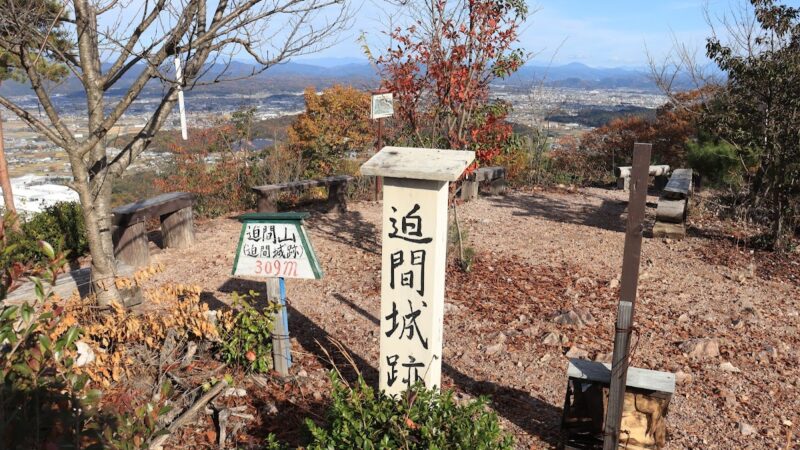
The current Sarutaki Castle ruins retain well-preserved remains characteristic of a mountain castle from the Sengoku period. There is a small flat area on the mountaintop, which is thought to be the site of the main keep. The layout, which skillfully utilizes the natural terrain, speaks to the high level of castle-building technology of the time.
Of particular note are the remains of moats and earthen bridges. Moats were defensive structures dug to cut across the ridge, playing a crucial role in preventing enemy intrusion. Earthen bridges served as passages across the moats, enhancing the castle’s defenses by limiting its entrances and exits.
Near the summit, the remains of baileys (kuruwa) also exist, indicating the presence of multiple defensive lines. The castle’s characteristics as a fortress utilizing the rugged mountain are evident throughout, making it a fascinating site for castle enthusiasts.
Spectacular Views from the Sarutakajo Observation Deck
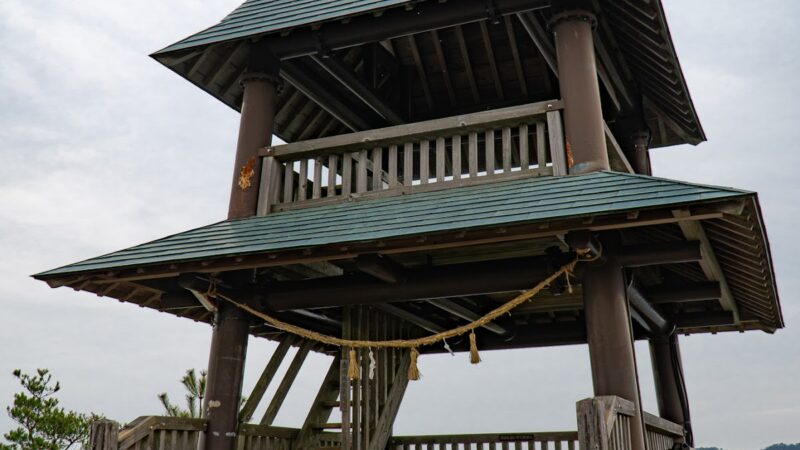
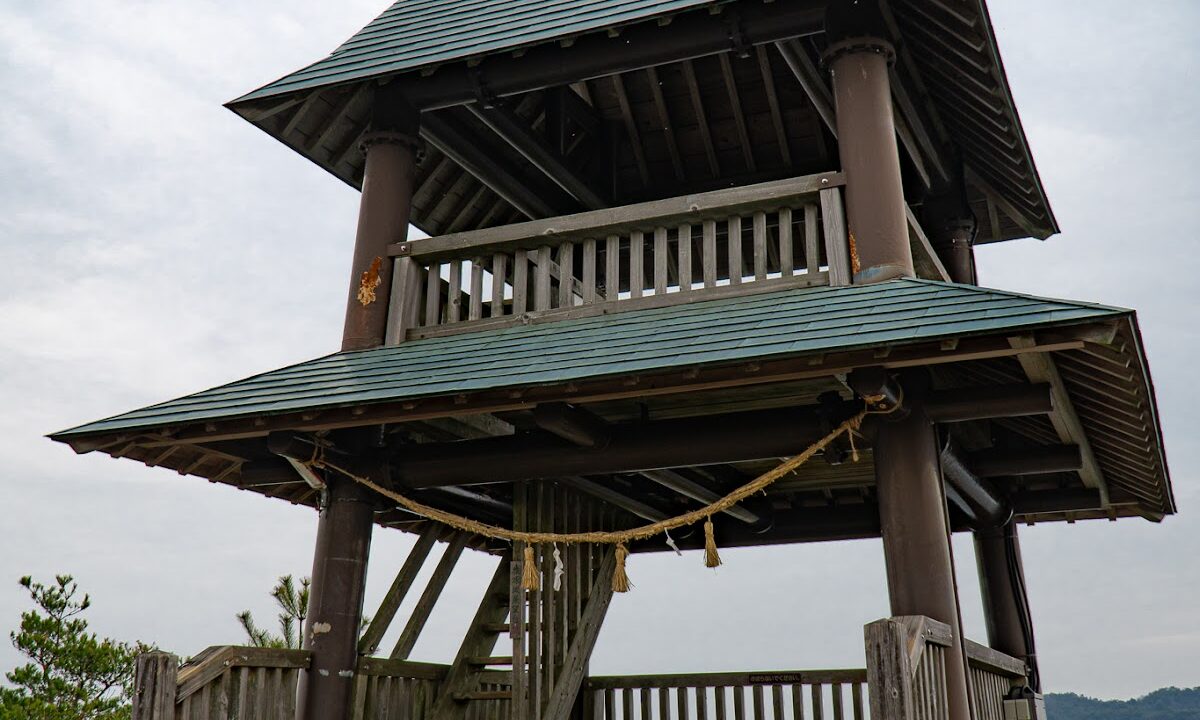
An observation deck, modeled after a watchtower, stands at the summit, offering 360-degree panoramic views. Built to commemorate the anniversary of Sakahogi Town’s establishment, it has become a symbolic landmark of Sarutakajo Castle.
From the observation deck, the majestic Kiso River and the Japanese Rhine unfold before your eyes. On clear days, you can see Mount Ena to the east, Mount Ontake to the west, and the Central Alps to the north, captivating visitors with its magnificent scenery.
Especially during the spring lush greenery and autumn foliage seasons, the surrounding mountains are ablaze with color, allowing you to enjoy the beauty of nature throughout the seasons. On clear winter days, the snow-capped Central Alps are stunning, making it a popular spot for photography.
How to Access Sarutakajo Castle
Access by Car and Parking Information
If you are visiting by car, it is convenient to use National Route 21. A dedicated parking lot for the Sarutakajo Castle Observation Deck is available in the Katsuyama area of Sakahogi Town. Parking is free and has space for about a dozen regular-sized cars.
To reach the parking lot, turn towards Katsuyama from National Route 21 and follow the signs. If using a car navigation system, search for “Sarutakajo Castle Observation Deck Parking Lot” or “Sakahogi Town Katsuyama.”
The parking lot can get crowded on weekends and holidays, especially during the hiking season, so we recommend arriving early. There are restrooms in the parking lot, which is convenient for preparing before your hike.
Access by Public Transportation
The nearest station is Sakahogi Station on the JR Takayama Line. It’s about a 60-minute walk from the station to the Sarutakajo Castle ruins. If walking from the station, first head towards National Route 21 and then towards the Katsuyama area.
Sakahogi Station is easily accessible from both Nagoya and Gifu, making it suitable for hiking using the train. However, since there is a distance from the station to the trailhead, you need to plan with plenty of time.
Route from the Trailhead to the Summit
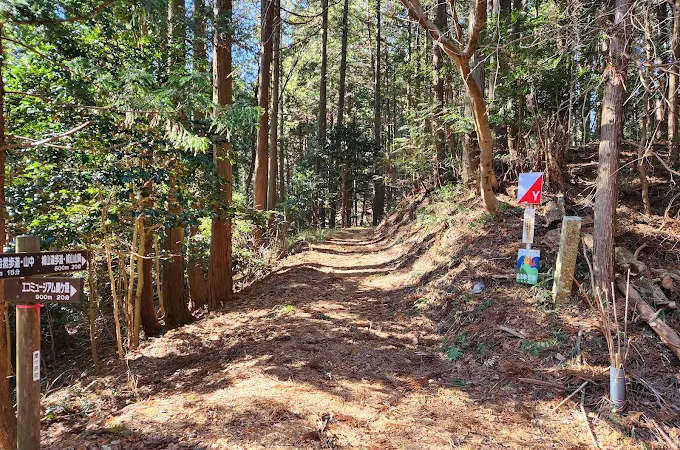
From the parking lot to the observation deck at the summit, it takes about 30-40 minutes on foot along a well-maintained hiking trail. The path is well-maintained, allowing you to enjoy a stroll through nature, and it is a popular hiking course enjoyed by many people.
The hiking trail is relatively well-maintained, but because of the steep slopes and stairs characteristic of mountain castles, it is recommended to wear comfortable shoes and clothing. There are rest points along the way, allowing you to climb at your own pace.
Information boards are installed along the trail, allowing you to read explanations about the castle’s history and remains as you climb. You can enjoy observing nature while experiencing the atmosphere of the Sengoku period – a truly valuable experience.
Attractions around Sarutakajo Castle
Kiso River and the Japan Rhine
The Kiso River, which flows at the foot of Sarutakajo Castle, has played an important role as a transportation hub since ancient times. This area is known as the “Japan Rhine,” a scenic spot where you can enjoy the beautiful valley scenery similar to the Rhine River in Germany.
A promenade is also maintained along the Kiso River, allowing you to stroll while listening to the sound of the flowing water. In spring, cherry blossoms bloom, making it a popular spot for cherry blossom viewing.
Tourist Attractions in Sakahogi Town
Sakahogi Town has other attractions besides Sarutakajo Castle. The town boasts historical shrines and temples, as well as direct sales outlets selling local specialties, which can be enjoyed in conjunction with a visit to the castle ruins.
For local cuisine, there are restaurants serving ayu (sweetfish) dishes caught in the Kiso River, and other regional dishes unique to Gifu Prefecture. Enjoying local flavors after a hike is highly recommended.
Best Season and Points to Note for Visiting Sarutaki Castle
Charms of Each Season
Sarutaki Castle can be visited year-round, but each season offers a different charm. Spring offers beautiful fresh greenery and cherry blossoms, making for a refreshing hike. Summer brings lush greenery and cool shade from the trees.
Autumn is the season for vibrant autumn foliage, with the entire mountain transformed into a breathtaking spectacle of red and yellow. The view from the observation deck becomes even more beautiful, attracting many hikers. Winter offers clear air and panoramic views of distant mountains, making it ideal for enjoying the scenery. Sometimes, a New Year’s Day hiking event is held to view the first sunrise of the year.
Precautions for Hiking
Hiking to Sarutakajo Castle is relatively easy, but there are some precautions unique to mountain castles. First, it is important to wear non-slip shoes. After rain, the trails become slippery, so extra caution is needed.
In summer, bring insect repellent and carry plenty of water to prevent heatstroke. In winter, the sun sets early, so it’s important to plan with plenty of time.
While the hiking trails are well-maintained, you are walking in nature, so be aware of changes in the weather. Avoid hiking on days when thunderstorms are expected, and prioritize safety.
The Cultural Value of Sarutakajo Castle
Sakahogi Town Designated Historic Site
The Sarutakajo Castle ruins are protected as a designated historic site of Sakahogi Town. As an important cultural property that conveys the history of the region, appropriate preservation and utilization are being pursued.
The town is continuously carrying out preservation and maintenance projects for the castle ruins, striving to create an environment where visitors can safely learn about history, including maintaining the hiking trails and installing information boards. Local history enthusiasts and volunteer groups also cooperate in the preservation of the castle ruins.
Importance in Oda Nobunaga’s Conquest of Mino
Sarutaki Castle held a strategically important position in Oda Nobunaga’s conquest of Mino Province. Controlling the transportation route along the Kiso River enabled his advance from eastern to central Mino, providing a foothold for his eventual unification of Mino.
The capture in 1565 was a crucial step in Nobunaga’s subsequent path to unifying Japan. Understanding this historical background will make your visit to the castle ruins more meaningful.
Tips for Enjoying Hiking at Sarutaki Castle
Preparation and Equipment
Proper preparation is essential for a comfortable hike. Basic equipment includes comfortable trekking shoes, comfortable clothing, a backpack, drinking water, a towel, and a hat.
Bringing a camera or binoculars will enhance your enjoyment of the views from the observation deck. Those interested in history will find it helpful to research the history of Sarutaki Castle beforehand, as this will deepen their understanding when viewing the ruins.
Estimated Time Required
Allow approximately 1 hour 30 minutes to 2 hours for the round trip from the parking lot to the mountaintop observation deck. Including breaks at the observation deck, taking photos of the scenery, and viewing the ruins, the entire trip will take approximately 2 hours 30 minutes to 3 hours.
Those who want to enjoy nature at a leisurely pace or closely examine the castle ruins are advised to allocate more time.
Photography Tips
The Sarutaki Castle observation deck is an excellent photo spot. You can capture the flow of the Kiso River and the surrounding mountains in a single photograph. The angles of light are particularly beautiful during sunrise and sunset, allowing for impressive photos.
Besides the observation deck, there are also photo opportunities along the hiking trail. Enjoy the scenery where nature and history blend together, such as views through the trees and moss-covered stone walls.
Engagement with the Community and Future Prospects
Contribution to Regional Revitalization
The Sarutakajo Castle Ruins are an important tourist resource in Sakahogi Town, contributing to regional revitalization. Visits from hiking enthusiasts and history buffs have a positive ripple effect on the local economy.
The town is focusing on promoting tourism centered around Sarutakajo Castle, undertaking various initiatives such as creating informational brochures and conducting guided tours. Local elementary and junior high schools also provide opportunities to learn about the history of Sarutakajo Castle as part of their local history curriculum.
Balancing Preservation and Utilization
To pass on the Sarutakajo Castle Ruins as a cultural property to future generations, a balance between preservation and utilization is crucial. Appropriate management is required to ensure that valuable remains are not damaged while still attracting many visitors.
It is hoped that local residents, the government, and experts will continue to cooperate to protect and utilize the Sarutakajo Castle Ruins in a sustainable manner. It is also important for each visitor to have an awareness of cultural property protection.
Summary
Sarutsubaki Castle in Sakahogi Town, Gifu Prefecture, is an attractive spot that combines historical importance as the site of Oda Nobunaga’s conquest of Mino Province with breathtaking views of the Kiso River and the Central Alps. You can enjoy a walk through nature to the 275.3-meter-high summit and feel the atmosphere of the Sengoku period.
Despite being easily accessible, just a 30-40 minute walk from the parking lot, you can see the remains of an authentic mountain castle, and enjoy the beautiful scenery of each season from the observation deck. It’s a recommended place not only for history buffs but also for beginner hikers and families.
This castle, which was captured in 1565 by Kawajiri Hidetaka, a retainer of Oda Nobunaga, and renamed Katsuyama Castle, is still carefully preserved as a valuable cultural asset of Sakahogi Town. Why not visit Sarutsubaki Castle as a destination for a weekend nature walk or historical exploration?