
Complete Guide to Sano Castle | History, Highlights, Access, and Archaeological Excavations
What is Sano Castle?
Sano Castle (Sano-jo) is a hilltop castle located in Wakamatsu-cho, Sano City, Tochigi Prefecture. It is also known as Kasugaoka Castle, Kasuga Castle, Ubagajō, and Asahioka Castle. Built in 1602 by Sano Nobuyoshi, it is a modern castle and is now a Sano City-designated historical site, enjoyed by citizens as Shiroyama Park (a city-designated scenic spot).
Due to its convenient location just a few minutes’ walk from Sano Station, it is also known as the “Station Castle” and is a popular spot for castle enthusiasts and history buffs as an easily accessible castle ruin. Built on a hill approximately 56m above sea level and 20m above ground, it features a distinctive multi-bailey layout spanning approximately 500m north-south and 370m east-west.
History of Sano Castle
Background of Construction and Sano Nobuyoshi
Construction of Sano Castle began in 1602 (Keicho 7), after the Battle of Sekigahara. The builder, Sano Nobuyoshi, was a samurai who led the Sano clan from the Sengoku period to the early Edo period. The Sano clan was a prestigious family that had used Karasawayama Castle as their residence since the Heian period, but during Nobuyoshi’s time, they moved their residence to a hilly area closer to the plains.
Reasons for the Relocation from Karasawayama Castle to Sano Castle
Several theories exist regarding the relocation from Karasawayama Castle to Sano Castle.
The Theory of Consideration for Tokugawa Ieyasu
One of the most plausible theories is that it was a political consideration for Tokugawa Ieyasu. Because Sano Nobuyoshi had ties to the Toyotomi family, he needed to demonstrate his loyalty to the Tokugawa family after the Battle of Sekigahara. It is believed that by abandoning the mountain castle of Karasawayama Castle and building a castle closer to the plains, Nobuyoshi demonstrated his submission to the Tokugawa shogunate.
Theory of the Ban on Mountain Castles Near Edo
Another theory is that the Edo shogunate issued a ban on mountain castles. In areas close to Edo, the existence of highly defensible mountain castles posed a threat to the shogunate, so the construction of castles on plains or low hills was encouraged.
The Anecdote of the Edo Fire
The most dramatic anecdote is the story of the Great Fire of Edo. One day, a massive fire broke out in Edo, and the flames were visible even from the distant Karasawayama Castle. It is said that Nobuyoshi rushed to Edo on horseback, only to be reprimanded by Ieyasu, who said, “What kind of behavior is it to build a castle in a place overlooking Edo?” and ordered him to relocate his castle. The veracity of this anecdote is uncertain, but it is widely known as an episode illustrating the high location of Karasawayama Castle and its relationship to Edo.
The History and End of the Sano Clan
Sano Nobuyoshi died in 1614 (Keicho 19), and since he had no heir, the Sano clan was dispossessed of their domain. Afterward, Sano Castle temporarily became a direct territory of the shogunate, and in 1634 (Kanei 11), Hotta Masamori took up residence there. However, the Hotta clan was also transferred after a short period, and thereafter, a magistrate’s office was established as a shoginate territory.
Throughout the Edo period, Sano Castle continued to function not as a daimyo’s residence, but as a base for the shogunate. After the Meiji Restoration, the castle was abandoned, and much of the castle structure was demolished, but the remains such as baileys, moats, and earthworks are still well-preserved today.
Structure and Layout of Sano Castle
Characteristics of a Renkaku-shiki Hilltop Castle
Sano Castle employs a layout style called Renkaku-shiki (renkaku-shiki). This structure features multiple baileys arranged in a straight line, with the third bailey, second bailey, main bailey, and north outer bailey positioned from south to north. Each bailey is clearly separated by a moat, demonstrating defensive measures throughout the structure.
Arrangement of the Main Bailey and Each Bailey
Main Bailey
Located at the highest point, the main bailey is approximately 56 meters above sea level and served as the central hub of the castle. From the main bailey, one can see a panoramic view of Sano city, and it is believed that the lord’s residence and other important facilities were once located here.
Second Bailey
Located south of the main bailey, the second bailey was an important defensive stronghold protecting the main bailey. A deep moat separated it from the main bailey, preventing enemy intrusion.
Third Bailey
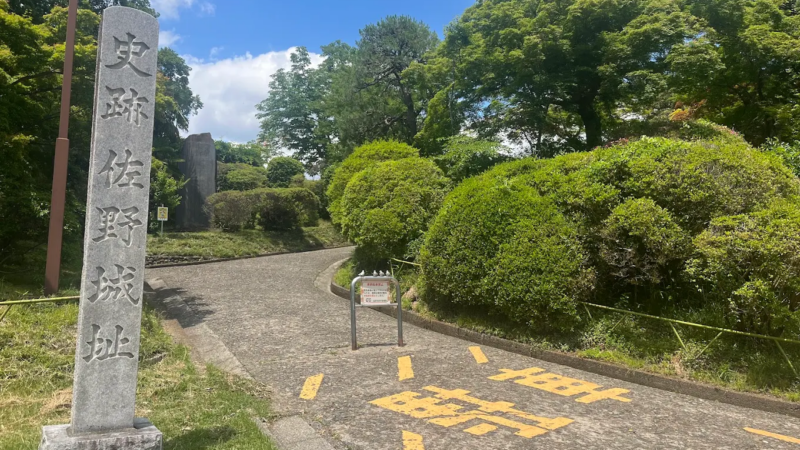
Further south, the third bailey served as the castle’s main entrance. The area around the current entrance to Shiroyama Park corresponds to this third bailey.
Kitademaru
Located north of the main keep, Kitademaru was a fortified enclosure designed to defend against attacks from the rear. This placement allowed for defense from both the north and south.
Features of the Moats and Earthworks
One of the greatest highlights of Sano Castle is the impressive moats that separate each enclosure. The moat between the main keep and the second enclosure is particularly deep, demonstrating the advanced castle-building techniques of the time. This moat, still clearly visible today, is a must-see for castle enthusiasts.
Earthworks also remain in various places, surrounding the enclosures. These earthworks served to prevent enemy intrusion and also made the interior of the enclosures less visible from the outside.
Changes in the Outer Moat and Water Moat
Sano Castle once had an outer moat (water moat), but most of it disappeared due to urban development and land readjustment after the Meiji era. While its existence can only be inferred from the topography and old maps today, it is believed that in its heyday, the moat surrounding the entire castle further enhanced its defensive capabilities.
Highlights of Sano Castle
Present as Shiroyama Park
The current site of Sano Castle has been developed as “Shiroyama Park,” a place of relaxation for citizens. Walking paths are maintained within the park, allowing visitors to experience the castle’s structure while touring the various enclosures. In spring, cherry blossoms bloom, making it a popular spot for cherry blossom viewing.
Remains of Enclosures and Moats
Strolling through Shiroyama Park, the flat areas of each enclosure and the moats between them can be clearly seen. The moats around the main enclosure, in particular, are deep and retain their original appearance well. Simple information panels are installed in the park’s management building, where visitors can learn about the castle’s history and structure.
Remaining Earthworks
Earthworks remain around each enclosure, and particularly high earthworks can be seen around the main enclosure. These earthen ramparts have withstood centuries of wind and snow and remain to this day, demonstrating the precision of the castle-building techniques of the time.
Relationship with Sano Yakuyoke Daishi Temple
When Sano Castle was built, Soshuji Temple was ordered to relocate. This Soshuji Temple is now widely known as “Sano Yakuyoke Daishi” (Sano Exorcism Temple), attracting many worshipers for New Year’s visits and exorcism rituals.
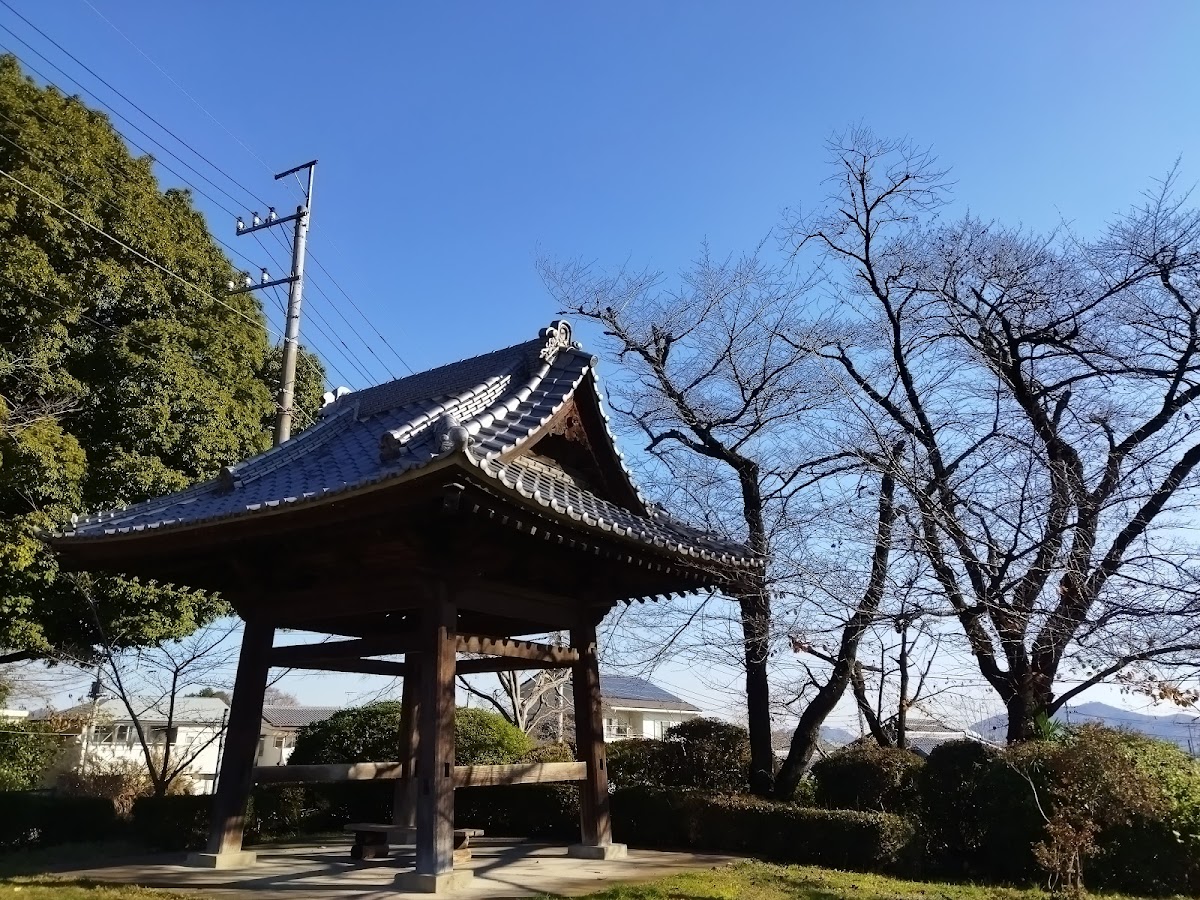
, the main gate of Sano Yakuyoke Daishi Temple is said to be a relocated gate from Sano Castle. This gate retains characteristics of Edo period castle architecture and is a valuable example of one of the few remaining structures from Sano Castle. When visiting the Sano Castle ruins, we highly recommend visiting Sano Yakuyoke Daishi Temple and viewing the relocated castle gate.
Archaeological Excavations and Research Results
Previous Archaeological Excavations
Several archaeological excavations have been conducted at the Sano Castle ruins. These investigations have yielded much insight into the castle’s structure, lifestyle, and construction techniques.
The excavations have unearthed foundation stones, ceramics, roof tiles, and metal artifacts, providing valuable information about castle life in the early Edo period. In particular, the excavated roof tiles bear patterns associated with the Sano and Hotta clans, making them noteworthy evidence of changes in castle ownership.
Clarification of the Castle’s Scale and Structure
The precise size of Sano Castle has been revealed through excavation and surveying. At approximately 500m north-south and 370m east-west, it is classified as a medium-sized castle for the early Edo period, but its multi-bailey layout has been confirmed to be a highly defensive design.
Furthermore, the elevation differences of each bailey and the depth of the moats have been measured in detail, allowing for the reconstruction of the topography at the time of construction. This data is important not only for the study of Sano Castle but also for understanding the construction techniques of the early Edo period.
Expectations for Future Investigations
Many areas of the Sano Castle ruins remain uninvestigated, and further discoveries are expected through future excavations. In particular, further research is needed regarding the precise location and structure of the vanished outer moat, and the extent of the castle town.
Access and Visiting Information
Access by Train
One of the greatest attractions of Sano Castle is its easy accessibility. You can reach Shiroyama Park in just about 5 minutes on foot from Sano Station on the JR Ryomo Line and Tobu Sano Line. Since you can walk almost in a straight line from the station to the castle ruins, even first-time visitors won’t get lost.
Access from Major Stations
- From Tokyo: Approximately 1 hour to Oyama Station on the JR Ueno-Tokyo Line, then approximately 30 minutes to Sano Station by transferring to the JR Ryomo Line.
- From Tochigi Station: Approximately 20 minutes on the JR Ryomo Line.
- From Asakusa Station: Approximately 1 hour 30 minutes on the Tobu Skytree Line (using the limited express train).
Access by Car and Parking
If visiting by car, it’s approximately 10 minutes from the Sano-Fujioka IC or Sano SA Smart IC on the Tohoku Expressway. While Shiroyama Park has its own parking lot, spaces are limited, and it can get crowded on weekends and during cherry blossom season. In such cases, we recommend using paid parking lots around Sano Station.
Visiting Hours and Precautions
Shiroyama Park is generally open all day, and admission is free. However, lighting is limited at night, so we recommend visiting during daylight hours.
The estimated time required for a leisurely stroll through the park is 30 minutes to 1 hour. If you plan to carefully explore each enclosure and observe the moats and earthworks, allow at least an hour.
While the park is well-maintained, there are some steep stairs and slopes. We recommend wearing comfortable shoes.
Nearby Tourist Attractions
When visiting Sano Castle Ruins, we recommend also visiting the following nearby spots:
Sano Yakuyoke Daishi (Sōzōji Temple)
It features a temple gate said to have been relocated from Sano Castle. Approximately 10 minutes on foot from Sano Station.
Karasawayama Castle Ruins
This mountain castle was the residence of the Sano clan before Sano Castle. Known as one of the finest mountain castles in the Kanto region, its remains, such as stone walls and moats, are well-preserved. Approximately 15 minutes by bus or car from Sano Station.
Sano Premium Outlets
For those who want to enjoy shopping, Sano Premium Outlets is recommended. Approximately 10 minutes by car from Sano Station.
The Charm and Value of Sano Castle
Value as a Castle Ruins Located Near a Train Station
Sano Castle is known as a “station-front castle,” boasting particularly good access from train stations among castle ruins throughout Japan. It can be easily visited during train transfers or short sightseeing trips, making it accessible even for those new to castle architecture.
This excellent location stems from the fact that Sano Castle was built as a flatland castle, on relatively flat ground. The fact that it doesn’t require the strenuous climbs of mountain castles, yet allows for clear examination of castle remains such as baileys and moats, is a unique charm of Sano Castle.
A Textbook Example of a Concentric Castle Layout
Sano Castle’s concentric castle layout is clear and typical. The arrangement of unusually baileys in a straight line from south to north, the moats separating each bailey, and the surrounding earthworks clearly preserve the basic elements of a castle, making it a “textbook” example for studying castle architecture.
For beginners just starting to take an interest in castles, Sano Castle is one of the best choices as a first destination to understand castle structure.
Cultural Assets that Tell the History of the Region
Sano Castle is an indispensable cultural asset when talking about the history of Sano City. The history of the Sano clan, which lasted from the Heian period, the relocation from Karasawayama Castle to Sano Castle, and its role as a shoginate territory during the Edo period—various historical periods are intricately etched into its history.
Protected as a city-designated historical site and scenic spot, the Sano Castle ruins will continue to be carefully preserved as a valuable historical heritage of the region.
Tips for Enjoying Sano Castle
Seasonal Ways to Enjoy
Spring (Late March – Early April)
Shiroyama Park is known as a famous cherry blossom viewing spot, and in spring it is bustling with many flower viewers. The collaboration of cherry blossoms and castle ruins is a perfect opportunity to enjoy the beauty of history and nature at the same time.
Summer (June – August)
The lush green park is relatively cool even in summer, making it pleasant for strolling. The refreshing feeling of exploring the castle ruins amidst the fresh greenery is exceptional.
Autumn (October-November)
During the autumn foliage season, the colorful trees adorn the castle ruins. A stroll in the crisp air allows you to feel the weight of history more deeply.
Winter (December-February)
Winter, after the leaves have fallen, is an excellent time to observe the topography, such as earthworks and moats, more clearly. For those who want to carefully observe the castle remains, a winter visit is recommended.
Photography Tips
The following points are recommended for photography at Sano Castle Ruins:
- Moat between the main keep and the second bailey: You can photograph the deep moat.
- View from the main keep: A view overlooking the city of Sano.
- Series of earthworks: The earthworks surrounding each bailey.
- Cherry blossoms and the castle ruins in spring: A beautiful landscape only available during cherry blossom season.
Castle Visit Records
Among castle enthusiasts, “castle visits,” where people record the castles they visit, are popular. Sano Castle is registered in castle visit apps such as “Kojodan,” allowing you to record your visits. Refer to the ratings from over 500 castle lords (visitors) and discover the of Sano Castle in your own charm.
Summary
Sano Castle is a flatland castle built in 1602 by Sano Nobuyoshi. It is an interesting castle ruin with a historical background of being relocated from Karasawayama Castle. Valuable remains for learning about early Edo period castle architecture are preserved, including a series of baileys, clear moats, and well-preserved earthworks.
Currently developed as Shiroyama Park, its excellent accessibility—just a 5-minute walk from Sano Station—makes it a popular “station-front castle” that’s easy to visit. Its charm lies in the fact that it offers enjoyment throughout the seasons: cherry blossoms in spring, lush greenery in summer, vibrant autumn foliage, and clear topographical observations in winter.
Sano Castle possesses multifaceted appeal, including its relocated castle gate at Sano Yakuyoke Daishi Temple, research findings from archaeological excavations, and its value as a cultural asset that tells the history of the region. When visiting Tochigi Prefecture, be sure to visit the Sano Castle ruins and reflect on the appearance of the castle from the early Edo period and the history of the Sano clan.
--765x450.png)