Complete Guide to Sakuragaoka Chashi (Hokkaido): A Thorough Explanation of the Ainu Sacred Site and Historical Value
What is Sakuragaoka Chashi?
Sakuragaoka Chashi is a historical site built by the Ainu people, located around Shunkunitai, Nemuro City, Hokkaido. “Chasi” (or “casi”) means “fence” or “fortress” in the Ainu language, and it is known as a multi-purpose site used as a military defense, ceremonial site, and watchtower.
Sakuragaoka Chashi, as part of the Nemuro Peninsula Chashi Ruins, was selected as one of the “Continued Top 100 Japanese Castles” in 2006, and its historical and cultural value is highly regarded. It is a valuable heritage site that conveys how the Ainu people lived, protected themselves from external enemies, and cultivated their spiritual culture in the harsh natural environment of eastern Hokkaido.
Historical Background of Chashi
Ainu Culture and the Role of Chashi
The Ainu people are an indigenous people who have developed their own unique culture, primarily in Hokkaido. Chashi were mainly built throughout Hokkaido from the 13th to the 18th centuries, and their number is said to exceed 500.
The main uses of Chashi are as follows:
- Military base: Defensive facilities in inter-tribal conflicts and battles with the Japanese
- Ritual site: Place for religious ceremonies and prayers
- Watchtower: Place to monitor the sea and rivers and confirm the upstream migration of salmon and trout
- Meeting place: Place for important meetings and gatherings of the Kotan (settlement)
Characteristics of Sakuragaoka Chashi
Sakuragaoka Chashi is one of the 32 Chashi sites scattered across the Nemuro Peninsula that is well-preserved and clearly shows its topographical features. It is a type of “cliff-faced Chashi” that utilizes the edge of a plateau, using natural cliffs as defensive walls.
Characteristics of the remains:
- Remains of trenches: Ditches dug to prevent enemy intrusion
- Remains of earthworks: Earthen embankments built to reinforce defenses
- Flat surfaces: Places where buildings or ceremonies were held
- Utilization of natural terrain: Structures that skillfully utilize cliffs and steep slopes
Nemuro Peninsula Chashi Sites and Sakuraoka Chashi
Overall view of the Nemuro Peninsula Chashi Sites
The Nemuro Peninsula Chashi Sites were designated a national historic site in 2006 and are the only group of ruins in Hokkaido selected as one of “Japan’s Top 100 Castles” (and the Continued Top 100 Castles). 32 chashi sites have been identified over a wide area within Nemuro City, each possessing its own unique characteristics.
Main Chashi Sites:
- Onnemoto Chashi Site: The best-preserved and easiest to visit.
- Notsukamafu Chashi Site: Beautiful scenery facing Lake Onnenuma.
- Sakuraoka Chashi Site: Located within the natural environment surrounding Shunkokutai.
- Ponmoi Chashi Site: Located overlooking Nemuro Port.
Positioning of Sakuraoka Chashi
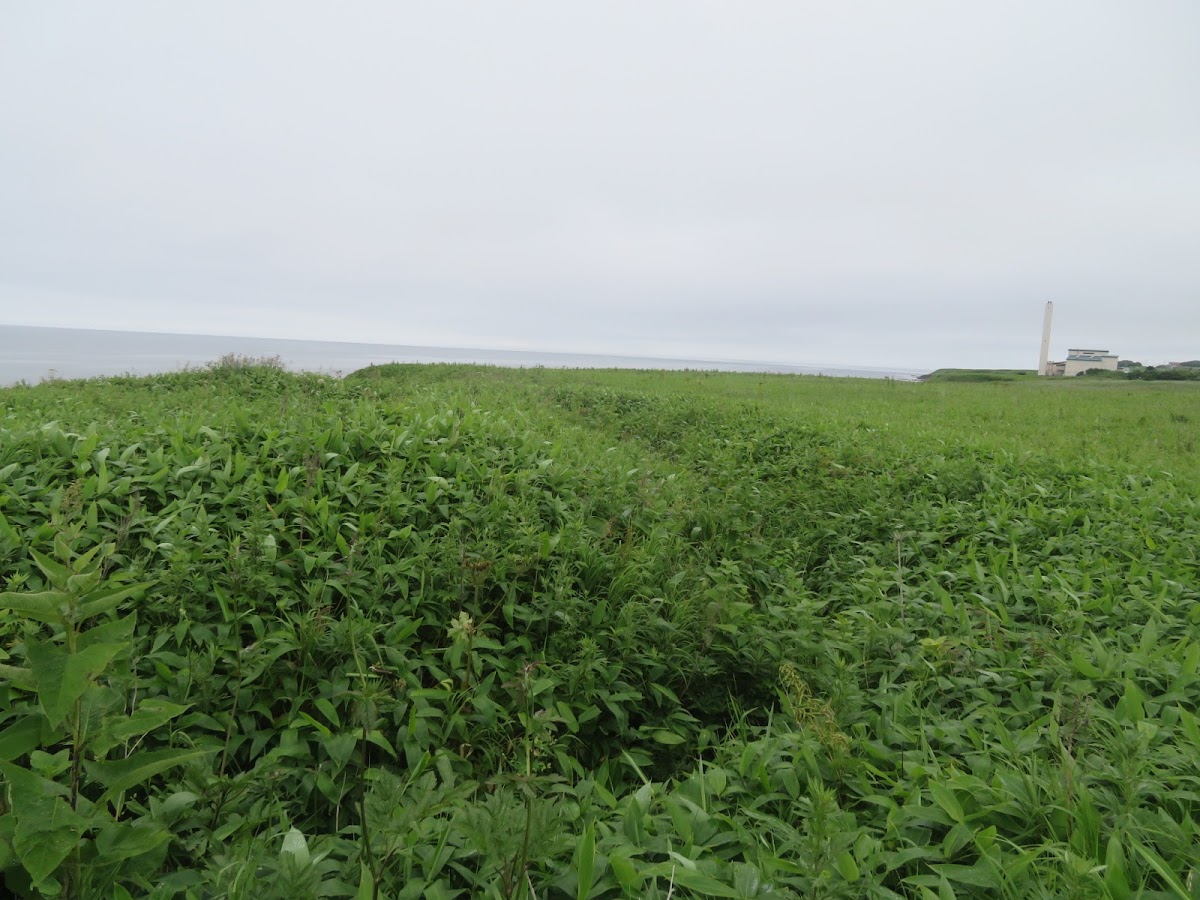
Sakuraoka Chashi is located near the unique natural environment of Shunkokutai (sandbars and wetlands), and is thought to have been strategically important for both access to marine resources and defense. Furthermore, its topography overlooking Nemuro Bay likely also served as a lookout post.
Highlights of Sakuragaoka Chashi
Observation Points for the Ruins
Points to note when visiting Sakuragaoka Chashi:
1. Arrangement of Moats and Earthworks
The remains of the moats surrounding the Chashi can still be seen as undulations in the terrain, even after hundreds of years. You can actually walk around and see how it was designed to prevent enemy intrusion.
2. Harmony with Natural Terrain
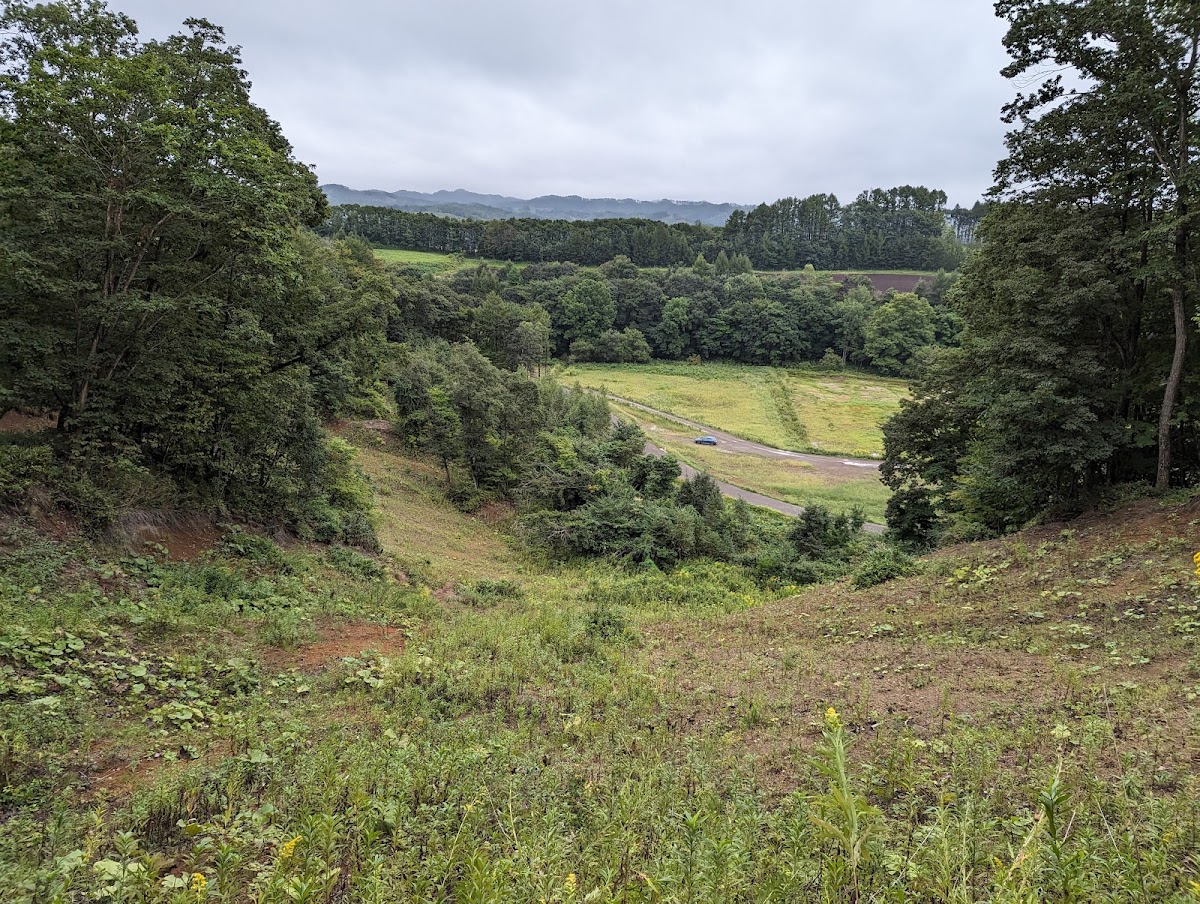
The design, which skillfully utilizes steep slopes and cliffs, speaks to the Ainu people’s ability to understand nature and their high level of architectural skill. Pay attention to the structure where the artificially excavated parts and the natural terrain are integrated.
3. View
Located overlooking the sea and wetlands, you can imagine what kind of scenery the people of that time saw as they lived. The view at sunset is especially spectacular.
Surrounding Natural Environment
The charm of Sakuragaoka Chashi lies not only in the ruins themselves, but also in the rich natural environment surrounding them.
Shunkokutai
Shunkokutai, a sandbar approximately 8km long and a Ramsar Convention-registered wetland, is known as a treasure trove of wild birds. There is a possibility of observing rare wild animals such as red-crowned cranes and white-tailed eagles.
Nemuro Bay Scenery
Enjoy the magnificent ocean scenery unique to the Nemuro Peninsula, where the Pacific Ocean and the Sea of Okhotsk meet.
Access and Visiting Information
How to Get to Sakuragaoka Chashi
Using Public Transportation
- Get off at Nemuro Station on the JR Nemuro Main Line
- Take the Nemuro Kotsu bus bound for Shunkokutai from Nemuro Station (approx. 15 minutes)
- Walk approximately 10-15 minutes from the nearest bus stop
Using a Car
- Approximately 10km from the center of Nemuro City via National Route 44 (approx. 15 minutes by car)
- Parking is available near the Shunkokutai Wild Bird Park Nature Center
- Set your car navigation system to “Shunkokutai Wild Bird Park Nature Center”
Visiting Precautions
Clothing and Equipment
- Comfortable walking shoes (trekking shoes recommended)
- Warm clothing appropriate for the season (Nemuro is cool even in summer)
- Insect repellent spray (spring to autumn)
- Hat and sunscreen
- Drinking water
Notes During Your Visit
- To avoid damaging the ruins, please walk only on the designated viewing paths.
- Please take all your trash with you.
- Do not collect plants or animals.
- Be aware of sudden weather changes (fog is common in this area).
- Avoid traveling alone, as this is a brown bear habitat.
Visiting Hours
- Open 24 hours a day, 365 days a year (however, daylight hours are recommended).
- Admission: Free
- Estimated time: Approximately 30 minutes to 1 hour
Sakuragaoka Chashi and the History of Nemuro
Interaction between Ainu and Japanese
The Nemuro Peninsula has long been an important living area for the Ainu people. During the Edo period, it came under the control of the Matsumae Domain, and trade with the Japanese became active. However, conflicts over trade and cultural clashes also arose, leading to tense relations, such as the Shakushain’s Rebellion of 1669.
Within this historical context, the Chashi served as an important base for the Ainu people to protect their way of life and culture.
Preservation Activities Since the Modern Era
While many Chashi (ancient fortified settlements) were lost due to development and agricultural conversion after the Meiji era, the Chashi sites on the Nemuro Peninsula have been preserved in relatively good condition. Thanks to the efforts of local researchers and citizen groups, their value was re-recognized, leading to their designation as a National Historic Site in 2006.
Currently, efforts for preservation and utilization continue, primarily led by the Nemuro City Board of Education.
Sightseeing Plan Including Sakuragaoka Chashi
One-Day Model Course
Morning
- Learn about Chashi at the Nemuro City Museum of History and Nature (Approx. 1 hour)
- Visit Sakuragaoka Chashi (Approx. 1 hour)
Afternoon
- Birdwatching at the Shunkokutai Wild Bird Park Nature Center (Approx. 1-2 hours)
- Visit the Onnemoto Chashi Ruins (Approx. 30 minutes)
- Watch the sunset at Nosappu Cape
Nearby Tourist Spots
Shunkokutai Wild Bird Park Nature Center
A facility where you can learn about the nature of Shunkokutai. Visiting before or after visiting the Chashi will give you a deeper understanding.
Nemuro City Museum of History and Nature
Exhibits on Ainu culture and Chashi are available, making it ideal for preparation before actually visiting the ruins.
Nosappu Cape
The easternmost cape in Japan. It is famous as a scenic spot overlooking the Northern Territories.
Rakuseki Nature Cruise
A cruise to enjoy the nature of the Nemuro Peninsula from the sea. You may even encounter sea otters and dolphins.
Cultural Value of Sakuragaoka Chashi
Movement Towards World Heritage Registration
Following the registration of the Jomon Archaeological Sites of Hokkaido and Northern Tohoku as a World Heritage Site, there is also a movement to register Ainu cultural heritage as a World Heritage Site. The Nemuro Peninsula Chashi Sites are attracting attention as one of the candidates.
Preservation of Ainu Culture
The Chashi sites, including Sakuragaoka Chashi, are not merely archaeological ruins, but “living heritage” that conveys the spiritual culture and worldview of the Ainu people to the present day. They play an important role in contemporary Ainu cultural preservation activities.
History of Research and Excavation
Academic Research
The Chashi sites of the Nemuro Peninsula, including Sakuragaoka Chashi, have been the subject of academic research since the 1930s. Prominent Ainu culture researchers, such as Hiromichi Kono and Mashio Chiri, have visited this site and conducted research.
In recent years, surveying using the latest technologies such as GPS and 3D scanning has been carried out, leading to a more detailed understanding of the remains.
Results of the Excavation
The excavation has yielded pottery, stone tools, and iron artifacts, revealing the period in which the Chashi (fortified settlement) was used and the lifestyle of the Ainu. In particular, the discovery of artifacts indicating trade with the Japanese provides important evidence supporting historical interaction.
Sakuragaoka Chashi in the Seasons
Spring (April-June)
As the snow melts, new greenery sprouts, and the songs of wild birds fill the air. This is the perfect season for observing migratory birds. However, caution is advised as the ground can be muddy immediately after the snow melts.
Summer (July-August)
Although it’s in Hokkaido, Nemuro’s summers are relatively cool, making it a comfortable place to visit. Wildflowers bloom in abundance, creating a lush and green landscape. However, this is also a time when fog is likely to occur.
Autumn (September-November)
The autumn foliage is beautiful, and the air is clear, allowing for expansive views. It’s also the salmon run season, making it easier to imagine the scenery seen by people of that time.
Winter (December-March)
The snow-covered Chashi (fortified settlements) have a fantastical atmosphere, but the heavy snow and cold make visits difficult. Winter visits are for advanced visitors only, requiring adequate equipment and experience.
Engagement with the Local Community
Local Preservation Activities
In Nemuro City, citizen volunteers conduct cleaning activities at the Chashi sites and maintain information boards. Local schools also incorporate Chashi visits into their local history curriculum.
Events and Educational Programs
The Nemuro City Board of Education regularly holds guided tours of the Chashi sites and workshops on Ainu culture. Participating in these programs will lead to a deeper understanding.
Photography Tips
Recommended Photography Spots
1. Panoramic View of the Chashi
Photograph from a slight distance to capture the topographical features of the Chashi. A wide-angle lens is useful.
2. Details of the Moat and Earthworks
Photograph from various angles to document the details of the remains. Morning and evening hours, when shadows are present, are recommended as they clearly show the topography.
3. Surrounding Landscape
Photograph with Nemuro Bay and Shunkokudai in the background, creating a composition that highlights the Chashi’s location and environment.
Precautions During Photography
- Photograph from designated areas to avoid damaging the remains.
- If using a tripod, be careful not to damage the ground.
- Drone photography requires prior permission.
- Be aware of weather changes (fog can suddenly form).
Summary: The Charm of Sakuragaoka Chashi
Sakuragaoka Chashi is a valuable heritage site that conveys the history and culture of the Ainu people to the present day. Nestled amidst the magnificent natural beauty of Hokkaido, this archaeological site is not merely a tourist attraction, but also a place to learn about the wisdom and spirituality of the indigenous people.
When visiting the Nemuro Peninsula, be sure to take the time to explore the Chashi ruins, including Sakuragaoka Chashi. Reflecting not only on the ruins themselves, but also on the surrounding natural environment and, above all, on the history of the people who lived in this land, will provide a deeper travel experience.
It is our responsibility to pass on this precious cultural heritage to future generations while maintaining an understanding and respect for Ainu culture. Sakuragaoka Chashi is an important teaching tool and a place for dialogue in this regard.