Sakasai Castle Complete Guide: A Sengoku Period Castle Ruins that Served as a Base for the Later Hojo Clan in Northern Kanto
What is Sakasai Castle?
Sakasai Castle is a Sengoku period hilltop castle located in Sakasai, Bando City, Ibaraki Prefecture. Currently, it is maintained as “Sakasai Castle Ruins Park,” and the buildings such as the turret gate, main hall, and watchtower, faithfully restored based on archaeological excavations, convey the appearance of the time.
Functioning as a frontline base for the Later Hojo clan’s expansion into northern Kanto, this castle is a valuable historical site for learning about Sengoku period castle architecture and military strategies. Its location on a hill overlooking the former Iinuma marsh in Sakasai, Bando City, Ibaraki Prefecture, speaks to the skillful use of natural terrain and the castle-building techniques of the Sengoku period.
History of Sakasai Castle
Sakasai Clan Era: Establishment of Sakasai Old Castle
The origin of Sakasai Castle lies in a castle built by the local powerful Sakasai clan. It is believed that Sakasai Tsunemune built the castle, and it functioned as the residence of the Sakasai clan. During this period, the castle was also known as “Sakasai Old Castle” and served as a base for a powerful local clan.
On March 3, 1536 (Tenbun 5), a turning point occurred during the time of Sakasai Tsuneshige. The Sakasai clan was forced to surrender after being attacked by the forces of the Later Hojo clan, based in Odawara. As a result, Sakasai Castle came under the control of the Later Hojo clan.
Later Hojo Era: Major Renovation to Iinuma Castle
After coming under the control of the Later Hojo clan, Sakasai Castle underwent a major renovation in 1577 (Tensho 5). Hojo Ujishige, the lord of Tamanawa Castle, summoned engineers from Fujisawa to rebuild the castle. This renovated castle came to be known as “Iinuma Castle.”
For the Later Hojo clan, Sakasai was a strategically important location for their invasions of Shimotsuke (present-day Tochigi Prefecture) and Hitachi (present-day Ibaraki Prefecture). Located on the border with various forces in northern Kanto, such as the Satake, Yuki, and Tagaya clans, it played a crucial role as a frontline base for the Later Hojo clan’s expansion into northern Kanto.
Hojo Ujishige, the eldest son of Hojo Tsunashige and lord of Tamanawa Castle, is said to have died at Sakasai Castle. This fact demonstrates how important Sakasai Castle was to the Later Hojo clan.
Abandonment
In 1590, with the fall of the Later Hojo clan following Toyotomi Hideyoshi’s siege of Odawara, Sakasai Castle also ceased to exist and was abandoned. The history of the castle, which functioned as a base for the Later Hojo clan’s control of northern Kanto for approximately 50 years, came to an end.
Structure and Layout of Sakasai Castle
Location and Topography
Sakasai Castle was built on the tip of a plateau, bordered by the Nishijinren River (irrigation canal) to the north and surrounded to the north and west by a vast marshland known as “Iinuma.” This location ensured natural fortification. Iinuma was a vast marshland stretching approximately 30 km from north to south, making the castle an impregnable fortress protected on three sides by water.
The location on a slightly elevated area facing flat land indicates that the surrounding area was once marshland, illustrating the skillful use of terrain in castle construction during the Sengoku period.
Main Enclosure and Bailey Layout
The main enclosure (honmaru) of Sakasai Castle was located in the center of the north side, and was basically square in shape, surrounded by earthen ramparts and dry moats. During construction, the castle grounds were designed with the honmaru on the northern cliff side, and multiple baileys lined up on the south side to strengthen the defenses, giving it the capacity to accommodate a large army.
A small enclosure, thought to be a barbican, is located in the south-central area, and the area with the turret gate on the east side is believed to have been the main entrance. Various defensive features are evident throughout, such as the projecting flanking fire on the north side.
Earthworks and Dry Moats
The remaining outer moat and earthworks are important remains of Sakasai Castle. Archaeological excavations have revealed the structure of the earthworks and the arrangement of the dry moats, confirming the unique castle-building techniques of the Later Hojo clan. The earthworks served to prevent enemy intrusion and also ensured visibility from within the castle.
Dry moats are moats that do not hold water and are a common defensive structure found in flatland castles in the Kanto region. The dry moats of Sakasai Castle were complexly arranged, effectively restricting the movements of attackers.
Highlights of Restored Structures
At Sakasai Castle Ruins Park, several structures have been faithfully restored based on archaeological excavations, allowing visitors to experience castle architecture from the Sengoku period.
Yaguramon (Gate Tower)
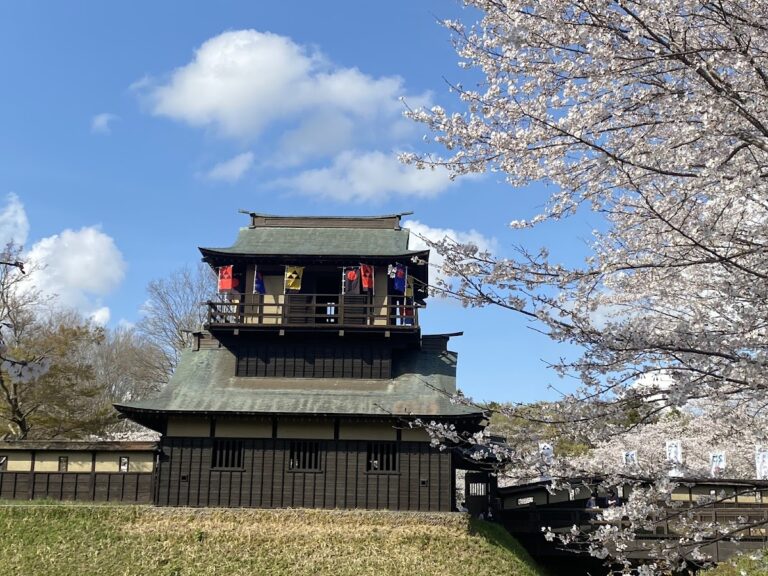
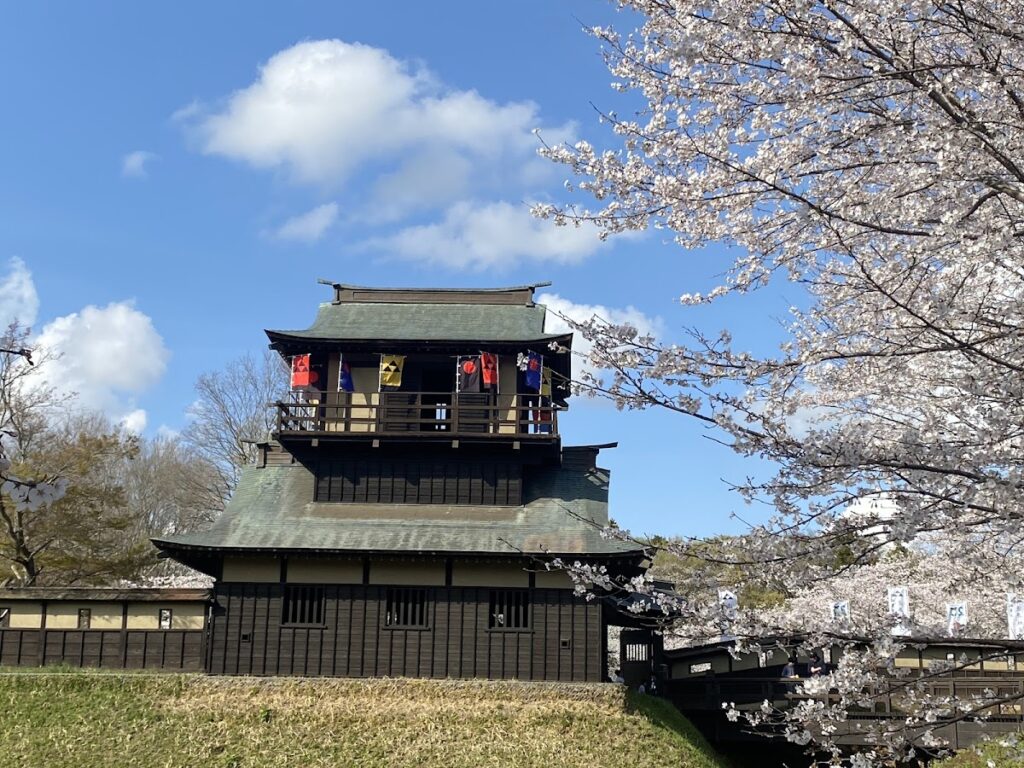
The restored yaguramon at the castle’s main entrance is a symbolic structure of Sakasai Castle. Its structure, with a tower built on top of the gate, served both defensive and surveillance functions. The restoration is based on the locations of the foundation stones and post holes discovered during archaeological excavations, offering insights into the architectural techniques of the time.
Shuden (Main Hall)
The Shuden, which functioned as the lord’s residence, has also been restored. It replicates the style of a samurai residence from the Sengoku period, allowing visitors to see the lord’s living and working spaces inside. The tatami-floored rooms and wooden-floored areas faithfully reproduce the architectural style of the time.
Seiroyagura (Watchtower Tower)
The Seiroyagura, which functioned as a watchtower, was a tall tower that served to monitor the surrounding area. “Seiro” refers to a structure resembling stacked well trusses, a simple yet effective building that provides a high vantage point for observation. From the restored watchtower, you can overlook the entire castle ruins park.
Watchtowers
Watchtowers located throughout the castle have also been restored. These towers were important facilities for detecting enemy movements early and transmitting that information within the castle. It is believed that the watchtower located on the northern cliff offered a view towards the former Iinuma area.
Yakui Gate
The Sakasai Castle Ruins Park also preserves a Yakui gate that was relocated from another site. The Yakui gate is a style used as a gate for samurai residences, characterized by its structure with supporting pillars behind the main pillars. Although this gate is not originally from Sakasai Castle, it has been relocated and preserved in the park as a valuable cultural asset that conveys Edo period architectural techniques.
Archaeological Excavation Results
Continuous archaeological excavations have been conducted at the Sakasai Castle ruins, resulting in many important discoveries. These findings form the basis of the current restored buildings.
The excavation revealed details such as the arrangement of building foundations, the locations of postholes, the structure of earthworks, and the depth and width of the moats. Furthermore, the unearthed pottery and weapons provide insights into the period of the castle’s use and the lifestyle of its inhabitants.
Of particular note is the overlapping of remains from the Later Hojo clan and the Sakasai clan. This layered structure allows us to understand the castle’s transformation process, making it a valuable resource for the study of Sengoku period castles.
Visitor Guide to Sakasai Castle Ruins Park
Access
Access by Car
- Approximately 40 minutes from the Joban Expressway “Yawara IC”
- Approximately 50 minutes from the Tohoku Expressway “Kuki IC”
- Free parking available (approximately 50 regular cars)
Access by Public Transportation
- Approximately 15 minutes by car from the Tobu Noda Line “Atago Station”
- Approximately 5 minutes on foot from the Ibaraki Kyuko Bus “Sakasai Castle Ruins” bus stop
Opening Hours and Admission Fee
- Opening Hours: 9:00 AM – 4:30 PM
- Closed Days: Mondays (or the following day if Monday is a public holiday), New Year holidays
- Admission Fee: Free
Estimated Visiting Time
For a leisurely visit to the entire castle ruins park, approximately 1-2 hours is recommended. Including a tour of the reconstructed buildings and a walk along the earthworks and moats will make for a more fulfilling visit.
Facility Information
- Parking: Free
- Restrooms: Located within the park
- Information Boards: Explanation boards at key points
- Accessibility: Partially accessible
Nearby Tourist Attractions
Sekiyado Castle
Located about 30 minutes by car from Sakasai Castle, Sekiyado Castle was a strategic point for water transport at the confluence of the Tone River and Edo River. Currently, it is maintained as the Sekiyado Castle Museum, where you can learn about the history of the rivers and the castle. Visiting both Sakasai Castle and Sekiyado Castle will give you a deeper understanding of the Sengoku period history of this region.
Historical Spots in Bando City
In addition to Sakasai Castle, there are many other historical spots in Bando City. By visiting ancient shrines, temples, and historical sites, you can experience the rich history and culture of this region.
Lords of Sakasai Castle
Sakasai Clan
The Sakasai clan, the first lords of Sakasai Castle, were a local powerful family in Shimosa Province. Through the lineage of Sakasai Tsunemune and Sakasai Tsuneshige, they established their control over this region. However, with the expansion of the Later Hojo clan’s power, their rule came to an end.
Hojo Ujishige
Hojo Ujishige, the eldest son of Hojo Tsunashige, was a samurai known as the lord of Tamanawa Castle. In 1577, he oversaw the major reconstruction of Sakasai Castle, developing it as a base for the Later Hojo clan’s control of northern Kanto. The record that Ujishige died at this castle speaks to its importance.
Cultural Value of Sakasai Castle
The ruins of Sakasai Castle possess high historical value as a castle structure from the Sengoku period. The following points are particularly noteworthy:
- Hojo Clan’s Castle Construction Techniques: A valuable example of the Hojo clan’s castle construction techniques in the Kanto region.
- Multilayered Remains: Remains from the Sakasai Clan era and the Hojo Clan era overlap, showing the castle’s transformation process.
- Restoration Based on Archaeological Excavations: Experience the castle’s appearance at the time through a restored structure based on academic evidence.
- Witness to Local History: A historical site that tells the story of the power struggles during the Sengoku period in northern Kanto.
Points to Enjoy at Sakasai Castle
Spring Cherry Blossoms
Sakasai Castle Ruins Park is also known as a famous cherry blossom viewing spot. In spring, cherry trees planted around the earthworks and moats bloom, allowing visitors to enjoy the beautiful contrast between the Sengoku castle ruins and the cherry blossoms.
Autumn Foliage
In autumn, the trees in the park change color, making it a popular spot for viewing autumn leaves. Enjoy the vibrant autumn scenery while walking along the earthworks.
Photography
The restored turret gate and main hall are popular photogenic subjects. Photos of the turret gate against a blue sky are sure to be a hit on social media. The remains of the earthworks and dry moats are also attractive photographic subjects for castle enthusiasts.
Event Information
Sakasai Castle Ruins Park hosts various events throughout the year. We recommend checking the Bando City Tourism Association website for event information before your visit, including experiences such as trying on Sengoku period armor and lectures on local history.
Deepening Your Understanding of Sakasai Castle’s Charm
As a Strategic Base of the Later Hojo Clan
Sakasai Castle was not merely a local castle, but a strategically important point in the Later Hojo clan’s control of northern Kanto. Located on the front lines against powerful northern Kanto forces such as the Satake, Yuki, and Tagaya clans, it functioned as a bridgehead for expanding the Later Hojo clan’s sphere of influence northward.
The major reconstruction in 1577 (Tensho 5) reflects this strategic importance. The fact that the Later Hojo clan undertook such a large-scale construction project, even bringing in engineers from Tamanawa Castle, demonstrates the high expectations they had for this castle.
Construction Utilizing Natural Fortifications
The most distinctive feature of Sakasai Castle is its location, which makes maximum use of the natural terrain of Iinuma. The topography, situated on the tip of a plateau surrounded on three sides by swamps, created extremely disadvantageous conditions for attackers.
By skillfully utilizing this natural fortification while also strategically placing artificial earthworks and dry moats, they achieved an impregnable fortress. This is a prime example of the pinnacle of castle construction techniques during the Sengoku period.
Archaeological Excavations Reveal the Castle’s True Nature
Continued archaeological excavations at the Sakasai Castle site have revealed the castle’s true nature, which could not be known from historical documents alone. The layout, scale, and structure of the buildings have been specifically determined, and reconstructed structures have been built based on this information.
This approach of “faithful reconstruction based on archaeological excavations” is an excellent method for balancing historical accuracy with the appeal of a tourist resource, and has become a model case for castle development throughout Japan.
Sakasai Castle and the Castle Culture of Ibaraki Prefecture
Ibaraki Prefecture has many castle ruins, and Sakasai Castle is a particularly well-preserved example of a castle that has undergone significant restoration and development. Its location in Bandō City, Ibaraki Prefecture, is a crucial point in the history of power struggles during the Sengoku period in the eastern part of the Kanto Plain.
Compared to other castle ruins in the prefecture, such as Mito Castle, Tsuchiura Castle, and Kasama Castle, Sakasai Castle is a valuable historical site where one can directly experience the castle-building techniques of the Later Hōjō clan, a major power in the Kanto region.
Summary: The Contemporary Significance of Sakasai Castle
Sakasai Castle Ruins Park functions not merely as a historical site, but as a “living textbook” for learning about Sengoku period castle architecture and military strategies. The faithfully restored buildings based on archaeological excavations, the well-preserved earthworks and moats, and the location that utilizes the natural terrain convey the spirit of the Sengoku period to visitors.
This castle, which the Later Hojo clan considered a crucial base for their expansion into northern Kanto, has, after approximately 400 years, taken on a new role as an important tourist resource that conveys the region’s history and culture. When visiting Bando City in Ibaraki Prefecture, be sure to stop by Sakasai Castle Ruins Park and immerse yourself in the historical romance of the Sengoku period.
Sakasai Castle Ruins Park can be enjoyed by a wide range of people, including castle enthusiasts, history buffs, families, and photography lovers. Its charm lies in the fact that each visitor can make new discoveries from their own perspective. The great appeal of Sakasai Castle is that you can find something new no matter how many times you visit.