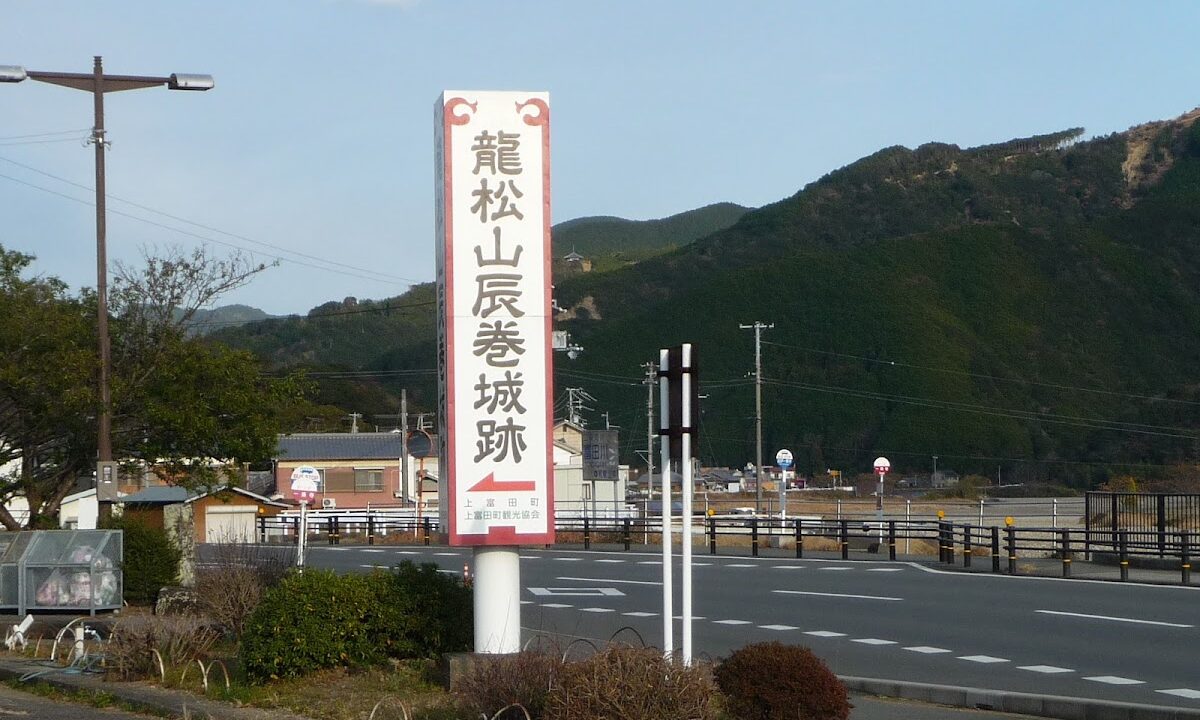
Ryushozan Castle (Wakayama Prefecture) Complete Guide: The Main Castle of the Yamamoto Clan, the Largest Powerful Family in Kinan, and its Sengoku Period History
What is Ryushozan Castle?
Ryushozan Castle is a mountain castle located at an altitude of 121m in Ichinose, Kamitonda-cho, Nishimuro-gun, Wakayama Prefecture. Also known as Ichinose Castle and Tatsumaki Castle, this castle, built on a mountaintop on the north bank of the Tomita River, is known as a representative medieval mountain castle of the Kinan region.
The Yamamoto clan, who served as retainers of the Muromachi Shogunate, resided here for 24 generations, and it was the base of the largest powerful family in Kinan, controlling the entire Tomita River basin. Despite being a mountain castle with a relative height of approximately 80m, it boasts impressive remains such as vast baileys and massive moats, and was designated a Wakayama Prefecture Designated Cultural Property in April 2021.
The castle’s name is said to have originated when the second lord, Yamamoto Tadatsugu, renovated the castle. A large, ancient pine tree within the castle grounds resembled a sleeping dragon, hence the name “Ryūshōzan Castle” (Dragon Pine Mountain Castle).
History of the Yamamoto Clan and the Establishment of Ryūshōzan Castle
The Yamamoto Clan’s Entry into the Region and Their Rule
The history of Ryūshōzan Castle begins with the Yamamoto clan’s entry into the region as the jitō (land steward) of Ichihara Manor in Kii Province. The first lord, Yamamoto Tadayuki, held the position of a gokenin (vassal) directly subordinate to the Shogun as a retainer of the Muromachi Shogunate, and built a powerful force in the Kinan region.
It is believed that the castle was fully constructed during the Tenbun era (1532-1554), and the Yamamoto clan ruled this area for 24 generations thereafter. The Yamamoto clan controlled important strategic locations in the Kumano region, primarily along the Tomita River basin, and reigned as a powerful local clan.
Role as a Retainer of the Muromachi Shogunate
The Yamamoto clan held a special position as retainers of the Muromachi Shogunate. These retainers were a military force directly under the Shogun, playing a crucial role in guarding Kyoto and serving as close advisors to the Shogun. Maintaining close ties with the central government, despite being located in Kinan, a region far from Kyoto, was one of the factors supporting the Yamamoto clan’s expansion of power.
Structure and Layout of Ryumatsuyama Castle
Characteristics of the Main Enclosure (Honmaru)
The main enclosure (Honmaru), the heart of Ryumatsuyama Castle, is located on a mountaintop at an altitude of 121m and boasts a remarkably large area for a mountain castle. Earthen ramparts surround the main enclosure, creating a highly defensible structure. Currently, it is maintained as a park, and the remains are well-preserved.
From the main enclosure, one can overlook the Tomita River basin, indicating its ideal location for monitoring developments within the territory. This size speaks to the extent of the Yamamoto clan’s power, and it was large enough to accommodate many retainers and soldiers.
Layout of the Second Enclosure and Baileys
Below the main enclosure lies the second enclosure, which surrounds it. This second enclosure is also large for a mountain castle, and while its structure—with the second enclosure surrounding the main enclosure—is relatively simple, it boasts a practical layout for combat.
While it’s currently possible to access the second enclosure by car, the road is narrow, so caution is advised. A clear cliff face separates the main enclosure from the second enclosure, demonstrating various defensive measures to prevent enemy intrusion.
Massive Moat System
The greatest highlight of Ryumatsuyama Castle is the massive moat system built on the northern slope. A double moat can be seen north of the main enclosure, and multiple moats and vertical trenches are continuously arranged along the slope.
These moats are large in scale and sufficiently deep, indicating they effectively served as defensive structures. They are particularly impressive remains among the mountain castles of the Kinan region, demonstrating the high level of castle-building technology of the Yamamoto clan.
Earthworks and Moats
Earthworks remain well-preserved around the main enclosure, and in some places, high earthworks can be seen. Moats (dry moats) are also positioned to strengthen the defenses between enclosures.
Vertical moats are also dug along the slopes, serving to prevent enemy attacks from the flanks. These defensive structures exhibit typical characteristics of mountain castles from the Sengoku period, indicating that the castle’s layout was designed with actual combat in mind.
Battles in the Tensho Era and the Castle’s Demise
Hashiba Hideyoshi’s Invasion of Kishu and Ryumatsuyama Castle
The fate of Ryumatsuyama Castle was dramatically altered by Hashiba Hideyoshi’s invasion of Kishu in 1585. At this time, Yamamoto Yasunaga became the last lord of Ryumatsuyama Castle.
When a large army led by Hideyoshi’s younger brother, Hashiba Hidenaga, invaded Kii Province, Yamamoto Yasunaga holed up in Ryumatsuyama Castle and resisted. Hideyoshi’s army included Todo Takatora, later known as a master castle builder, and a formidable force besieged Ryumatsuyama Castle.
Three Months of Siege
Yamamoto Yasunaga held out in the castle for approximately three months, using its strong defenses to withstand Hideyoshi’s attacks. However, the overwhelming difference in troop numbers and the cutoff of supply lines gradually worsened the situation inside the castle.
Ultimately, a peace agreement was reached, and Yamamoto Yasunaga decided to surrender the castle. This peace agreement resulted in the bloodless surrender of Ryumatsuyama Castle, bringing an end to the 24-year rule of the Yamamoto clan.
The End of Yamamoto Yasunaga
As a condition of the peace agreement, Yamamoto Yasunaga was to move to Yamato-Koriyama Castle. However, this peace agreement was a ploy by Hideyoshi, and Yasunaga was assassinated on his way to Koriyama Castle. This completely wiped out the Yamamoto clan’s power, and Ryumatsuyama Castle was abandoned.
Hideyoshi’s invasion of Kishu aimed to eliminate rebellious forces within the province, and the Yamamoto clan was among those targeted. The fall of Ryumatsuyama Castle symbolized the end of the era of medieval powerful families in the Kinan region.
Highlights of Ryumatsuyama Castle
Value as a Prefectural Designated Cultural Property
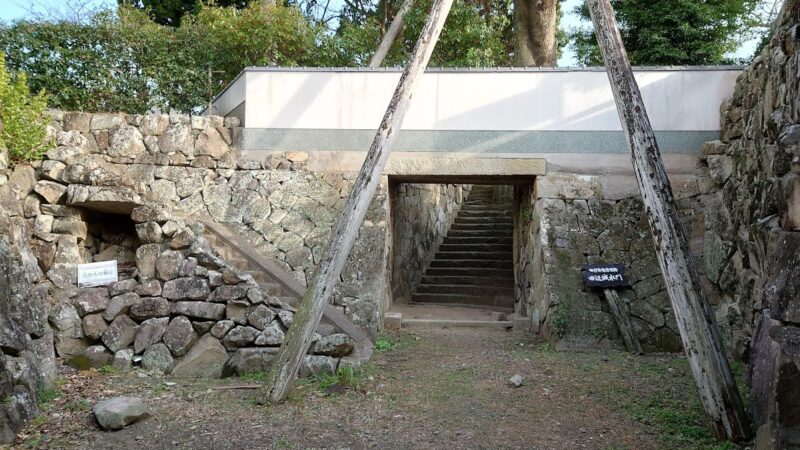
Ryumatsuyama Castle ruins, designated as a Wakayama Prefecture Cultural Property in April 2021, possess high historical value as a representative medieval mountain castle of the Kinan region. The remains are well-preserved, making it a valuable historical site for learning about the structure of mountain castles during the Sengoku period.
In recent years, explanatory signs have been updated, creating a more accessible environment for visitors. The local Kamitonda town is also focusing on the protection and utilization of the site as a cultural property, making it a must-see spot for history and castle enthusiasts.
Practical Defensive Facilities
The greatest appeal of Ryumatsuyama Castle lies in its numerous defensive facilities designed with actual combat in mind. The massive moats are arranged in a continuous line on the slope, forming a strong defensive line that hindered enemy advances.
Earthworks and steep slopes remain clearly visible, allowing visitors to experience the castle-building techniques of the time. The double moat on the north side, in particular, is impressive in both scale and depth, making it a must-see for castle enthusiasts.
Views and Location
The views from the main enclosure are magnificent, offering a panoramic view of the Tomita River basin. It’s an excellent location that makes it clear why the Yamamoto clan chose this site.
The location, at an altitude of 121m and a relative height of 80m, is suitable for defense, yet not extremely difficult to access, suggesting a choice that also considered convenience as a residence. Its location behind the Kasuga Shrine also indicates a connection to religious authority.
Access and Visiting Information
Access by Car
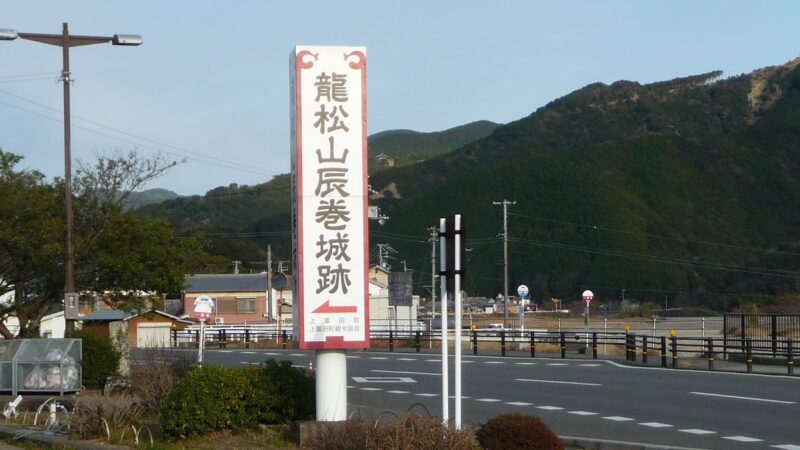
Access to Ryumatsuyama Castle is most convenient by car. It is approximately 20 minutes from the Kamitonda Interchange on the Kisei Expressway. Located easily accessible from National Route 42, it’s a convenient stop for sightseeing in the Kinan region.
While it’s possible to drive to the vicinity of the second enclosure, the road is narrow, so careful driving is necessary. There are sections where passing oncoming vehicles is difficult, so please drive cautiously.
Access by Public Transportation
If using public transportation, it’s approximately a 31-minute bus ride from JR Kii-Tanabe Station. However, you will need to walk from the bus stop to the castle ruins.
It is recommended to check the timetable and service status in advance. Since public transportation in the Kinan region is limited, you may want to consider renting a car.
Precautions for Visiting the Castle
Ryumatsuyama Castle is a mountain castle, so appropriate equipment is necessary for visiting. Please prepare comfortable walking shoes and clothing. While the main and second enclosures are maintained as a park, be careful of your footing when viewing the remains such as moats.
In summer, it is recommended to bring insect repellent and drinking water. Furthermore, it is safer to visit in groups rather than alone.
Nearby Attractions
Kasuga Shrine
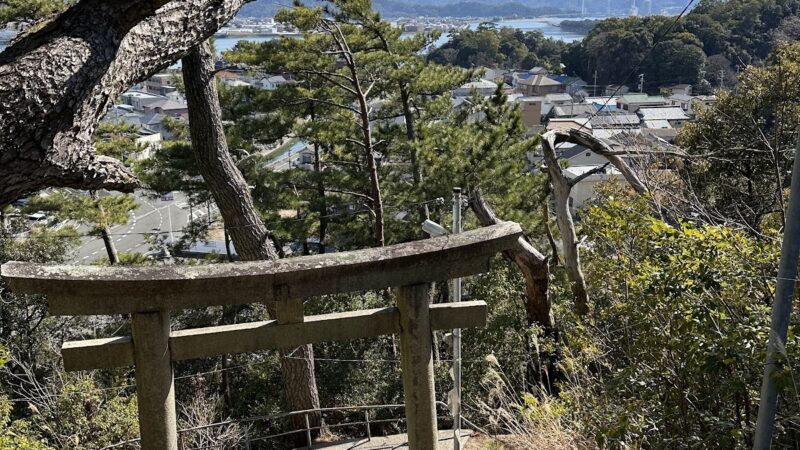
Kasuga Shrine is located at the foot of the Ryumatsuyama Castle ruins. Its location on the hill behind the castle suggests a deep connection between the Yamamoto clan and the shrine. It is common to visit the shrine before ascending to the castle.
History and Culture of Kamitonda Town
Besides Ryumatsuyama Castle, Kamitonda Town has other historical attractions. Learning about the town’s history and culture will allow you to gain a deeper understanding of the characteristics of the region ruled by the Yamamoto clan.
Nature of the Tomita River Basin
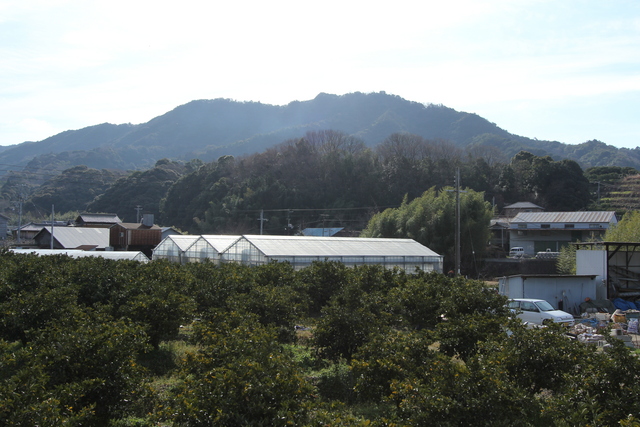
The Tomita River is a representative clear river of the Kinan region, and the surrounding natural environment is also attractive. You can enjoy the rich nature of Kinan in conjunction with visiting the castle ruins.
Current Status and Future of Ryumatsuyama Castle Research
Archaeological Excavations and Research
Recent investigations of Ryumatsuyama Castle are yielding new insights. With its designation as a prefectural cultural property, further research is expected. As academic research progresses, including the creation of layout maps and detailed surveys of the remains, we will gain a more detailed understanding of the Yamamoto clan’s rule and castle-building techniques.
Preservation and Utilization
Kamitonda Town is working on the preservation and utilization of the Ryumatsuyama Castle ruins. Efforts are being made to pass on its cultural value to future generations through updating explanatory signs and protecting the remains.
It is also used as a place for local history education, providing local children with an opportunity to learn about their local history.
The Position of Ryumatsuyama Castle in the Kinan Region
A Center of Regional Governance
Ryumatsuyama Castle was not merely a military base, but the political, economic, and cultural center of the Tomita River basin. The Yamamoto clan ruled this area for 24 generations, deeply rooted in the local community.
The Yamamoto clan’s rule, which combined ties to the central government as retainers of the Muromachi Shogunate with the establishment of their own independent sphere of influence as a local powerful family, can be considered a model of regional governance in medieval Italy.
Relationship with Kumano Faith
The Kinan region is an area through which the pilgrimage routes to the Kumano Sanzan shrines pass, and is deeply connected to Kumano faith. The Yamamoto clan also protected Kumano faith, and it is believed they utilized religious authority in their governance, as seen in their relationship with Kasuga Shrine.
Key Point for Water Transport and Transportation
The Tomita River was an important route for transporting goods, and Ryumatsuyama Castle was located at a key point along it. It is presumed that the Yamamoto clan gained economic benefits by controlling transportation along the river.
Significance of Visiting Ryumatsuyama Castle
The Reality of Local Powerful Clans in the Sengoku Period
Visiting Ryumatsuyama Castle allows you to experience firsthand what kind of castles local powerful clans built and how they governed their territories during the Sengoku period. Here you will find a medieval mountain castle rooted in the local community, different from the castles of famous daimyo.
Excellent Preservation of Remains
As a representative mountain castle of the Kinan region, Ryumatsuyama Castle has preserved excellent remains. The scale and state of preservation of the moat system, in particular, are remarkable, making it a valuable historical site for learning about castle construction techniques of the Sengoku period.
Understanding Local History
Learning the history of Ryumatsuyama Castle leads to an understanding of the history of the Kinan region. How did local powerful families survive and perish within the larger historical currents of the central government? The history of Ryumatsuyama Castle and the Yamamoto clan offers many lessons as one example.
Summary
Ryumatsuyama Castle is the largest medieval mountain castle remaining in Kinan, located in Kamitonda Town, Wakayama Prefecture. It was the residence of the Yamamoto clan, who prospered as retainers of the Muromachi Shogunate, for 24 generations, and a historical base that controlled the Tomita River basin.
Built on a mountaintop at an altitude of 121m, the castle retains its vast main and secondary enclosures, massive moat system, and earthworks in excellent condition. It was designated a Wakayama Prefecture Cultural Property in 2021. In 1585, during Hashiba Hideyoshi’s invasion of Kishu Province, the last lord of the castle, Yamamoto Yasunaga, made peace after a three-month siege, but was subsequently murdered, marking the end of the Yamamoto clan’s era.
Currently, the site is maintained as a park, and it is possible to access the area around the second enclosure by car. Located in a convenient location about 20 minutes from the Kamitonda Interchange on the Kisei Expressway, it is a historical site that you should definitely visit when visiting the Kinan region. Ryumatsuyama Castle, where you can experience the reality of local powerful families during the Sengoku period and the practical structure of a mountain castle, is a must-see spot for history buffs and castle enthusiasts.