Oka Castle (Taketa City, Oita Prefecture) Complete Guide | A Thorough Explanation of the Impregnable Mountain Castle and the Setting of “Kojo no Tsuki” (The Moon Over the Ruined Castle)
Oka Castle, towering over Taketa City in Oita Prefecture, is a magnificent mountain castle with impressive stone walls built atop a sheer cliff. From its construction legend in 1185 to its abandonment in the Meiji era, this castle boasts a history of approximately 700 years and is also known as the inspiration for Rentaro Taki’s famous song “Kojo no Tsuki” (The Moon Over the Ruined Castle). Selected as one of Japan’s 100 Famous Castles and protected as a nationally designated historical site, Oka Castle’s charm is explored in detail, including its history, highlights, and tourist information.
Overview and Basic Information of Oka Castle
Oka Castle (Okajō) is a mountain castle located in Taketa, Taketa City, Oita Prefecture. It is also known as Gagyūjō or Bungo Taketa Castle. Built on Mt. Tenjin, 325 meters above sea level, the castle boasts a vast scale, with a relative height of 95 meters, a castle area measuring 2,500 meters east-west and 362 meters north-south, and a total area of approximately 234,000 square meters.
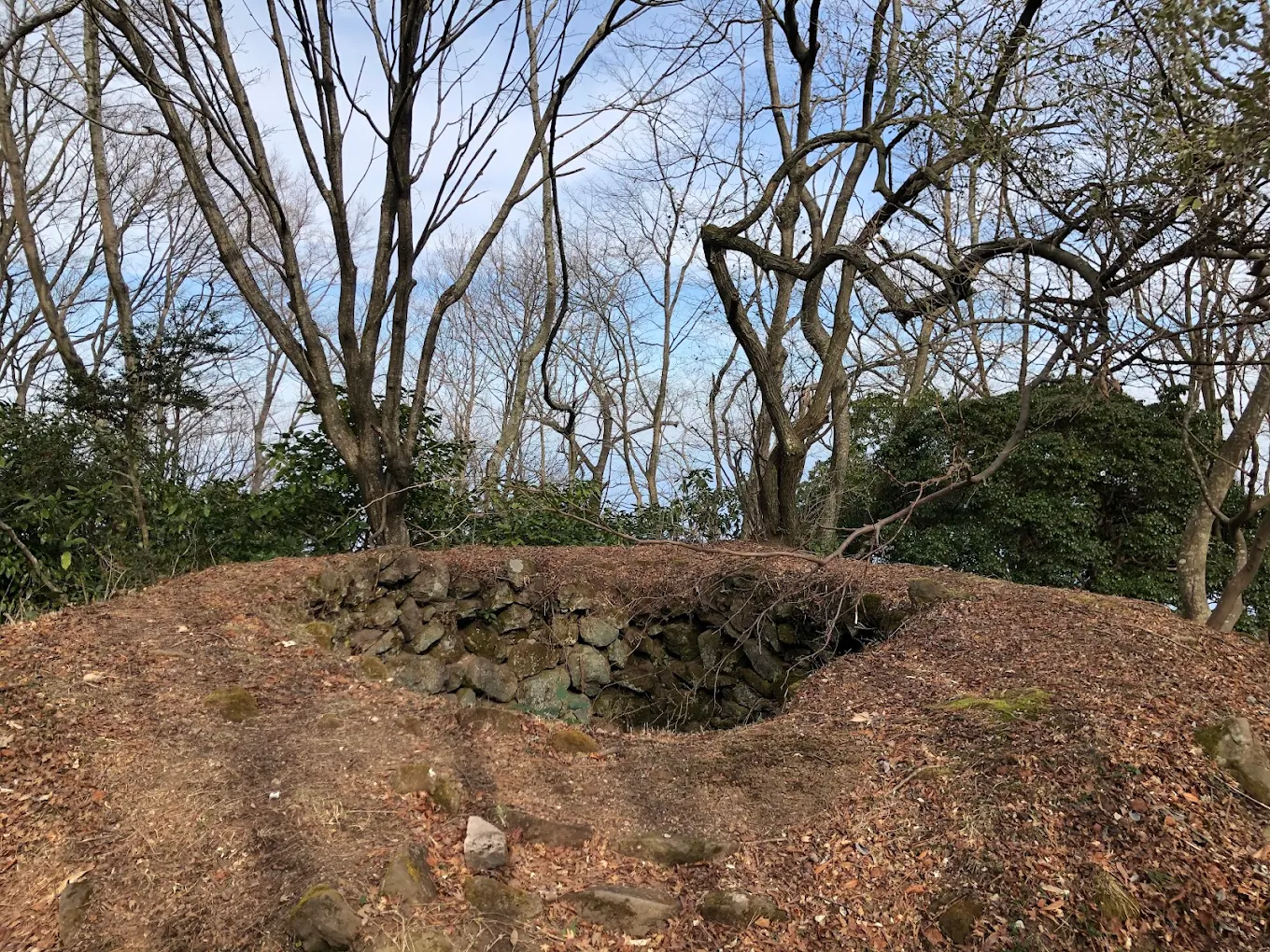
The castle’s shape resembles a reclining cow, hence its name, “Gagyujo” (Reclining Cow Castle). Surrounded on all sides by sheer cliffs, it is a natural stronghold and is known as an “impregnable castle.” Although no structures remain today, the magnificent stone walls still convey its former grandeur.
Basic Information
- Location: 2889 Taketa, Taketa City, Oita Prefecture (Toll collection point and parking lot are at 2761)
- Opening Hours: 9:00~17:00 (Last entry 16:30)
- Admission Fee: 300 yen for high school students and above, 150 yen for elementary and junior high school students (group discounts available)
- Parking: Free parking available (120 spaces for regular cars)
- Designation: National Historic Site, One of Japan’s 100 Famous Castles (No. 95), One of Japan’s 100 Best Cherry Blossom Viewing Spots
History of Oka Castle
Legend of its Construction and Ogata Koreyoshi
Regarding the founding of Oka Castle, there is a legend that it was built in 1185 by Ogata Saburo Koreyoshi to welcome Minamoto no Yoshitsune. Ogata Koreyoshi was a powerful warlord of Bungo Province. It is said that when Minamoto no Yoshitsune, who had distinguished himself in the defeat of the Taira clan, was pursued by his brother, Minamoto no Yoritomo, Ogata Koreyoshi hastily built a castle in this area to shelter Yoshitsune.
However, there is no historical evidence to support this legend, and it has been suggested that the actual construction date may be even earlier. Archaeological investigations have confirmed remains dating from the late Heian period to the early Kamakura period, confirming that some kind of castle structure existed during the period corresponding to the legend.
Battles in the Sengoku Period
Oka Castle first appears on the historical stage during the Sengoku period (Warring States period). In 1586, during the Shimazu clan’s campaign to unify Kyushu, Oka Castle became the site of fierce battles. The castle lord at the time, Shiga Chikatsugu, is said to have repelled a fierce attack by the Shimazu army, estimated at around 40,000 men, with only a little over 1,000 soldiers.
This battle proved the formidable strength of Oka Castle, establishing its reputation as “impregnable.” The castle’s layout, skillfully utilizing the cliffside terrain, and strategically placed stone walls repelled the large Shimazu army.
The Establishment of the Oka Domain and the Nakagawa Clan
In 1594 (Bunroku 3), Nakagawa Hidenari, lord of Miki Castle in Harima Province, was appointed to Oka Castle by order of Toyotomi Hideyoshi with a stipend of 70,000 koku, thus establishing the Oka Domain. As the first lord, Nakagawa Hidenari extensively renovated the existing mountain castle, completing Oka Castle as a modern fortress.
Many of the magnificent stone walls that remain today date from the time of Nakagawa Hidenari’s construction. He arranged the main baileys (kurwa), including the main keep, second bailey, third bailey, and western bailey, and built a sturdy castle entirely constructed of stone walls. The total length of the stone walls is approximately 3 kilometers, with many sections exceeding 10 meters in height.
The Nakagawa family ruled the Oka Domain for 14 generations until the Meiji Restoration, and the castle town of Takeda flourished as the cultural and economic center of Bungo Province. The Oka Domain was a medium-sized domain with a 70,000 koku (unit of rice production) yield, but it maintained stable administration through financial reforms and industrial development.
Meiji Restoration and Abolition of the Castle
With the abolition of the feudal domains and establishment of prefectures in 1871 (Meiji 4), the Oka Domain was abolished, and Oka Castle was also abandoned. In 1874 (Meiji 7), all the buildings within the castle were demolished, leaving only the stone walls. However, the historical value of these stone walls was recognized, and in 1936 (Showa 11), they were designated a national historic site.
Features and Highlights of Oka Castle
Impressive Stone Walls
The greatest highlight of Oka Castle is undoubtedly its magnificent stone walls, which stretch for approximately 3 kilometers in total length. One of the attractions is being able to observe the different stonework techniques used throughout history, such as rough-hewn stonework, fitted stonework, and cut stonework.
In particular, the stonework extending from the north side of the third bailey to the second bailey is built on top of a sheer cliff, and the sight of it towering amidst the mountains is breathtaking. The sight of the stonework, exceeding 10 meters in height, stacked in multiple layers, truly lives up to its reputation as “impregnable.”
Upon entering the castle from the Otemon Gate ruins, the first thing that catches the eye is the stonework, approximately 18 meters high. This “stonework of the approach to the castle” is a symbolic feature of Oka Castle and overwhelms visitors.
Spectacular View from the Main Bailey
The main bailey ruins are located at the highest point within the castle grounds, offering a 360-degree panoramic view. You can see representative mountains of Kyushu, such as Mount Aso, the Kuju mountain range, and Mount Sobo, and the castle town of Takeda spreads out below.
In the early mornings from autumn to winter, if the conditions are right, you can see the fantastical sight of a “castle in the sky” floating above a sea of clouds. While the pronunciation differs from Takeda Castle in Hyogo Prefecture, this is also known as a famous spot for viewing sea of clouds.
Ninomaru, Sannomaru, and Nishinomaru
Ninomaru is the second most important enclosure after the Honmaru (main enclosure), and is believed to be the site of the feudal lord’s residence. A vast flat area remains, allowing one to imagine the scale of the former buildings.
Sannomaru occupies a strategically important position for the castle’s defense, and was equipped with turrets and gates. The stone walls of the turret bases are still well-preserved.
Nishinomaru is the enclosure protecting the western side of the castle, and the view from here is magnificent, especially known for the beauty of the sunset.
Rentaro Taki and “Kojo no Tsuki” (The Moon over the Ruined Castle)
Rentaro Taki, one of Japan’s leading composers, spent his boyhood in Takeda. It is said that memories of playing at the ruins of Oka Castle later became the motif for the famous song “Kojo no Tsuki” (The Moon Over the Ruined Castle).
A bronze statue of Rentaro Taki is installed within the castle grounds, and there is a mechanism that plays the melody of “Kojo no Tsuki.” Listening to this masterpiece amidst the scenery created by the stone walls and nature, the scene that Rentaro Taki felt resonates in your heart.
The Beauty of Nature in Every Season
Oka Castle has been selected as one of “Japan’s Top 100 Cherry Blossom Viewing Spots,” and in spring, approximately 2,500 cherry trees bloom. The contrast between the stone walls and the cherry blossoms is a spectacular sight, attracting many tourists.
In autumn, the autumn leaves are beautiful, with 2,500 trees, mainly maple trees, coloring the castle ruins. The contrast between the remaining stone walls and the autumn leaves has a different charm than the cherry blossoms in spring.
Recommended Gourmet Food and Nearby Tourist Spots at Oka Castle
Taketa’s Local Cuisine
To enjoy Taketa City’s local cuisine in conjunction with your visit to Oka Castle, try their specialty dishes.
Kashira Ryori (Pig’s Head Dishes) is a local Taketa dish, a unique dish made with pig’s head. It’s said to be rich in collagen and good for beauty.
Toriten (Chicken Tempura) is a specialty of Oita Prefecture, but Taketa City also has many restaurants serving delicious toriten. The combination of crispy batter and juicy chicken is exquisite.
Bungo Beef is a representative brand of beef from Oita Prefecture, and can be enjoyed at restaurants in Taketa City. Enjoying dishes made with local ingredients after visiting Oka Castle is highly recommended.
Strolling Through the Castle Town
The castle town of Taketa, spread out at the foot of Oka Castle, is charming with its historical streetscape that retains the atmosphere of the Edo period. Samurai residences and merchant houses line the streets, allowing for a peaceful stroll.
Tonomachi Samurai Residence Street is an area where former samurai residences remain, with white-walled storehouses and cobblestone streets that convey the atmosphere of yesteryear.
The Taki Rentaro Memorial Museum offers detailed information about the life and works of Taki Rentaro. It’s a spot you’ll want to visit in conjunction with Oka Castle.
Nearby Tourist Attractions
Nagayu Onsen is a hot spring resort in Taketa City famous for its carbonated springs. It’s perfect for relaxing after sightseeing at Oka Castle. It boasts one of the highest concentrations of carbonated spring water in Japan, and you can also enjoy drinking the water.
Harajiri Falls is a waterfall 120 meters wide and 20 meters high, sometimes called the “Niagara of the East,” located about 20 minutes by car from Oka Castle.
Kuju Mountain Range is easily accessible, allowing you to enjoy mountain climbing and hiking. Activities in the magnificent natural surroundings, combined with Oka Castle sightseeing, will make for a fulfilling trip.
Access Information
Access by Public Transportation
It’s approximately a 25-minute walk from Bungo-Taketa Station on the JR Hohi Main Line to Oka Castle Ruins. The path from the station through the castle town offers a pleasant walk through historical streets.
The magnificent stone walls appear before you after passing through two short tunnels, a truly impressive sight. A taxi will get you there in about 5 minutes.
From Oita City, it’s approximately 1 hour and 10 minutes by JR Hohi Main Line; from Kumamoto City, it’s approximately 1 hour and 30 minutes.
Access by Car
From Oita Mitsuyoshi IC on the Oita Expressway, it’s approximately 50 minutes via National Routes 57 and 442; from Kumamoto IC, it’s approximately 1 hour and 30 minutes via National Routes 57 and 325.
It’s approximately 1 hour by car from central Oita City and approximately 1 hour and 30 minutes from Kumamoto City. Free parking is available for 120 regular-sized cars.
Getting Around and Visiting the Castle Grounds
Oka Castle is a mountain castle, but the climbing paths are relatively well-maintained, making it easy to explore with average fitness. However, there are many stone steps and slopes, so comfortable walking shoes are recommended.
A thorough visit to the castle grounds will take approximately 1 hour 30 minutes to 2 hours. Even if you only visit the main points of interest, you should allow at least 1 hour.
Useful Information for Oka Castle Sightseeing
Oka Castle Time-Space Walk AR Guide
Using the “Oka Castle Time-Space Walk AR Guide” smartphone app, you can view augmented reality (AR) footage of the castle’s former buildings. You can compare the current state of the castle (only the stone walls remain) with the buildings that stood there in the past, allowing for a deeper understanding of Oka Castle’s history.
Downloading the app before your visit will enhance your experience. It supports Japanese, English, Chinese, and Korean.
Fees and Discounts
Admission is 300 yen for high school students and older, and 150 yen for elementary and junior high school students. Group discounts apply (30 or more people). Visitors with a disability certificate and one caregiver are admitted free of charge.
While there are no annual passes, combined tickets with other tourist facilities in Taketa City are sometimes available, so it’s a good idea to check with the tourist information center.
Accessibility Information
Due to its mountainous location, Oka Castle ruins have many stone steps and slopes, making wheelchair access difficult in many areas. However, the area from the parking lot to the vicinity of the main gate is relatively flat, allowing for close-up views of some of the stone walls.
A barrier-free restroom is available at the admission station. Even if visiting the castle interior is difficult, you can still enjoy a panoramic view of the ruins from the parking lot area, appreciating its grandeur.
Photo Spots
Oka Castle offers numerous excellent photo opportunities.
The stone walls of the main gate are a representative photo spot of Oka Castle. The impressive stone wall, approximately 18 meters high, is best viewed from the path leading up to the castle.
The view from the main keep is a spectacular spot for taking photos with Mount Aso and the Kuju mountain range in the background. The lighting is particularly beautiful during sunrise and sunset, making for impressive photographs.
The stone wall of the third bailey is a great spot to photograph the multi-tiered stone wall. You can also observe the differences in how the stones are stacked.
During the cherry blossom season in spring and the autumn foliage season, the contrast between the stone wall and nature is beautiful, allowing you to enjoy the changing scenery throughout the seasons.
Important Notes for Visitors
- Climbing on top of the stone walls is dangerous and should be avoided at all costs.
- The stone steps become slippery during and after rain, so extra caution is needed.
- In summer, there is little shade, so bring a hat, parasol, and drinks.
- In winter, there is a possibility of snow and ice, so please check the information beforehand.
- Please take all your trash with you and cooperate in protecting the historical site.
Summary
Oka Castle in Taketa City, Oita Prefecture, is a historic castle that began with the legend of Minamoto no Yoshitsune, survived fierce battles during the Sengoku period, and flourished as the center of the Oka Domain during the Edo period. Although no buildings remain today, the magnificent stone walls convey the grandeur of the past and continue to fascinate visitors.
Oka Castle possesses both a romantic side, which served as the motif for Rentaro Taki’s famous song “Kojo no Tsuki” (The Moon over the Ruined Castle), and a practical side as an impregnable fortress. It is one of Japan’s representative mountain castles, where the beauty of nature in each season and historical value are fused together.
When you visit Oita Prefecture, be sure to stop by Oka Castle and experience the impressive stone walls built on a sheer cliff face and the breathtaking views from there. Combine your visit with a stroll through the castle town, enjoying local cuisine, and visiting the nearby hot springs for a fulfilling trip filled with history, culture, and nature.