Complete Guide to the History and Highlights of Ogurayama Castle | From Kanamori Nagachika’s Retirement Castle to the Present Day
##Overview
Ogurayama Castle is a Japanese ruin castle located on Ogurayama, Izumi-cho, Mino City, Gifu Prefecture. Built on Ogurayama, a hilltop castle approximately 160 meters above sea level on the east bank of the Nagara River, it is currently protected as a designated historical site of Mino City.
It was built between 1601 and 1605 by Kanamori Nagachika, a samurai warrior and lord of the Hida Takayama Domain, as his retirement castle. However, it is known as a short-lived castle, having been abandoned only six years after Nagachika’s death.
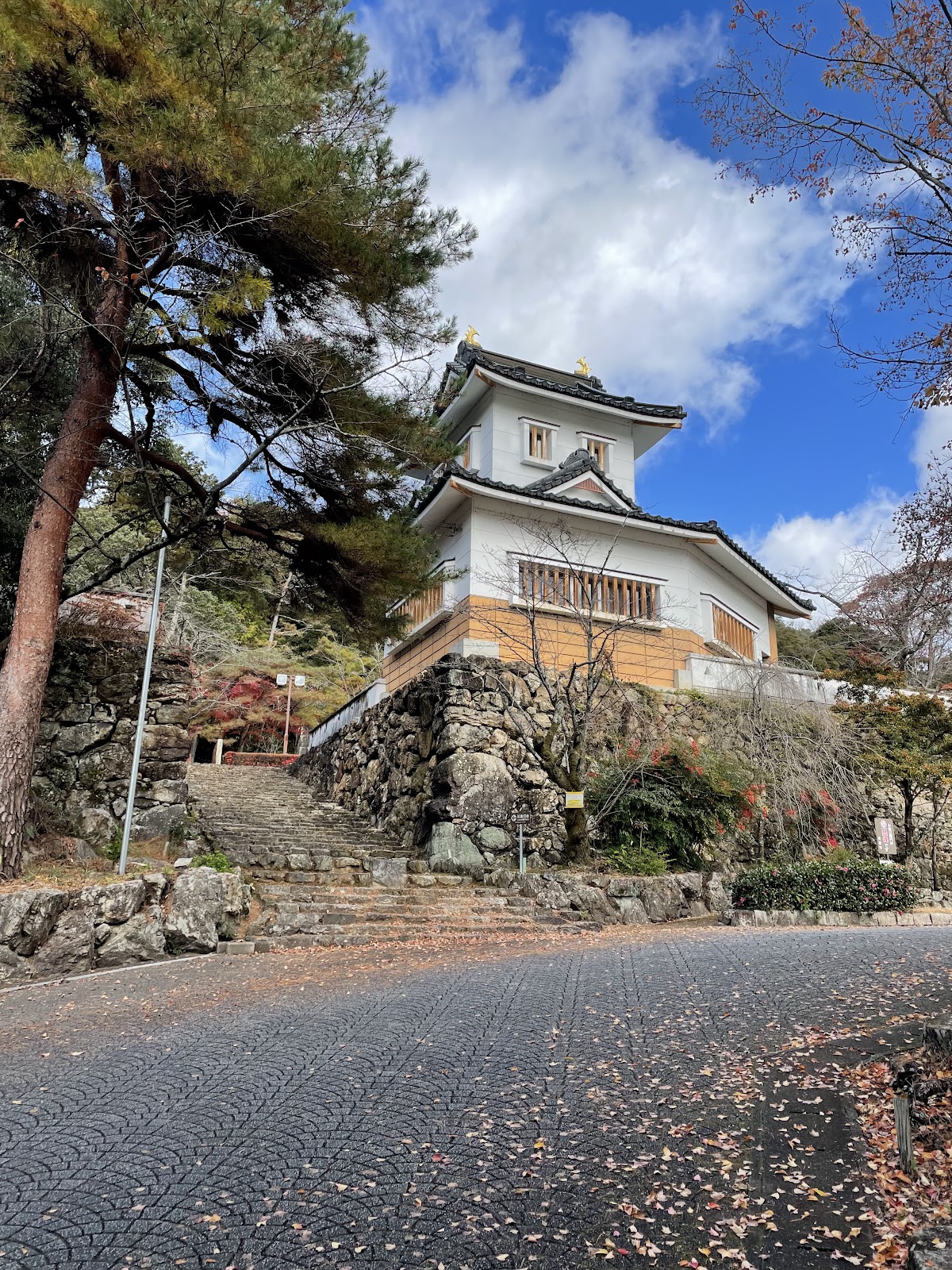
Currently, the site is maintained as Ogurayama Park, and the remains of the main keep, second bailey, and third bailey serve as a place of relaxation for citizens, where remnants such as stone walls and vertical moats can be seen. The Mino City Library is also built within the castle grounds, creating a space where history and modernity harmonize.
History of Ogurayama Castle
Background of the Castle’s Construction and Kanamori Nagachika
The construction of Ogurayama Castle is deeply connected to his achievements in the Battle of Sekigahara. In the Battle of Sekigahara in 1600, Kanamori Nagachika sided with the Eastern Army led by Tokugawa Ieyasu and contributed to the capture of castles such as Gujo Hachiman Castle.
For this service, Nagachika received an additional 20,000 koku of land in Mugi District, Mino Province. This was the former territory of the Sato clan, and although Nagachika already ruled Ono Castle (Echizen) and Takayama Castle (Hida), he decided to build a castle in this new territory for his retirement.
Kanamori Nagachika was a seasoned warrior who served Oda Nobunaga and Toyotomi Hideyoshi, and he was also skilled in castle construction. In 1601 (Keicho 6), construction of a retirement castle began on the site of Ozaki Maruyama, also known as Ogurayama.
Characteristics of the Castle Construction
Ogurayama Castle was designed for retirement, prioritizing livability over defense. While typical mountain castles have their main keep at the summit, Ogurayama Castle was built at the foot of the mountain. This is thought to be a consideration to make daily life easier for the elderly Nagachika.
The castle’s structure consisted of the main keep, second bailey, and third bailey, separated by stone walls and earthen ramparts. Its location facing the Nagara River offered both convenient water transport and beautiful scenery, making it a suitable environment for retirement.
In 1605 (Keicho 10), Nagachika handed over Takayama Castle to his adopted son, Kanamori Yoshishige, and officially retired. Ogurayama Castle is believed to have been completed around this time.
A Castle with a short life
Kanamori Nagachika died at Ogurayama Castle in 1608 (Keicho 13). He lived to the age of 85, a long life for the time, but the castle’s history rapidly came to an end from this point.
After Nagachika’s death, his second son, Kanamori Nagamitsu, was granted 20,000 koku and became the lord of the Kōzuchi Domain. However, Nagamitsu died prematurely at the age of six. Because there was no heir, the Kōzuchi Domain was abolished, and Ogurayama Castle was abandoned around 1609 (Keicho 14).
Ogurayama Castle, which disappeared from the stage of history just over six years after its construction, is also known as the “phantom castle.” After its abandonment, the Kōzuchi Magistrate’s Office was established on the site, and it came under the direct control of the shogunate.
Remains and Highlights of Ogurayama Castle
Existing Stone Walls
The most impressive remains at Ogurayama Castle are the stone walls that still remain today. Around the main keep, the stone walls, built using the nozura-zumi technique (rough-stone masonry) that demonstrates the castle construction techniques of the Keicho period, are well-preserved.
The height of the stone walls depending on the location, but the highest parts reach over 3 meters. The nozura-zumi technique, where natural stones are stacked as they are, is characteristic of the time of Kanamori Nagachika, and because there were varies few later renovations, it has retained its original appearance relatively well.
Some stone steps also remain, allowing visitors to imagine the movement within the castle in the past. Climbing these steps allows you to experience the paths walked by the castle lord and his retainers of that time.
Vertical Moats and Earthworks
Remains of vertical moats can also be found at Ogurayama Castle. Vertical moats are moats dug along the slopes of the mountains, serving as defensive structures to prevent enemy lateral movement. Even though it was a retirement castle, it is clear that it possessed the minimum necessary defensive functions. The earthworks remain, demarcating each enclosure. The combination of stone walls and earthworks demonstrates the high level of castle-building skill of Kanamori Nagachika.
Main Enclosure, Second Enclosure, and Third Enclosure Sites
Currently, the main enclosure site has been developed into a plaza, offering a spectacular view of Mino city and the relatively Nagara River. Despite its low elevation of 160 meters, it’s an open space where visitors can enjoy the surrounding scenery.
The Mino City Library is located on the second enclosure site. It’s noteworthy as a rare example of historical castle ruins coexisting with modern public facilities. The library also displays materials related to Ogurayama Castle, allowing visitors to learn about the castle’s history.
The third enclosure site has also been developed into a plaza, serving as a place of relaxation for local residents. Cherry trees have has been planted, making it a popular spot for cherry blossom viewing in spring.
Current Status of Ogura Park
Park Development Status
The Ogurayama Castle ruins are developed and managed by Mino City as “Ogura Park.” It is a park that balances the preservation of historical remains with public use, and is cherished by the local community.
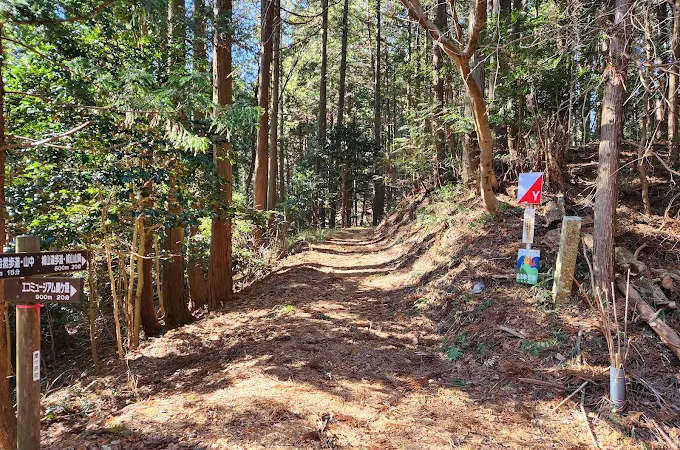
Walking paths are maintained within the park, allowing visitors to enjoy strolling while viewing the remains such as stone walls and earthworks. Information boards are placed throughout the park, allowing visitors to learn about the castle’s history and structure.
Parking is available, making it easily accessible by car. Basic facilities such as restrooms are also provided, making it a safe and convenient place for families to visit.
As a Place of Relaxation for Citizens
Ogura Park is not merely a historical site; it functions as a place of daily relaxation for the citizens of Mino. Many citizens use it for morning walks, jogging, and as a playground for children.
Cherry blossoms bloom in spring, and the autumn leaves are beautiful, allowing visitors to nature throughout the seasons. The view overlooking the Nagara River is also magnificent, making it a popular spot for photography.
The Mino City Library, located within the ruin castles, offers a unique experience of enjoying reading while learning about history. From the library windows, you can enjoy views of the castle’s stone walls and the Nagara River, providing a quiet and peaceful environment.
The Person of Kanamori Nagachika
Career as a Samurai
Kanamori Nagachika was born in 1544 and served Oda Nobunaga from a young age. He achieved numerous military successes under Nobunaga and was particularly known as a samurai with exceptional castle-building skills.
After the Honnoji Incident, he served Toyotomi Hideyoshi and was entrusted with the governance of Hida Province. He is also famous for laying the foundation of the castle town of Takayama as the first lord of the Hida Takayama Domain. Takayama’s townscape remains a popular tourist destination today, and Kanamori Nagachika laid its foundation.
In the Battle of Sekigahara, he sided with the Eastern Army and received an increase in his territory in Mino Province for his achievements. Although nearly 60 years old, he remained energetic and directed the construction of Ogurayama Castle.
Life After Retirement
In 1605 (Keicho 10), at the age of 61, Nagachika handed over the family headship to his adopted son, Yoshishige, and lived in retirement at Ogurayama Castle. However, it is believed that he did not completely retire, but continued to be involved in the domain’s administration as Yoshishige’s guardian.
His retirement at Ogurayama Castle lasted for approximately three years. It is said that Nagachika spent his later years quietly in a scenic environment overlooking the Nagara River.
In 1608 (Keicho 13), Nagachika died at the age of 85. This was an exceptionally long life for a samurai who survived the Sengoku period. His death also determined the fate of Ogurayama Castle.
Historical Background of Mino City
The Importance of Mugi District, Mino Province
Mugi District in Mino Province, where Ogurayama Castle was built, was a crucial transportation hub where the Nagara River waterway and the Higashiyama-do (Nakasendo) land route intersected. It was an economically important region from ancient times, and during the Sengoku period, multiple powers repeatedly vied for control of it.
Before the Battle of Sekigahara, the Sato clan ruled this area, but they were dispossessed of their lands for siding with the Western Army. Their former territory was then granted to Kanamori Nagachika.
The Town of Kōzuchi
Kōzuchi (present-day Mino City), where Ogurayama Castle is located, was a town that prospered from the Nagara River waterway and the production of Mino washi paper. Mino washi is known as one of Japan’s three major types of washi paper and is still registered as a UNESCO Intangible Cultural Heritage.
With Kanamori Nagachika’s construction of Ogurayama Castle, Kōzuchi temporarily took on the characteristics of a castle town. However, after the castle was abandoned, the Kamiuchi Magistrate’s Office was established, and the area developed as a territory directly controlled by the shogunate.
Present-day Mino City preserves a historical townscape lined with Edo-period merchant houses, known as the “Udatsu-lined townscape,” and has been designated as an Important Preservation District for Groups of Traditional Buildings. Visiting this area along with the Ogurayama Castle ruins will allow you to gain a deeper understanding of Mino’s history.
Access and Visiting Information for Ogurayama Castle
Transportation Access
Access by Car
- Approximately 5 minutes from the Mino IC on the Tokai-Hokuriku Expressway
- Approximately 15 minutes from the Seki-Hiromi IC on the Tokai-Kanjo Expressway
-Parking available (free)
Access by Public Transportation
- Approximately 15 minutes on foot from Mino-shi Station on the Nagaragawa Railway
- Approximately 10 minutes on foot from the Mino City Hall bus stop (Gifu Bus)
Visiting Information
- Location: Izumi-cho, Mino City, Gifu Prefecture
- Opening Hours: Always open (as Ogura Park)
- Admission Fee: Free
- Estimated Visiting Time: Approximately 30 minutes to 1 hour
- Inquiries: Mino City Board of Education
Points to Note When visiting Ogurayama Castle Ruins, paying attention to the following points will make your visit more fulfilling.
- Observing the Stone Walls: The stone walls around the main keep are a must-see. Take your time to observe the nozurazumi (rough-stone masonry) technique.
- Checking the Vertical Moats: Look for the vertical moats remaining on the mountain slope. You can understand the ingenuity of these defensive structures.
- Enjoying the View: The view of the Nagara River and Mino city from the main keep ruins is spectacular.
- Mino City Library: You can view related materials at the library located within the ruin castles.
- Checking the Information Boards: Learn about the history from the information boards installed throughout the site.
Nearby Tourist Spots
When visiting Ogurayama Castle Ruins, we recommend also visiting the following nearby spots:
- Udatsu Townscape: A group of Edo-period merchant houses within walking distance. A designated Important Preservation District for Groups of Traditional Buildings.
- Mino Washi Village Hall: A facility where you can learn about the history of Mino washi (Japanese paper) and experience making it.
- Nagara River: Enjoy river activities and ayu (sweetfish) fishing in the clear waters of the Nagara River.
- Oyada Shrine: An ancient shrine known for its beautiful autumn foliage.
Cultural Value of Ogurayama Castle
Mino City Designated Historic Site
Ogurayama Castle ruins are protected as a designated historic site of Mino City. Although the castle was short-lived, its historical value is recognized as a valuable remains demonstrating the castle-building techniques of the Keicho period.
In particular, as a retirement castle built by the famous Sengoku period warlord Kanamori Nagachika, it occupies an important position in the study of castle history. The design philosophy of a castle intended for retirement has characteristics different from typical castles built for combat, and is valuable for understanding the lifestyle and culture of warlords of that time.
Efforts for Preservation and Utilization
Mino City is actively working on the preservation and utilization of Ogurayama Castle ruins. While conducting regular surveys and preservation work on the remains, development as a park is also underway.
The installation of signposts and the development of walking paths have created an environment where ordinary citizens and tourists can easily visit. It can be said to be a good example of balancing the preservation of historical value with modern use.
In recent years, the creation of 3D models and digital archives of the castle ruins has also been considered, and methods of preservation and public access utilizing new technologies are being explored.
Differences from other Ogurayama Castles
There are actually several castles named “Ogurayama Castle” in Japan. The most famous is the Ogurayama Castle in Aki Province, located in Kitahiroshima Town, Hiroshima Prefecture. This was the residence of the Kikkawa clan, also known as Ogurayama Castle and Momijiyama Castle, and is designated as a national historic site.
The Ogurayama Castle in Aki Province is a medieval mountain castle built by Kikkawa Tsunemi and used as the residence of successive generations until Kikkawa Motoharu built Hinoyama Castle. As the base of the Aki Kikkawa clan, known as “Oni Kikkawa” (Demon Kikkawa), it played an important role in the history of the Sengoku period.
On the other hand, Ogurayama Castle in Mino Province is an early modern hilltop castle built for the specific purpose of a retirement residence. Its construction period, characteristics, and historical background are completely different.
When searching for “Ogurayama Castle” online, it’s important to distinguish between Mino Province and Aki Province. This article focuses on Ogurayama Castle in Mino City, Gifu Prefecture (Mino Province).
Summary
Ogurayama Castle is a castle ruin with unique historical value, built as a retirement residence by Kanamori Nagachika, a renowned general who survived the Sengoku period. Although it was abandoned after a short period of only six years, the existing stone walls and vertical moats convey the castle-building techniques of that time.
Currently, it is maintained as Ogura Park, as a place of relaxation for the citizens of Mino while also being carefully preserved as a historical heritage site. The beautiful scenery overlooking the Nagara River, the changing seasons, and the stone walls that evoke the spirit of the Sengoku period—all of these contribute to the charm of the Ogurayama Castle ruins.
When you visit Mino City, be sure to stop by the ruins of Ogurayama Castle. Combining it with a visit to the historic townscape with its distinctive udatsu (firewall) architecture and the Mino Washi (Japanese paper) village will allow you to experience Mino’s rich history and culture more deeply. Why not reflect on the story of this short-lived “phantom castle”?