
Guidance on the completion of Oguni castle ruins | National history of castle ruins, light points and communication information
Is this the Oguni Castle Ruins?
Oguni Castle Ruins (Japanese: 小国城阿托) is a national historical historical mountain castle located in Oguni-machijiri, Yamagata-shi, U.S. (Atsumi-machi, Haradagawa-gun). Yinzachi is located in Tateyama Mountain, 348.5 meters in sea distance, Oguni Village near Yukino, about 10 km south west of JR Atsumi Onsen Station, about 6.5 km east coast of the Sea of Japan.
The height of the height of the castle in Yushan is approximately 235.5 meters, which is the largest drop in the mountain castle ruins of the medieval period. During the war in the Shonai area, the castle was an important cornerstone of the war, and was a major border fortification, a major transportation route between the border and the western part of the country.
On December 19, 2002 (Heisei 14), Oguni Castle was designated as a national cultural history, and as of today, the castle was designated as a rare cultural heritage by historical enthusiasts who were introduced to the castle.
Oguni Castle History
Construction background and Nanboku Town era
The exact date of Oguni Castle’s construction is unknown, but the records indicate that it was Masamitsu Oguni’s residence during his time in Nanbokucho. The Oguni clan was a major feature of the Southern Dynasty, and the region was under control.
The castle was used as a natural barrier in Tateyama, and from the beginning it was equipped with special military fortifications. A bird’s-eye view of the small country castle, an ideal battle position, convenient to view the defensive surrounding area.
Change in time of war
During the war, Oguni Castle was the center of conflict in the Shonai area. During this period, the lord of the castle was changed.
Oguni Castle first belonged to the Shonai Daihoji clan (Muto clan), followed by the Uesugi clan, and last by the Mogami clan. This means that the commander of the capital has the power to monitor the castle in a small country, and to take control of key points across the country and the world, and to strengthen its defense.
In fact, while the Uesugi clan was in the process of repairing the castle, the castle was built by a large scale outside the castle, and the defense function of a small country castle was completed. The outer square shape of the castle has been perfectly preserved and is one of the highlights of the Oguni castle ruins.
废弃加后
As a result of the era of the Edo period and the time of the war, the Oguni castle disappeared and was used for military purposes, and it was finally destroyed. However, the castle and castle ruins have been perfectly preserved, such as the dry construction of the castle and river, the history of the construction of the envoy, and the construction technology of the castle at the time of its expansion.
Summary of Oguni Castle Site
Honmaru
Tateyama Sanke usually referred to as “honmaru” (honmaru), which is the central part of a small country castle. It takes about 40 minutes to walk from the village entrance, and you can reach the spectacular scenery of the surrounding area.
The original castle tower remains, and until now it has a large outer shell (square shell), which was built during the Uesugi clan’s construction period. The exhibition has now expanded to include a special attack with strong defensive capabilities, and the fortress construction technology of the world’s most advanced fortifications. Its owner’s castle fort is located in the ruins of Uchiyama Castle, and the name of the castle fort has been expressed in ancient times.
Nishihon-in, Nihime, Sanhime site
The area around the main castle is usually referred to as `Nishihon-in'', and is a ruin site with the names Nihime'' and `Sanhime”. This is a small part of the construction of the castle, which is protected by defensive construction.
Each castle has its own construction and construction of defenses such as construction of castles and landscaping due to drought, forming a multi-level defense system. The idea is to obtain one, and the design of the path between the two walls is clever, and the effective prevention of enemy invasion is a typical example of the construction of mountain castles in the era of the Empire.
Abandoned land
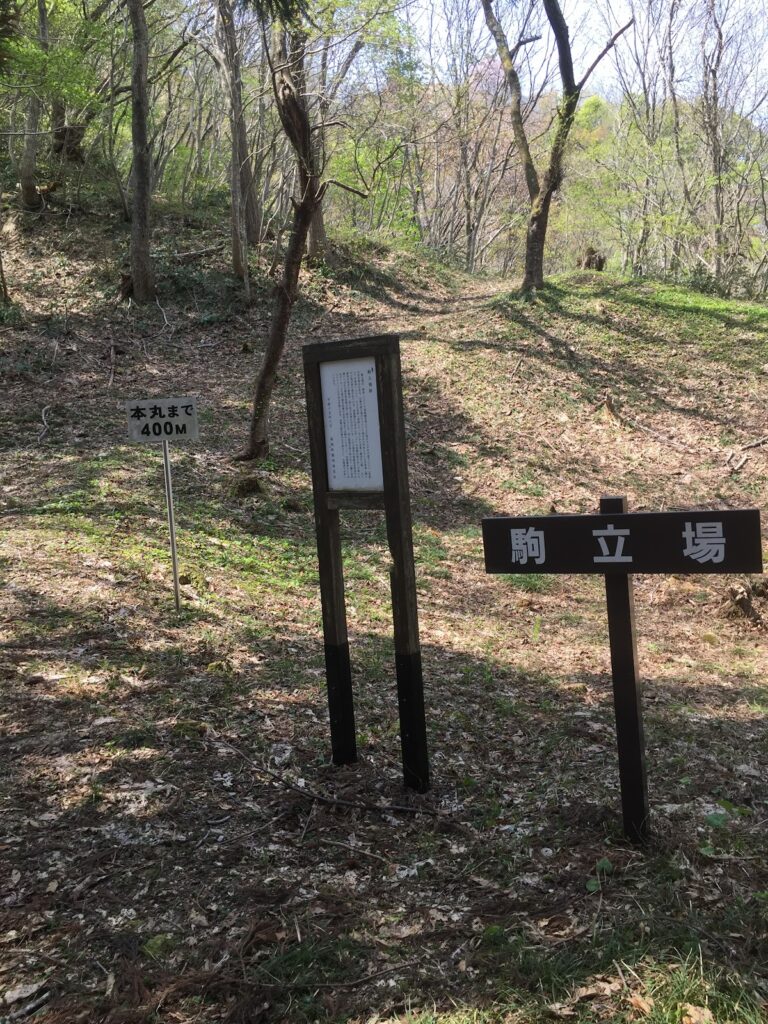
It is usually referred to as a `remote place'' area, and the area is a `remote place”. It has been observed that Shancheng is an important transportation base.
You can see the traces of the construction and defense works of the surrounding area, which is part of the comprehensive defense system of the fort.
Dried-out castle Kawa Hijikata construction
One of the most notable features of the Oguni Castle ruins is the Kawa Hijikata construction work for the dry castle, which has been perfectly preserved. Hundreds of years have passed since the start of the mission, but it still looks clear.
Due to the drying up of the castle river, important defensive works were carried out, the fortress was separated and the forts were destroyed, and enemy invasions were prevented. The scale of the civil engineering project is currently underway to demonstrate its depth and flexibility. The earthworks are used for construction of muddy soil that is ejected from the river during drying up, and has a defensive effect.
Yamashita’s residence remains
Nobuo, Oguni Castle, located in Yamashiro, under the foot of Usan. During times of peace, the owner and his vassals lived in this residence; during times of war, they took refuge in the fort in the mountains.
As of today, the castle site of a small country is surrounded by a small area, and the special terrain of Nawa is reserved for the area.
History of Oguni Castle Site
Maximum height difference within Yamagata
It was the most famous special expedition at the Oguni castle ruins, with a drop of approximately 235.5 meters, making it the largest of the Yamagata castle ruins in the medieval period. Just like this, the huge height difference manifests itself in the fort’s great defensive ability, and it also reflects the huge heart and soul of the builder.
Strategic points in Joetsu border
Oguni Castle is located on the border between Joetsu and Kyoto, connected to Dewa Province (Yamagata Prefecture) and Western Province (Niigata Prefecture). Its geographical location was determined and Oguni Castle was a military position during the time of the war.
The transportation control system is connected to the Shonai area, the key transportation center for the area, and the distribution and administrative operations of the accessible supplies.
Commentary on the history of the Shonai District War War
Oguni Castle site’s history is a rare historical document, and the history of the war in the Shonai area during the time of the country was specifically described. The fort’s structure includes the Muto clan, the Uesugi clan, the Mogami clan, and other strong feudal lords with numerous repairs and repairs.
The reason for this is that during the construction period of the Uesugi clan, the outer wall (square wall) was of great importance during research into the history of castle forts, and the fort construction techniques of the post-Vietnam era (now Niigata) were introduced to the Shonai area.
Protection of the National Museum’s History
In 2002, Oguni Castle Site was designated as a National Historic Site, and was designated as a Nationally Important Cultural Site. This is a confirmation that we will continue to promote the preservation of the land and research, and ensure that the history of this country will be able to be used in the future.
Transportation and visitor information
Location
Land site: Oguni-machijiri, Yamagata Kantoku-shi (Atsumi-machi, Haradagawa-gun)
Transportation
Public transportation:
- From JR Joetsu Main Line “Tsumi Onsen Station” direction, about 10 km in the south-west direction
- Convenient way to get around while sitting at the taxi station or in front of the taxi.
Self-indulgence:
- From the Japan Sea East Highway Highway “Tsumi Onsen IC”, approximately 15 minutes by car
- A parking area is available on the Oguni Castle site.
Visit Oguni Castle
It takes about 40 minutes to walk from the starting point of the mountain trail in Oguni Village to the site of the castle tower. Yuyu Oguni Castle is a mountain fort, please note the following points:
- Wearing: Designed clothing for wearing Japanese mountain climbing shoes or walking shoes.
- Equipment: Carrying water for drinking, hair cloth, mosquito sniper, etc.
- Seasonal: Visit Oguni Castle from spring to autumn. Winter snow levels are high, and levels are dangerous.
- Time: Round trip approximate demand 2 hours.
Visit Knowledge
- Pre-visit preparation: Before visiting, understand that the historical commander of Oguni Castle will understand the location of your visit.
- Director’s Guide: Visiting activities of the local guide at a certain time.您可以咨询鹤冈市观光协会.
- Photograph: A very spectacular view of the castle tower’s ruins. I forgot about this!
- Looking at the place:Seeing the place in detail, for example, the dry water of the river, Hijikata process Japanese square shape (square wall).
Nearby tourist attractions
Atsumi Onsen
Atsumi Onsen is a recent hot spring resort village located in a small country castle, and is also a hot spring town with a long history built in the JR Atsumi Onsen station. Visiting the castle of a small country, this place is an ideal place for the mind and body. Atsumi Hot Springs has a history of over 1,000 years, and you can enjoy high-quality hot springs all over the world.
Shonai Oguni River
Shonai Oguni River Flows at the foot of Oguni Castle, the name of the river is pure, and the scenery of the four seasons is beautiful. Of course, it’s the new green season, the autumn season, the red leaf season, and the scenery is even more lost.
History of Dunhai area
The ruins of Oguni Castle, the ancient temples of Tsunhai-cho, the historic temples, shrines, and other historic sites. It’s easy to walk through a clean and well-organized area, giving you a sense of historical flavor.
Precautions for visiting Oguni Castle Site
Safety knowledge
-Yuyu is a mountain fort, please be careful under your feet.
- Rainy weather and wet ground after rain, extra cautious.
- Of course, you can climb independently, and you can build it with your own companion.
- Preliminary check signal strength.
Courtesy
- Be careful, this is a nationally designated history, a treasured cultural relic, and an unnecessary destruction.
- The property is owned by the operator.
- Prohibited attracting plants and trapping animals.
- Prohibited use of Meika.
Seasonal weather
- Spring season (April-June): The ideal time to climb a small country.
- Summer (July-August): Demand warning, heat protection, mild weather, mosquito prevention. Building Qingchen was a long time ago.
- Autumn (September-November): Autumn leaves are beautiful and warm. The hottest season.
- Winter season (December-March): Covered by snow, pass through the darkness. It’s not worth it this season.
Yoki and other Oguni castle divisions
Yamagata Utaza’s famous “Oguni Castle” fort. Please be careful and mix it up.
Oguni Castle (Mogami District, Dewa Province)
Yamashiro in Honjo, Mogami-cho, Mogami-gun, Yamagata. Also known as Iwabe Tateru Honjo Castle. Nobuo, the castle fort was built on the site of a vassal of the Mogami clan, the Oguni clan (Kuramasu clan), and the residence of the Shigawa clan in the Mogami clan.
Oguni Castle (Kutama District, Dewa Province)
Oguni Castle is a plain-type castle fort located in Oguni-Osaka-cho, Oguni-cho, Nishio-Itama-gun, located in Uyamagata. During the time of the war, there was a direct presence in the time of the river war. Founded in 1692, originally called “carpenter”, built during the Tenbun era (1532-1555), a vassal of the Ida clan.
Oguni Castle (Okuni)
Zayama Castle was located in Oguni-cho, Hirakawa City, Aomori, and was the stable residence of Yasuzaburo Oguni during the post-war period. A small country Ankou is honored as a “Southern Dynasty Samurai”, which is the point of a small country Ankou.
Oguni Castle Site in the City It is the only designated national historical monument, and has since been given a status of preservation.
Research on Oguni Castle Site
Archaeological excavation
The site of the castle in Oguni was designated as the site of the National Palace Museum, and after that, archaeological excavations were carried out over many years. The details of the fort’s structure, its history and the period of use are as follows.
The excavated cultural relics show the way of life during the wars, the traces of the wars, and the historical materials that can be obtained by law.
Blue System Castle Ruins Bureau
Fortress researchers have completed a detailed layout, and a complete structure for a small country castle has been developed. Information on the fortress defense system is an important resource for the Japanese military force.
Academic details
During the research on the history of Oguni Castle Ruins and Fort, the following are the reasons:
- A large-scale mountain castle with the largest land drop within the construction area, which is unique in its construction.
- Clear traces of Uesugi’s repair
- The boundary between Joetsu and China, with important military positions and historical significance
- Status of preservation of the site
This is one of the most important examples of Japanese medieval mountain castle research.
Protection and use of Oguni Castle site
Protection activity
After the designation of the small country castle located in the city, the national history and history, the establishment of the security management plan, and the reasonable protection of the land location. Regularly proceeding with grassland maintenance, pruning and tree management, preserving the visibility of the existing site, and ensuring a harmonious coexistence with the natural environment.
Educational activities
This is an opportunity for local elementary and junior high school students to visit the castle ruins of a small country, and part of the study of local history. The fortress site is an active teaching material for employees, and assistant students understand the local history.
Travel resource usage
The Oguni Castle ruins are an important part of the Shonai area’s historical tourism route. There are many different uses for the current situation, such as the combined travel items of the general and Dunhai hot springs, and the travel route for history lovers in the future.
overview
The ruins of Oguni Castle are a monument to the history of an arrogant nation since Yamagata Air Force Market. This is the largest height difference in the entire mountain range (approximately 235.5 meters). During the period of war, the fortifications that blocked the major roads in the area of the castle, and the Shonai area of Oguni Castle played an important role.
When Nanboku-cho arrived at the time of the war, the Oguni clan, the Muto clan, the Uesugi clan and the Mogami clan changed their rulers, and the Oguni castle was completely restructured. Among them, the tower outside the castle tower, which was built during the Uesugi restoration period, is one of the most notable features of Oguni Castle.
Oguni Castle has many ancient castle ruins, comprehensive castle tower, west mansion (large residence), two-tiered castle, three-tiered castle, and a stable (resting area for horses), as well as construction work on the Kawawa castle during the dry period, all of which have been preserved perfectly. This is a small distance from the historical history of the treasure, and the fortress construction techniques of the country have been developed and the defense system has been developed.
Distance from Oguni Castle to JR Atsumi Onsen Station is approximately 10 km, and it takes approximately 40 minutes to reach the starting point of the climbing route. Spring to autumn is the best season to explore, and is a must-visit place for history lovers.
Visit the ruins of Oguni Castle, feel the history of wars in the Shonai area during the war, and see the castle built by your ancestors. You must visit the history of the country and the natural exchange of rare cultural heritage.