History of Ogawa Castle and detailed explanation
Is this Ogawa Castle?
Ogawa Castle Koreichiza Medieval Kiyama Castle, Minakami Town, Iyu Gunma Tone District. Approximately 400 meters east of the Jomo Plateau Station, the building is located on the plateau between the old castle and the Hachiman River. Kagehisa Numata, the lord of Numata Castle, built Kagehisa Numata’s castle fort, and was involved in defense work in the western part of the country. During the war period, it was an important military base in the northern part of Ueno Province.
Ogawa Castle’s special feature is the clever use of natural topographical defense construction. A triangular plateau with an east-west trend, a natural river with rivers flowing on both sides. It has a variety of terrain, has excellent military strength, and has a small number of troops and effective defense.
The Ogawa Castle ruins are perfectly preserved, the history of the Hijikata process and the drying up of the castle river still exists, and it is a treasure trove historical site that is a castle fortress structure during the country’s history. The area surrounding the castle fort is also a good place to get a good deal, and it is a hot scenic spot for those who love history in the city.
History of Ogawa Castle
Construction background and Kagehisa Numata
The exact construction date of Ogawa Castle is still unknown, but it is believed that it was built in the middle of the Warring States era. The lord of Numata Castle, Kagehisa Numata, defended the west side of Numata Castle and completed the construction of Ogawa Castle. His second son, Kageaki, changed his surname to Ogawa, and became the lord of Ogawa Castle. This is a typical example of a fort attached to the control of a family that is constantly seen in the time of war.
The Numata clan was a powerful regional owner in the northern part of Ueno Province, and held its own status during the competition with other powerful feudal lords such as the Uesugi clan, the Sagami Hojo clan, and the Kai Takeda clan. Under the current political and military background, Ogawa Castle is a key fortress in the western part of Numada Province, and plays an important role.
Ogawa clan and Numata seven knights
Keimei’s son Hideyasu, Sokogawa, the title 为冈林斯, and this is Numata Shichinoichi no Ichi. The Numata Seven Warlords are the effective names of the Numata clan’s most powerful vassals, including the Ogawa clan, the following eight clans, the Kawada clan, the Kaneko clan, and the Ikeda clan and the Kohinata clan.
Hideyasu Kebayashi was famous for his extraordinary bravery, and he also contributed to the establishment of Ogawa Castle and the defense of the Numada Islands. Since the Ogawa clan’s generation, the castle has been the home of the castle and has been a major owner of the area.
The role of the war
In the 16th Era, Hannobu, Ueno Province, Seishin Uesugi, Takeda Shingen and Hojo Ujimasa, a decisive stage. Numata Sojiya is unexceptional, Ogawa Jyotoshi’s great power as he runs over the fire.
Of course, you should be careful when you see Takeda’s victory after winning. After the death of the Takeda clan, the fifth generation landlord of the Ogawa clan, Yoshihiro Ogawa, succeeded to the Uesugi clan. According to historical records, he was a vassal of the Sanada family, a branch of the Ogawa family, and the lord of Numata Castle, who was the lord of Noto, Kitano, and his homeroom teacher. The anastomosis occurred at the time of the Numata area during the reign of the Sanada clan.
The decision of the vassal Hideyoshi and the installation of Numata Castle
In 1589 (17th year of the Tensei era), Hideyoshi, a vassal, enacted an ordinance for the Numata area. Numata Castle and Ogawa Castle were owned by the Hojo clan, and Kukai Castle was owned by the Sanada clan. However, this law has not yet been established.
In the same year, he completed his career at Nakukai Castle. The title was given to the Hojo clan’s army, the Sanada clan took over Nakumi Castle, and was an important factor in the success of the incident and the decision of Hideyoshi, the commander of the military, in the Battle of Odawara. In 1590, after the Odawara War, the Hojo clan died, and the Sanada clan returned to Numata.
The exact date of Ogawa Castle’s inauguration is unknown, but it is universally acknowledged that it was in Odawara before and after the war, or that it was the early period of the Edo period when the “one country, one castle” law was enacted. As a result of the war, Joya Ogawa stopped military use.
Construction construction
Geographical location and terrain usage
Ogawa Castle Saiaki’s special feature is the clever use of the topography. The castle fort is built on a gorge that flows westward, eastward, and eastward, on a triangular plateau that forms an ancient castle. The land on the west side of the plateau was strong, the eastward direction was strong, and the envoys came to attack the western part of the country.
The rivers on both sides cut deeply and deeply, making it very difficult to attack the city as it moves north and south. The attacking attacker will inevitably be attacked on the western or eastern flanks, and the defense forces will be able to use advantageous military divisions.
Approximately 20-30 meters high in the highlands of the Hizuhaku area, by Akiyoshi Obino. This is where the defense forces are able to attack and the criminals who appear early in the morning are located in the Numata district.
Placement of cloth station
Due to the location of Ogawa Castle, a multi-layered burial mound was constructed in the shape of the highlands. The main burial mound is the highest point on the high ground, and the second and third burial mounds are aligned eastwards in a step-like manner.
The main cave is a flat area with a large width, and the main area is the main address and the location of important facilities. The messenger is here now, and the flat area is still clearly visible, and I can imagine it as an image of ancient times.
Each burial mound is separated by land quality, and the time of the burial mound is different from the castle river. In this case, the castle river is important defensive construction, it is possible to prevent the invasion of enemies, and there is a situation where one of the troops is not defended.
Hijikata construction Japanese dry river
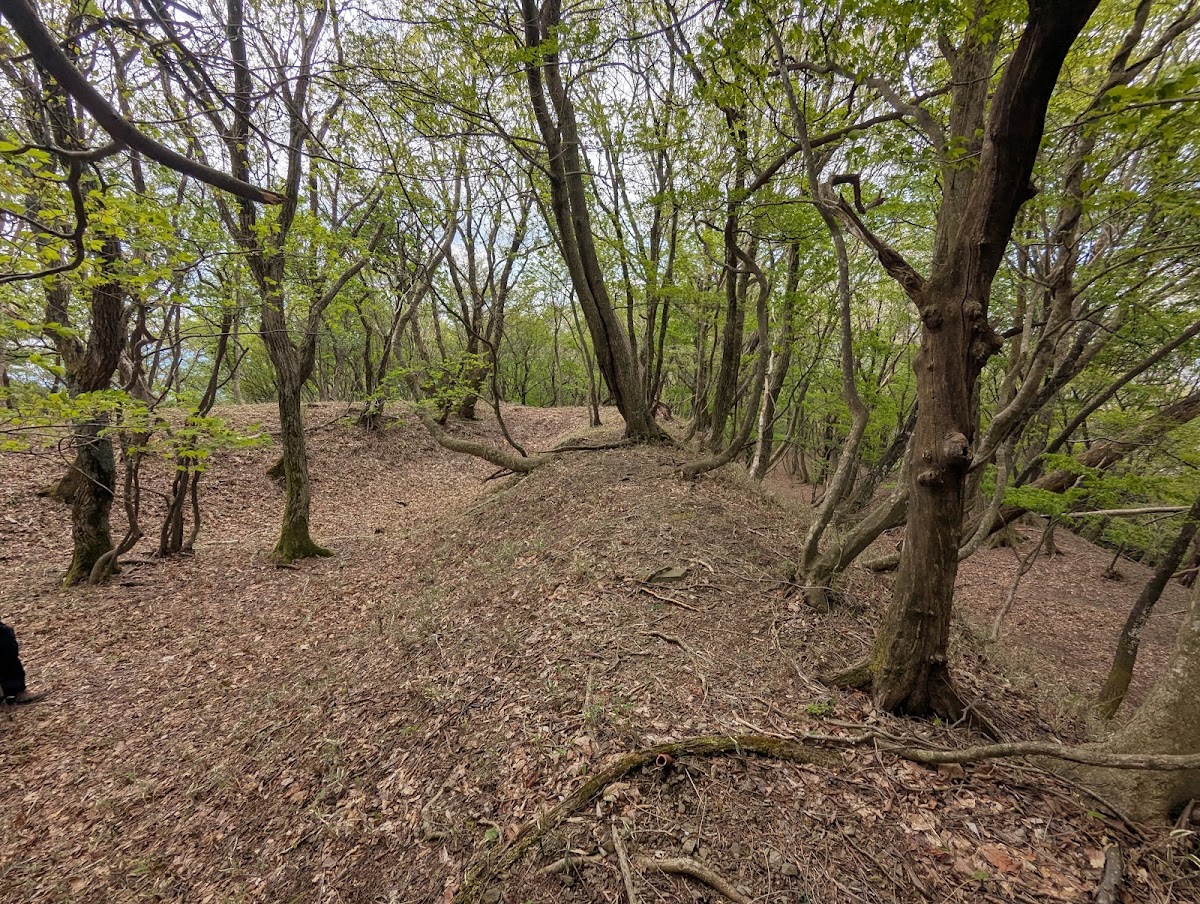
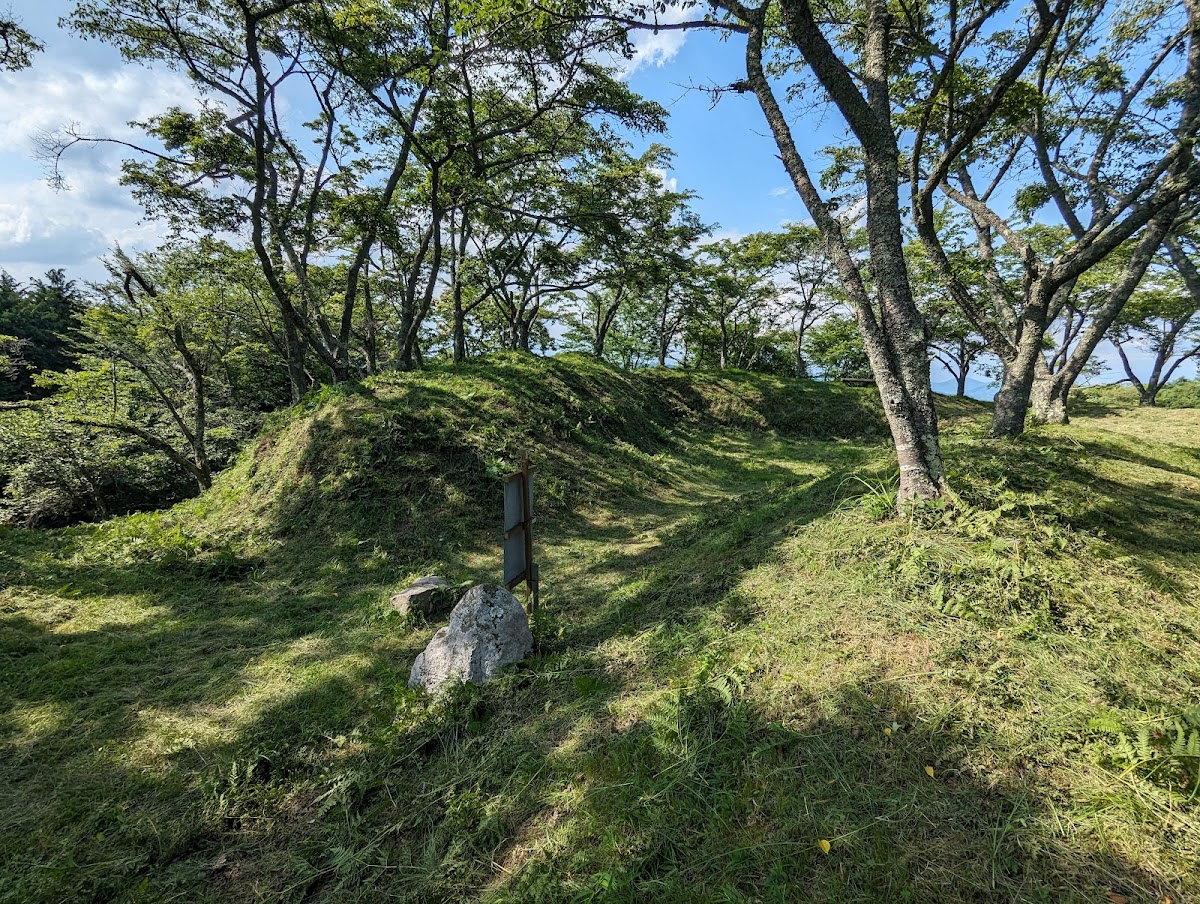
Hijikata construction and the dry river of Ogawa Castle are the clearest possible future. The construction of the earthworks for the main castle was approximately 2-3 meters high, and parts of it are perfectly preserved. This is a small amount of earthworks, and there are some traces of the earthworks that were brought out.
Dry city river construction and separated fortress trenches, depth 3-5 meters. This is a typical medieval castle fort with a V-shaped cross section, a narrow bottom, and a wide base. This type of shape is limited, and the enemy’s attack enters the city’s action, and it is convenient for the upward movement to attack.
There are also remains of the fortifications within the outer fortress, and the remains of the fortified river due to drying up during the construction, and the fort area was declared as the intention of the builder at the time. This is a small historical statement, but Ogawa Castle is not the only residence of the troupe, and the entire troupe is entirely designed with military design.
Entrance Japanese path
The fort-like entrance, also known as the “small entrance”, is the most important defensive work. Located in Ogawa Castle, the main castle gate is located on the west side of the city. A monument to the construction of the castle gate’s surroundings, the construction of the earthen castle wall, and the defense construction of the wings (Yokoyagari).
The paths of the connected castles are not direct, so the arc shape is different, and the various designs are designed to prevent the enemies from attacking. Along the way, there is also an earthen castle, which is convenient for the enemy to attack from above.
Water source and living facilities
There are several types of water sources in the city that are necessary for daily life. At present, it is confirmed that Mizui is located in Mizui’s location, but there are people who have confirmed that it is possible to find a place near the castle.
The living space of the people, the residence of the lord of the castle is within the lord’s castle, and the residence of the vassal is within the second castle. The archaeological excavation of Yushang has not progressed, the concrete details are not clear, but the ground surface has been surveyed, and the flat area of the pseudo-construction history is revealed.
Attached castle fortress series
Ogawa Castle does not exist in isolation, so it is a systematic part of Numata Castle. To the west, there are other small forts that can be used as a peace watchtower, and the small fort can be used as a comprehensive defense system.
However, if you don’t know how to use the fire pit, you should think about it, but it’s possible to use the fire signal to communicate.
The light of Ogawa Castle
Perfectly preserved earthworks
Visit the Ogawa Castle’s brightest spot, which is perfectly preserved by earthworks. Specially, the construction of the main castle’s earthwork, its high degree of Japanese-shaped capital preservation, and the ability of visitors to visit the city’s fortress structure during the time of the war. This is the image of a soldier and soldier who climbed the earth in the same year that Buddha received his knowledge.
Looking at the engineering surface of Hijikata, we have been observing the wind and rain for many years, and we have found that the original construction method was harmonious. If you are a fan of building a fort in China, this is a first-class treasure learning opportunity.
Clear-cut 护城川
The castle river in the castle fortress is a must-see. The development of the clear V-shaped cross-section envoy was an important milestone in the design of medieval fortress defenses. At the bottom of the river, at the bottom of the river, the cliffs were trembling at high altitudes.
Take a look at the castle river, and explore the advanced fortress construction techniques at the time. I imagine that in the age of heavy machinery, human demand and some effort and talent were perfected in this large-scale civil engineering process, and the fortress building was a magnificent and moving experience.
View of the highlands
A panoramic topographical view of the castle’s inner temple and surrounding area. The view is towards Numata, the view is wide open, and no one can understand what Ogawa Castle is like here. On the other hand, the depths of the gorge and the depths of the canyon are both deep and the natural terrain is well utilized for defense construction.
A sunny day in the village, far away to see the mountains, imagine a castle lord from the time of the war, and a romantic atmosphere that has never been forgotten.
Plateau view
Panoramic topographical view of the surrounding area of the main city. ### Cloth Bureau
If you want to see it, you can see how it’s sorted out. During the walk, each part of the hill is a flat area, so you can feel the true cut of the ground, and the structure of the citadel. During the exploration process, each time I imagined the ability of the castle, I was able to understand Ogawa Castle even more deeply.
Beautiful scenery of the four seasons
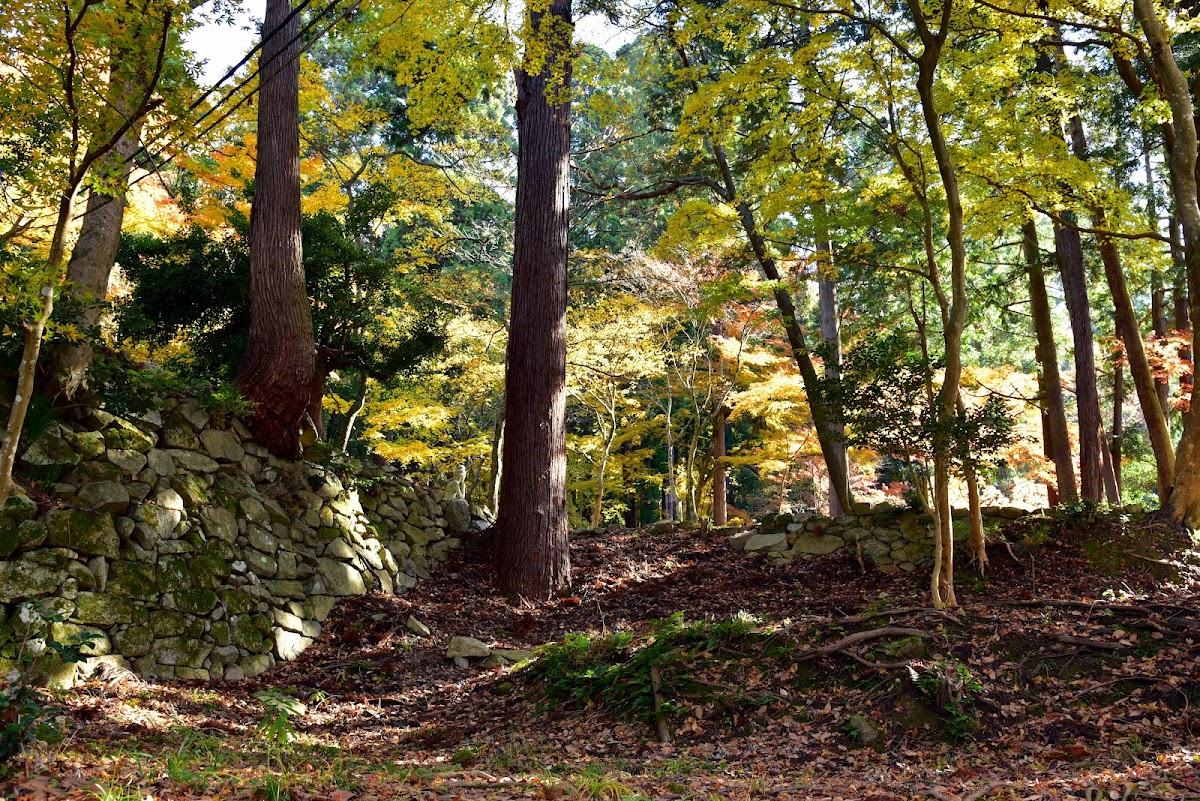
The Ogawa Castle ruins are beautiful throughout the four seasons, and the natural scenery is beautiful. The Ogawa Castle Association’s seasonal changes appear in different landscapes: Spring sky is naturally green, summer sky is full of green leaves, autumn sky is full of green leaves, and winter weather is white and snowy. Of course, in the autumn season, the red leaves bloom, and the fort is dyed with red and yellow, and the scenery is beautiful.
Traffic information
Sitting fire car
The closest train station to Ogawa Castle is the Jomo Kogen Station on the Joetsu Shinto Line. It takes 70 minutes to reach the new line from Tokyo Station to Shangmo Plateau Station, and it takes 5-10 minutes to walk to the city center, which is very convenient for transportation.
From the top of the Mao Plateau Station to the east, there will be a number of instruction tiles (however, there will be many instruction tiles, and the site will be viewed before construction). The car station is approximately 400 meters away from the castle fort, and the road is flat.
Selfishness
The Tsukiyono Interchange Highway is the same as the Tsukiyono Expressway. From the transportation center, it takes about 10 minutes to arrive at the Ogawa Castle Ruins. In front of National Route 17 heading towards Minakami-cho, the road is clear and easy to navigate.
How to use a car to guide the navigation system, to set the destination and place it at “Shangmo Kogen Station”, and then to go back and forth, which is the most flexible choice.
Car stop
The Ogawa Castle ruins are a private parking lot, but there is a parking lot near the Jomo Kogen Station. It is possible to park your car on the road near the site, but there is no need to be careful when parking your car on the road.
We will build a public transportation tool for you. The distance between Yuyu and the train station is near, and walking is the most convenient transportation method.
Washing hands and rest facilities
The Ogawa Castle ruins have a built-in washroom or rest area. Rest facilities were set up for washing hands and using the Jomo Kogen Station, which was previously used for construction and transportation. The car station has a Japanese convenience store, and you can buy Japanese snacks.
Nearby tourist attractions
Numata Castle Ruins
The ruins of Numata Castle are the main castle of Ogawa Castle, and it is also a great place to visit. As of now, Numata Park has been opened in the village. Spring heaven, this is a famous victory place, attracting a lot of visitors. It takes about 15 minutes to get to Ogawa Castle.
Nakai Castle Ruins
The site of Meikai Castle is also near Yu, and it is the site of the Meikai Castle Incident during the Battle of Odawara, by Hideyoshi, a retainer of his command. This is a well-preserved castle fort site, designed to guide visitors, and understand the history of the country’s history. It takes about 20 minutes to get to Ogawa Castle.
Minakamicho Onsen
Minakami Town is also a famous hot spring resort. Minakami Town, Aritaya Hot Springs Village, Comprehensive Kamiwa Onsen, Yunoyado Onsen Wasarukyo Onsen, Guests can enjoy the hot springs after the ruins of the castle, and can enjoy the best of hot springs. In addition to this, you can choose to visit the hot spring baths for many days.
Tanigawadake
Mt. Tanigawa is one of Japan’s 100 Famous Mountains, also located in Minakami Town. In front of the car, you can enjoy the magnificent mountain scenery near the mountain. This is not only a hot destination for mountain climbing enthusiasts, but also a must-visit destination for tourists.
Takumi Noro Station
The craftsmanship is one of the thermal gate’s tourist attractions, and visitors can visit here to experience the craftsmanship. We provide various study items, comprehensive writing, bamboo-made ceramics, and very suitable home play.
##Visit knowledge
Wearing and equipping
The ruins of Ogawa Castle are a non-mountainous castle fort, but the land travels in the land of the Japanese grass. Designed to wear optional shoes (driving shoes or hiking shoes) and long sleeves and long shoes. Summer construction work and mosquito trap.
Visit time
Visiting the castle fort site schedule takes 30 minutes to 1 hour. If you think about it, you can look at the site, build it for a short period of time or even a long time. As long as you count your time, you will also have a fulfilling time.
Safety Precautions
Part of the Hijikata process can be compared to wet areas. In rainy weather and after the rain, the demand will be more cautious. In addition to this, the summer grass and plants are underfoot.
You can visit it independently, but the conditions are acceptable, so you can continue to be safe. If the hand signal is good, but if it happens, the best way to proceed is to let others know.
Thank you for the photo
The castle grounds are located within the castle grounds, but the district is located in the residential area of the city. I respect the residents, but I am not allowed to stay in the apartment. Outside of this, please note that this is not a private residence.
Ogawa Castle’s source
Reference Fees
As for the information about Ogawa Castle, please read the following information:
- 《Gunmao Medieval City Fort and Housing》 (Gunmao Education Committee)
-《Japanese Castle Fort Encyclopedia》 Volume 4 (New Shinto Shrine Ceremony Visit)
- 《Minakami Town History》 (Minakami Town Education Committee)
- Each city fortification reference book
Please note that some information may also be available in the library.
On-line information
A review of the visitors’ impressions of Ogawa Castle when visiting the city center network. This is a small piece of information, please visit the previous meeting. Nuclear information is reliable from various sources in the construction process.
Basic information about the Ogawa Castle ruins, including the Minakami Town Tourist Association’s network.
Ogawa Castle ruins protection and future
The Ogawa Castle site has not yet been designated as a special historical site, but it has been designated as an important historical site for public review. The state of preservation of the ruins is good, however, natural encroachment and vegetation change have occurred, making it possible for the building to be renovated and transformed.
Hope for the future, more people understand the history of Ogawa Castle, and use the appropriate protection as we move forward. Every time a visitor visits the city, it is rare to find a small place, and the equipment is protected by the knowledge of the children and the children.
When you visit the fort, you don’t need to pay attention to the fort, and you must run the castle. In addition, dangerous activities such as evacuation, evacuation, descending earthworks, and castle rivers.
overview
Ogawa Castle was an important military fortress in the northern part of Ueno Province during the War, and played an important role in the establishment of the Numata clan. The work is the residence of the Ogawa clan, one of the seven great masters of Numata, and it is a masterpiece that has been reenacted in local history.
Ogawa Castle’s skillful use of the natural topography, its construction and clear preservation of the earthworks, the castle river, and the study of the medieval castle fort structure provided by the treasure source. In addition, it is a long walk from Ogawa Castle to Jomo Plateau Station, convenient transportation, and this is one of the great points.
Visiting the ruins of Ogawa Castle, I was able to experience the state of mind of the samurai warriors who lived in a small land and preserved the land since the war. This is a must-visit place for anyone who loves history, and it is also an ideal destination for those who are new to castle fort research.
When I visited Minakami Town, I took a look at the ruins of Ogawa Castle, which was a historical monument during the time of the country. As a result, you can easily travel to nearby hot springs and other scenic spots, and this is a very practical trip.