A Thorough Explanation of the History and Structure of Ogawa Castle | Gunma in the Sengoku Period as Seen from the Base of the Numata Seven Knights
What is Ogawa Castle?
Ogawa Castle is a medieval mountain castle located in Minakami Town, Tone District, Gunma Prefecture. Built approximately 400 meters east of Jomo-Kogen Station, it sits on a plateau between two streams, Kojozawa and Hachimanzawa. Constructed by Numata Kagehisa, lord of Numata Castle, as a western defense, this castle functioned as an important military base in northern Kozuke Province during the Sengoku period.
The defining characteristic of Ogawa Castle lies in its defensive structure, which skillfully utilizes the natural terrain. It utilizes a triangular plateau extending from west to east, with the streams on both sides acting as natural moats. This topographical advantage allowed for effective defense even with a small force.
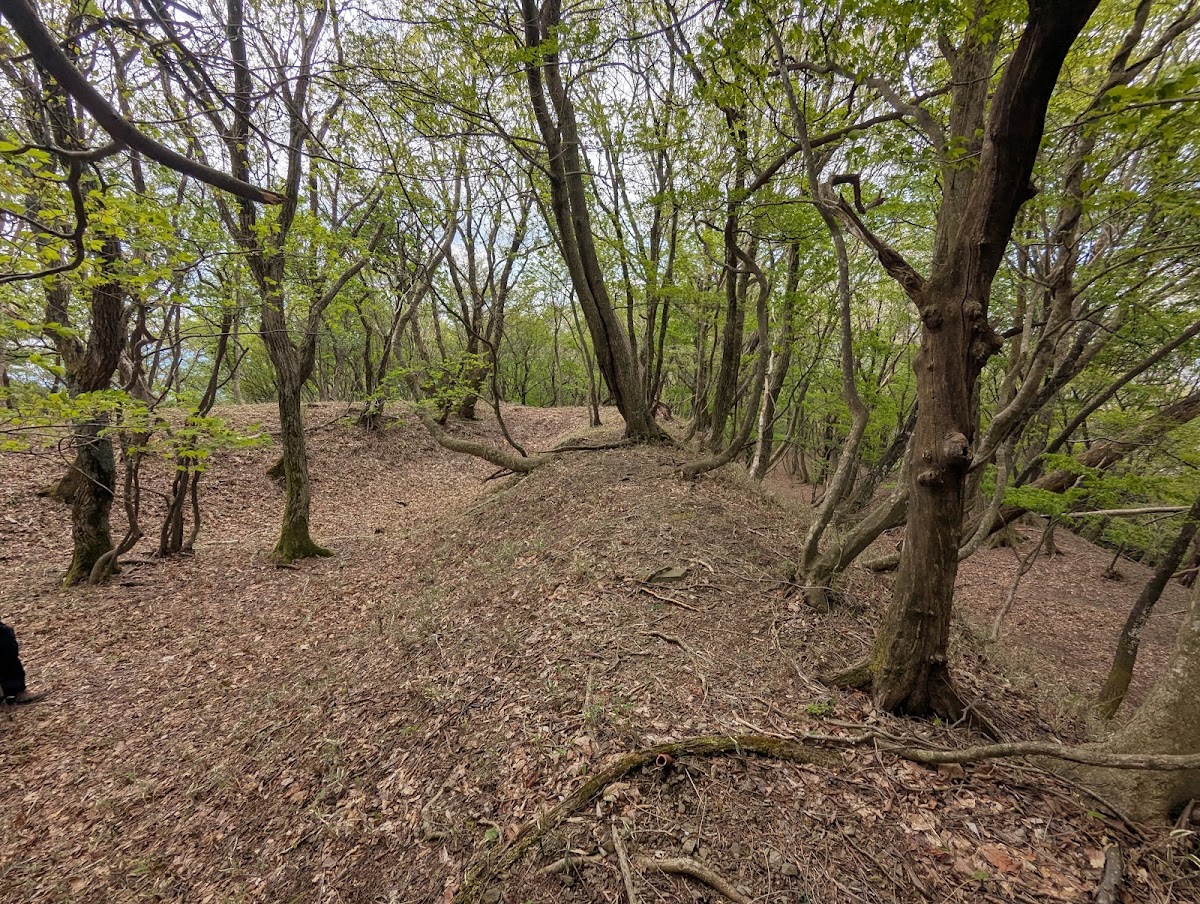
The current Ogawa Castle site retains well-preserved remains such as earthworks and dry moats, making it a valuable historical site for learning about the castle structure of the Sengoku period. The area surrounding the castle ruins has been maintained and is known as a popular spot for history enthusiasts and castle fans.
History of Ogawa Castle
Background of Construction and Numata Kagehisa
The exact date of construction of Ogawa Castle is unclear, but it is estimated to be during the mid-Sengoku period (Warring States period). Numata Kagehisa, the lord of Numata Castle, built Ogawa Castle out of the need to strengthen the western defenses of Numata Castle. Kagehisa had his second son, Kageaki, adopt the name Ogawa and made him the lord of this castle. This is a typical example of branch families subsidiary governing castles, a common practice during the Sengoku period.
The Numata clan was a powerful local lord in northern Kōzuke Province, and they sought to maintain their own position amidst the rivalry of powerful daimyo such as the Uesugi clan of Echigo, the Hojo clan of Sagami, and the Takeda clan of Kai. In this political and military context, Ogawa Castle played a crucial role as a key stronghold protecting the western part of the Numata territory.
The Ogawa Clan and the Seven Knights of Numata
Kageaki’s son, Hideyasu, who bore the name Ogawa, was known as Okabayashi-sai and was counted among the Seven Knights of Numata. The Seven Knights of Numata is a collective term for powerful retainers who served the Numata clan, including the Ogawa clan, as well as the Hachi, Kawada, Kawada, Kaneko, Ikeda, and Kohinata clans.
Okabayashi-sai Hideyasu was known as a warrior of exceptional bravery and contributed to the defense of the Numata territory from his base at Ogawa Castle. The Ogawa clan used this castle as their residence for generations, establishing themselves as a powerful local lord.
Battles in the Sengoku Period
In the latter half of the 16th century, Kozuke Province became the stage for power struggles between Uesugi Kenshin, Takeda Shingen, and Hojo Ujimasa. The Numata territory was no exception, and Ogawa Castle was repeatedly at risk of being ravaged by war.
Of particular note is the development after the fall of Takeda Katsuyori. It is said that the fifth head of the Ogawa clan, Ogawa Kayusai, fled to the Uesugi clan after the fall of the Takeda clan. Records show that Kitano Noto-no-kami, a retainer of the Sanada family and a branch of the Ogawa family, later resided at the castle as its castellan. This coincides with the period when the Sanada clan controlled the Numata territory.
Toyotomi Hideyoshi’s Ruling and the Abandonment of the Castle
In 1589 (Tensho 17), Toyotomi Hideyoshi handed down a ruling regarding the Numata territory. This ruling resulted in Numata Castle and Ogawa Castle becoming part of the Later Hojo clan’s territory, while Nagurumi Castle belonged to the Sanada clan. However, this ruling did not last long.
In the same year, the Nagurumi Castle Incident occurred. This incident, in which the Hojo forces suggested seduced Nagurumi Castle from the Sanada, became a major factor in Toyotomi Hideyoshi’s decision to launch the Odawara Campaign. Following the fall of the Hojo clan in the Siege of Odawara in 1590, the Numata territory once again came under the control of the Sanada clan.
The exact date of Ogawa Castle’s abandonment is unclear, but it is believed to have occurred around the time of the Siege of Odawara, or due to the “One Castle Per Province” decree in the early Edo period. With the end of the Sengoku period, Ogawa Castle also ceased its military role.
Structure
Location and Topography Utilization
The most distinctive feature of Ogawa Castle lies in its ingenious use of the terrain. The castle is built on a triangular plateau formed by two streams, Kojōzawa and Hachimanzawa, flowing from west to east. This plateau is higher on the west side and slopes gently downwards towards the east, providing a strategic advantage against attacks from the west.
The streams on both sides are deep cut, making approaches from the north and south extremely difficult. Attackers were inevitably forced to approach from the west or east, allowing for advantageous tactical deployments for the defenders.
The plateau is approximately 20-30 meters higher than the surrounding area, offering excellent views. This allowed for early detection of approaching enemies and facilitated communication with the Numata area.
Layout and Enclosure Arrangement
Ogawa Castle’s layout consists of multiple enclosures arranged along the shape of the plateau. The main enclosure is located at the highest point of the plateau, and the second and third enclosures are arranged in a stepped fashion to the east.
The main enclosure is a relatively large, flat area, presumably where the lord’s residence and important facilities were located. Even today, the flat surface remains clearly visible, allowing us to imagine its former scale.
Each enclosure is demarcated by earthen ramparts, and moats are provided between them. These moats were important defensive structures that prevented enemy intrusion and allowed for continued defense in the event of the fall of one enclosure.
Earthworks and Dry Moats
The earthworks and dry moats are the most clearly identifiable remains of Ogawa Castle. The earthworks surrounding the main enclosure are approximately 2-3 meters high and partially well-preserved. The earthworks show evidence of being constructed using rammed earth techniques, not just simple mounds of earth.
The dry moats functioned as trenches separating the enclosures and are approximately 3-5 meters deep. They are typical medieval castle moats with a V-shaped cross-section, narrow at the bottom and wide at the top. This shape restricts the movement of enemy soldiers entering the moat and facilitates attacks from above.
Traces of earthworks and dry moats also remain in the outer enclosure, indicating an intention to defend the entire castle area. These remains suggest that Ogawa Castle was not merely a residence, but a military facility designed for full-scale combat.
Entrances and Passageways
The entrances to the castle, known as “koguchi,” are the most crucial defensive features. At Ogawa Castle, it is believed that the main gate to the main enclosure was located on the west side. Earthen ramparts extended around the gate, and traces of a flanking attack structure (yokoyagakari) can also be seen.
The passages connecting the enclosures were not straight but curved, a design intended to prevent enemy charges. Earthen ramparts were also positioned on both sides of the passages, allowing for attacks from above on passing enemies.
Water Sources and Living Facilities
Regarding the water source essential for life within the castle, there are two theories: one that there was a well within the castle, and another that water from a stream was used. Currently, no clear well remains have been confirmed, but a depression near the main enclosure has been suggested as a possible well site.
As for living spaces, it is presumed that the lord’s residence was in the main enclosure, and the residences of retainers and barracks were in the second enclosure. Details are unknown as no archaeological excavations have been conducted, but several flat areas believed to be building remains have been identified from surface observation.
Relationship with Subsidiary Castles
Ogawa Castle did not exist in isolation, but functioned as part of a castle network centered around Numata Castle. It is possible that other smaller forts and watchtowers were located to the west, and it is thought that these worked together to form a wide-ranging defensive system.
While no clear traces of a signal fire station have been confirmed, given the excellent view from the main enclosure, it is highly likely that smoke signals were used for communication.
Highlights of Ogawa Castle
Well-Preserved Earthworks
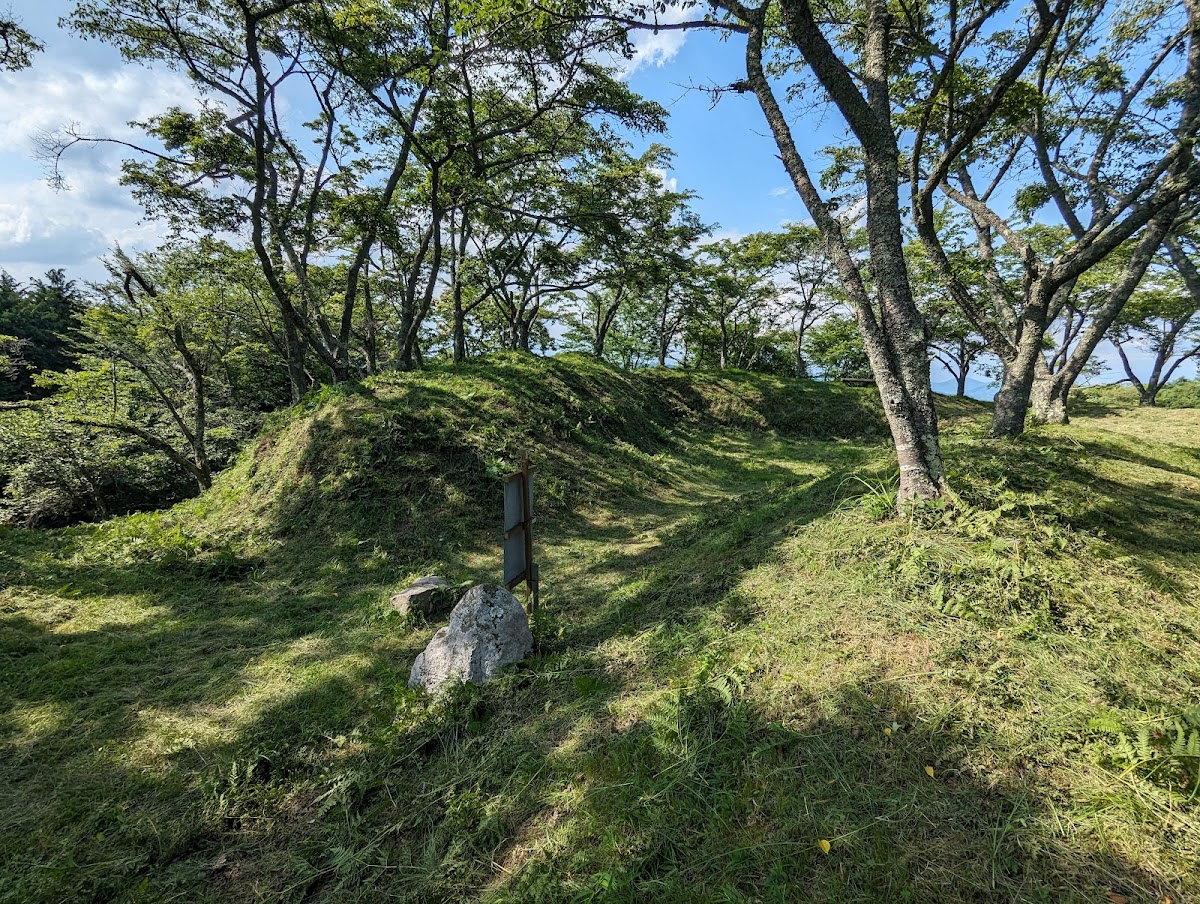
The greatest highlight of a visit to Ogawa Castle is its well-preserved earthworks. The earthworks surrounding the main enclosure, in particular, retain their height and shape relatively well, allowing visitors to experience the castle structure of the Sengoku period. Climbing the earthworks, one can imagine the soldiers who stood guard there.
Observing the surface of the earthworks, although there is erosion from years of wind and rain, one can still discern the original construction methods and slope angles. This is a valuable learning opportunity for those interested in castle architecture.
Clearly Defined Moats
The moats separating the baileys are a must-see. Their clearly defined V-shaped cross-sections make them important remains for understanding the defensive design of medieval castles. Standing at the bottom of the moat, you’ll be amazed by the height and steepness of the cliffs on both sides.
Observing the moats allows you to appreciate the advanced castle-building techniques of the time. Imagining the effort required to carry out such civil engineering work by hand in an era without heavy machinery, you’ll be moved by the grandeur of the castle’s architecture.
Views from the Plateau
From the main bailey, you can enjoy a panoramic view of the surrounding terrain. The view towards Numata opens up, helping you understand why the castle was built in this location. You can also utilize the depth of the ravines on both sides, appreciating the ingenuity of the defensive structure the natural terrain.
On a clear day, you can even see the distant mountains, and imagining the castle lords of the Sengoku period gazing upon this view evokes a sense of historical romance.
Views from the Plateau
From the main bailey, you can enjoy a panoramic view of the surrounding terrain. ### Layout of the Enclosures
You can observe how multiple enclosures are arranged in a stepped pattern. Walking across the flat areas of each enclosure allows you to experience the scale and structure of the castle. Imagining the role of each enclosure while exploring will deepen your understanding of Ogawa Castle.
Seasonal Scenery
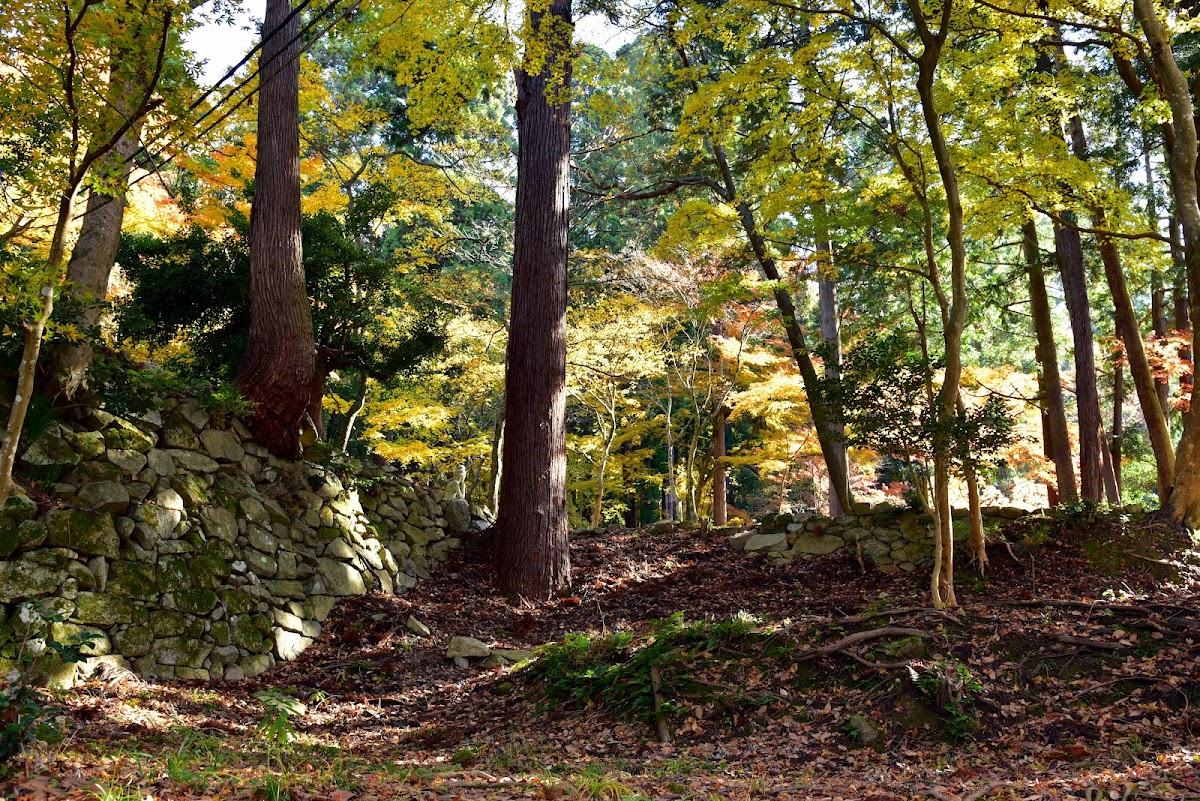
Ogawa Castle ruins offer enjoyment of nature throughout the seasons. It displays different expressions depending on the season: fresh greenery in spring, deep green in summer, autumn leaves in fall, and snowscapes in winter. Especially during the autumn foliage season, the entire castle site is dyed in red and yellow, offering a beautiful view.
Access Information
Access by Train
The nearest station to Ogawa Castle is Jomo-Kogen Station on the Joetsu Shinkansen line. It’s approximately 70 minutes by Shinkansen from Tokyo Station to Jomo-Kogen Station, and about 5-10 minutes on foot from the station to the castle ruins, making it very easily accessible.
Leaving Jōmō-Kōgen Station and heading east, you’ll find signs (however, signs are few, so it’s recommended to check a map beforehand). The distance from the station is approximately 400 meters, and it’s a flat walk.
Access by Car
If visiting by car, the Tsukiyono Interchange on the Kan-Etsu Expressway is convenient. From the interchange, it’s about a 10-minute drive to the ruin castles. The route via National Route 17 towards Minakami Town is easy to follow.
If using a car navigation system, setting “Jōmō-Kōgen Station” as your destination and walking from there is the most reliable option.
Parking
There is no dedicated parking lot for Ogawa Castle Ruins, but there are paid parking lots around Jōmō-Kōgen Station. There may also be parking spaces on the roadside near the castle ruins, but please be considerate of local residents.
We recommend using public transportation when visiting. Since it’s close to the station, walking is the most convenient and reliable way to access it.
Restrooms and Rest Facilities
There are no restrooms or rest facilities at the castle ruins. It is recommended to use the facilities at Jomo-Kogen Station before visiting. The station has shops and convenience stores, so you can purchase drinks and snacks there.
Nearby Tourist Attractions
Numata Castle Ruins
Numata Castle Ruins, the main castle of Ogawa Castle, is also worth visiting. It is now developed as Numata Park, with some of the stone walls and moats remaining. It is also known as a cherry blossom viewing spot in spring, attracting many tourists. It is about a 15-minute drive from Ogawa Castle.
Nagurumi Castle Ruins
Nagurumi Castle Ruins, the site of the Nagurumi Castle Incident which triggered Toyotomi Hideyoshi’s Odawara campaign, is also nearby. It is a well-maintained castle site with a guidance facility where you can learn about the history of the Sengoku period. It is about a 20-minute drive from Ogawa Castle.
Hot Springs in Minakami Town
Minakami Town is also famous as a hot spring resort. Minakami Town boasts several hot spring resorts, including Kamimaki Onsen, Yunoyado Onsen, and Sarugakyo Onsen, allowing visitors to relax in a hot spring after exploring the castle ruins. Day-trip bathing facilities are also plentiful.
Tanigawa-dake
Tanigawa-dake, one of Japan’s 100 Famous Mountains, is also located in Minakami Town. A ropeway takes you near the summit, offering magnificent mountain scenery. It’s a popular spot not only for mountain climbing enthusiasts but also for tourists.
Takumi-no-Sato Roadside Station
Takumi-no-Sato, where visitors can experience traditional crafts, is another popular tourist spot. Various experience programs are available, including papermaking, bamboo crafting, and pottery, making it ideal for families.
Points to Note When Visiting
Clothing and Equipment
While Ogawa Castle Ruins are not a mountain castle, you will be walking on dirt slopes and grassy areas. It is recommended to wear comfortable shoes (sneakers or light hiking boots) and long sleeves and long pants. In the summer, it’s a good idea to bring insect repellent.
Visiting Time
Please allow 30 minutes to 1 hour for visiting the castle ruins. If you wish to carefully observe the remains, it is recommended to allocate 1 hour or more. If you plan to enjoy photography, it is also advisable to allow ample time.
Safety Precautions
Some areas of the earthworks and moats can be slippery. Particular caution is needed during and after rain. Also, in summer, the grass can be overgrown, making it difficult to see your footing.
While solo visits are possible, it is safer to visit with others if possible. Cell phone reception is available, but it is reassuring to inform someone of your planned visit in case of an emergency.
Photography Etiquette
Photography is permitted at the castle ruins, but the surrounding area is residential. Please be considerate of residents’ privacy and avoid including houses in your photos. Also, please refrain from trespassing on private property.
Resources for Learning About Ogawa Castle
References
For those who wish to learn more about Ogawa Castle, the following resources may be helpful:
- “Medieval Castles and Residences of Gunma Prefecture” (Gunma Prefectural Board of Education)
- “Comprehensive Survey of Japanese Castles,” Volume 4 (Shin Jinbutsu Oraisha)
- “History of Minakami Town” (Minakami Town Board of Education)
- Various castle-related magazines and books
These resources can be viewed at libraries, and some information is also available online.
Online Information
Community sites for castle enthusiasts feature photos and impressions from people who have actually visited the castle. This information can be helpful before visiting. However, it is recommended to verify the accuracy of the information by cross-referencing it with multiple sources.
The Minakami Town Tourism Association website also contains basic information about the Ogawa Castle ruins.
Preservation and Future of Ogawa Castle Ruins
Although the Ogawa Castle ruins are not currently designated as a special historical site, they are recognized as a valuable historical heritage of the region. While the remains are relatively well-preserved, they may gradually change due to natural erosion and vegetation shifts.
It is hoped that more people will learn about the historical value of Ogawa Castle in the future, leading to appropriate preservation and utilization. It is important that each visitor cherishes the remains and has an awareness of preserving them for future generations.
When visiting the castle site, please be careful not to damage the remains and be sure to take all your trash with you. Also, please avoid dangerous activities such as climbing or descending earthworks or moats.
Summary
Ogawa Castle was an important military base in northern Kōzuke Province during the Sengoku period, contributing to the maintenance of the Numata clan’s power. As the residence of the Ogawa clan, one of the seven powerful families of Numata, it played a significant role in the history of the region.
The castle’s layout, which skillfully utilizes the natural terrain, and the clearly remaining earthworks and moats, are valuable resources for learning about the structure of medieval castles. Its excellent accessibility, being within walking distance of Jōmō-Kōgen Station, is also one of its attractions.
Visiting the ruins of Ogawa Castle allows you to experience the tension of the Sengoku period and the feelings of the warriors who defended this land. It’s a recommended spot not only for history buffs but also for beginners just beginning to take an interest in castles.
When you visit Minakami Town, be sure to stop by the ruins of Ogawa Castle and feel the spirit of the Sengoku period. Combining your visit with nearby hot springs and other tourist attractions will make for a truly fulfilling trip.