Complete Guide to the History and Highlights of Noda Castle | A Famous Castle in Mikawa, Known as the Site of Takeda Shingen’s Demise
Noda Castle is a historical castle site located in Toyoshima, Shinshiro City, Aichi Prefecture. Also known as “Mikawa Noda Castle” and “Negoya Castle,” it is widely known as a castle conquered by Takeda Shingen during the Sengoku period, and as the site where Shingen’s downfall occurred. This article provides a comprehensive explanation of Noda Castle, from its construction to the present day, including its structure, details of important battles, and current highlights.
Overview of Noda Castle
Noda Castle is a flatland castle located in Toyoshima, Shinshiro City, Aichi Prefecture, built on a hill along the Ure River, a tributary of the Toyokawa River. The main keep was situated on a plateau approximately 100 meters above sea level, strategically positioned to monitor important hub transportations in the surrounding area.
Basic Information
- Location: Toyoshima, Shinshiro City, Aichi Prefecture
- Other Names: Mikawa Noda Castle, Negoya Castle, Kaminoyama Castle
- Year of Construction: Eisho 2 (1505)
- Builder: Suganuma Sadamura
- Castle Structure: Hilltop Castle
- Nearest Station: JR Iida Line Nodajo Station (approx. 15-minute walk)
The JR Iida Line’s Nodajo Station is named after this castle, conveying the historical importance of the region to this day.
History of Noda Castle
Construction and the Suganuma Clan Era
Noda Castle was built in Eisho 2 (1505) by Suganuma Sadamura. The Suganuma clan was a powerful local lord in Mikawa Province, known as the Noda Suganuma clan. The Suganuma clan used this castle as their residence for generations, maintaining power in the eastern Mikawa region.
The Suganuma clan, while under the influence of the Imagawa clan, maintained a degree of independence. Amidst the complex power dynamics of the Sengoku period, they sought their own survival by maintaining relationships with both the Imagawa and the Matsudaira clan (later the Tokugawa clan).
Relationship with the Imagawa Clan
In the mid-16th century, eastern Mikawa Province was within the Imagawa clan’s sphere of influence, and Noda Castle was also under their control. The castle lord at the time, Suganuma Sadamitsu, was a subordinate of Imagawa Yoshimoto and played a key role in the Imagawa clan’s control of Mikawa.
When Imagawa Yoshimoto was killed by Oda Nobunaga at the Battle of Okehazama in 1560, the situation in Mikawa Province changed dramatically. As the Imagawa clan’s power declined, Tokugawa Ieyasu (then Matsudaira Motoyasu) embarked on unifying Mikawa, and the area around Noda Castle came under Tokugawa influence.
Relationship with Tokugawa Ieyasu
After the decline of the Imagawa clan, the Suganuma clan became subordinate to Tokugawa Ieyasu. The Suganuma clan became an important collaborator in Ieyasu’s unification of Mikawa Province. Noda Castle functioned as one of the Tokugawa clan’s bases in eastern Mikawa and played a crucial role in their confrontation with the Takeda clan.
Takeda Shingen’s Invasion and the Battle of Noda Castle
The most important event in the history of Noda Castle is the battle for Noda Castle during Takeda Shingen’s westward campaign, which began in 1572.
Start of the Westward Campaign
In October 1572, Takeda Shingen led a large army of 25,000 men from Kai Province and began his invasion of Tokugawa territory. The ultimate goal of this campaign was to defeat the combined forces of Oda Nobunaga and Tokugawa Ieyasu and march to Kyoto.
The Takeda army invaded Tōtōmi Province (present-day western Shizuoka Prefecture), capturing castles such as Futamata Castle one after another. In December, they decisively defeated the Tokugawa-Oda allied forces at the Battle of Mikatagahara. Following this historic victory, the Takeda army invaded Mikawa Province.
Siege of Noda Castle
In January of Genki 4 (1573), Takeda Shingen began his siege of Noda Castle. The castle lord at the time was Suganuma Sadamitsu, who defended the castle with only about 500 soldiers. The Takeda army, on the other hand, numbered between 15,000 and 20,000, a vast difference in troop strength.
The Takeda army completely surrounded the castle and began the siege. Suganuma Sadamitsu requested reinforcements from Tokugawa Ieyasu, but the Tokugawa army, exhausted from their crushing defeat at Mikatagahara, lacked the resources to send reinforcements.
The Development of the Siege
The defending troops, led by Suganuma Sadamitsu, bravely resisted despite their small numbers. Utilizing the castle’s strong structure, they repelled the Takeda army’s attacks numerous times. However, due to the overwhelming difference in troop numbers and the prolonged siege, supplies such as food and arrows within the castle gradually ran out.
The Takeda army not only attacked by force but also built auxiliary forts around the castle, strengthening their siege and turning it into a siege by starvation. After approximately one month of fighting, in February, Suganuma Sadamitsu finally decided to surrender.
The Truth Behind Takeda Shingen’s Injury
The most famous episode in the siege of Noda Castle is the injury of Takeda Shingen. According to legend, a bullet fired from inside the struck castle Shingen, which later caused his death.
According to one account, a skilled marksman named Torii Suneemon, stationed within the castle, apparently snipped Shingen’s main camp at night, hitting him in the chest or abdomen. However, this anecdote lacks historical evidence, and the prevailing theory is that Shingen died of illness.
Nevertheless, it is a fact that shortly after the capture of Noda Castle, Shingen decided to abandon his westward campaign and return to Kai Province, dying on April 12th in Komaba, Shinano Province (present-day Shimoina District, Nagano Prefecture). While it’s unclear whether the injuries sustained at Noda Castle were the direct cause of death, it is historically recorded that this castle was Shingen’s last battlefield.
History after the Surrender of Noda Castle
After the surrender of Noda Castle, it came under the control of the Takeda clan, but the Takeda army withdrew after Shingen’s death. Subsequently, the castle returned to the control of the Tokugawa clan.
Following the Takeda clan’s crushing defeat at the Battle of Nagashino in 1575, their influence in Mikawa Province completely disappeared, and Noda Castle came under the firm control of the Tokugawa clan.
After the Edo Period
In 1590, when Tokugawa Ieyasu was transferred to the Kanto region, Mikawa Province came under the rule of daimyo affiliated with the Toyotomi clan. Noda Castle lost its strategic importance and gradually began its path to abandonment.
In the Edo period, Noda Castle was officially abandoned and lost its function as a fortress. The castle site became farmland and forest, and many of the remains were lost over the long years.
Structure of Noda Castle
Layout and Arrangement
Noda Castle was a flatland castle built on a hill along the Ure River, with a structure that skillfully utilized the natural terrain. The main keep, the heart of the castle, was located on a plateau approximately 100 meters above sea level, and was protected by deep valleys and steep slopes. The castle’s layout was as follows:
- Honmaru: The central area of the castle, where the lord’s residence and important facilities were located.
- Ninokuruwa: The second line of defense protecting the Honmaru.
- Sannomaru: The outer bailey, where the residences of retainers and other buildings were located.
- Negoya: The area at the foot of the mountain, where samurai residences and merchant districts were located.
The alternative name “Negoya Castle” originates from the existence of this Negoya area.
Defensive Structures
Noda Castle possessed characteristics of a medieval castle, but also featured practical defensive structures from the Sengoku period:
- Dry Moat: A moat dug around the castle, serving as a crucial defensive line to prevent enemy intrusion.
- Earthwork: Earthen walls built inside the moat, enhancing defensive capabilities.
- Enclosures: Multiple enclosures (kuruwa) were arranged to form a multi-layered defensive structure.
- Tiger’s Mouth: The castle gate was designed to make enemy intrusion difficult.
Although the castle was of medium size, its robust structure, utilizing the terrain, allowed it to hold off Takeda Shingen’s large army for approximately one month.
Strategic Importance of Location
Noda Castle’s location was on a major road connecting eastern Mikawa Province and Shinano Province, making it a strategically and economically important point. It also benefited from the Ure River’s water transport, making it convenient for the transportation of supplies.
Furthermore, the castle offered a panoramic view of the surrounding roads, functioning as a surveillance base that allowed for early detection of enemy movements. This high strategic value was one of the reasons why Takeda Shingen prioritized the capture of Noda Castle in his westward campaign.
Current Status of Noda Castle
Preservation Status of the Castle Ruins
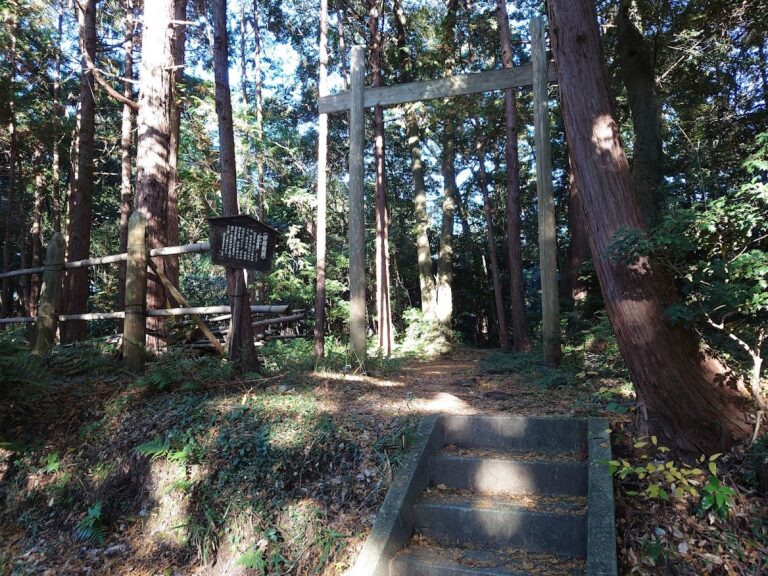
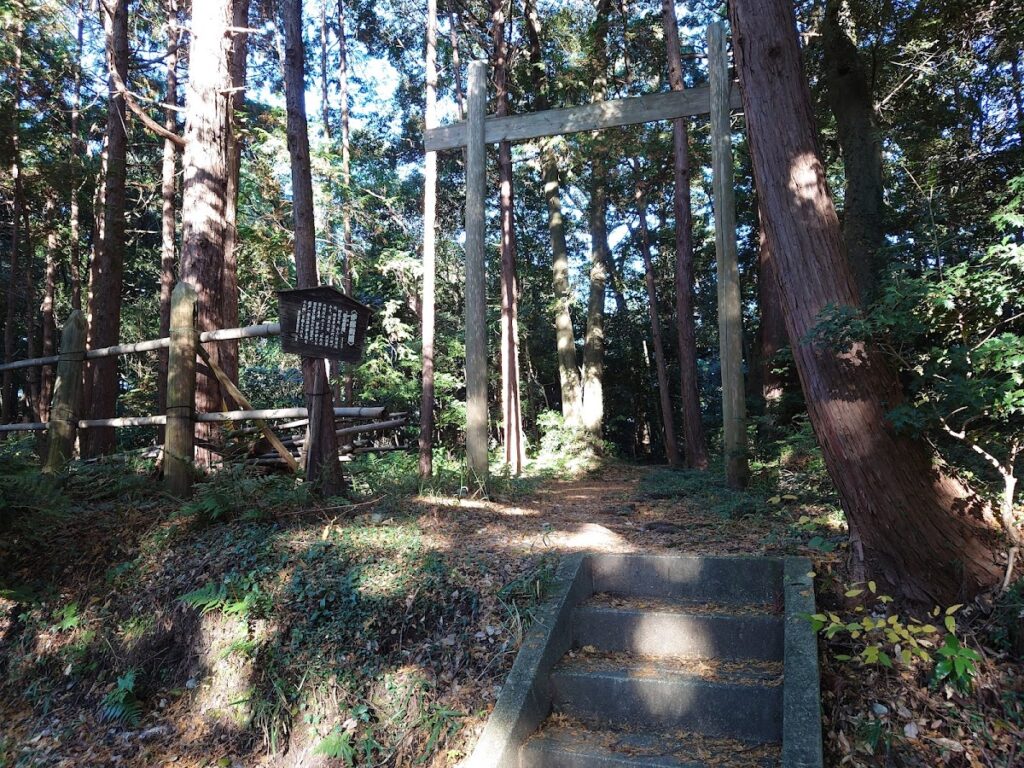
Currently, the Noda Castle ruins are designated as a historical site of Shinshiro City under the name “Noda Castle Site.” The ruin castles retain such as the main keep, dry moats, and earthworks, allowing visitors to imagine its former appearance.
In particular, the dry moats and earthworks around the main keep are preserved in relatively good condition, making them valuable remains for learning about the structure of medieval castles. However, since no buildings remain and no stone walls were constructed, the remains mainly consist of civil engineering structures.
Access and Visiting Information
Access to the Noda Castle Ruins is as follows:
- Train: Approximately 15 minutes on foot from Nodajo Station on the JR Iida Line
- Car: Approximately 15 minutes from the Shinshiro Interchange on the Shin-Tomei Expressway. There is parking available near the ruin castles.
The castle ruins are freely accessible, and there is no entrance fee. However, since it is not a well-maintained tourist facility, we recommend wearing comfortable shoes.
Points of Interest
Main Enclosure Site
The main enclosure site, which was the central part of the castle, is now a flat open space. It is believed that the lord’s residence and other important buildings were located here. From the main enclosure, you can overlook the surrounding scenery and appreciate the castle’s advantageous location.
Dry Moat and Earthworks
The dry moat and earthworks remaining around the main enclosure are the most important remains of Noda Castle. The dry moat, several meters deep, conveys the scale of the defensive facilities at the time. Walking on the earthworks allows you to experience the castle’s structure.
Information Boards and Explanation Boards
Information boards explaining the history and structure of Noda Castle are installed at the ruins. They provide detailed explanations of the battles with Takeda Shingen and the history of the Suganuma clan, which will help deepen your understanding of the castle ruins.
Historical Sites Associated with Takeda Shingen
Around the castle ruins, there are sites believed to be the location of Takeda Shingen’s encampment and a monument marking the spot where he was injured. It’s a must-see spot for history buffs.
Related Historical Sites in the Surrounding Area
When visiting Noda Castle Ruins, we recommend also visiting the related historical sites in the surrounding area:
- Nagashino Castle Ruins: A castle ruin famous for the Battle of Nagashino, located about 20 minutes away by car.
- Shitaragahara Ancient Battlefield: The main battlefield of the Battle of Nagashino, now a historical park where demonstrations of matchlock guns are held.
- Shinshiro City Shitaragahara Historical Museum: A museum where you can learn about the Battle of Nagashino and the local Sengoku period history.
Combining these will allow you to gain a deeper understanding of the Sengoku period in Mikawa.
Local use
Shinshiro City is working to utilize Noda Castle Ruins as a local historical heritage site. Regular guided tours of the castle ruins are held, and local history enthusiasts carry out cleaning and preservation activities. Furthermore, every May, the “Shinshiro Rally,” a motorsports event, is held, with the area around the Noda Castle ruins being part of the venue. You can enjoy a unique atmosphere where history and modern events blend together.
People related to Noda Castle
Suganuma Sadamura
He was the builder of Noda Castle and is considered the ancestor of the Noda Suganuma clan. He built the castle in 1505 and made it his base. The Suganuma clan, as a powerful local lord in Mikawa Province, played an important role in the region’s politics and military affairs.
Suganuma Sadamitsu
He was the lord of Noda Castle during the siege by Takeda Shingen in 1573. With only 500 soldiers, he resisted Takeda’s large army for about a month, displaying bravery in battle. After the castle surrendered, he served Tokugawa Ieyasu and later became a prominent retainer of the Tokugawa clan.
Sadamitsu’s loyalty and courage were highly valued by Tokugawa Ieyasu, and he was later promoted to a hatamoto (direct retainer of the shogun). His descendants continued to serve the Tokugawa clan throughout the Edo period.
Takeda Shingen
A Sengoku period daimyo of Kai Province, he was a renowned general feared as the “Tiger of Kai.” In his westward campaign, which began in 1572, he captured Noda Castle, but this battle was Shingen’s last.
Shortly after capturing Noda Castle, his condition worsened, and he died on his way back to Kai. There is a theory that injuries sustained at Noda Castle were one of the causes of his death, making this castle a place of significant importance in Shingen’s life.
Tokugawa Ieyasu
A Sengoku period daimyo of Mikawa Province, and later the first shogun of the Edo shogunate. The Suganuma clan of Noda Castle were important retainers of Ieyasu, and Noda Castle was one of the Tokugawa clan’s bases in Mikawa. During Takeda Shingen’s westward campaign, the castle was unable to send reinforcements to Noda Castle due to the devastating defeat at Mikatagahara. However, after Shingen’s death, it solidified its control over Mikawa Province.
Cultural Significance of Noda Castle
The Site of Takeda Shingen’s Legendary End
Noda Castle holds a special place in Japanese Sengoku period history as “the site that triggered the end of Takeda Shingen’s life.” The history of Shingen, who led the Takeda army, renowned as the strongest, being wounded (or whose condition worsened) during the siege of this small castle, ultimately leading to his death, has attracted the attention of many history enthusiasts.
This legend has been passed down through generations as a story symbolizing the possibility of the small overcoming the large, or the irony of fate.
Importance in Regional History
Noda Castle is an indispensable historical site when discussing the history of eastern Mikawa Province. As the residence of the Suganuma clan and a battleground between the Tokugawa and Takeda clans, Noda Castle symbolizes the Sengoku period in this region.
In the Okumikawa region, including Shinshiro City, efforts are being made to utilize Sengoku historical sites, including Noda Castle, as tourist resources to promote the region’s history and culture.
Value in Castle Research
Noda Castle is an important historical site in castle research, as a typical example of a medium-sized flatland castle from the Sengoku period. It is attracting attention from researchers as a valuable remains that demonstrates characteristics of the transitional period from the medieval to the Sengoku period, such as its earthen castle structure without stone walls, its layout that utilizes the natural terrain, and its transitional features from the medieval to the Sengoku period.
Summary
Noda Castle is a historical castle site remaining in Shinshiro City, Aichi Prefecture, and is etched in Japanese Sengoku history as the last battlefield of Takeda Shingen. Built in 1505 by Suganuma Sadamura, this castle played an important role as a strategic point in eastern Mikawa Province.
In 1573, during a siege by Takeda Shingen, a small force of 500 defenders led by Suganuma Sadamitsu bravely held off Takeda’s large army for approximately one month. Takeda Shingen, who is believed to have been wounded in this battle, died shortly afterward, and Noda Castle became historically significant as the site of his death.
The current Noda Castle ruins retain remnants such as the main keep, dry moats, and earthworks, preserving the castle’s structure from the Sengoku period. It is accessible on foot from Noda-jo Station on the JR Iida Line, making it a popular destination not only for history buffs but also for those enjoying leisurely strolls.
Despite its small size, Noda Castle is a historically significant site and an essential location for learning about the Sengoku period history of Mikawa Province. Visiting it along with other nearby historical sites such as Nagashino Castle and the Shitaragahara battlefield will allow for a deeper understanding of the rich history of this region.