
History and Highlights of Naruma Castle: A Thorough Explanation of the Southern Court’s Base During the Nanboku-cho Period
What is Naruma Castle?
Nareuma Castle (or Narenma-jo) was a Japanese castle located in Naruma-cho, Ryugasaki City, Ibaraki Prefecture. From the early Nanboku-cho period, it functioned as an important military base for the Southern Court in Kawachi District, Hitachi Province, and was registered as an Ibaraki Prefecture designated historical site on April 5, 1940 (Showa 15).
Currently, the Ryugasaki City Historical and Folk Museum is built on the castle site, making it a valuable historical heritage site that allows visitors to imagine the atmosphere of that time. Its location on a plateau approximately 3 kilometers southeast of Ryugasaki-shi Station (formerly Sanuki Station) on the Joban Line speaks to its strategic importance at the time.
Historical Background of Naruma Castle
Tensions and Castle Construction During the Nanboku-cho Period
The exact date of construction of Naruma Castle is uncertain, but it is believed to have been built by a Southern Court general in the early Nanboku-cho period. During this period, Japan was divided into the Southern Court, centered around Emperor Go-Daigo, and the Northern Court, supported by Ashikaga Takauji, and fierce battles were fought throughout the country.
Hitachi Province (present-day Ibaraki Prefecture) was a region where Kitabatake Chikafusa, an important supporter of the Southern Court, was active, and Naruma Castle is believed to have been under his influence. Its geographical location in Kawachi District played a crucial role as a base for the Southern Court forces in eastern Japan.
Successive Castle Lords and Warriors
Unfortunately, detailed records of the successive lords of Naruma Castle are scarce, and much remains unknown. However, based on ancient documents and historical records, it is inferred that warriors of the Southern Court served as castle lords for generations.
The most famous figure recorded is Kasuga Akinori, a warrior of the Southern Court. Kasuga Akinori was a samurai under Kitabatake Chikafusa. After the fall of Daihō Castle (Shimotsuma City, Ibaraki Prefecture), he is said to have fled attacks from the Northern Court forces and occupied Naruma Castle.
Relationship between Naruma Castle and Naruma Numata Castle
According to historical documents, “Naruma Numata Castle,” where Kasuga Akinori of the Southern Court took refuge in 1344 (Kōei 3/Kōkoku 5), is identified as this Naruma Castle. Therefore, it is highly likely that Naruma Castle and Naruma Numata Castle are the same castle.
The alternative name “Numata Castle” may have been given due to the surrounding topographical features. Although the castle was built on a plateau, it is presumed that low-lying wetlands and swamps surrounded it, which likely served as a natural stronghold enhancing its defensive capabilities.
Battles Surrounding Naruma Castle
The Battle in 1341 (Ryakuō 4th Year / Kōkoku 2nd Year)
Ancient documents mention the “retreat of Naruma Shield in Kawachi County” in 1341 (Ryakuō 4th Year / Kōkoku 2nd Year). This record clearly indicates that Naruma Castle was attacked by the forces of the Ashikaga clan, who supported the Northern Court.
The term “shield” (楯) refers to a castle or fort at the time, and “retreat” is interpreted as meaning withdrawal or fall. While many details of this battle remain unclear, it suggests that the Southern Court faced a difficult situation.
The Siege in 1344 (Kōei 3rd Year / Kōkoku 5th Year)
Records show that Kasuga Akinori took refuge in Naruma Castle in 1344. During this period, Southern Court forces were under pressure from the Northern Court in various locations, and after being forced to withdraw from Daihō Castle, Kasuga Akinori chose Naruma Castle as his new base. The exact duration of Kasuga Akikuni’s stay at Naruma Castle and its ultimate fate are unclear due to limited historical records. However, this siege is undoubtedly one of the most important events in the history of Naruma Castle.
Role in the Nanboku-cho War
Naruma Castle functioned as an important military base for the Southern Court in southern Hitachi Province during the Nanboku-cho War. Other Southern Court castles were scattered throughout the surrounding area, and it is believed that these worked together to resist the Northern Court.
The *Jinnō Shōtōki*, written by Kitabatake Chikafusa, also records activities in Hitachi Province, and it is highly likely that Naruma Castle was part of this strategic network. As a base for the Southern Court, it is presumed to have played a crucial role as a relay point for information transmission and logistics.
Structure and Characteristics of Naruma Castle
Location and Topographical Characteristics
Naruma Castle is a flatland castle built on a plateau, utilizing its geographical advantage of being on a high ground overlooking the surrounding area. This region of Kawachi District in Hitachi Province is characterized by a complex topography influenced by the Tone River system, with plateaus and lowlands forming a natural defensive line.
Steep cliffs formed along the edges of the plateau, creating terrain conditions that made it difficult for attackers to approach. Furthermore, the surrounding swamps and wetlands are thought to have also functioned as elements that enhanced its defensive capabilities.
Castle Size and Layout
Detailed records regarding the specific size and layout (castle design) of Naruma Castle are lacking, and many aspects remain unclear even with current research. However, considering its importance as a base for the Southern Court, it is presumed to have been a castle of considerable size.
Unlike the castles of the early modern period, which featured stone walls and keeps, medieval castles were primarily composed of earthen ramparts and moats. It is believed that Naruma Castle was similarly defended by earthen ramparts and moats designed to prevent enemy intrusion.
Existing Remains and Traces
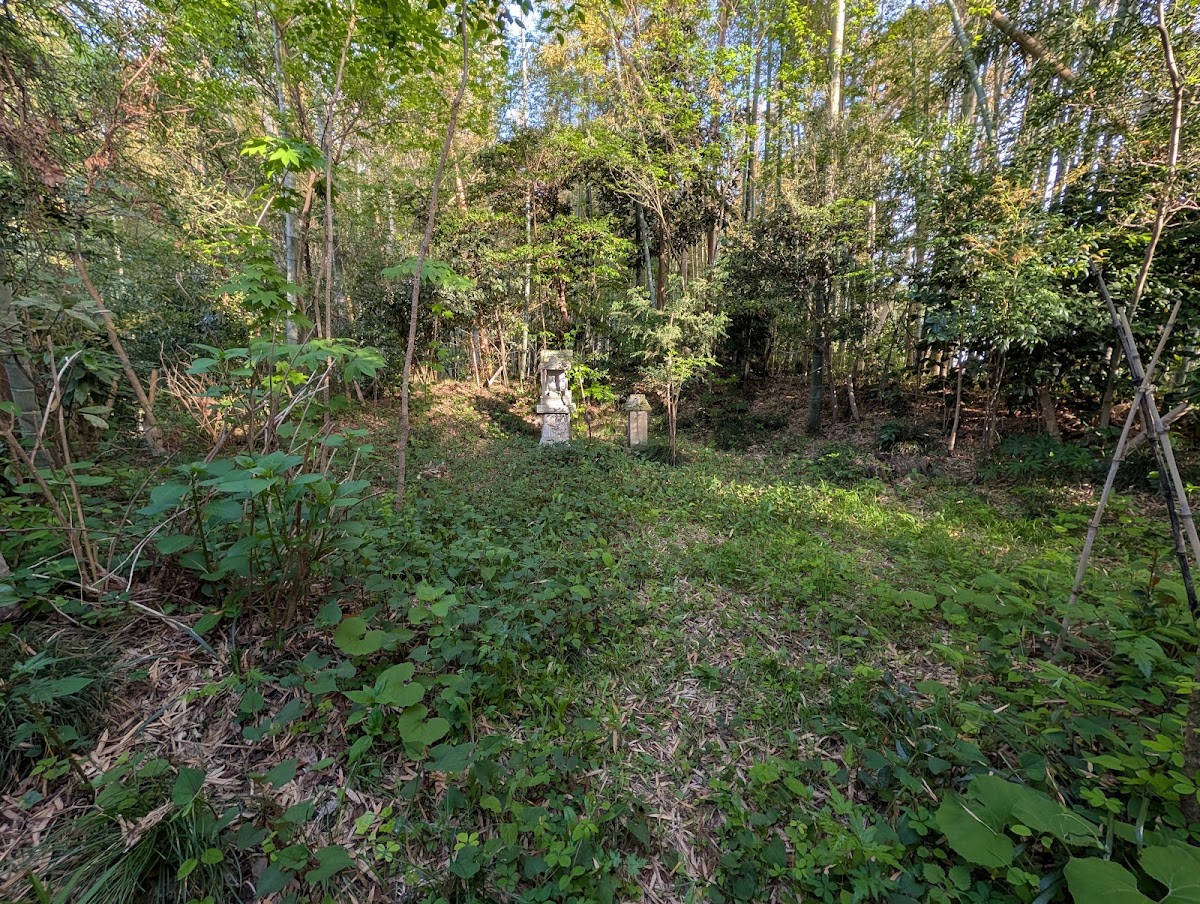
Unfortunately, only a limited number of Naruma Castle remains can be clearly identified. Due to the passage of time and later development, many of the original castle facilities have been lost.
The area where the Ryugasaki City Historical and Folk Museum now stands is thought to be the central part of the castle site, and an information board marking the castle site is located at the back of the museum’s parking lot. While it may be possible to discern traces of the former earthen ramparts and moats from the topography and subtle elevation differences, clear remains are difficult to confirm.
Location and Access
Basic Information
Location: Naruma-cho, Ryugasaki City, Ibaraki Prefecture
Former Province: Kawachi District, Hitachi Province
Castle Classification: Hilltop Castle
Designation: Ibaraki Prefecture Designated Historic Site (Designated April 5, 1940)
Access Method
The nearest station to Naruma Castle Ruins is Ryugasaki-shi Station (formerly Sanuki Station) on the Joban Line. It is approximately 3 kilometers southeast of the station, taking about 40 minutes on foot.
If using the Kanto Railway Ryugasaki Line, you can get off at Ryugasaki Station and access the site on foot or by bus. Since it’s about a 30-minute walk from Ryugasaki Castle Ruins to Naruma Castle Ruins, visiting both castles is a popular castle-touring route.
Access by car is also possible; the Ryugasaki City Historical and Folk Museum has a parking lot. Access is possible via local roads from the Yawara Interchange or Ushiku-Ami Interchange on the Joban Expressway.
Relationship with Ryugasaki City Historical and Folk Museum
Museum Overview
Currently, the Ryugasaki City Historical and Folk Museum is under construction on the site of Naruma Castle, aiming for its preservation and utilization. The museum features exhibits on the history and folklore of Ryugasaki City, including materials related to Naruma Castle.
While the construction of the museum has altered part of the castle site, it has also contributed to increased recognition of the historical site and fostered awareness of its preservation. A detailed explanation of the historical background and importance of Naruma Castle can be found on an information board located at the back of the parking lot.
Exhibits and Points to Note
At the Ryugasaki City Historical and Folk Museum, you can learn about the turmoil in Hitachi Province during the Nanboku-cho period and the historical significance of Naruma Castle. The museum displays materials related to Kasuga Akikuni and Kitabatake Chikafusa, as well as weapons and daily life items from the period, making it a facility where you can feel closer to medieval history.
When visiting the museum, it is recommended to check the opening hours and closing days in advance. Also, since special exhibitions and temporary exhibitions are sometimes held, it is a good idea to check the latest information on the Ryugasaki City official website.
Naruma Castle and Surrounding Historical Sites
Relationship with Ryugasaki Castle
Ryugasaki Castle ruins are located approximately 2.5 kilometers from Naruma Castle. Ryugasaki Castle was built by the Toki clan during the Sengoku period. Although it was built at a different time than Naruma Castle, it is considered an important castle ruin within Ryugasaki City.
A historical walking course visiting both castle ruins offers a valuable opportunity to experience the history of Hitachi Province from the medieval period to the Sengoku period. The distance of approximately 30 minutes on foot makes it a popular and convenient walking route for castle enthusiasts.
Historical Sites Related to the Southern Court in Hitachi Province
Besides Naruma Castle, numerous historical sites related to the Southern Court during the Nanboku-cho period remain in Ibaraki Prefecture. Oda Castle (Tsukuba City), Seki Castle (Chikusei City), and Taiho Castle (Shimotsuma City) are all castles that played important roles as bases for the Southern Court.
In particular, Taiho Castle was the base of Kasuga Akinori before he moved to Naruma Castle, making it an important historical site for understanding the historical connection between the two castles. Visiting these castle ruins allows for a deeper understanding of the power dynamics and strategic situation in Hitachi Province during the Nanboku-cho period.
Castle Stamps and Castle-Visiting Culture
Castle Stamps of Naruma Castle
With the recent boom in castle-visiting, Naruma Castle also issues castle stamps. Castle stamps are like certificates that can be purchased as a memento of visiting a castle, and they are gaining popularity among castle enthusiasts as a cultural practice similar to shrine stamps.
The Naruma Castle stamp is sometimes offered as a reward for special events or crowdfunding campaigns. In regional revitalization projects such as the “Ryugasaki Castle x Kanto Railway Ryugasaki Line: High School Student-Planned Town Walk!”, the castle stamp is included as a reward for the “Town Walk Hospitality Set: Castle-Focused” course, demonstrating how regional development and the dissemination of history and culture are linked.
How to Enjoy Castle Tours
When visiting Naruma Castle, a deeper understanding can be gained not only by viewing the castle ruins, but also by observing the surrounding historical environment and topography. Walking along the edge of the plateau to experience the elevation changes and imagining the defensive lines of the time while referring to a topographic map of the surrounding area will give you a closer look at the reality of a medieval castle.
Furthermore, it is recommended to plan a wider-area castle tour route, starting with learning at the Ryugasaki City Historical and Folk Museum, and visiting Ryugasaki Castle and other castle ruins in Hitachi Province. Understanding the historical background and interrelationships of each castle ruin will give you a more three-dimensional view of the turbulent Nanboku-cho period.
Historical Significance of Naruma Castle
Position in the History of the Northern and Southern Courts
Naruma Castle is a valuable historical site that functioned as a base for the Southern Court in eastern Japan during the crucial turning point in Japanese history known as the Northern and Southern Courts period. The Southern Court’s assertion of legitimacy, exemplified by Kitabatake Chikafusa’s *Jinnō Shōtōki*, was supported by military and political activities that unfolded in Hitachi Province, and Naruma Castle was one of the specific stages of these activities.
Recorded as the base of operations for the warrior Kasuga Akinori, Naruma Castle is not merely a small local fortress, but a historically significant entity linked to nationwide political trends. As a valuable witness conveying the reality of how the Southern Court’s warriors continued their resistance, Naruma Castle speaks to us today.
Importance in Local History
In the local history of Ryūgasaki City and Kawachi District of Hitachi Province, Naruma Castle is an important historical site symbolizing medieval history. The fact that it is legally protected as an Ibaraki Prefecture designated historical site indicates that its historical value is officially recognized.
For the local people, Naruma Castle serves as a cornerstone for learning about local history and confirming their identity. Its inclusion in school education and lifelong learning programs deepens understanding of and affection for the region’s history and culture, ensuring its transmission to future generations.
Value in Castle Research
From the perspective of castle research, Naruma Castle is an important case study for understanding the castle structure and construction techniques of the Nanboku-cho period. Although there are limitations due to the scarcity of clear remains, combining historical documents and topographical analysis allows us to approach the reality of medieval castles.
In particular, its location on a plateau and the surrounding topographical features provide valuable information for considering medieval castle construction ideas and defensive strategies. Understanding the characteristics of medieval castles without stone walls or keeps is essential for surveying the entire history of Japanese castles, and Naruma Castle is positioned as a prime example.
Current Status of Preservation and Utilization
Historic Site Designation and Protection
The Naruma Castle Ruins were designated a historic site by Ibaraki Prefecture on April 5, 1940 (Showa 15), and are now legally protected. This designation has protected the site from uncontrolled development and established a foundation for its transmission as a historical heritage to future generations.
More than 80 years have passed since the historic site designation, and balancing preservation and utilization remains a challenge. The construction of the Ryugasaki City Historical and Folk Museum is one example of utilization, but careful consideration is also needed from the perspective of preserving the remains.
Future Challenges and Prospects
Future challenges for Naruma Castle include detailed investigation and documentation of the remains, improvement of information facilities, and development of the surrounding environment. There is a possibility of discovering new remains through archaeological excavations, and progress in academic research is expected.
Furthermore, utilization as a tourist resource is also an important theme. New ways of utilizing Naruma Castle are being explored to suit the modern era, such as developing a wide-area historical tourism route that links with Ryugasaki Castle and surrounding historical sites, and introducing digital technologies like reconstructed CG and AR applications.
Collaboration among local residents, history enthusiasts, and researchers to rediscover the value of Naruma Castle and pass it on to future generations will become increasingly important.
Summary
Naruma Castle is a historical castle site that played an important role as a base for the Southern Court during the turbulent Nanboku-cho period. It is recorded in historical documents as Naruma Numata Castle, where Kasuga Akinori took refuge, and was also the stage for battles against the Ashikaga clan of the Northern Court.
Many aspects of its construction date and successive lords remain unknown, and no clear remains are preserved, but its value as an Ibaraki Prefecture designated historical site is highly regarded. Currently, the Ryugasaki City Historical and Folk Museum has been constructed and functions as a center for learning about the region’s history.
Its location on a plateau in Kawachi District, Hitachi Province, its history as a base for the activities of Southern Court generals, and the efforts toward its preservation and utilization in modern times are all significant factors. All of these factors elevate Naruma Castle from a mere historical ruin to a living historical heritage site.
When visiting Ryugasaki City, be sure to stop by the Naruma Castle ruins and reflect on the turbulent era of the Nanboku-cho period. Standing before the information board and gazing at the surrounding landscape, imagining the historical drama that unfolded here will give you a tangible sense of history that you can’t get from textbooks.

-800x450.png)
