Nanao Castle Completion Guide | One of Japan’s Five Great Castles – An explanation of Nanao Castle’s history, bright spots, and transportation
Nanao Castle Yuyuu Ishikawa Castle Nanao City is one of Japan’s top 100 famous castles, and is also one of Japan’s Five Great Castles. The feudal lord of Noto Province, the feudal lord Hatakeyama, lived here for about 170 years, and it was a magnificent and magnificent `temple,'' a highly respected `temple,” which still exists today in the form of a stone citadel Japanese garden among the mountains. The full text of the main text is explained in detail, including the complete history of Nanao Castle, comprehensive history, and transportation methods from the light point onward.
Nanao Castle Summary | Overview and basic information
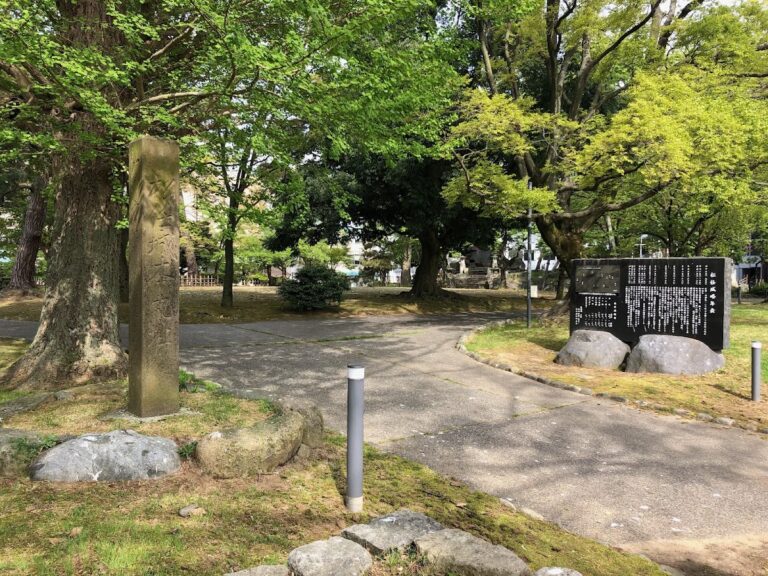
Nanao Castle was located in Kojo Town, Nanao City, Ishikawa City, and was an ancient mountain castle in the era of the war. The hotel is located on the spine of Shidang Mountain and Mountain, located at the center of Yisongwei Mountain (commonly known as “Castle Mountain”), approximately 300 meters in distance, geographical location of Yiyue, overlooking Nanao Bay.
Basic fees
- Point: Kojo-cho, Nanao City, Ishikawa
- Construction year: Zheng Dynasty (1428-1429)
- Constructor: Mitsuyoshi Hatakeyama
- Castle Fortress Structure: Concentric Mountain Castle
- Seaweed: Approximately 300 US
- Seongbao Myeon: Approximately 266 public days
- Size: North-south distance approximately 2.5 km, east-west distance approximately 1 km
- Designated use: National history of history (designated in 1934), Japan’s 100 most famous castles (34th place)
Origin of Nanao Castle name
The name of the place is `Nanao'', which is the origin of the seven mountain spines of the Yucheng fortress. This mountain has been divided into three names: Matsuo, Takeo, Umeo, Kikuo, Kuo, Torao and Long Tail**, and the outer fort or fort on Mt. Mt. The castle fort was also called Matsuo Castle'' or `Sueo Castle”, and its main fort was the name of the Matsuo area.
Nanao Castle History | 170 years of brilliance from the Noto Hatakeyama clan
Built by the Noto Hatakeyama clan in Yotoki
The history of Nanao Castle was traced back to the Muromachi era during the Shōcho period (1428-1429). The construction of a castle fort was begun, and the head of the Noto province, Mitsuyoshi Hatakeyama, was in charge of neutralizing the Etsu.
At first, it was just a small Yamashiro theater, and the Hatakeyama family created the powerful force of the feudal lords of Noto Province, and the castle was also established. In fact, it was in the 16th century that the fort was built, and the fort was expanded to a large scale, and the fort was the center of politics and daily life at the time.
Nanao Castle during the period of prosperity
During the height of the power of the Hatakeyama clan, Nanao Castle was shining brightly and was honored as a “temple of heaven”. From the city fort to the main city center, along the seven roads of the mountain, there are multiple stone citadels, defensive construction and residential areas, formation of a large scale fort building group, four circumference construction of earthen fortifications.
The castle town is a mile long (approximately 4 km) from the foot of the mountain, and the country’s politics are flourishing. As a matter of fact, it was originally built as a castle town in the Nanao City area in modern times.
Nanao Castle Battle | Yogami Sugishin’s Battle
The appearance of the head of Nanao Castle on stage is during the Nanao Castle War, which takes place at the end of the Warring Kingdom era. From December 1576 (Tensho 4) to 1577 (Tensho 5), Uesugi Shinobu invaded Noto in Echigo Province and attacked Nanao Castle.
First Battle of Nai (1576)
After the death of Takeda Shingen, the commander of the military, Uesugi Shinsei’s general forces arrived in Noto Province. However, Nanao Castle made good use of the mountainous terrain of Ryozaki, and Gu Ruo Jintan was able to conquer the enemy’s military forces.
Second attack and fall (1577)
In 1577 (5th year of Amaterasu), Nobubu Uesugi attacked Nanao Castle again. A continuous long-term attack, bombing and epidemic within the castle, internal revolt in Kajo, and finally the fall of Nanao Castle. The translation is the famous Chinese poem “September 13th Night,” which was written at this time, with the first phrase being “Frost in the middle of the night, refreshing in the autumn wind.”
Toshiie Maeda invades Nanao Castle
After the fall of Nanao Castle, Uesugi Uji no Tetsu entered the Tsengtan Kyochi. However, in 1582, at the time of the change of Honno-ji Temple, in 1581, Maeda Toshiie was granted the entire territory of Noto Province, and Nanao Castle was invaded.
However, it was inconvenient to live in Yushan Castle, and in 1589, Liieyu completed the construction of a new castle (Komaruyama Castle) in Zaishanshishita (now Nanao City), and the commander’s residence was here. A history of about 160 years since the introduction of Nanao Castle and its completion.
Construction characteristics of Nanao Castle | Performance of one of Japan’s five great mountain castles
What are Japan’s five major mountain castles?
Nanao Castle is one of Japan’s five greatest mountain castles.
- Kasugayama Castle (Niigata) – Uesugi Nobu’s residence
- Guanyinji Castle (滋贺县)—Residence of the Rokkaku clan
- Odani Castle (Jigakuen) – Asai clan’s residence
- Gassan Tomita Castle (Shimone) – residence of the Amago clan
- Nanao Castle (Ishikawa) – residence of the Hatakeyama clan
This small city is a typical mountain fortress during the period of war, with a large scale, advanced construction technology, and strong defensive ability.
Castle Fortress Structure Special Features
Nanao Castle is a rectangular mountain castle, with the main castle in a vertical line along the mountain.
Honmaru (Matsuo Castle Mound)
The highest point of the main enclosure, approximately 300 meters in distance, is the central part of Matsuo Castle. A spectacular view of the main Maru, Sho Nanao Bay, Noto Island and Tateyama Mountain. Today, the main building has a viewing platform, Chengdu Hot Gate Tourist Scenic Point. #### Second Wa Third Castle Mound
The second and third fortifications are located below the lord’s castle, which is the main castle, and is the residence of a high-class vassal and an administrative office. Perfectly preserved stone tombs are on display showing the advanced fort construction techniques of the time.
Nanami and Bunjo
Matsuo, Takeo, Umeo, Kikuo, Takuo, and Torao Watsuo, each of the seven mountains has its own castle and fortification, and it is a combined defense system. Immediately, the enemy will attack the mountain, move forward, and attack the mountain.
Stone technology
Nanao Castle’s stone tombs were built using the famous “nozurazumi” technique. The wild grass chisel is a natural stone clay pot directly deposited with fingers, which is a typical stone burial technique from the time of the war, and most of the parts are now perfectly preserved.
Of course, the height of the stone mound around the main city is over 5 meters, and the stone mound technology at this time is a rare treasure. Zainodomaru, the residence of the 汤za residence located in the residence of the Watai residence, and the ability to see the old man’s impression of a serious stone tomb.
Outer shell defense system
Nanao Castle has a built-in structure, a “foreign defense system” for the castle, and a comprehensive structure for the castle. It is not easy to use this, and it is Ichiza Yamashiro, which is also an integrated defense base within the castle town. The foot of the mountain reached the mountain, the defense work in the layer was spread, and the enemy was attacked.
Nanao Castle Ryoten | Existing and magnificent scenery
Main Castle Observation Platform Observation Field
The biggest highlight of Nanao Castle is the observation deck above the ruins of Moyuyu Castle. Approximately 300 meters high, 360 degree panoramic view of the fundus, clear view of Hikori, Nanao Bay, Noto Island, Waku Onsen Town, even Tateyama Mountain Range.
Sunrise and sunset, the scenery is especially spectacular, and this place is also a place where you can capture the heat. Right in front of the road, it’s a straight line up the mountain, and it takes about 5 minutes to walk to the parking lot.
Stone wall
The stone tomb of the Fortress of Henbu is the most important monument of Nanao Castle.
Main Castle Stone Mound
The stone burial mounds surrounding the main castle are in the best possible state of preservation, and some of the burial mounds are over 5 meters high. This is an example of a technical summary of wild grass porcelain (crusted stone porcelain).
Chodo Maru Stone Tomb
The stone tomb of Hiroya, where Chodomaru was placed, was on the east side of the burial mound of his master. With confidence, this is the country where the weapons and Japanese furniture are kept.
The site of the Takuza residence
The residence of a high-ranking vassal, a stone grave with a serious impression on the arrival of a retainer, and the social system of the time.
Scenery and Mound
The field is a flat area on the north side of the main hill, and it is a place where horses can run in both directions. Spring sky, the opening of the cherry blossoms, the success of the success of the heat gate in this village.
In addition, inside the castle fort, there are many foreign temples (围墙), and visitors can walk along the short path, which is similar to the castle fort in its heyday.
Walking route
There are many walking routes within the Nanao Castle site.
Main castle road
The shortest route takes approximately 5 minutes to reach the main city. Recommended for beginners and limited time users.
Green Walk
The entire process took about 1 hour, leaving the main castle, and then arriving at the Chodomaru and the ruins of the Wahyuza mansion. It is possible to see the main features of the land.
Mountain footpath
Exit the Nanao City History Museum and climb the mountain road to the main castle. The entire process takes approximately 40 minutes to 1 hour. Part of the experience is the primitive upper mountain road, and the defense structure of the fort is understood to be deeper.
Note: Due to the impact of the Noto Hanshima earthquake in January 2024, partial route adjustment is closed. Official information from Nanao City, written in the previous post.
Nanbi Castle History Museum | History Studies Center
When visiting Nanwei Castle, I also recommend visiting the Nanwei Castle History Museum at the foot of Usan.
Exhibition contents
- Materials related to Yonanao Castle and the history of the Hatakeyama clan
- Cultural artifacts excavated from archaeological excavations (pottery, weapons, etc.)
- Nanao Castle Hobara Model
- Exhibits from Nobuyuki Youesugi’s Battle of Nanao Castle Battle
- Materials related to Toshiie Yomaeda and the Noto clan
Basic information
- Point: 8-1 Furuyashiki-cho, Nanao City, Ishikawa (Kibu-kai Kokin Museum)
- Opening time: 9:00-17:00 (16:30 stop entry)
- Closing day: Shuichi (the first day of Shuichi, the next day of the new year), New Year holiday
- Gate ticket: 200 days for adults, exemption for junior high school students and below
- Parking: Parking area (free of charge)
After understanding the background knowledge in the museum, I revisited the castle fortress site, changed the current perspective, and now I have a more serious understanding.
Traffic and stoppage information
Self-indulgence
Front Honmaru bus stop
- Departure from Yunoto-Satoyama Expressway “Tianyuan IC”: Approximately 20 minutes
- Departure from Nanao City Center: Approximately 15 minutes
- Departure from Yuwahu Hot Springs: Approximately 20 minutes
A parking lot near the main castle tower (castle tower) with convenient road access, where regular cars can park immediately. However, please be careful, the road is narrow and steep, and you must be careful when driving.
Car stop information
- Honmaru parking lot: Approximately 30 cars (free of charge)
- Nanao Castle History Museum Car Park: Approximately 20 cars (free of charge)
Public transportation
Fire car
- Get off at JR Nanao Line “Nanao Station”: Take a seated taxi or take about 15 minutes from the local bus stop.
Tomoe
From Nanao station to Nanao Castle History Museum, Bashi Banji Co., Ltd., pre-construction timetable. It takes approximately 40 minutes to 1 hour to walk to the museum.
Exit vehicle
From there, the Nanao station will take you to the main parking lot in front of the rental car, and the cost will be approximately 3,000 yuan. It is also possible to pay additional fees for commuting to and from the business.
Precautions and recommended tour times
Clothing and equipment
- Shoes: Designed and worn, movement shoes or mountain climbing shoes. Yushan Road multi-stone floor, high-legged sandals and Japanese-style sandals.
- Clothing: A seasonal coat that fits the mountain bag, temperature and temperature, and construction bag.
- Portable items: Drinking water, wool, mosquito shield (summer), rain gear
Recommended tour time
Spring (April-May)
At this time, the cherry blossoms are in full bloom, and you can enjoy the cherry blossoms wherever you are. The weather is mild and very suitable for walking.
Autumn (October-November)
Autumn leaves are beautiful and colorful, the air is refreshing, and Keika Obino. Apart from this, Autumn is also a historical romantic breath at this time when Uesugi Shinnobu attacks.
Summer (June to August)
When the mountain fort is covered with green onions, it is a good place to take a summer vacation, but it is necessary to carry mosquitoes.
Winter (December to March)
As a result, it is difficult to climb the fort. This is the last time I’ve been there before.
Situation after the earthquake
Yuyu On January 1, 2024, due to the effects of the Noto Hanshima earthquake, a partially designed road to the Nanao Castle ruins was destroyed. Please read the following information before proceeding:
- Nanao City Government Office
- Nanao Castle Historical Museum Opening Information
- Unimpeded road information
Zhoukan Travel Scenic Points
Waju Onsen
The hot springs are the most representative hot springs in the Noto area, and are about 20 minutes by car from Nanao Castle. We are currently a small hot spring town facing Nanao Bay, where you can enjoy delicious sea food and Japanese hot springs.
Noto Island
From the Nanao Castle castle tower, you can immediately get a view of Noto Island, and on the island you can find tourist attractions such as the Water Tribe Museum, Japanese Glass Museum, and more. From the center of Nanao City to Notojima Bridge, it is immediately available.
Komaruyama Castle Ruins
Maeda Toshiie used to live in Nanao Castle, and now Komaruyama Castle remains in the open park. The place is located in the center of Nanao City.
Ipponsugidori
The old street view of Nanao Castle was preserved on the Jiao Road, and there were also a number of shops, such as a Chinese oil factory and a Japanese-style winery shop.
Yonanao Castle Sokan’s culture Japanese language
Uesugi Uesugi’s Chinese lyrics
Uesugi Shinshin wrote a Chinese poem 《September 13th Night 营中诗《广为行传, which was written during the attack on Nanao Castle.
“Cold frost, refreshing autumn wind.”
This is a high level of cultural training.
Hatakeyama Culture
The Hatakeyama clan is not only a military force, but also a cultural aid. Noh theater, tea ceremony, poetry, and other cultural activities were exhibited at Nanao Castle, which was once a culturally famous castle that was once nicknamed “Little Kyoto.”
Nanao Castle and local temple
Every year, the city changes and the history of Nanao Castle is activated.
Japan Hundred Castles Votes
Nanao Castle is known as the 34th person out of Japan’s 100 castles, and a large number of lovers came to visit the city.
Yingzhang Point
- Nanao Castle History Museum: During opening hours
- Near the castle tower car stop information plate: Immediate envoy museum gate, also available here (outside location)
A collection of seals from Japan’s 100 most famous castles.
Summary | Experience the charm of Nanao Castle
Nanao Castle is one of Japan’s five great castles, a rare historical example, and a masterpiece of mountain castle construction during the time of the Empire. This is the story of the 170-year long history of the Hatakeyama clan, the fierce battles fought by Yoshinobu Yosugi, and the changes that took place during Maeda Toshiie’s later generations.
300 meters above the castle tower, you can see the magnificent scenery of Nanao Bay, Wanoto Island. A perfectly preserved stone tomb, which has since been disseminated, is located in the castle fort, and is located in the middle of the garden, where the castle was located. Under the foot of the mountain, the Nanao Castle History Museum understands its history, you can take your own walk through the ruins of the castle fort, explore the remnants of the cliffs, and experience the historical history of the ancient castle in the future.
When you visit Noto half an island, you must go to Nanao Castle, and experience the cultural peak of Japan’s mountain castles. However, please note that due to the impact of the 2024 Noto Hanjima Earthquake, there is a partial release option, so please check the latest information before departure.
The charm of Nanao Castle, the fusion of Noto’s history and natural scenery, and the first tour are all described. The site is full of fascinating castle forts, and you will be able to explore the site from time to time.