Complete Guide to Namioka Castle | A Thorough Explanation of the Kitabatake Clan’s History and the Structure of its Eight Residences
Namioka Castle is a medieval hilltop castle located in the Namioka district of Aomori City, Aomori Prefecture. Designated as a National Historic Site in 1940, it was the first in Aomori Prefecture to receive this designation, and is also included in the Continued Top 100 Japanese Castles. Built by the Namioka Kitabatake clan, descendants of Kitabatake Chikafusa, who was active during the Nanboku-cho period, it flourished for approximately 120 years as the political and cultural center of the Tsugaru region.
This article provides a detailed explanation of this historic castle site, covering its historical background, unique castle structure, the lifestyle revealed by archaeological excavations, current attractions, and access information.
History and Background of Namioka Castle
Construction of the Castle and the Establishment of the Namioka Kitabatake Clan
Namioka Castle is believed to have been built in the 1460s, around the Ōnin era (1467-1469), by Kitabatake Akiyoshi, the fourth head of the Namioka Kitabatake clan. The Namioka Kitabatake clan is said to be descended from Kitabatake Chikafusa, who supported Emperor Go-Daigo during the Kenmu Restoration (1334-1336), and his son, Kitabatake Akiie, who served as the governor of Mutsu Province.
Due to this noble lineage, the Namioka Kitabatake clan was respectfully referred to as “Gosho” (御所), and held a special place of respect in the region. They skillfully utilized the topography of the right bank terrace at the confluence of the Namioka River and the Shōheizu River, constructing a multi-enclosure residence-type castle on the gently sloping land.
Prosperity at its Peak and Interaction with Kyoto
In the first half of the 16th century, the Namioka Kitabatake clan reached its peak. During this period, they actively interacted with Kyoto nobles and cultural figures, bringing the culture of the capital to Tsugaru. Archaeological excavations have unearthed numerous high-quality ceramics, tea ceremony utensils, and Buddhist artifacts transported from Kyoto, attesting to the high level of culture at the time.
The Namioka Kitabatake clan also focused on building temples and shrines, functioning as a religious and cultural center of the region. Merchants and artisans gathered in the castle town, and it developed into a key economic hub in the Tsugaru region. The castle covered an area of approximately 136,300 square meters, and its sheer size reflects its prosperity.
The Kawara Gosho Rebellion and Decline
In 1562 (Eiroku 5), a major turning point occurred for the Namioka Kitabatake clan. The “Kawara Gosho Rebellion,” a power struggle among relatives, erupted. This internal conflict significantly weakened the previously strong Kitabatake clan.
The internal divisions gave external enemies an opening, making the clan vulnerable to the movements of surrounding Sengoku daimyo. This turmoil became a crucial event that determined the fate of Namioka Castle.
Fall of Namioka Castle by Oura Tamenobu
In 1578 (Tensho 6), the forces of Oura Tamenobu (later Tsugaru Tamenobu), who aimed to unify Tsugaru, attacked Namioka Castle. This occurred during the reign of the 9th head of the clan, Kitabatake Akimura. The Namioka Kitabatake clan, weakened by internal conflict, could not withstand Tamenobu’s fierce attack, and the castle finally fell.
With this fall, the rule of the Namioka Kitabatake clan, which had lasted for approximately 120 years, came to an end, and Namioka Castle disappeared from the stage of history. After its fall, the castle was abandoned, and the Tsugaru region came under the rule of Tsugaru Tamenobu.
Preservation and Research in the Modern Era
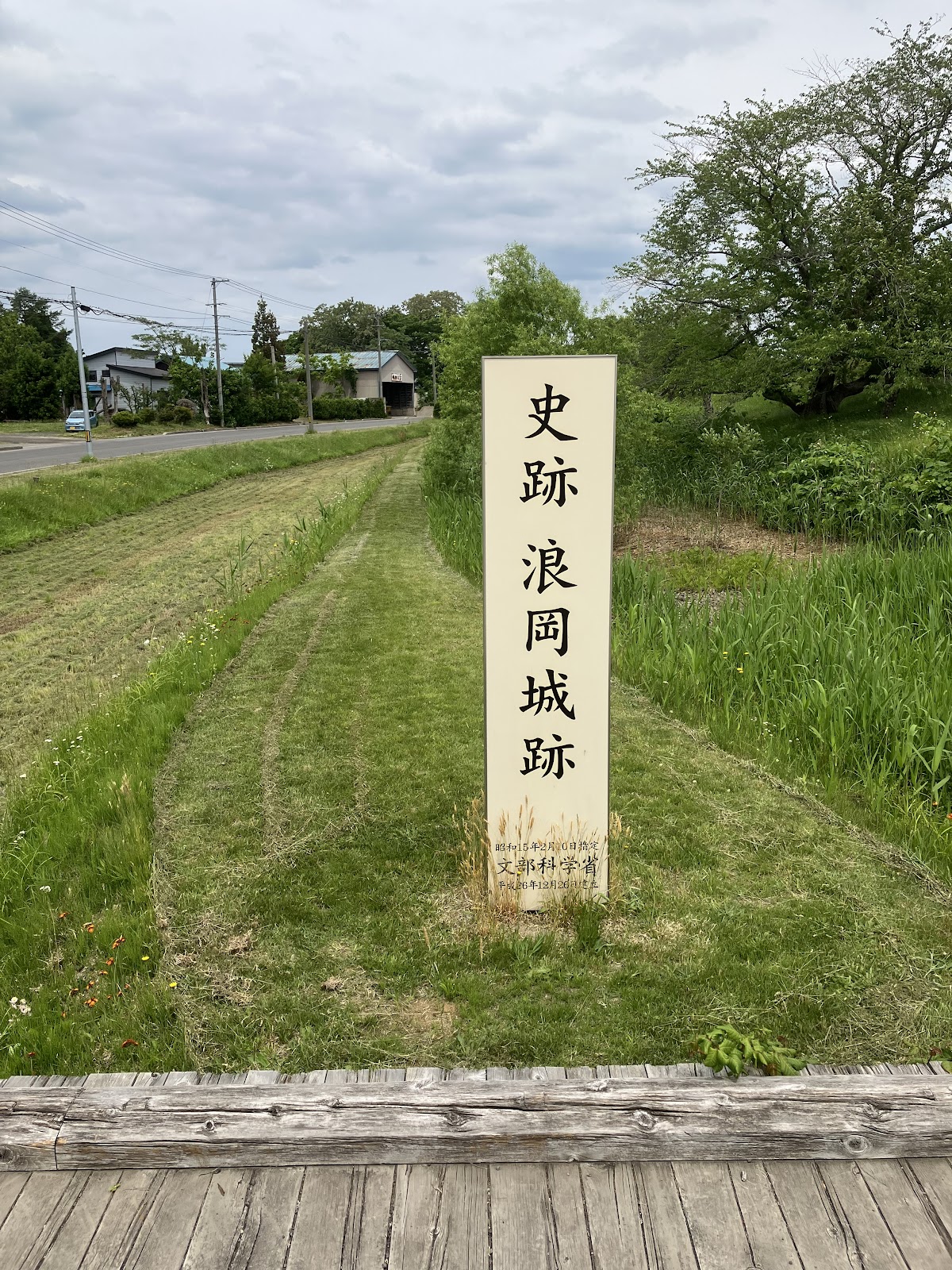
On February 10, 1940 (Showa 15), Namioka Castle Ruins were designated as the first National Historic Site in Aomori Prefecture. This indicates the high historical value of the castle ruins.
Full-scale archaeological excavations began in 1977 (Showa 52) and have continued to this day. To date, over 50,000 artifacts, including tableware, cooking utensils, weapons, and religious objects, have been unearthed, providing extremely valuable information for understanding medieval life and culture. In 2017 (Heisei 29), it was selected as one of the Continued Top 100 Japanese Castles (No. 104), attracting attention from castle enthusiasts.
Structure of Namioka Castle
Characteristics of the Multi-Enclosure Layout
The most distinctive feature of Namioka Castle is its multi-enclosure layout, with eight enclosures (kuruma) arranged in a fan shape. This is a very unique structure for a flatland castle of the Sengoku period and is highly regarded by researchers as a typical example of a residential-type castle.
The castle cleverly utilizes the gently sloping terrain from east to west, with each building separated by a double moat approximately 20 meters wide and 5 meters deep. This double moat not only served a defensive function but also enhanced the independence of each building, allowing each to have a different function.
Arrangement and Role of the Eight Buildings
The eight buildings that make up Namioka Castle are arranged as follows:
Uchidate (Inner Building)
Located in the center of the castle, it is believed to be the lord’s residence. It was the place where the most important administrative affairs were conducted, and archaeological excavations have yielded numerous high-quality ceramics and tea ceremony utensils.
Kitadate (North Building)
Located north of the Uchidate, it is presumed to have housed the residences of senior retainers and facilities assisting with administrative affairs.
Higashidate (East Building)
Located in a crucial position protecting the eastern side of the castle, it is considered to have had a strong defensive function.
West Building (Nishidate)
This building was responsible for the western defense, and excavated artifacts suggest it may have contained an armory or a garrison for soldiers.
Sarugaku Building (Sarugakudate)
As the name suggests, it is believed to have contained facilities related to performing arts and rituals, suggesting it was a building with cultural functions.
New Building (Shindate)
This building was added relatively late, and is thought to be a section added as the castle expanded.
Kengyo Building (Kengyodate)
This is believed to have been the residence of an official responsible for management and supervision, and may have held administrative functions.
Northeast Building (Kitahigashidate)
Located in the northeastern part of the castle, it formed part of the defensive line.
These buildings, while each being an independent space, constitute a unified defensive system connected by moats, demonstrating the sophisticated design philosophy of medieval castles.
Defensive System of Moats and Earthworks
The key to the defense of Namioka Castle is the system of double moats and earthworks. The large moat, 20 meters wide, speaks to the advanced civil engineering technology of the time. The 5-meter-deep moat effectively prevented enemy incursions, allowing each castle to function as an independent defensive stronghold.
The earthen ramparts were constructed using the excavated soil from the moat. Their height varied depending on the location, but it is estimated they were around 3-4 meters. The well-preserved remains of the ramparts allow us to imagine their original appearance.
The moat was not merely a defensive structure; it also served a drainage function, playing a crucial role in maintaining the castle’s environment. Furthermore, the double-moat structure is based on the concept of multi-layered defense, ensuring that even if one moat was breached, the next line of defense would still function.
Location as a Hilltop Castle
Namioka Castle is classified as a hilltop castle. Built on a terrace at the confluence of two rivers, the Namioka River and the Shoheizu River, it sits slightly higher than its surroundings. This slightly elevated location was ideal, offering both defensive advantages and convenient water transport.
The rivers also functioned as natural moats, enhancing the castle’s defensive capabilities. Furthermore, its location overlooking the Tsugaru Plain made it an excellent site for monitoring developments in the surrounding area.
Excavation and Unearthed Artifacts
Over 50,000 Valuable Artifacts
Excavation work, which began in 1977, has continued to this day, unearthing over 50,000 artifacts. These artifacts are extremely valuable resources for understanding the lifestyle, trade relations, and social structure of the Tsugaru region in the 16th century.
Tableware and Cooking Utensils
The unearthed tableware includes Chinese celadon and white porcelain, domestic pottery, and lacquerware. Of particular note is the presence of high-quality ceramics transported from Kyoto and the Seto/Mino regions. These serve as physical evidence indicating that the Namioka Kitabatake clan had deep ties to the aristocratic culture of Kyoto.
Cooking utensils such as pots, kettles, and mortars have been unearthed, providing clues to reconstructing the dietary habits of the time. Furthermore, numerous fish and animal bones have been discovered, and research is progressing on the types of ingredients and cooking methods used.
Weapons and Armor
Many artifacts related to combat have been unearthed, including sword fragments, arrowheads, and musket bullets. The musket bullets, in particular, are important evidence of the fierce fighting that took place during the castle’s fall. It has been confirmed that firearms were already in use at the time of the castle’s fall in 1578.
Fragments of sword fittings and horse tack offer a glimpse into the lives of the samurai class.
Religious Objects and Cultural Properties
A wealth of religious artifacts have also been unearthed, including Buddhist implements, prayer beads, fragments of scriptures, and parts of Buddhist statues. These confirm that the Namioka Kitabatake clan was deeply devoted to Buddhism and actively engaged in the construction of temples and shrines.
The discovery of tea ceremony utensils is valuable evidence that Kyoto’s tea ceremony culture spread to the Tsugaru region. Tea bowls, tea caddies, and water pitchers have been discovered, indicating the high level of cultural sophistication at the time.
Daily Life Items
A variety of artifacts related to daily life have been unearthed, including inkstones, inscribed pottery, coins, and ornaments. The presence of inkstones suggests that document creation and academic study took place within the castle.
The coins are mainly Chinese coins, providing clues to the economic activities and trade practices of the time. Furthermore, ornaments such as hairpins and combs offer insights into the lives and aesthetic sensibilities of women.
Exhibition at the Aomori City Medieval Museum
Many of the unearthed artifacts are on display at the “Aomori City Medieval Museum,” adjacent to the Namioka Castle ruins. This facility clearly presents the results of the excavation and allows visitors to experience the appearance of Namioka Castle in the Middle Ages through reconstructed models and video materials.
The permanent exhibition systematically displays artifacts from each period, designed to provide a comprehensive understanding of the history and culture of the Namioka Kitabatake clan. Furthermore, special exhibitions focusing on specific themes are held regularly, allowing visitors to learn about the latest research findings.
Highlights of Namioka Castle
Well-Preserved Castle Ruins
The current Namioka Castle site is a historical park where the remains of a medieval castle are well-preserved. The layout of the eight buildings, the remains of the double moat, and the remains of the earthworks make it a valuable place to imagine the castle’s appearance at the time of its construction.
The remains of the moat, in particular, are clearly visible, allowing visitors to appreciate its scale. You can experience firsthand just how powerful a 20-meter-wide moat was as a defensive structure.
A Famous Cherry Blossom Spot in Spring
In spring, Namioka Castle becomes a popular cherry blossom viewing spot, attracting many visitors. When the cherry trees planted on the castle grounds are in full bloom, you can enjoy the beautiful contrast between the medieval castle ruins and the cherry blossoms.
The rows of cherry trees planted along the earthworks are especially magnificent, creating a wonderful scene where historical landscape and natural beauty harmonize. It is a beloved place of relaxation for locals.
Namioka Castle Ruins Information Center
An information center is located at the castle ruins, where you can receive pamphlets and guidance on the sightseeing route. The information center also has a stamp station for the Continued Top 100 Japanese Castles, making it an important base for those enjoying castle tours.
Guided tours by volunteer guides are also available (advance reservations required). By touring the castle ruins while listening to explanations from knowledgeable guides, you can gain a deeper understanding of Namioka Castle’s history.
Walking Course and Estimated Time
A thorough visit to the Namioka Castle Ruins requires approximately 1.5 to 2 hours. The recommended walking route is as follows:
- Obtain information materials at the information center to get an overview.
- Begin your visit with the Inner Building.
- Visit the North Building, then the East Building, and so on.
- Confirm the remains of the double moat.
- Climb the earthen rampart to get a panoramic view of the entire castle site.
- View the excavated artifacts at the Aomori City Medieval Museum.
Each building has an explanatory sign where you can learn about its unique features and role.
Access
Location
Address: 43 Okada, Namioka, Aomori City, Aomori Prefecture 038-1311
Access by Public Transportation
By JR Train:
- Get off at Namioka Station on the JR Ou Main Line, approximately 25 minutes on foot (approx. 2km)
- Approximately 5 minutes by taxi
By Bus:
- Get off at Namioka Castle Ruins bus stop (Aomori City Bus), short walk
- However, bus service is limited, so please check the timetable in advance.
Access by Car
By Expressway:
- Approximately 5 minutes (approx. 3km) from Namioka IC on the Tohoku Expressway
- Approximately 15 minutes from Kuroishi IC
From Central Aomori City:
- Approximately 30 minutes (approx. 20km) via National Route 7
Parking:
- Free parking available (accommodates approximately 50 regular cars)
- Parking space for large buses is also available
Opening Hours and Admission Fees
Namioka Castle Ruins (Outdoor)
- Free to visit (24 hours)
- Free admission
Aomori City Medieval Museum
- Opening Hours: 9:00 AM – 4:00 PM
- Closed: Mondays (or the following day if Monday is a public holiday), New Year’s holidays (December 29th – January 3rd)
- Admission Fee: General 200 yen, High school and university students 100 yen, Junior high school students and younger free
- Group discounts available (20 or more people)
Nearby Facilities
Michi-no-Eki Namioka
Located about a 5-minute drive from Namioka Castle Ruins, you can purchase local specialties and fresh agricultural products. There is also a restaurant where you can enjoy Tsugaru regional cuisine.
Namioka Onsen
Several day-trip hot spring facilities are located nearby, perfect for relaxing after visiting the castle ruins. Ideal for soothing fatigue from historical sightseeing.
Map
Namioka Castle Ruins are located in the southern part of Aomori City, east of the center of the former Namioka town. They sit on a terrace near the confluence of the Namioka River and the Shoheizu River, surrounded by residential areas and farmland.
They are easily accessible from the Namioka Interchange on the Tohoku Expressway. Located midway between central Aomori City and Hirosaki City, they are suitable for day trips from both cities.
When using car navigation, searching for “Aomori City Medieval Sites” or “Namioka Castle Ruins” is recommended. There are also well-maintained signs in the area, so you should be able to arrive without getting lost.
Cultural Value of Namioka Castle
Importance as a National Historic Site
Namioka Castle Ruins were designated as the first National Historic Site in Aomori Prefecture in 1940 (Showa 15). This recognition stems from the following recognized values of the castle ruins:
- A Typical Example of a Medieval Castle: The multi-enclosure layout, with eight mansions arranged in a fan shape, is of high academic value as an excellent example of a residential castle from the Sengoku period.
- Preservation of Remains: The remains, such as moats and earthworks, are well-preserved, making them invaluable for understanding the castle structure of the time.
- Abundance of Excavated Artifacts: Over 50,000 artifacts have been unearthed, forming an important collection of materials for studying medieval life and culture.
- Historical Background: An indispensable historical site for understanding the history of the Tsugaru region from the Nanboku-cho period to the Sengoku period.
Selected as one of the Continued Top 100 Japanese Castles
In 2017, Namioka Castle was selected as the 104th of the Continued Top 100 Japanese Castles. This selection, made by the Japan Castle Association, recognizes castles of high historical and cultural value, signifying a renewed recognition of Namioka Castle’s national importance.
The Namioka Castle Ruins stamp, part of the Continued Top 100 Japanese Castles, can be obtained at the Namioka Castle Ruins Information Center, making it a popular tourist spot for castle enthusiasts nationwide.
Contribution to Local History Education
Namioka Castle Ruins is also utilized as a site for local history education. Elementary and junior high schools in Aomori City provide opportunities for students to visit Namioka Castle Ruins as part of their local history studies.
The Aomori City Medieval Museum also offers educational programs for schools, designed to allow children to learn about medieval history through hands-on experience. Seeing excavated artifacts firsthand allows for a concrete understanding of history that cannot be obtained from textbooks alone.
The Namioka Kitabatake Clan and the Medieval History of Tsugaru
Genealogy of the Kitabatake Clan
The Namioka Kitabatake clan is a branch of the prestigious Kitabatake clan, a noble family descended from the Murakami Minamoto clan. Kitabatake Chikafusa, who supported Emperor Go-Daigo during the Nanboku-cho period, was an important figure known as the scholar who authored the “Jinno Shotoki” (Chronicle of the Legitimate Succession of the Divine Emperors). His son, Kitabatake Akiie, was appointed governor of Mutsu Province at a young age and played an active role as a military leader for the Southern Court in the Tohoku region.
The Namioka Kitabatake clan is believed to have originated from descendants of Akiie who settled in Tsugaru. However, there are various theories regarding their lineage, and debate continues among researchers. Nevertheless, given their strong connection to the aristocratic culture of Kyoto and the honorific title “Gosho” (御所), it is considered certain that they had some kind of relationship with the Kitabatake clan.
Power in the Tsugaru Region
From the late 15th to the 16th century, the Namioka Kitabatake clan expanded their power as a powerful local lord in the Tsugaru region. At that time, the Tsugaru region, while under the influence of the Nanbu clan, was a situation where multiple local lords vied for power.
The Namioka Kitabatake clan, backed by their noble lineage and cultural superiority, became a respected presence among the surrounding lords. The information and culture gained through exchanges with Kyoto were crucial factors in elevating the status of the Namioka Kitabatake clan in the Tsugaru region.
Economic Foundation
The economic foundation of the Namioka Kitabatake clan lay in agricultural production and trade. In addition to tax revenue from the fertile land of the Tsugaru Plain, Namioka, as a transportation hub, also saw the development of commerce.
Excavated coins and trade goods indicate their involvement in a trade network across the Sea of Japan. It is possible they acquired not only luxury goods from Kyoto but also imported goods from China and the Korean Peninsula.
Cultural Activities
The most distinctive feature of the Namioka Kitabatake clan lies in their cultural activities. Through exchanges with Kyoto’s court nobles and temples, they transplanted the culture of the capital to Tsugaru. Cutting-edge cultures of the time, such as the tea ceremony, linked verse poetry, and Buddhist culture, were brought to Namioka.
They also actively built temples and shrines, functioning as a religious and cultural center. These activities were not merely cultural pastimes, but also served to legitimize the lord’s rule as symbols of authority.
History after the fall of Namioka Castle
The rise of Tsugaru Tamenobu
Oura Tamenobu (later Tsugaru Tamenobu), who captured Namioka Castle, continued his unification of Tsugaru, eventually bringing the entire Tsugaru region under his control. He participated in Toyotomi Hideyoshi’s Odawara campaign in 1590, and his ownership of the Tsugaru region was officially recognized.
Tamenobu changed his surname from Oura to Tsugaru in 1597, laying the foundation for the Hirosaki Domain. The capture of Namioka Castle was a crucial step in Tsugaru Tamenobu’s rise to power in the Tsugaru region.
The aftermath of the castle ruins
After its fall, Namioka Castle was abandoned, and its buildings were demolished. Throughout the Edo period, the castle ruins were used as farmland, and the remains gradually disappeared. However, large-scale geographical features such as moats and earthworks remained intact.
Locally, the site was remembered as the “site of the Imperial Palace,” and the legends of the Namioka Kitabatake clan were passed down through generations. From the Meiji era onward, local historians re-recognized the historical importance of Namioka Castle, and momentum for its preservation grew.
Efforts toward Preservation and Utilization
Since its designation as a National Historic Site in 1940, efforts toward the preservation and utilization of the Namioka Castle site have intensified. Excavations conducted from 1977 onward scientifically clarified the actual state of the castle site, providing fundamental data for preservation and development.
In the Heisei era, development as a historical park progressed, including the installation of explanatory signs, the construction of walking paths, and planting of trees. The opening of the Aomori City Medieval Museum also secured a base for exhibiting excavated artifacts and for historical education.
Currently, preservation activities by local residents are active, with citizen-participatory historical site preservation being practiced through activities such as cleaning and cherry tree management.
Things to Know Before Visiting Namioka Castle
Clothing and Items to Bring
Since the castle ruins are an outdoor historical park, comfortable clothing and shoes are essential. Especially when viewing the bottom of the moat and the earthworks, some areas have uneven footing, so sneakers or other athletic shoes are recommended.
In summer, the sun is strong, so bring a hat, sunscreen, and drinks. In winter, there may be snow, making visits difficult, so check in advance. Spring and autumn are relatively easy seasons to visit, but it’s a good idea to bring rain gear.
Best Season for Visiting
The best seasons to visit Namioka Castle Ruins are as follows:
Spring (Late April to May): This is the cherry blossom season, offering the most beautiful scenery. However, it can get crowded with cherry blossom viewers.
Early Summer (June): The fresh greenery is beautiful, and the weather is mild, making it ideal for visiting.
Autumn (September-October): The contrast between the autumn leaves and the castle ruins is beautiful, and the weather is pleasant.
Winter: While visits are difficult due to snow, the snow-covered castle ruins also have a unique charm.
Photography Tips
Namioka Castle Ruins are also attractive as a photography spot. Recommended photo spots include:
- Full view of the double moat: From an angle that shows the scale of the moat.
- From the top of the earthen rampart: A viewpoint overlooking the entire castle ruins.
- Cherry blossoms and the moat in spring: The contrast between the cherry blossoms and the ruins.
- Explanation boards and ruins of each building: For documentation purposes.
When taking photos, please be considerate of other visitors.
Combining your visit with nearby attractions
Visiting Namioka Castle Ruins will make your trip more fulfilling when combined with nearby attractions:
Hirosaki Castle: Approximately 30 minutes by car. A famous castle with an existing keep, it’s interesting to visit while comparing it to Namioka Castle.
Sightseeing in Aomori City: Approximately 30 minutes by car. Includes the Sannai-Maruyama Ruins and the Aomori Prefectural Museum of Art.
Kuroishi City: Approximately 20 minutes by car. Historic townscapes remain, including Komise Street.
Michi-no-Eki Namioka: Ideal for purchasing local specialties and lunch.
Summary
Namioka Castle is a valuable historical site that conveys the history of the Tsugaru region from the Nanboku-cho period to the Sengoku period. Built by the Namioka Kitabatake clan, a family of noble lineage, the castle has a unique structure with eight mansions arranged in a fan shape, and occupies an important position in the study of medieval castles.
From its construction in the 1460s to its fall in 1578, Namioka Castle functioned as the political and cultural center of the Tsugaru region for approximately 120 years. The culture brought about by exchanges with Kyoto, the rich life revealed by over 50,000 excavated artifacts, and the dramatic history that ended with Tsugaru Tamenobu’s aim to unify Tsugaru—all these elements contribute to the rich history of the region.
Currently preserved as a national historical site, the Namioka Castle ruins are a valuable place to experience the appearance of a medieval castle through the well-preserved remains of moats and earthworks. At the Aomori City Medieval Museum, you can view the excavated artifacts and gain a concrete understanding of the lifestyle and culture of the time.
Selected as one of the Continued Top 100 Japanese Castles, the Namioka Castle ruins are a historical site worth visiting not only for castle enthusiasts but for all those interested in history. When you visit Aomori, be sure to stop by the Namioka Castle ruins and reflect on the medieval history of Tsugaru.