Nagayabu Castle (Wakayama Prefecture) Complete Guide: A Thorough Explanation of the History and Highlights of the Largest Mountain Castle in Northern Kii Province
Nagayabu Castle, located in Shiroyamadai, Hashimoto City, Wakayama Prefecture, is one of the representative medieval mountain castles of northern Kii Province. Built on a ridge at an altitude of 350m and a relative height of 170m, this castle boasts a vast scale spanning approximately 600m from east to west and is known as one of the largest mountain castles in the northern Kii region. This article comprehensively explains the history, structure, highlights, and access methods of Nagayabu Castle, providing useful information for both castle enthusiasts and beginners.
Overview and Basic Information of Nagayabu Castle
Nagayabu Castle is a mountain castle built on “Shiroyama,” located on the north side of Shiroyamadai, Hashimoto City, Wakayama Prefecture. While some parts of the castle ruins have been lost due to the development of the Shiroyamadai residential area, the main remains are well preserved.
Basic Data
- Location: Shiroyamadai, Hosokawa, Hashimoto City, Wakayama Prefecture
- Elevation: Approximately 350m
- Relative Height: Approximately 170m
- Castle Size: Approximately 600m east-west
- Construction Period: Bunmei era (1469-1487)
- Builder: Ikegawa Yoshiharu (Niegawa Yoshiharu)
- Castle Type: Mountain castle (One castle, separate enclosures)
- Main Remains: Enclosures, moats, vertical moats, earthworks
The most distinctive feature of Nagayabu Castle is its “one castle, separate enclosures” layout, consisting of three independent castle zones: the eastern castle, the western castle, and the outpost. This structure is rare for a mountain castle of the Sengoku period and demonstrates advanced castle construction techniques that coordinated multiple bases for defense.
The History of Nagayabu Castle and the Genealogy of its Lords, the Ikegawa Clan
Background of the Castle’s Construction and the Rise of the Ikegawa Clan
The history of Nagayabu Castle dates back to the Nanboku-cho period (Northern and Southern Courts period). According to the *Kii Zoku Fudoki* (Continued Topographical Record of Kii Province), Yoshiharu, the son of Ikegawa Yoritoshi (or Niegawa Yoritoshi), who distinguished himself under Kusunoki Masashige, entered Ito District in Kii Province during the Bunmei era (1469-1487) and built Nagayabu Castle.
The Ikegawa clan (or Niegawa clan) originally hailed from Kawachi Province and were subordinates of Kusunoki Masashige, a warrior who played an active role on the Southern Court side. The descendants of Ikegawa Yoritoshi, who achieved merit during the turbulent Nanboku-cho period, expanded their power in northern Kii Province during the mid-Muromachi period, establishing their base in this area, which marked the beginning of Nagayabu Castle.
Nagayabu Castle in the Sengoku Period
After Yoshiharu, the Ikegawa clan continued with Yoshinori and Yoshitsugu. During the Sengoku period, Kii Province was under the influence of the Hatakeyama clan, but with the changing political situation in the Kinai region, the Ikegawa clan came to follow Oda Nobunaga.
During Yoshinori’s time, in response to the Oda clan’s expansion into the Kinai region, the castle functioned as an Oda base in northern Kii Province. In Yoshitsugu’s generation, after the death of Oda Nobunaga, as Toyotomi Hideyoshi advanced towards unifying Japan, the Ikegawa clan was incorporated into the Toyotomi regime.
The Fall of Nagayabu Castle and the End of the Ikegawa Clan
In 1587 (Tensho 15), during the time of Yoshikiyo, the son of Ikegawa Yoshitsugu, Nagayabu Castle underwent a major turning point. As Toyotomi Hideyoshi’s pacification of Kii Province progressed, Yoshikiyo allegedly defied Hideyoshi and was killed in battle. This marked the fall of Nagayabu Castle, bringing an end to the rule of the Ikegawa clan.
After its fall, Nagayabu Castle was abandoned and became part of the territory of the Kishu Tokugawa family during the Edo period, but it lost its function as a castle. Over many years, the castle site became a forest, and the remains have been preserved to this day.
Structure and Layout of Nagayabu Castle
Characteristic Structure of a Single Castle with Separate Enclosures
The most distinctive feature of Nagayabu Castle is its layout, consisting of three independent castle areas. Unlike typical mountain castles centered around a single main keep, this reflects a sophisticated castle-building philosophy where multiple strongholds cooperate for defense.
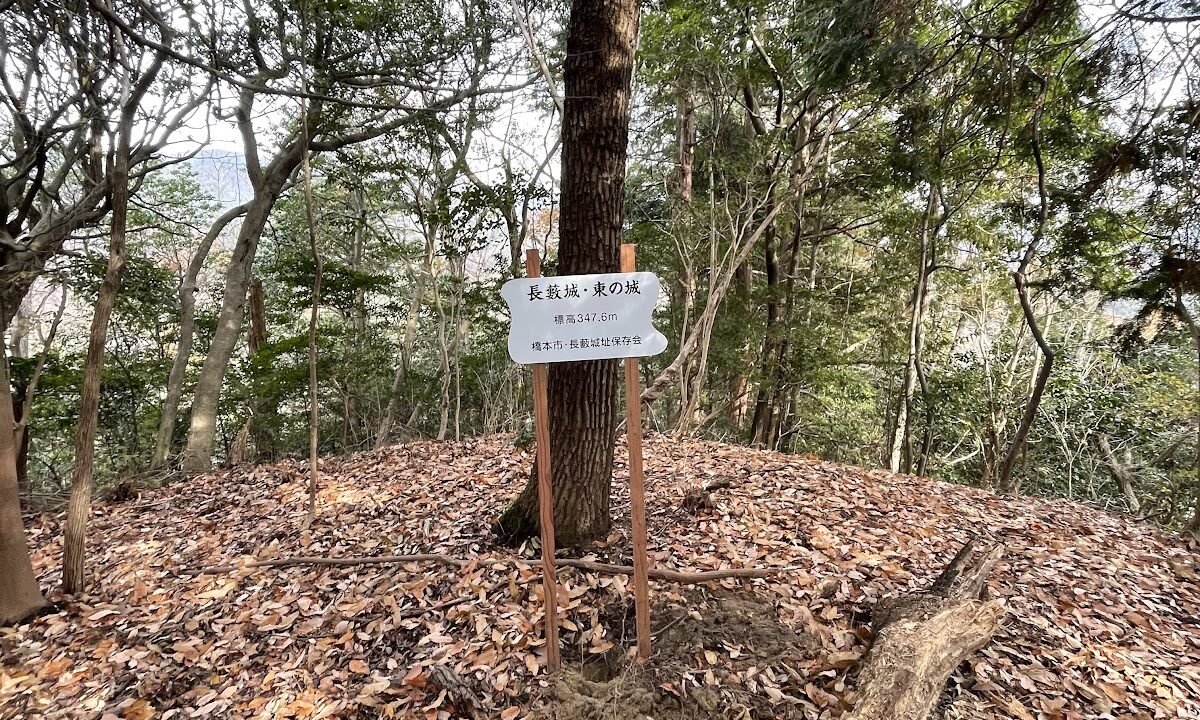
Eastern Castle (Higashi Castle)
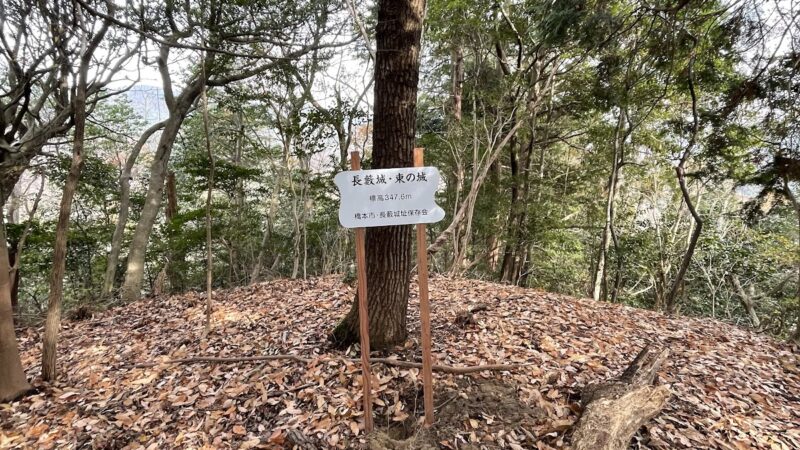
Higashi Castle is a castle area located at the eastern end of Nagayabu Castle. It has a relatively large enclosure, and a flat area believed to be the main keep remains. Higashi Castle offers excellent views, overlooking the Kinokawa River basin and the city of Hashimoto.
As for the remains, several clearly defined trenches can be identified, and the large trench blocking the eastern ridge is particularly impressive. Traces of earthworks also remain around the enclosures, allowing us to understand the layout of the defensive structures.
West Castle (Nishijo)
Nishijo is located at the western end of Nagayabu Castle, approximately 200m from Higashijo. Similar to Higashijo, it features multiple enclosures and trenches, indicating that it functioned as an independent defensive base.
A distinctive feature of Nishijo is the development of vertical trenches. These trenches, dug along the slopes, are thought to have prevented flanking attacks and also served a drainage function. These vertical trenches are still clearly visible today, making them valuable remains that allow us to experience the castle-building techniques of the Sengoku period.
Outpost
The outpost is located at the tip of the ridge extending further southwest from Nishijo, on a peak at an elevation of 300.5m. Located separately from the eastern and western castles, it is presumed to have served as an outpost or observation base.
Although smaller in scale than the eastern and western castles, the outpost features an independent enclosure and moat, making it capable of defense on its own. This placement is thought to be a strategic arrangement for early detection of enemy movements and communication to the main castle.
Defensive System of Moats and Vertical Moats
The core of Nagayabu Castle’s defensive system is the moat and vertical moat. Moats are ditches dug across ridges, serving to hinder enemy advances. At Nagayabu Castle, multiple clear moats can be identified at both the eastern and western castles, and their size and depth demonstrate the advanced castle-building techniques of the time.
Vertical moats are ditches dug vertically along slopes, preventing enemies from climbing the slopes to attack. The vertical moats at Nagayabu Castle are particularly numerous around the western part of the castle, and in some areas, a “ridge-like vertical moat group” configuration, where multiple vertical moats are arranged in parallel, can be observed. This is characteristic of castle construction techniques from the late Sengoku period, indicating that Nagayabu Castle was modified over time.
Arrangement and Function of the Enclosures
Nagayabu Castle has over a dozen enclosures of varying sizes. The main enclosures are concentrated in the eastern and western parts of the castle, and each is arranged in a hierarchical manner, such as the main enclosure, second enclosure, and third enclosure.
The largest enclosure measures approximately 40m east-west and 20m north-south, a sufficient size for constructing buildings. Although no archaeological excavations have been conducted, it is presumed that residences, warehouses, and barracks were built in these enclosures.
Highlights and Castle Remains of Nagayabu Castle
Well-Preserved Moats
The most noteworthy feature for castle enthusiasts visiting Nagayabu Castle is its well-preserved moats. In particular, the moat located between the eastern and western castles is approximately 5 meters deep and 10 meters wide, retaining much of its original form.
Standing at the bottom of the moat, the towering cliffs on both sides give a real sense of the difficulty it would have been for an enemy to cross. Furthermore, in some places, vertical moats extend from the bottom of the moat towards the slope, demonstrating a functional design that served both defense and drainage.
Clear Traces of Vertical Moats
The vertical moats around the western castle are another highlight of Nagayabu Castle. Clearly remaining along the slope, these vertical moats are approximately 2-3 meters deep and several tens of meters long, and can still be seen in the forest today.
Observing the vertical moats reveals that they weren’t simply dug into the slope, but rather constructed by piling up earth on both sides to increase their height. This suggests a defensive effect exceeding the actual depth.
Main Enclosure with Excellent Views
From the main enclosure of the eastern castle, there are expansive views of the Kinokawa River basin. On clear days, you can see not only the city of Hashimoto but also the mountains on the border of Osaka Prefecture in the distance.
This excellent view was militarily important, offering the advantage of monitoring enemy movements from afar. One reason the Ikegawa clan built Nagayabu Castle in this location is thought to be this strategic location.
Traces of Earthworks and Cut Slopes
Traces of earthworks and cut slopes remain around the enclosure. Many of the earthworks are about 1-2 meters high and served to reinforce the enclosure’s defenses. Cut slopes, on the other hand, are sections where the edge of the enclosure was vertically cut away, a technique designed to make it difficult for enemies to climb.
These ruins are difficult to spot at first glance because they are covered with trees, but they can be clearly identified with careful observation. When exploring the castle grounds, paying attention to changes in the terrain will add to the enjoyment of discovering these ruins.
Access and Visiting Guide to Nagayabu Castle
Access by Public Transportation
The nearest station to Nagayabu Castle is “Rinkan Den’entoshi Station” on the Nankai Koya Line. The castle ruins are approximately a 23-minute walk (about 1.8 km) from the station.
Access Route:
- Get off at Rinkan Den’entoshi Station
- Head north on the road in front of the station towards the Shiroyamadai residential area
- Head towards the residential area of Shiroyamadai 4-chome
- The entrance to the castle is near the water tower facility in the northeastern part of the residential area.
The roads within the residential area are complex, so it is recommended to check a map app on your smartphone beforehand.
Access by Car
By car, it is approximately a 10-minute drive from the “Hashimoto IC” on the Keina-Wa Expressway.
Parking Information:
There is parking space for 1-2 cars near the water tower facility in the northeastern part of the residential area of Shiroyamadai 4-chome. However, this is not an official parking lot, so please be considerate of the surrounding residents. Avoid street parking and use public transportation whenever possible.
Castle Entrance and Route
There are several entrances to Nagayabu Castle, but the most common route is from near the water tower facility in the northeastern part of the Shiroyamadai residential area.
Recommended Route:
- Enter the mountain path from the entrance next to the water tower facility.
- Reach the eastern castle in approximately 15-20 minutes.
- After visiting the eastern castle, follow the ridge to the western castle (approximately 10 minutes).
- After visiting the western castle, proceed to the outpost to the southwest (approximately 15 minutes).
- Return along the same route or descend via a different route.
The total viewing time is approximately 1.5-2 hours if you take your time to explore thoroughly.
Important Notes for Visitors
- Clothing: As this is a mountain castle, appropriate clothing and footwear for hiking are necessary. Be especially careful after rain, as the ground can be slippery.
- Equipment: Bring drinking water, a towel, insect repellent, and a map or GPS device.
- Season: During the summer, there are many mosquitoes and bees, so wearing long sleeves and long pants is recommended. Autumn to spring is the best time to visit.
- Safety: Avoid visiting alone; visit in groups whenever possible. Also, check your cell phone signal strength.
- Manners: The castle ruins are a valuable cultural asset. Please be careful not to damage the remains or litter.
Estimated Visiting Time
- Simplified Visit: East Castle only, approximately 40-50 minutes
- Standard Visit: East Castle and West Castle, approximately 1-1.5 hours
- Complete Visit: East Castle, West Castle, and Outposts, approximately 2-2.5 hours
Nearby Tourist Attractions and Related Historical Sites
Mount Koya
Located approximately 20km south of Nagayabu Castle, Mount Koya is a sacred site of Shingon Esoteric Buddhism founded by Kobo Daishi Kukai. It is a UNESCO World Heritage Site and a representative tourist destination in Wakayama Prefecture. It is well worth visiting in conjunction with a visit to Nagayabu Castle.
Chihaya Castle Ruins
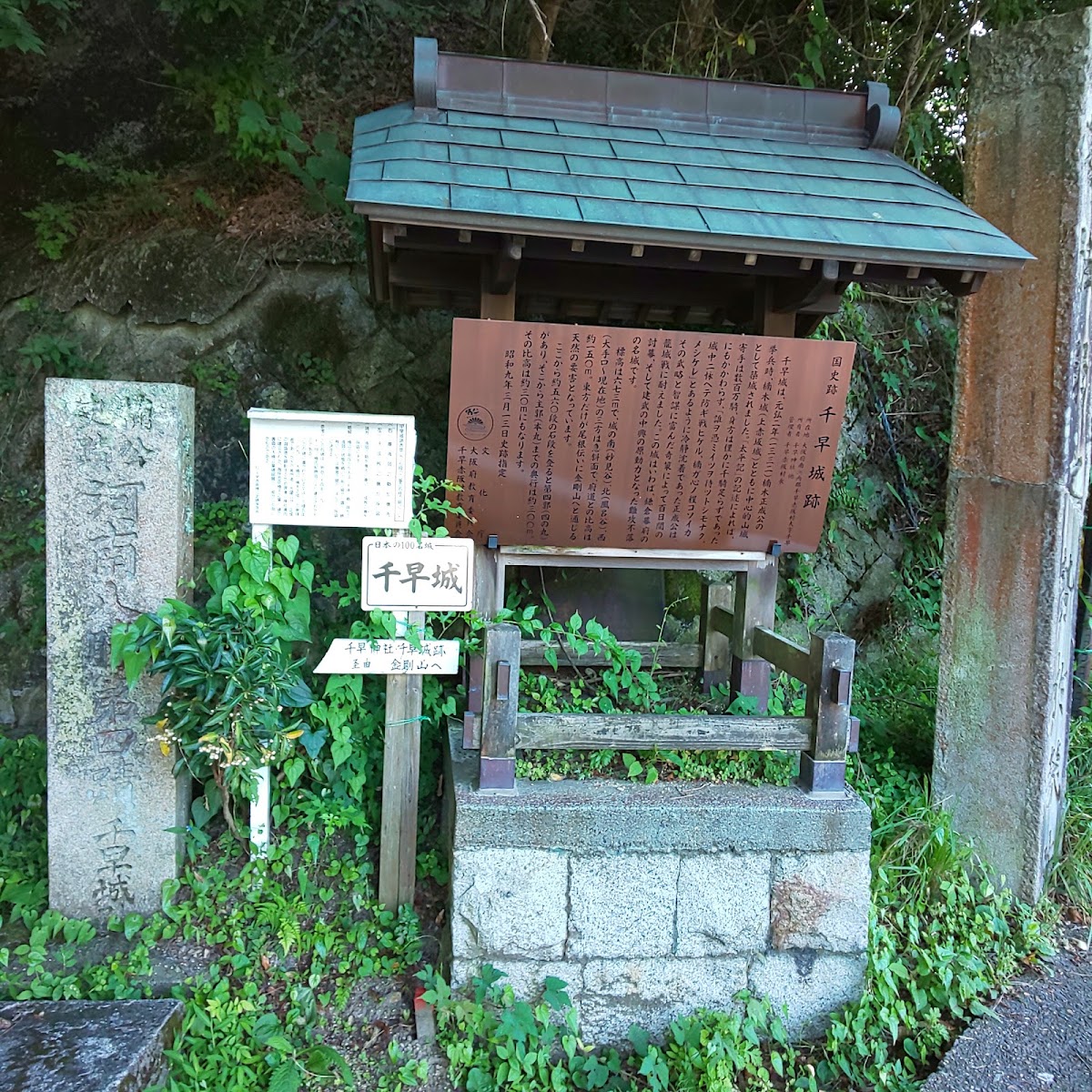
Located approximately 10km north of Nagayabu Castle in Chihayaakasaka Village, Osaka Prefecture, are the ruins of Chihaya Castle, famous as the residence of Kusunoki Masashige. As a place associated with Kusunoki Masashige, the lord of the Ikegawa clan, one can feel a historical connection.
Hashimoto City Local History Museum
The local history museum in Hashimoto City features exhibits on the history and culture of Hashimoto City, including Nagayabu Castle. Visiting before visiting the castle ruins will provide a deeper understanding.
Historical Significance and Evaluation of Nagayabu Castle
Position in the Medieval History of the Kii Region
Nagayabu Castle is an important historical site that tells the history of the medieval and Sengoku periods in northern Kii Province. This castle witnessed the turbulent times from the turmoil of the Nanboku-cho period to the warring states of the Sengoku period, and finally to the unification under the Toyotomi regime.
It is a valuable historical site that allows us to understand how changes in the central government affected the provinces through the rise and fall of a local powerful family, the Ikegawa clan.
Evaluation from the Perspective of Castle Construction Technology
The distinctive layout of a single castle with separate enclosures is an important example of the development of castle construction technology during the Sengoku period. The defensive system linking multiple independent bases represents a transitional period from simple mountain castles to the complex castles of the Sengoku period.
Furthermore, the placement of defensive structures such as moats and vertical trenches incorporates the latest technology of the time, suggesting that the Ikegawa clan was not merely a local powerful family but actively incorporated information and technology from the central government.
Preservation Status and Challenges in Modern Times
While some of the remains of Nagayabu Castle have been lost due to the development of the Shiroyamadai residential area, the main parts are preserved in relatively good condition. However, it has not received official historical site designation, and preservation and maintenance are not yet sufficient.
In the future, appropriate preservation and utilization as a regional historical heritage site are required. Creating an environment where visitors can safely view the site, such as installing information boards, improving the access roads, and regularly mowing the grass, is desirable.
Advice for Castle Enthusiasts Visiting Nagayabu Castle
Points for Preparation
To make your visit to Nagayabu Castle more fulfilling, please prepare the following beforehand:
- Obtaining a Layout Map: Obtain a layout map from the internet or castle-related books to understand the castle’s structure beforehand.
- Preparation for History: Learning about the history of the Ikegawa clan and the situation in Kii Province from the Nanboku-cho period to the Sengoku period will deepen your understanding at the site.
- Check the Weather: As it is a mountain castle, it is affected by the weather. Choose a sunny day to visit.
- Check Your Physical Fitness: Climbing a mountain castle with a relative elevation of 170m requires a certain level of physical fitness. If you are not usually active, plan a reasonable trip.
Photography Tips
Points for capturing the charm of Nagayabu Castle in photographs:
- The Power of the Moat: An angle looking up from the bottom of the moat can express its depth and scale.
- The Continuity of the Vertical Moat: Photographing the vertical moat extending along the slope from a diagonal angle above makes the overall picture easier to understand.
- View: The view from the main enclosure is an important element that conveys the excellent location of the castle. – Details of the Ruins: Photographing details such as the cross-sections of earthworks and cliffs is valuable for documentation.
Comparative Visit with Other Castles
To deepen your understanding of Nagayabu Castle, we recommend comparing it with other mountain castles from the same period:
- Chihaya Castle (Osaka Prefecture): As the castle of Kusunoki Masashige, you can feel its historical connection to the Ikegawa clan.
- Negoro-ji Fortress (Wakayama Prefecture): As a castle of a religious power in Kii Province, it has a different character.
- Takatori Castle (Nara Prefecture): As a large-scale mountain castle in Yamato Province, close to Kii Province, you can compare its construction techniques.
Summary: The Charm and Future Prospects of Nagayabu Castle
Nagayabu Castle, located in Hashimoto City, Wakayama Prefecture, is one of the largest mountain castles in northern Kii Province, and is a valuable historical site that conveys the history from the medieval period to the Sengoku period. Located at an altitude of 350m, with a relative height of 170m, and stretching approximately 600m from east to west, this vast castle complex boasts a distinctive layout of a single castle with separate enclosures, demonstrating the high level of castle-building technology of the Sengoku period.
Built during the Bunmei era by the Ikegawa clan, vassals of Kusunoki Masashige, Nagayabu Castle functioned as a strategic point in northern Kii Province for approximately 100 years until its fall in 1587. Its history tells the story of a turbulent era, from the turmoil of the Nanboku-cho period to the warring states of the Sengoku period and the unification of Japan under the Toyotomi regime.
Currently, the castle ruins stand quietly amidst the forest, but the remains such as moats, vertical trenches, enclosures, and earthworks are well-preserved, conveying to visitors its appearance in the past. For castle enthusiasts, this will be a valuable opportunity to experience firsthand the structure of a Sengoku period mountain castle.
Access is relatively easy, approximately a 23-minute walk from Rinkan-Den’entoshi Station on the Nankai Koya Line, making a day trip possible. However, as it is a full-fledged mountain castle, appropriate equipment and preparation are necessary.
We hope that Nagayabu Castle will be properly preserved as a regional historical heritage site and become known to more people in the future. If the signage is improved and the access routes are maintained, its value as a place for historical learning and as a tourist attraction will further increase.
When you visit Wakayama Prefecture, be sure to visit Nagayabu Castle and experience the magnificent mountain castle built in the mountains of northern Wakayama. There, you will feel the spirit of the people who lived through the Sengoku period and the weight of history that has witnessed the changing times.