Nagatoro Jinya Ruins (Higashine City) Complete Guide: A Historical Heritage Site in Yamagata Prefecture from the Middle Ages to the Meiji Restoration
Located in Higashine City, Yamagata Prefecture, the Nagatoro Jinya Ruins are an important historical site that has witnessed over 600 years of history, from the Kamakura period to the Meiji Restoration. This place, which transformed from the medieval Nagatoro Castle to the Edo period magistrate’s office and then to the administrative center of the Nagatoro Domain, is an indispensable part of Yamagata Prefecture’s history.
Historical Background of the Nagatoro Jinya Ruins
Kamakura Period: Construction of Nagatoro Castle
The history of the Nagatoro Jinya dates back to the Kenchō era (1249-1255). Nagatoro Castle, built during this period, functioned as an important military base in Murayama District, Dewa Province. It is said that the castle was built by the Nishine clan, and it is a valuable historical site that demonstrates the governing system of local powerful families at the time.
The Kenchō era (1254-1264) was the time of Hōjō Tokiyori, the fifth regent of the Kamakura Shogunate, and a period when castle construction by samurai vassals was progressing throughout Japan. Nagatoro Castle was built within this historical context and played an important role as a base for the defense and governance of the Murayama region.
Muromachi Period: As a Retirement Castle of the Mogami Clan
It is said that in Ōei 22 (1415), Nagatoro Castle became the retirement castle of Mogami Mitsuie, lord of Yamagata Castle. During this period, the Mogami clan was expanding its power as a powerful Sengoku daimyo in Dewa Province, and Nagatoro Castle came to occupy an important position as a branch castle of the Mogami family.
The fact that Mogami Mitsuie chose Nagatoro Castle as his retirement castle indicates that it possessed excellent conditions both militarily and as a living environment. Castles of that time were not merely military facilities, but also symbols of regional control, and functioned as bases for maintaining influence even after retirement.
Edo Period: From Magistrate’s Office to Domain Office
With the start of the Edo period, Nagatoro Castle lost its function as a formal castle due to the “One Castle Per Province” decree of the Keicho era (1596-1615). However, when the Mogami clan was dispossessed in 1622, Nagatoro became a shogunate-controlled territory (tenryo), and a magistrate’s office was established.
In 1798, when Yonezu Michimasa was transferred from the Kuki Domain in Musashi Province with a 10,000 koku stipend, the Nagatoro office took on a new role as the domain office of the Nagatoro Domain. The Yonezu clan were hereditary daimyo from Mikawa Province, and after half of their territory was transferred to Murayama District in Dewa Province, they established their domain office in this location.
The Yonezu clan’s rule continued until the Meiji Restoration, and the Nagatoro office played an important role even during the turbulent period at the end of the Edo period.
Structure and Characteristics of Nagatoro Jinya
A Flatland Castle with Triple Moats
The most distinctive feature of Nagatoro Jinya is its triple moats, which utilize the remains of the medieval Nagatoro Castle. The area used as the Jinya was the inner part of the “Second Moat,” a square area measuring 114 meters on each side. This structure is highly regarded as a model form of a flatland castle.
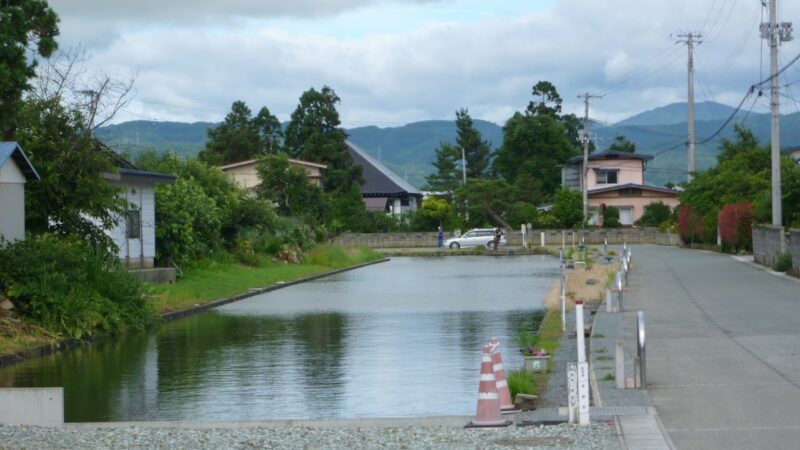
The triple moats served not only as a defensive function but also as an important element demonstrating the status of the Jinya. Even today, a large portion of the Second Moat remains, allowing us to imagine its original scale. Walking around the perimeter of the moats allows us to experience the scale of an Edo-period Jinya.
Layout and Buildings of the Jinya
The 114-meter square size was relatively large for a small domain of 10,000 koku. The Jinya housed the lord’s residence, government offices, an armory, and a rice storehouse, functioning as the center of the domain’s administration.
Unfortunately, the Nagatoro Jinya (fortified residence) buildings were destroyed by fire during the Boshin War. However, archaeological excavations and research into ancient documents are gradually revealing the original layout of the buildings. The structure of the Jinya is a valuable resource for understanding the governance system of small domains during the Edo period.
The Boshin War and the Nagatoro Jinya
Participation in the Ouetsu Reppan Alliance
In 1868 (Keio 4), amidst the turmoil of the Meiji Restoration, the Nagatoro Domain joined the Ouetsu Reppan Alliance. Despite being a hereditary daimyo, the Yonezu clan prioritized regional solidarity in the Tohoku region and chose to side with the alliance.
This decision marked a major turning point for the Nagatoro Domain. Facing the new government forces, the Nagatoro Domain faced a battle for its very survival.
Attacks by the New Government Forces and the Destruction of the Jinya
By belonging to the Ouetsu Reppan Alliance, the Nagatoro Jinya became a target of attacks by the new government forces. As a result of the battle, the Nagatoro Jinya (fortified residence) buildings were destroyed by fire, and the Nagatoro Domain was forced to surrender. This war resulted in the loss of the Jinya architecture, which had been maintained throughout the Edo period.
After the Boshin War, the Nagatoro Domain submitted to the new government, and following the return of the domains to the emperor in 1869 (Meiji 2), the Nagatoro Domain ceased to exist with the abolition of the feudal domains and establishment of prefectures in 1871 (Meiji 4). Thus, the history of the Nagatoro Jinya came to an end.
Current Status of the Nagatoro Jinya Site
Preservation Status as a Historic Site
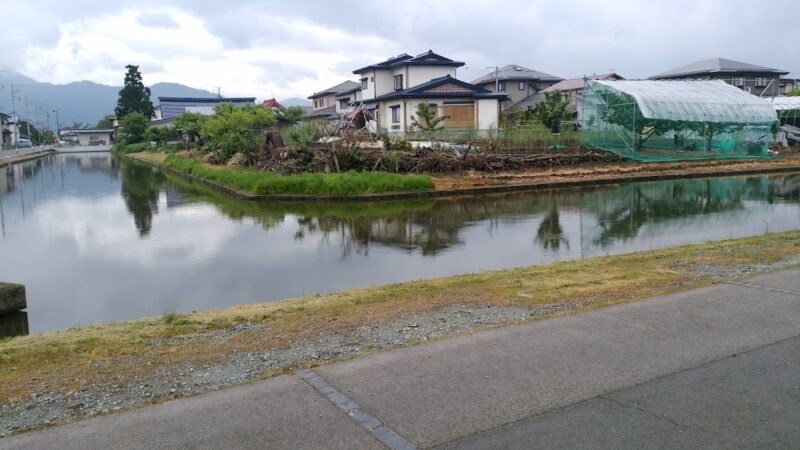
Currently, the Nagatoro Jinya site is preserved as a historical site by Higashine City. Although the buildings no longer exist, a large portion of the second moat remains in good condition, allowing visitors to experience the scale of the site at the time.
Part of the Jinya site is now a residential area, but the remains of the moat and a castle ruins monument have been erected, allowing visitors to feel the historical atmosphere. Locally known as the Nagatoro Castle Ruins (Nagatoro Jinya Ruins), this site is an important location that tells the history of Higashine City.
Highlights of the Ruins
The main highlights when visiting the Nagatoro Jinya Ruins are as follows:
Remains of the Second Moat: Almost the entire circumference of the moat remains, allowing visitors to experience the scale of the jinya by walking around its perimeter. The width and depth of the moat allow one to imagine the defensive system of the time.
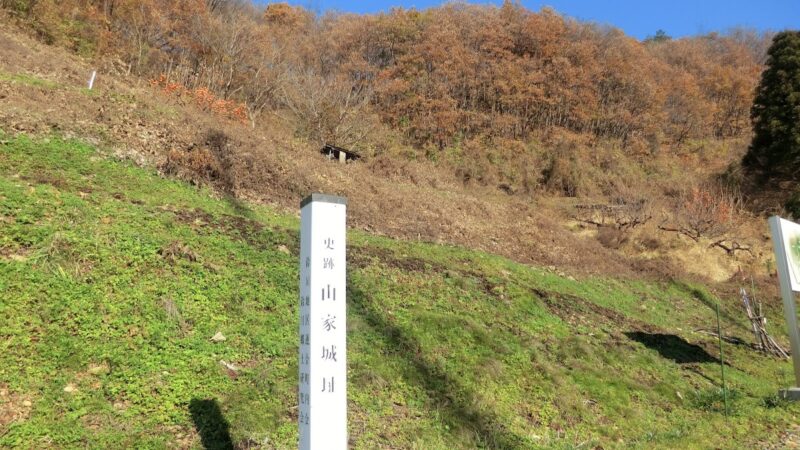
Castle Ruins Monument: A monument marking the Nagatoro Castle Ruins stands at the jinya site, indicating the historical importance of this place. The inscription provides a concise history, giving visitors an overview of the historical site.
Traces of Earthworks: Traces of earthworks remain in some areas, illustrating the transition from a medieval castle to a modern jinya.
Access and Tourist Information
Transportation Access
Access to Nagatoro Jinya Ruins is as follows:
By Train:
- Approximately 17 minutes on foot from JR Sakuranbo-Higashine Station
- Approximately 4 kilometers from the station
By Car:
- Approximately 9 minutes by car from Sakuranbo-Higashine Station
- Easily accessible from Higashine city center
Points to Note When Visiting
Nagatoro Jinya Ruins is a historical site that is always open to visitors, but please note the following:
- Part of the Jinya Ruins is a residential area, so please be considerate of the residents’ privacy when visiting.
- Please watch your step when walking around the moat.
- Since explanatory signs and information boards are limited, learning about the history beforehand will deepen your understanding.
- Photography is permitted, but consideration is needed when taking pictures in residential areas.
Nearby Tourist Spots
Higashine City is known as the “Fruit Kingdom of Higashine” and is Japan’s number one cherry producing area. In addition to visiting the Nagatoro Jinya Ruins, you can also enjoy the following sightseeing:
Cherry Picking: From June to July, you can enjoy cherry picking at many orchards.
Higashine Onsen: There are hot spring facilities in the city, perfect for relaxing after a historical walk.
Other Historical Sites in Higashine City: There are many other historical sights scattered throughout Higashine City.
Historical Value of the Nagatoro Jinya Ruins
Research Material for Local Domains
The Nagatoro Jinya Ruins are a valuable historical site for understanding the realities of local domains (10,000 koku) during the Edo period. Although small in scale compared to the castle towns of large domains, they provide important materials for studying the governance system and lifestyle of small domains.
In particular, the form of a jinya (fortified residence) that reused a medieval castle is an interesting example for understanding Edo period castle policies and the realities of regional governance.
Historical Heritage of the Meiji Restoration
The Nagatoro Jinya (fortified residence) site holds significant importance, particularly as a site of a fortified residence destroyed during the Boshin War. As a historical site that tells the fate of a small domain participating in the Ouetsu Reppan Alliance, it is a valuable legacy conveying the history of the Tohoku region during the Meiji Restoration.
The site of the fortified residence, destroyed by the attack of the new government forces, conveys not only the history of the victors but also the reality of the Meiji Restoration from the perspective of the defeated.
Importance in Local History
The Nagatoro Jinya site occupies a central position in the history of Higashine City, Yamagata Prefecture, and the Murayama region. Having remained the political and military center of the region from the Kamakura period to the Meiji era, this site is a core historical site of regional identity.
It is also an important teaching material in local history education and is indispensable for learning the history of Higashine City.
Significance of Visiting the Nagatoro Jinya Ruins
Experiencing the Layers of History
The greatest significance of visiting the Nagatoro Jinya Ruins lies in experiencing the history of multiple eras intertwined in one place. Layers of history spanning over 600 years—a castle from the Kamakura period, the retirement castle of the Mogami clan from the Muromachi period, a magistrate’s residence and domain office from the Edo period, and a battlefield from the Meiji Restoration—are piled up here.
By visiting the site and gazing at the remaining moats, you can gain a tangible sense of history that cannot be learned from textbooks.
Understanding the Importance of Local History
The Nagatoro Jinya Ruins teach us the importance of looking not only at the history of large cities and domains, but also at the history of small local domains. Even a small domain of 10,000 koku (a unit of rice production) had its own life, politics, and battles.
While it may be a historical site with low national recognition, it is a source of pride and identity for the local people. Recognizing the importance of such local history is essential for a multifaceted understanding of Japanese history as a whole.
Summary: The History Told by the Nagatoro Jinya Ruins
The Nagatoro Jinya Ruins in Higashine City, Yamagata Prefecture, are an important historical site that has witnessed over 600 years of history, from its construction during the Kenchō era to the Meiji Restoration. As a model flatland castle with a triple moat, and as the stage of the Boshin War, this place possesses diverse historical value and offers profound historical lessons to visitors.
Although the buildings no longer remain, the well-preserved remains of the second moat convey the scale and structure of the time. When visiting Higashine City, be sure to visit this historical site and experience the rich history of Yamagata Prefecture.
While the Nagatoro Jinya Ruins are not a large-scale tourist destination, they are a valuable historical site worth visiting for those who want to deeply understand Japanese local history, those interested in castles and jinya (fortified residences), and those who want to learn about the history of the Meiji Restoration from multiple perspectives. Why not discover a new charm of historical exploration in Higashine City, known for its cherry production?