Nagasawa Castle, Toyama City (Toyama Prefecture) Complete Guide: A Thorough Explanation of a Single Castle with Separate Enclosures from the Sengoku Period
Located in Nagasawa, Fuchu-machi, Toyama City, Toyama Prefecture, Nagasawa Castle is an important mountain castle in Etchu Province during the Sengoku period. It possesses a unique structure known as “Single Castle with Separate Enclosures,” divided into east and west sections by a valley, and features a complex defensive system consisting of two castle enclosures: Nagasawa West Castle (Shiroyama) and Nagasawa East Castle (Karo Yashiki Castle). This article comprehensively introduces information you should know before visiting Nagasawa Castle, including its history, structure, highlights, and access methods.
History and Overview of Nagasawa Castle
Background and Period of Construction
While there are no clear records regarding the construction period of Nagasawa Castle, it is confirmed to have existed during the Sengoku period. It functioned as a defensive base in the sphere of influence of Jinbo Nagashige, the deputy governor of western Etchu Province.
Built on a mountain approximately 130 meters above sea level overlooking the Toyama Plain, Nagasawa Castle played a crucial role as a military stronghold in Etchu Province. Particularly during the 16th-century Sengoku period, it is believed to have held a strategic position amidst the conflicts between the Uesugi clan, the Ikkō-ikki rebels, and the Oda forces vying for control of Etchu.
Castle Lord Terashima Shokujō and the Jinbō Clan
During the Sengoku period, Nagasawa Castle was occupied by Terashima Shokujō, a vassal of Jinbō Nagashige. The Jinbō clan was a powerful local lord controlling western Etchu Province, with Toyama Castle as their base. It is presumed that Terashima Shokujō, as a senior retainer of the Jinbō clan, was entrusted with the governance and defense of this region.
Jinbō Nagashige is believed to have built Toyama Castle in 1543 and sought to expand his power in Etchu Province. However, due to Uesugi Kenshin’s invasion of Etchu Province and conflicts with the Ikkō-ikki forces, the power of the Jinbo clan gradually declined. Nagasawa Castle is one of the castles that survived this turbulent period.
Possibility during the time of Sasa Narimasa
In the 1580s, Sasa Narimasa, a vassal of Oda Nobunaga, entered Toyama Castle as the ruler of Etchu Province. It is believed that many castles in Etchu Province underwent renovations and reorganizations during this period, and Nagasawa Castle may have also undergone some renovations under Sasa Narimasa’s rule.
To strengthen his control over Etchu Province, Sasa Narimasa improved castles throughout the region and assigned vassals to them. Some of the defensive structures seen in Nagasawa Castle may be the result of renovations during this period. However, no clear records remain, and the details are unknown.
Abandonment and its aftermath
After Toyotomi Hideyoshi’s unification of Japan, Etchu Province came under the control of Maeda Toshinaga, and many mountain castles were abandoned. It is believed that Nagasawa Castle also ceased to serve its military purpose and was abandoned around this time. During the Edo period, it was remembered by the local people as a castle ruin, and the place name “Shiroyama” (Castle Mountain) remains to this day.
Structure and Characteristics of Nagasawa Castle
Unique Structure of One Castle with Separate Enclosures
The most distinctive feature of Nagasawa Castle is its “one castle with separate enclosures” structure. This is a form in which a single castle system is divided into two independent castles separated by a valley. Nagasawa West Castle (the main castle) and Nagasawa East Castle (the chief retainer’s residence castle) each have independent defensive functions, but are designed to cooperate with each other for defense.
This structure has the advantage of allowing one side to provide support if under attack, and it was also expected to have the effect of dispersing enemy forces. This is a relatively rare form among mountain castles in Etchu Province, and it speaks to the strategic importance of Nagasawa Castle.
Structure of Nagasawa West Castle (Main Castle/Shiroyama)
Nagasawa West Castle is built on the summit of a ridge called Ishiyama (Shiroyama), at an altitude of approximately 132 meters. The following are some of the main remains that have been identified:
Main Enclosure (Honmaru): Located at the highest elevation in the castle’s central area. It is surrounded by earthen ramparts, enhancing its defensive capabilities.
Group of Enclosures: Multiple enclosures (kuruwa) are arranged in a stepped pattern around the main enclosure, forming a multi-layered defensive structure. Each enclosure is demarcated by earthen ramparts and steep slopes.
Moat: Several moats, dug to cut across the ridge, remain, functioning as important defensive structures to prevent enemy intrusion. The moats reach several meters in depth, demonstrating the high level of engineering skill of the time.
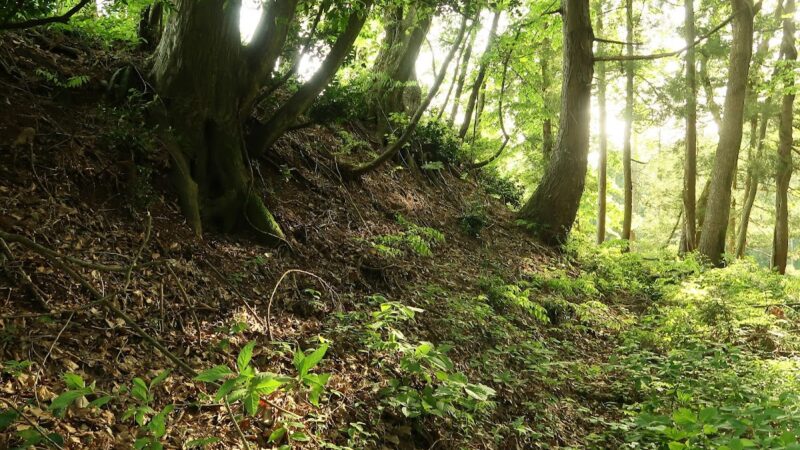
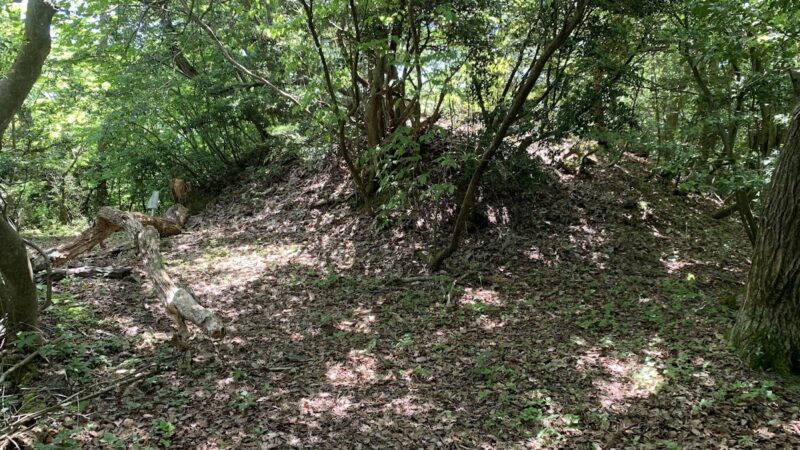
Earthen Ramparts: Earthen ramparts were built around each enclosure and along the boundaries of the castle, further enhancing its defensive capabilities. Some of these ramparts are still clearly visible today.
Well Remains: Well remains within the castle grounds, indicating that water supply was considered during sieges.
Structure of Nagasawa Higashi Castle (Karo Yashiki Castle)
Nagasawa Higashi Castle is a mountain castle built on the summit of Mt. Mujō (approximately 120 meters above sea level). It is also known as Karo Yashiki Castle or Sugaya Fort. Although slightly smaller in scale than Nagasawa Nishi Castle, it functions as an independent fortress.
Main Enclosures: The main enclosures are located on the mountaintop, and it is believed that a samurai of the chief retainer rank resided here.
Moats and Earthworks: Similar to Nagasawa Nishi Castle, defensive facilities such as moats and earthworks were constructed. Moats, in particular, that cut off the ridgeline were crucial for defense.
Communication Routes: It is presumed that there were communication routes between Nagasawa Higashi Castle and Nagasawa Nishi Castle across the valley, suggesting a system for sending reinforcements to each other in emergencies.
Layout and Defensive System
The layout (castle design) of Nagasawa Castle is a defense-oriented design that skillfully utilizes the mountainous terrain. The castle’s steep slopes were utilized to make enemy attacks difficult, while maintaining a clear view of the surrounding area from within.
The arrangement of the two castles across a valley meant that any attack on one castle would be vulnerable to a flank attack from the other, making sieges extremely difficult. This design philosophy demonstrates the high level of military technology in Etchu Province during the Sengoku period.
Highlights and Remains of Nagasawa Castle
Well-Preserved Moats
One of the biggest highlights when visiting Nagasawa Castle is its well-preserved moats. Nagasawa West Castle, in particular, has several moats remaining, and their depth and width give a real sense of the high level of defense at the time. Standing at the bottom of a moat, you are overwhelmed by the height of the cliffs on both sides.
Moats were not merely ditches, but important military facilities designed to halt enemy advances and prevent intrusion into the castle. Seeing them firsthand allows you to experience the castle-building techniques of the Sengoku period.
Clearly Remaining Enclosures and Earthworks
The remaining enclosures and earthworks throughout the castle grounds are not to be missed. In particular, the enclosures around the main enclosure clearly show their stepped arrangement, making them valuable remains for understanding the castle’s structure at the time.
Although some parts of the earthworks have collapsed due to weathering, many sections retain their original shape, allowing us to identify the castle’s boundaries and defensive lines. Walking along the earthworks allows us to appreciate the excellent visibility within the castle grounds and the ingenuity of its defensive design.
Views and Surrounding Landscape
From the main enclosure and various enclosures of Nagasawa Castle, you can overlook the Toyama Plain and the surrounding mountains. On a clear day, you can even see the Tateyama mountain range, evoking a sense of historical romance as you imagine the castle lords of the Sengoku period gazing upon this same view.
Furthermore, the area surrounding the castle ruins has been developed as the “Fuchu Furusato Nature Park,” featuring a rich natural environment centered around the Kodō Pond. Enjoying the changing seasons while strolling through the castle ruins is another attractive feature.
Information Boards and Castle Layout Maps
Information boards with castle layout maps are placed throughout the castle grounds, making it easy for first-time visitors to understand the castle’s structure. Each ruin is also explained in detail, making it enjoyable even for those unfamiliar with history or castles.
The information boards show the current location relative to the major ruins, allowing for efficient sightseeing. Comparing the castle layout map with the actual terrain while walking will provide a clearer overall picture of the castle.
Access and Visiting Guide to Nagasawa Castle
Location and Basic Information
Location: Nagasawa, Fuchu-machi, Toyama City, Toyama Prefecture
Castle Type: Mountain Castle
Elevation: Nagasawa West Castle approx. 132m, Nagasawa East Castle approx. 120m
Remains: Enclosures, earthworks, moats, well remains
Designation: City-designated historical site (confirmation required)
Access by Car
From the Hokuriku Expressway:
- Approximately 20 minutes from Toyama IC
- Approximately 15 minutes from Toyama West IC
Proceed towards “Fuchu Furusato Nature Park”. The park has a parking lot that is free to use. Entering “Fuchu Furusato Nature Park” or “Kodo Pond” into your car navigation system is convenient.
Access by Public Transportation
Access by public transportation is somewhat inconvenient. The nearest station is Hayahoshi Station on the JR Takayama Line, but the castle ruins are about 3 kilometers from the station, taking about 40 minutes on foot.
Consider using a taxi or rental bicycle. Renting a car from Toyama City is the most convenient way to access the castle.
Castle Ascent Route and Estimated Time
From the parking lot of Fuchu Furusato Nature Park, head towards the walking trail around Kodō Pond. There is a sign for the fork in the trail leading to “Nagasawa Castle,” and from there, enter the mountain path.
Nagasawa East Castle is about a 10-minute uphill climb from the fork. The mountain path is well-maintained, but comfortable walking shoes such as athletic shoes are recommended.
Nagasawa West Castle is about 15-20 minutes further past Nagasawa East Castle from the fork.
If you plan to thoroughly visit both castles, allow approximately 1 hour 30 minutes to 2 hours in total. It’s an enjoyable light hike, but we recommend bringing drinks and appropriate clothing for the season. ### Points to Note When Visiting
- Season: Spring to autumn is the best time to visit. Snowfall in winter can make mountain trails dangerous.
- Clothing: Comfortable clothing and non-slip shoes are essential for walking on mountain trails.
- Insect Repellent: In summer, insects are abundant, so insect repellent spray and long sleeves are recommended.
- Bear Repellent: As it is a mountainous area, carrying a bear bell is advisable.
- Toilets: There are no toilets within the castle ruins, so please use the facilities at Fuchu Furusato Nature Park beforehand.
Nearby Tourist Attractions and Related Historical Sites
Toyama Castle (Toyama City Local History Museum)
Toyama Castle, said to have been built by Jinbo Nagashige, the lord of Terashima Shigetada (the lord of Nagasawa Castle), is located in the center of Toyama City. It is currently maintained as Toyama Castle Ruins Park and is open to the public as the Toyama City Local History Museum.
Selected as one of the Continued Top 100 Japanese Castles, it’s an ideal facility for learning about Toyama’s history. It also boasts a history as the residence of Sasa Narimasa and the Maeda family, and visiting it along with Nagasawa Castle will provide a deeper understanding of the Sengoku period history of Etchu Province.
Yasuda Castle
Located in Yasuda, Fuchu-machi, Toyama City, Yasuda Castle is a mountain castle in Etchu Province, just like Nagasawa Castle. Known for its strong connection to the Ikkō-ikki rebellion, its remains, such as earthworks and moats, are well-preserved.
It’s about a 15-minute drive from Nagasawa Castle, making it possible to visit both on the same day. Comparing the castles of Etchu Province reveals the differences and commonalities in castle construction techniques across the region.
Fuchu Furusato Nature Park and Kodō Pond
Fuchu Furusato Nature Park, the entrance to Nagasawa Castle, is a nature-rich park centered around Kodō Pond. Enjoy seasonal flowers and autumn foliage, making it perfect for walks and picnics.
A walking path is maintained around Kodō Pond, allowing you to leisurely enjoy nature before or after exploring the castle ruins. The cherry blossoms in spring and the autumn leaves are beautiful, making it a popular spot for photography.
Tourist Attractions in Toyama City
Besides Toyama Castle, there are many other tourist attractions in the central area of Toyama City.
- Fugan Canal Kansui Park: A park known for its beautiful scenery, it houses the “world’s most beautiful Starbucks.”
- Toyama Prefectural Museum of Art: A museum focusing on contemporary art, with a wonderful view from the rooftop garden.
- Toyama Glass Art Museum: A museum specializing in glass art, its architecture is also noteworthy.
We recommend combining your visit to Nagasawa Castle with sightseeing in Toyama City.
Nagasawa Castle and the Sengoku Period History of Etchu Province
Sengoku Period in Etchu Province
Etchu Province (present-day Toyama Prefecture) was a fierce battleground during the Sengoku period, with forces such as the Uesugi clan, the Ikkō-ikki, and the Oda clan vying for power. Geographically, it was a strategic point connecting Hokuriku, Shinano, and Hida, making it an important base for various powers.
The Jinbo clan, as local lords controlling western Etchu Province, built their power centered around Toyama Castle. However, repeated invasions of Etchu by Uesugi Kenshin gradually caused the Jinbo clan to lose power.
Relationship with the Ikkō-ikki
In Etchu Province, the Jōdo Shinshū (Ikkō-shū) sect was strong, and the Ikkō-ikki rebellions had significant influence. The Jinbo clan repeatedly formed alliances and conflicts with the Ikkō-ikki, striving to survive amidst a complex political situation.
Nagasawa Castle may have also played a role as a defensive base in these battles against the Ikkō-ikki. Many mountain castles in Etchu Province functioned as Ikkō-ikki bases or defensive structures against the rebellions.
Etchu Province under the Oda and Toyotomi Regimes
In the 1580s, Sasa Narimasa, acting on orders from Oda Nobunaga, pacified Etchu Province and entered Toyama Castle. Narimasa strengthened his rule over Etchu and improved castles throughout the region.
However, after the Honnoji Incident, Narimasa clashed with Toyotomi Hideyoshi and was ultimately forced to surrender. Subsequently, Etchu Province came under the control of Maeda Toshinaga and, during the Edo period, was governed as part of the Kaga Domain.
During this process, many mountain castles were abandoned, and Nagasawa Castle also ceased to serve its purpose.
The Charm and Significance of Visiting Nagasawa Castle
Value for History Enthusiasts
Nagasawa Castle is an important historical site for castle researchers and history enthusiasts, as a typical example of a mountain castle in Etchu Province during the Sengoku period. In particular, its unique “one castle, separate enclosures” structure is a valuable example for understanding the castle construction techniques and military strategies of the time.
The remains are well-preserved, and by actually walking around and seeing the moats, baileys, and earthworks, you can experience how a castle functioned during the Sengoku period.
Interacting with Nature
Since Nagasawa Castle is a mountain castle, climbing it requires walking along mountain paths. This adds an element of enjoyment beyond mere historical site sightseeing, making it a light hike.
The rich natural environment of Fuchu Furusato Nature Park allows you to experience the changing seasons while strolling through history—a unique charm of Nagasawa Castle. Leaving the hustle and bustle of the city and reflecting on history in the quiet mountains is a refreshing experience for both mind and body.
Learning about Local History
Visiting Nagasawa Castle is also an opportunity to learn about the history of the Fuchu region of Toyama City. This area has been inhabited since ancient times and functioned as an important military base during the Sengoku period.
Learning about local history helps you understand how present-day Toyama City was formed, deepening your understanding of and affection for the region.
Tips for Enjoying Nagasawa Castle
Recommended Prior Study
Before visiting Nagasawa Castle, acquiring basic knowledge about the Sengoku period history of Etchu Province, the Jinbo clan, and Sasa Narimasa will deepen your understanding at the site. The Toyama City Library and the Toyama Prefectural Library have related books, and we recommend reading them beforehand.
Also, there is a lot of information available online. Castle information websites such as Kojodan feature accounts and photos from actual visitors, which can be helpful.
Photography Tips
Nagasawa Castle is a suitable location for photography. There are many photo opportunities, including the impressive scenery of the moat and the view of the Toyama Plain from the baileys.
Especially during the autumn foliage season, you can take beautiful photos of the castle ruins in harmony with nature. Early morning and evening light create particularly impressive photographs.
Multiple Visits
Nagasawa Castle shows different faces depending on the season. The castle ruins offer unique beauty throughout the seasons: the fresh greenery of spring, the deep green of summer, the vibrant autumn foliage, and the snowy winter landscape (caution is advised during heavy snowfall).
Multiple visits allow you to discover new aspects of the castle ruins and enjoy the seasonal changes in nature. Each visit will deepen your understanding of the history, leading to a more fulfilling experience.
Summary: The Historical Value and Future Preservation of Nagasawa Castle
Nagasawa Castle is a valuable Sengoku period mountain castle ruin remaining in Toyama City, Toyama Prefecture. Its unique structure, divided into east and west sections by a valley, reflects the rule of the Jinbo clan in Etchu Province and the complex political situation of the Sengoku period.
The well-preserved remains, such as the moats, baileys, and earthworks, are valuable resources for understanding the castle construction techniques of the time, making it an important historical site for history enthusiasts and castle researchers. Furthermore, its location within the rich natural environment of Fuchu Furusato Nature Park makes it an attractive spot where you can enjoy both historical and nature walks simultaneously.
As a valuable historical heritage site of the region, appropriate preservation and utilization are essential. Each visitor respecting the historical remains and observing proper etiquette is crucial for preserving Nagasawa Castle for future generations.
When visiting Toyama City, we highly recommend visiting Nagasawa Castle and reflecting on the Sengoku period in Etchu Province. In this tranquil mountain setting, you’re sure to have a valuable experience of feeling the breath of history.