Naegi Castle Complete Guide | History, Highlights, and Access Information for the Mountain Castle in the Sky
What is Naegi Castle?
Naegi Castle is a mountain ruin castle located in Nakatsugawa City, Gifu Prefecture. Built on Mt. Takamori at an altitude of 432 meters, it dates from the Sengoku period to the Edo period. In 2017, it was selected as one of the “Continued Top 100 Japanese Castles” and is also designated as a National Historic Site.
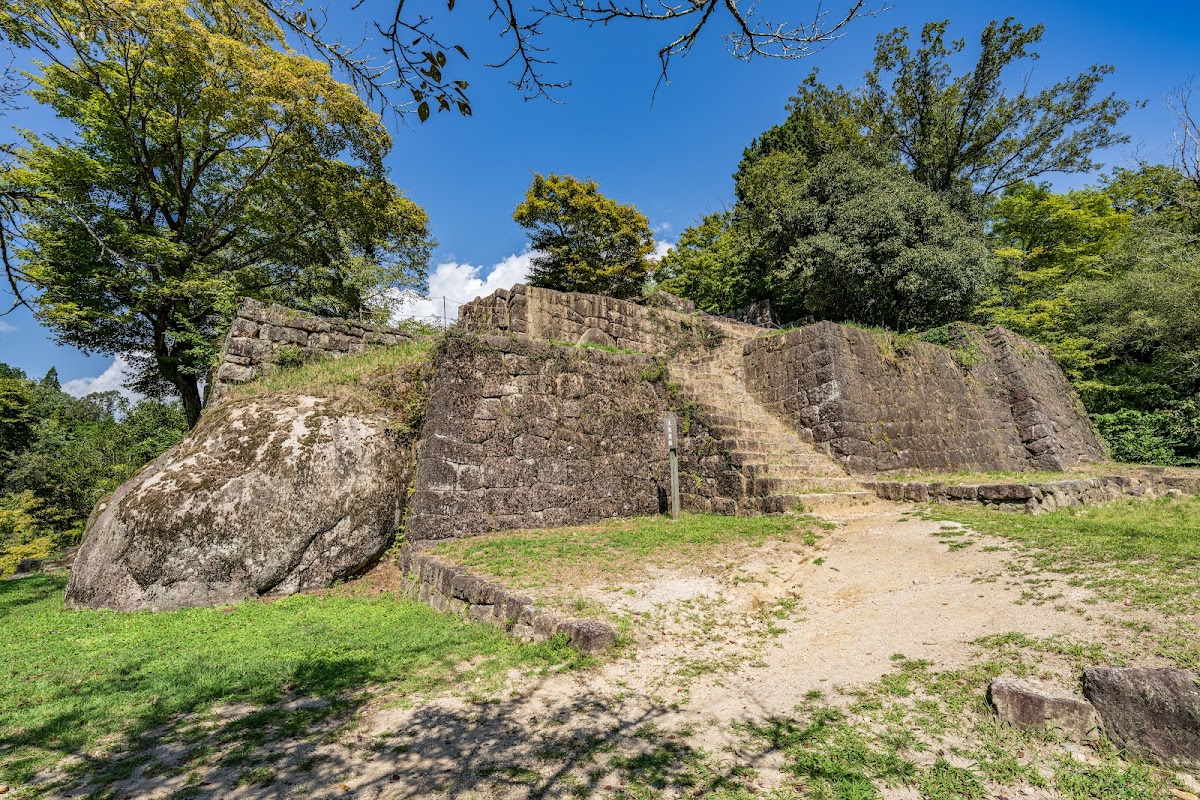
It is characterized by its unique construction techniques, skillfully incorporating massive natural stones (giant rocks) into its stone walls, and its spectacular views overlooking the Kiso River. In recent years, it has attracted attention as the “Castle in the Sky” and “Japan’s Machu Picchu.” From the ruin castles, you can enjoy panoramic views of Mt. Ena and the Kiso River valley, and appreciate the beautiful scenery throughout the seasons.
History of Naegi Castle
From Construction to the Sengoku Period
There are various theories regarding the construction date of Naegi Castle, but it is generally believed to have been built by the Toyama clan during the Tenbun era (1532-1555). The Toyama clan were local lords who controlled the eastern part of Mino Province, and Naegi Castle played an important role as a strategic point controlling the Kiso River waterway and the Nakasendo road.
During the Sengoku period, with the expansion of Oda Nobunaga’s power, the Toyama clan sided with the Oda clan. However, due to subsequent political changes, the castle’s lord changed several times. As the power of the era shifted from the Takeda clan to the Oda clan and then to the Toyotomi clan, the rulers of Naegi Castle also changed repeatedly.
Naegi Domain in the Edo Period
Toyama Tomomasa, who sided with the Eastern Army in the Battle of Sekigahara (1600), was granted the Naegi territory of 10,000 koku, establishing the Naegi Domain. The Naegi Domain was ruled by the Toyama clan throughout the Edo period and continued until the Meiji Restoration.
Naegi Domain was a small domain with a 10,000 koku (unit of rice production) yield, but it was blessed with water transport on the Kiso River and timber resources, and developed its own unique domain administration. In particular, during the late Edo period, it established the domain school “Shubunkan” and focused on education.
From Abandonment to the Present
With the abolition of the feudal domains and establishment of prefectures in 1871 (Meiji 4), Naegi Domain was abolished, and Naegi Castle was also abandoned. Although the castle buildings were subsequently demolished, the remains, including the stone walls and structures utilizing large rocks, remain in good condition.
In 1981 (Showa 56), it was designated a national historic site, and from 1990 (Heisei 2), archaeological excavations and restoration work were carried out. In 2004 (Heisei 16), an observation deck was installed on the site of the castle tower, and it is now a popular tourist spot as a historical park.
Highlights of Naegi Castle
Castle Tower Observation Deck
The biggest highlight of Naegi Castle is the observation deck installed on the site of the castle tower. From the wooden observation deck, a 360-degree panoramic view unfolds, offering views of the clear waters of the Kiso River below and, in the distance, Mount Ena and the Central Alps.
Especially during the autumn foliage season and when seas of clouds form in the early morning, you can enjoy a fantastic and breathtaking spectacle. On clear days, you can even see Mount Ontake, and its magnificent view has earned it the nickname “Castle in the Sky.”
Stone Walls Utilizing Giant Rocks
The most distinctive feature of Naegi Castle is its unique construction technique, which utilizes natural giant rocks as stone walls. Within the castle grounds, there are numerous massive rocks exceeding 10 meters in height, such as “Umaarai-iwa” (Horse Washing Rock) and “Kazefuki-mon no Kyobou” (Giant Rock of the Wind-Blown Gate), skillfully incorporated as part of the castle’s structure.
This technique is called “kakezukuri” (suspended construction), a method for efficiently building a strong castle within limited financial resources. The landscape, where giant rocks and stone walls are integrated, is a unique charm of Naegi Castle that cannot be seen in other castles.
Oyakura Ruins
Located north of the main keep, the Oyakura ruins are one of the largest enclosures (kuruwa) within the castle grounds. The view from here is magnificent, offering a panoramic vista of the Kiso River. Archaeological excavations have uncovered foundation stones and drainage facilities, providing insight into the scale of the former building.
Kasagi Yagura Ruins
Located west of the second enclosure (Ninomaru), the Kasagi Yagura ruins are another must-see. A particularly large rock stands here, believed to have been the site of a watchtower. The view from atop this massive rock is truly a natural observation deck.
Stone Walls and Enclosures
The castle grounds contain numerous enclosures, including the main keep, second enclosure, and third enclosure. The stone walls connecting each enclosure and the structure of the entrances (koguchi) are also noteworthy, offering insights into the evolution of castle construction techniques from the Sengoku period to the Edo period.
The approach to the castle, particularly from the main gate to the inner citadel, features a complex structure designed with defense in mind, allowing visitors to appreciate the ingenuity of castle architecture at the time.
Forty-Eight Bends
One of the approaches to Naegi Castle, the “Forty-Eight Bends,” is a mountain path that zigzags up a steep slope. As the name suggests, the path bends and turns repeatedly, a design intended to prevent enemy intrusion, and this route allows visitors to experience the defensive thinking of the time.
Naegi Toyama Historical Museum
At the foot of the Naegi Castle ruins is the Nakatsugawa City Naegi Toyama Historical Museum, which displays valuable materials related to the Naegi Domain and the Toyama clan.
Exhibits
The museum displays a reconstructed model of Naegi Castle, weapons and armor associated with the Toyama clan, ancient documents, and drawings. The precisely reconstructed model of Naegi Castle is particularly useful for understanding the complete layout of the castle.
You can learn in detail about the administrative records of the Naegi Domain and its role during the turbulent Bakumatsu period. Visiting before or after your visit to the castle ruins will allow you to understand the history of Naegi Castle more deeply.
Opening Hours
- Opening Hours: 9:30 AM – 5:00 PM (Last entry at 4:30 PM)
- Closed: Mondays (or the following day if Monday is a public holiday), New Year holidays
- Admission Fee: Adults 330 yen, Elementary and Junior High School Students 110 yen
Access
Access by Car
Using the Chuo Expressway
- Approximately 10 minutes (approx. 5 km) from Nakatsugawa IC
- Approximately 15 minutes (approx. 8 km) from Ena IC
There is free parking (approx. 30 cars) at the Naegi Toyama Historical Museum. It’s about a 5-minute walk from the museum to the castle ruins entrance, and about a 20-30 minute walk from there to the castle tower observation deck.
Access by Public Transportation
If using the JR Chuo Main Line
- Get off at JR Nakatsugawa Station
- Take the Kita-Ena Kotsu bus bound for “Tsukechi-kyo Kuraya Onsen” or “Kashimo General Office”
- Get off at the “Naegi” bus stop (approximately 15 minutes)
- From the bus stop, it’s about a 10-minute walk to the Naegi Toyama Historical Museum
Since the number of buses is limited, it is recommended to check the timetable in advance. If using a taxi, it takes about 10 minutes from Nakatsugawa Station to Naegi Castle, and the fare is approximately 1,500 yen.
Walking Route to the Castle
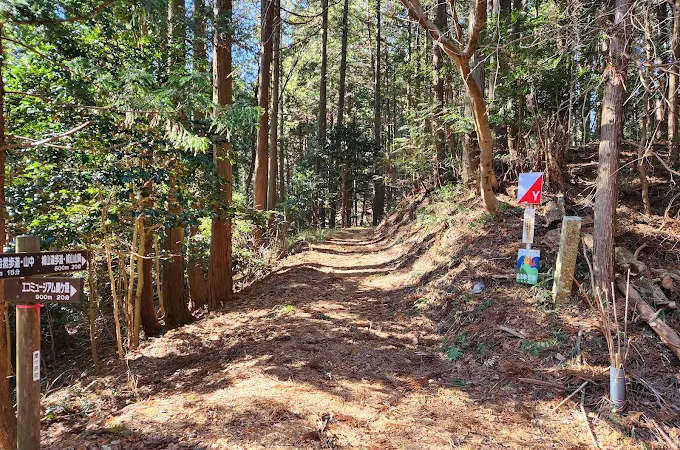
There are several routes to Naegi Castle ruins, but for first-time visitors, the Otemichi route starting from the Historical Museum is recommended.
- Start from the Naegi Toyama Historical Museum parking lot.
- Walk along the paved road for about 5 minutes to reach the castle ruins entrance.
- From there, climb the mountain path for 20-30 minutes to reach the castle tower observation deck.
The path is well-maintained, but as it is a mountain castle, there are steep slopes and stairs. We recommend wearing comfortable shoes and clothing.
Notes and Advice for Visitors
Clothing and Items to Bring
- Shoes: Non-slip, comfortable shoes such as sneakers or hiking boots are essential.
- Clothing: Choose comfortable clothing that allows for easy movement. Insect repellent is useful in the summer.
- Drinks: Hydration is especially important in the summer. Vending machines are only located near the historical museum.
- Rain Gear: The weather can change quickly, so a folding umbrella or rain gear is recommended.
Estimated Time Required
- Museum Visit: 30-60 minutes
- Castle Ruins Ascent: 60-90 minutes round trip
- Total: 2-3 hours
If you want to explore thoroughly or enjoy taking photos, we recommend allocating about half a day.
Best Season
Naegi Castle offers beautiful scenery throughout the four seasons, but the following times are especially recommended:
Spring (April-May)
The fresh greenery is beautiful, and the weather is mild, making it ideal for an ascent. You can also enjoy cherry blossoms around the ruin castles during cherry blossom season.
Autumn (October-November)
The autumn foliage is magnificent, especially from early to mid-November. The contrast between the autumn leaves along the Kiso River and the castle ruins creates a spectacular view.
Early Morning (Sea of Clouds Season)
In the early morning from autumn to winter, if the conditions are right, a sea of clouds will form, allowing you to witness the sight of a “castle in the sky.”
Safety Precautions
- Be careful as the ground can be slippery during and after rain.
- Take extreme caution to avoid falling when climbing on large rocks.
-In winter, there is a possibility of snow and ice, so check the conditions beforehand.
- Cell phone reception is available, but it is recommended to visit the castle in groups as a precaution.
Nearby Tourist Attractions
Highlights in Nakatsugawa City
Magome-juku on the Nakasendo Road
Magome-juku, located about 30 minutes by car from Naegi Castle, is a popular tourist destination that retains the atmosphere of an Edo-period post town. Edo-period buildings line the cobblestone slopes, and it is also known as the birthplace of the renowned author Shimazaki Toson.
Tsukechi Gorge
Tsukechi Gorge, selected as one of “Japan’s 100 Best Forests for Forest Bathing,” is about 40 minutes by car from Naegi Castle. This beautiful gorge, with its emerald green stream and primeval forest, is perfect for hiking and forest bathing.
Kurikinton
Nakatsugawa City is known as the birthplace of kurikinton (sweet chestnut paste), and there are many Japanese confectionery shops in the city. In autumn, each shop competes to sell kurikinton, making it a popular souvenir.
Tourist Spots in Ena City
Iwamura Castle Ruins
Iwamura Castle Ruins, counted as one of Japan’s three greatest mountain castles, is about a 30-minute drive from Naegi Castle. Known as the castle of a female lord, it boasts magnificent stone walls. It is a famous castle that many mountain castle enthusiasts visit along with Naegi Castle.
Ena Gorge
This artificial lake was created by the Oi Dam, built by damming the Kiso River, and is a beautiful tourist spot with a landscape woven from strangely shaped rocks and boulders. You can enjoy the beauty of the gorge from a sightseeing boat.
To Maximize Your Enjoyment of Naegi Castle
Recommendation for Prior Study
Before visiting Naegi Castle, learning a little about the history of the Naegi Domain and the Toyama clan will deepen your experience there. Detailed information is available on the Nakatsugawa City official website and the Naegi Toyama Historical Museum website.
Photography Tips
- View from the Castle Tower Observation Deck: The early morning and evening light is beautiful, and it’s an excellent photo spot, especially during the autumn foliage season.
- Giant Rocks and Stone Walls: The combination of giant rocks and stone walls, showcasing unique castle construction techniques, is a subject unique to Naegi Castle.
- Sea of Clouds: When the conditions are right, the sea of clouds that can be seen is truly a “castle in the sky” scene. Visiting early in the morning is recommended.
Utilizing Guided Tours
The Nakatsugawa City Tourism Association offers guided tours by volunteer guides by prior reservation. By touring while listening to explanations from a guide with specialized knowledge, you can gain a deeper understanding of the castle ruins’ highlights and history.
Naegi Castle and the Continued Top 100 Japanese Castles Stamp
Naegi Castle was selected as one of the “Continued Top 100 Japanese Castles” (No. 141) in 2017. The stamp for the Continued Top 100 Japanese Castles is located at the Naegi Toyama Historical Museum.
Castle enthusiasts and those touring the Top 100 Castles can get their stamps at the museum. Stamp books are also sold at the museum, making them a great souvenir of your castle visit.
Summary
Naegi Castle is a mountain ruin castle that boasts unique construction techniques skillfully utilizing massive rocks and breathtaking views overlooking the Kiso River. Its view, sometimes referred to as the “Castle in the Sky,” continues to fascinate visitors.
Through the stone walls and baileys that bear the history from the Sengoku period to the Edo period, and through learning at the Naegi Toyama Historical Museum, you can experience the history of the Naegi Domain, a small domain that cultivated its own unique culture.
When visiting Nakatsugawa City, be sure to visit the Naegi Castle ruins and enjoy the historical romance and spectacular views. You will surely be impressed by the beautiful scenery throughout the seasons and the brilliance of the castle-building techniques of our ancestors.