
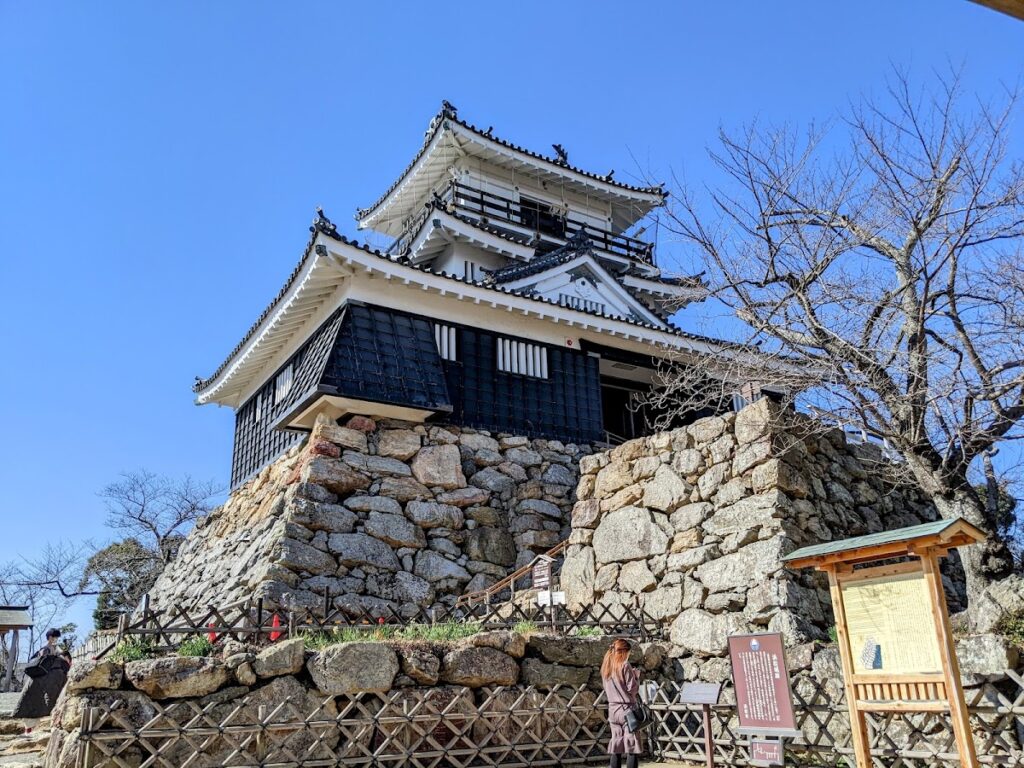
What is Motojō? A Thorough Explanation of the History of Castle Ruins and Place Names Remaining Across Japan
Motojō (also pronounced Motoshiro, Motojiro, or Genjō) is a word of significant importance in Japanese history. Literally meaning “original castle,” it is widely used to refer to former castles or their ruins. Furthermore, place names derived from castle ruins remain throughout Japan, serving as important cultural heritage that conveys the history of each region.
This article comprehensively explains everything from the meaning of the word Motojō to the history of specific Motojō castles throughout Japan, and the place names derived from them.
##Table of Contents
- Basic Meaning and Pronunciation of Motoshiro
- Motoshiro in Iyo Province (Yawatahama City, Ehime Prefecture)
- Motoshiro Towns throughout Japan
- History of Motoshiro Town and Hamamatsu Castle in Hamamatsu City
- Motoshiro in Other Regions
- Reasons Why Motoshiro Remains as a Place Name
7.Modern Use of Motoshiro Ruins
- Related Items
Basic Meaning and Pronunciation of Motoshiro
The word “Motoshiro” has several pronunciations. The most common are “motojō” and “motoshiro,” but in some regions it is pronounced “motojiro” or “genjō.”
Definition of “Former Castle”
The term “former castle” is primarily used in the following senses:
- Former castle: A castle that is now abandoned but played an important role in history.
- Main castle: A castle that served as the main base, as opposed to subsidiary castles.
- Old castle: The castle that existed before a new castle was built.
- Castle site: The place where a castle once stood.
These meanings are used differently depending on the context and are closely related to the history and culture of the region.
Former Castles and Castle History
In the history of Japanese castles, the concept of “former castle” holds an important position. From the Sengoku period to the Edo period, many castles were built and later abandoned. Following the Meiji Restoration’s decree abolishing castles (1873), many castles were demolished or sold off, but their sites remained as place names and site historical names under the name “former castle.”
Motoshiro Castle in Iyo Province (Yawatahama City, Ehime Prefecture)
Motoshiro Castle, located in Yawatahama City, Ehime Prefecture, was one of the important castles in Iyo Province during the Sengoku period (Warring States period).
Location and Structure of Motoshiro Castle
Motoshiro Castle was a hill castle situated on a small hill approximately 50 meters above sea level on the west bank of the Gotanda River. This location was a typical choice for architecture at the time, ensuring a defensive advantage by being built on high ground overlooking the surrounding area.
As the Main Castle of the Settsu Clan
Motoshiro Castle functioned as the main castle of the Settsu clan. The Settsu clan was a powerful samurai family in Iyo Province, and they positioned the following branch castles around Motoshiro:
- Tenjin-yama Castle
- Wakayama Castle
- Enokawa Castle
These branch castles formed a defensive network centered around Motoshiro, playing a role in protecting the Settsu clan’s sphere of influence.
The Era and Battles of Settsu Sanechika
During the time of Settsu Sanechika, fierce battles were fought against the Utsunomiya clan of Hagimori Castle. Tragically, Settsu Sanechika met his end in this battle, dying in Yawatahama. This event illustrates the intensity of power struggles in Iyo Province during the Sengoku period.
Fall of the Castle During the Shikoku Campaign
In 1585 (Tensho 13), Toyotomi Hideyoshi launched the Shikoku Campaign. As a result of this military action, Motoshiro Castle fell to the Toyotomi army. This marked the end of Settsu clan rule and a turning point in the history of Motoshiro Castle.
Current Status of Motoshiro Castle Site
Currently, the Motoshiro Castle site is preserved as a historical heritage site of Yawatahama City. While some parts of the castle’s structure have been lost over time, remnants of earthworks and baileys can still be seen, allowing us to imagine the castle’s structure at the time.
Motoshiro-cho Towns Across Japan
The place name “Motoshiro” exists throughout Japan, originating from the site of a castle. Major examples of Motoshiro-cho towns include:
Distribution of Motoshiro-cho Towns
- Motoshiro-cho (Kashiwazaki City): Kashiwazaki City, Niigata Prefecture
- Motoshiro-cho (Shizuoka City): Shimizu Ward, Shizuoka City, Shizuoka Prefecture
- Motoshiro-cho (Hamamatsu City): Chuo Ward, Hamamatsu City, Shizuoka Prefecture
- Motoshiro-cho (Fujinomiya City): Fujinomiya City, Shizuoka Prefecture
- Motoshiro-cho (Toyota City): Toyota City, Aichi Prefecture
- Motoshiro-cho (Kitakyushu City): Yahatanishi Ward, Kitakyushu City, Fukuoka Prefecture
These place names serve as historical evidence indicating the former existence of a castle in that area.
Pronunciation of Motoshiro-cho
The pronunciation of Motoshiro-cho by region. In most cases, it is pronounced “motoshiro-cho” or “motoshiro-machi,” but the pronunciation is established based on local dialects and historical circumstances. ## History varies of Motoshiro-cho and Hamamatsu Castle in Hamamatsu City
Motoshiro-cho in Chuo-ku, Hamamatsu City, Shizuoka Prefecture, is particularly famous as a place associated with Tokugawa Ieyasu.
Origins of Hamamatsu Castle and Motoshiro-cho
Since Hamamatsu Castle was built by Tokugawa Ieyasu, Motoshiro-cho has developed as the administrative center of Hamamatsu. Ieyasu chose Hamamatsu Castle as his base for governing Totomi Province and spent 17 years there. This period was crucial in Ieyasu’s life, during which a large group of retainers was formed and the foundation of the later Tokugawa Shogunate was laid.
Changes After the Meiji Era
In 1873 (Meiji 6), Hamamatsu Castle was abolished due to the Castle Abolition Order. The castle site was preferentially sold off to the samurai of the former Hamamatsu Domain, and the former samurai residences were repurposed for private use.
In the same year, “Dai-ichi Elementary School” opened as Hamamatsu’s first elementary school, on the site of a former samurai residence near the Otemon Gate. This would later become Hamamatsu Municipal Motoshiro Elementary School.
Modern Landscape of Motoshiro-cho
Modern Motoshiro-cho has a unique landscape where history and modernity blend:
- Along Ote-dori: Lined with office buildings, it functions as a business district.
- Around Hamamatsu Castle Keep: Developed as a lush green park, it serves as a place of relaxation for citizens.
- Hamamatsu City Hall: Located on the site of Hamamatsu Castle, it functions as the administrative center.
History and Closure of Motoshiro Elementary School
Hamamatsu Municipal Motoshiro Elementary School had a history of 144 years since its opening in 1873 as “Hamamatsu First Elementary School.” Located in the heart of Hamamatsu City, it produced many graduates, but closed in March 2017.
Upon its closure, a project was held under the theme “Present, Past, Future ~Thank You Motoshiro Elementary School~,” in which current students, graduates, parents, and local residents participated in painting pictures of memories on the school’s walls and windows. With the cooperation of Director Iimuro of the Hamamatsu City Museum of Art and the art department of Hamamatsu Gakugei High School, artistically sensible works were created and preserved as a memory for the community.
Motoshiro-cho Toshogu Shrine
In Motoshiro-cho stands the Motoshiro-cho Toshogu Shrine. This shrine is one of the Toshogu shrines dedicated to Tokugawa Ieyasu and conveys its historical connection to Hamamatsu Castle.
Within the shrine grounds are bronze statues of Tokugawa Ieyasu and Toyotomi Hideyoshi, and there is a legend that taking a photograph standing between these two statues will bring good fortune. It is a popular tourist spot, attracting many worshipers and tourists.
Urban Functions of Motoshiro-cho
Currently, Motoshiro-cho, as the central area of Hamamatsu City, has the following functions:
- Administrative Functions: Public facilities including Hamamatsu City Hall
- Commercial Functions: Office buildings and commercial facilities
- Tourism Functions: Tourist facilities such as Hamamatsu Castle Park and Motoshiro-cho Toshogu Shrine
- Cultural Functions: Preservation of historical buildings and historical sites
Motoshiro in Other Regions
Motoshiro-cho in Kashiwazaki City, Niigata Prefecture
Motoshiro-cho in Kashiwazaki City is also a place name derived from the area where a castle once stood. It is related to the history of Kashiwazaki Castle and is an important place name that conveys the history of the region.
Motoshiro-cho in Shimizu Ward, Shizuoka City
Motoshiro-cho in Shimizu Ward is also a place name related to a castle that once existed in this area. It occupies an important position in the history of Shimizu.
Motoshiro-cho in Fujinomiya City
Motoshiro-cho in Fujinomiya City is a place name located in a distinctive location at the foot of Mt. Fuji. This is closely related to the history of castles in this region.
Motoshiro-cho, Toyota City
Motoshiro-cho in Toyota City, Aichi Prefecture, is also known as a place name derived from the site of a former castle.
Motoshiro-cho, Yahata-Nishi Ward, Kitakyushu City
Motoshiro-cho in Yahata-Nishi Ward, Kitakyushu City, Fukuoka Prefecture, is a representative example of a place name named Motoshiro in the Kyushu region.
Reasons why Motoshiro remains as a place name
Inheritance of Historical Memory
The reason why the place name Motoshiro remains in various parts of Japan is to inherit the historical memory of the region. Castles were not merely military facilities, but the political, economic, and cultural centers of the region. Even after the castles were abandoned, the memory remained as place names, preserving the region’s identity.
Castles as Symbols of the Region
Castles were symbols and sources of pride for the region. Even if the buildings are lost, preserving them as place names continues to indicate that the region was a historically important place.
Clarifying the Land’s Origin
The place name “Motoshiro” clearly indicates the origin of the land. It serves as a clue to understanding the historical background in real estate transactions and regional development, and is an important source of information from the perspective of cultural property preservation.
Value as a Tourism Resource
In recent years, the place name “Motoshiro” and the ruin castles themselves have been re-evaluated as tourism resources. Amidst the growing popularity of historical and castle tourism, the name “Motoshiro” has become one of the elements that attract tourists.
Modern Use of Motoshiro Ruins
Development as a Park
Many former castle ruins have been developed into parks in modern times. Many examples, such as Hamamatsu Castle Park, feature restored castle towers as tourist facilities while also serving as lush green spaces for citizens to relax.
Use as an Educational Facility
As exemplified by Motoshiro Elementary School, there have been many cases where schools have been built on castle ruins. Learning in historical sites has the effect of making local history feel more accessible to children.
Location of Administrative Facilities
It is common for administrative facilities to be located on former castle sites, as is the case with Hamamatsu City Hall. This symbolizes the historical continuity of the castle once being the center of administration.
Preservation as Cultural Property
Important former castle sites are designated as cultural properties, and preservation activities are carried out. Archaeological excavations sometimes reveal new historical facts, and their academic value is highly regarded.
Utilization for Regional Revitalization
Efforts to revitalize local communities by utilizing historical resources such as former castle sites and former castle towns are being undertaken in various regions. Diverse utilization methods are being explored, including holding historical events, establishing tourist routes, and building regional brands.
##Overview
“Motoshiro” refers to castles and their ruins that played an important role in Japanese history. Many castles built from the Sengoku period to the Edo period were demolished after the Meiji Restoration’s castle demolition decree, but their memory remains in place names.
Motoshiro in Yawatahama City, Ehime Prefecture, served as the main castle of the Settsu clan and was a central hub of the region until its fall during the Shikoku Campaign. Meanwhile, Motoshiro-cho in Hamamatsu City, the site of Hamamatsu Castle associated with Tokugawa Ieyasu, remains the administrative and cultural center of Hamamatsu City today.
Motoshiro-cho towns throughout Japan are important cultural heritage sites that tell the history of their respective regions, and are utilized today as parks, administrative facilities, and tourist attractions. The word and place name “Motoshiro” represents a bridge connecting the past and present, and are historical assets that should be carefully preserved for the future.
Related Topics
- List of Japanese Castles: Comprehensive information on castles throughout Japan
- Castle Abolition Order: A law issued during the Meiji era concerning the abolition of castles
- Castle Town: A type of city that developed around a castle
- Tokugawa Ieyasu: A Sengoku period warlord and the first shogun of the Edo shogunate, based at Hamamatsu Castle
- Toyotomi Hideyoshi: A Sengoku period warlord who carried out the Shikoku campaign
- Hamamatsu Castle: A castle located in Hamamatsu City, Shizuoka Prefecture, associated with Tokugawa Ieyasu
- Castle Architecture: Traditional Japanese castle architecture
- Sengoku Period: A period when many castles were built
- Cultural Property Protection: Preservation activities for historical buildings and ruins
- Origin of Place Names: The historical background of Japanese place names
References
To deepen your understanding of former castles, the following materials may be helpful:
- Local history materials published by local governments in each region
-Specialized books on castle research
-Cultural property survey reports
- Historical documents recording the region’s history
- Reports on the results of archaeological excavations
Through these materials, you can gain a deeper understanding of the historical value of Motoshiro and its role in the region. Furthermore, visiting the Motoshiro ruins and Motoshiro town will allow you to experience history firsthand.
The term “Motoshiro” is not merely a relic of the past; it is a living heritage that conveys the region’s history and culture to the present day. is important to continue to carefully preserve it and pass it on to future generations.
