Moriyama Castle (Takaoka City, Toyama Prefecture) Complete Guide | Detailed Explanation of the History, Remains, and Highlights of the Three Great Mountain Castles of Etchu
Basic Information on Moriyama Castle
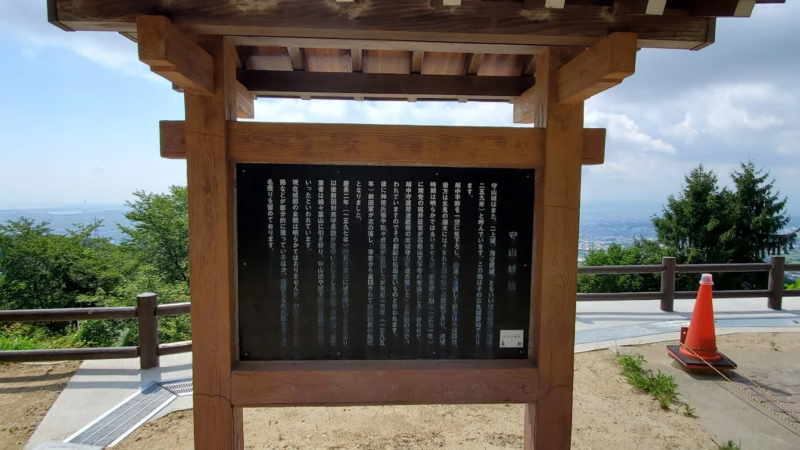
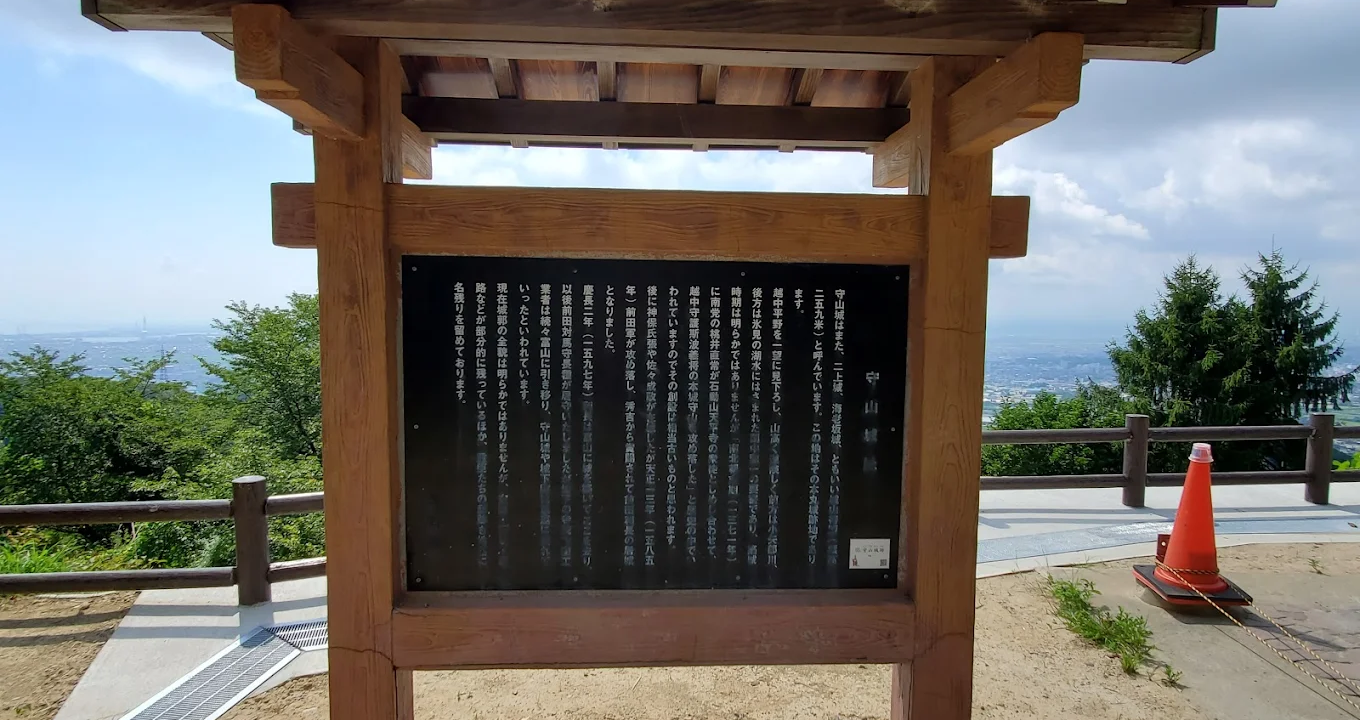
Moriyama Castle is a mountain castle located in Higashi-Ebisaka, Takaoka City, Toyama Prefecture. Along with Masuyama Castle (Tonami City) and Matsukura Castle (Uozu City), it is widely known as one of the Three Great Mountain Castles of Etchu. Built on a steep mountaintop 259m above sea level and approximately 250m above ground level on the west side of Mount Futakami, this castle served as a strategic stronghold overlooking the Etchu Plain and was used for approximately 250 years, from the Nanboku-cho period to the early modern period.
Common Names and Alternative Names
Moriyama Castle has several alternative names:
- Futagami Castle (Futagami-jō): Named because it was built on Mount Futagami.
- Futagamiyama Castle: Named for the same reason as above.
- Ebisaka Castle (Ebisaka-jō): Named after the Ebisaka district where it was located.
- Moriyama Castle: Named as an alternative spelling of Moriyama.
- Shishigashira Castle (Shishigashira-jō): Named after the shape of the castle.
These names are used differently depending on the era and the documents, and the name “Futagami Castle” is also common among local residents.
Location and Former Province Name
- Location: Higashiebisaka Shiroyama, Takaoka City, Toyama Prefecture
- Former Province Name: Moriyama, Imizu District, Etchu Province
- Castle Type: Concentric Mountain Castle
- Elevation: 259m
- Relative Height: Approximately 250m
- Designated Cultural Property: The site of the main keep is a Takaoka City designated historical site
Classification and Structure
Moriyama Castle is classified as a concentric mountain castle. It features a structure with multiple enclosures connected along the ridge, centered on the main keep at the mountaintop, and is characterized by defensive facilities that skillfully utilize the natural terrain. There is no keep structure, maintaining the typical form of a medieval mountain castle.
In terms of location, it is a strategically important site, sandwiched between the Oyabe River in front and Lake Himi (present-day sea) behind, making it an excellent surveillance base overlooking the Etchu Plain. This geographical advantage is one of the reasons why it functioned as a military base for a long period.
History of Moriyama Castle
Nanboku-cho Period: Construction and Early History
While the exact construction date of Moriyama Castle is unclear, historical records confirm that it was already functioning as the residence of Shiba Yoshimasa, the governor of Etchu Province, during the late Nanboku-cho period.
Records indicate that in Kentoku 2 (1371), Momoi Naotsune, a general of the Southern Court, allied with followers of Ishidoyama Tenpyo-ji Temple and attacked and captured Moriyama Castle, the main castle of Shiba Yoshimasa, the governor of Etchu Province, of the Northern Court. This account shows that Moriyama Castle was already an important military base in Etchu Province by the mid-14th century.
During this period, Moriyama Castle was a focal point of the struggle for control of Etchu Province amidst the turmoil of the Nanboku-cho period, and it was a castle symbolizing the balance of power between the Nanboku-cho forces in the Hokuriku region.
Muromachi Period: The Base of the Jinbo Clan, the Deputy Governor
With the start of the Muromachi period, the Hatakeyama clan became the governor of Etchu Province, and the Jinbo clan gained real power as their deputy governor. Moriyama Castle played a crucial role as the Jinbo clan’s escort castle (a castle for emergencies).
While the Jinbo clan had multiple bases within Etchu Province, they positioned Moriyama Castle as their central military facility. It is believed that they conducted their affairs at their residence on the plains during peacetime and defended Moriyama Castle during wartime.
During this period, Etchu Province was in a complex political situation, marked by conflicts between the Jinbo and Shiina clans, as well as invasions by Nagao Tamekage (father of Uesugi Kenshin) from Echigo Province. Amidst this turmoil, Moriyama Castle continued to function as an important fortress supporting the Jinbo clan’s power base.
Sengoku Period: Conflicts with Uesugi Kenshin
With the arrival of the Sengoku period, Moriyama Castle became a battleground for conflicts between warring daimyo over Etchu Province. It played a particularly important role as a defensive stronghold against the invasion of Etchu by Uesugi Kenshin (originally Nagao Kagetora).
Uesugi Kenshin sought to expand his influence from Echigo Province into Etchu Province, frequently attacking various castles within Etchu. Moriyama Castle was also a target, and it is presumed that fierce battles took place there. The strategic value of this castle, overlooking the Etchu Plain, was extremely high for both the Uesugi and Jinbo clans.
However, the balance of power within Etchu Province was fluid, and the Jinbo clan itself found it difficult to maintain its influence amid internal conflicts and rivalries with other forces.
The Oda-Toyotomi Period: Sasa Narimasa and Maeda Toshinaga
After the Honnō-ji Incident in 1582, Etchū Province came under the control of Sasa Narimasa, a vassal of Oda Nobunaga. Sasa Narimasa centered his administration around Toyama Castle, but Moriyama Castle also remained a strategically important military location.
However, in 1585, Sasa Narimasa surrendered during Toyotomi Hideyoshi’s conquest of Etchū. Subsequently, Etchū Province became the territory of Maeda Toshinaga (the eldest son of Maeda Toshiie). Maeda Toshinaga entered Moriyama Castle and used it as his base for a time.
During the Maeda era, the region underwent a transition from Sengoku-era mountain castles to modern castles. Maeda Toshinaga eventually moved on to the construction of Toyama Castle and then Takaoka Castle, and Moriyama Castle gradually ceased to play a significant military role. It is believed that the castle was abandoned around the Keicho era (1596-1615).
Historical Significance
Moriyama Castle played a central role in the politics and military of Etchu Province for approximately 250 years, from the Nanboku-cho period to the early modern period. Its history can be summarized as follows:
- Nanboku-cho Period: A base of conflict between the forces of the Nanboku-cho
- Muromachi Period: The castle of the Jinbo clan, the shugodai (deputy governor)
- Sengoku Period: The stage for battles with the Uesugi clan
- Oda-Toyotomi Period: A transitional period from Sasa Narimasa to Maeda Toshinaga
- Early Modern Period: Abandonment and the end of its historical role
This long period of use speaks to the high strategic value of Moriyama Castle.
Remains and Restored Facilities
Existing Remains
Several remains that still retain the appearance of a medieval mountain castle can be found at Moriyama Castle.
Main Enclosure Site
The main enclosure site at the mountaintop is a designated historical site of Takaoka City and represents the core of Moriyama Castle. The main enclosure is a relatively flat, leveled area, suggesting that major buildings once stood here. From the main enclosure, a magnificent view unfolds, encompassing the Etchu Plain, the Oyabe River, the Imizu Plain, and even the Himi area.
This excellent view is the reason Moriyama Castle functioned as a military base for such a long period. It allowed for early detection of enemy movements and communication with surrounding allied castles.
Stone Walls
One of the greatest highlights of Moriyama Castle is its stone walls. Although only a small portion remains, remnants of the original stone walls offer a glimpse into the stone-building techniques of medieval mountain castles.
The stone walls remain around the main enclosure and along the edges of the baileys, demonstrating the use of natural stones in the Nozurazumi technique. This is a characteristic of stone wall construction techniques from the Sengoku period to the early modern period, and is an important remains that tells the story of the era in which Moriyama Castle was used.
Detailed surveys conducted from 2013 onwards included not only surveying and historical document research, but also ground-penetrating radar surveys, confirming the existence of buried remains.
Enclosures and Moats
Several enclosures (kuruwa) are arranged along the ridge, centered around the main enclosure (honmaru). These are typical structures of a multi-enclosure mountain castle, and each enclosure functioned as a defensive line.
Moats (horikiri) were provided between the enclosures, serving to prevent enemy intrusion. Moats are dry moats dug to cut across the ridge and are an important defensive structure of medieval mountain castles.
Groups of Enclosures
Several groups of enclosures (kuruwa) have been identified on the mountainside, and these are thought to have been used as garrisons for soldiers or storage areas for supplies. The layout of the baileys reveals that the castle was designed based on a meticulous defensive plan.
Peace Kannon Statue
Currently, a Peace Kannon Statue stands at the Moriyama Castle site. Erected to commemorate post-war peace, it serves as a landmark for visitors to the castle site. While not a historical relic, it has become a symbolic presence at the Moriyama Castle site in modern times.
Research and Preservation Activities
The Takaoka City Board of Education began a detailed investigation of the Moriyama Castle site in 2013, conducting the following investigations:
- Survey Investigation: Creation of a layout map based on precise topographic surveys
- Historical Document Investigation: Research of historical documents and illustrations
- Ground Penetrating Radar Survey: Confirmation of buried remains through non-destructive testing
- Excavation Investigation: Clarification of the actual state of remains through partial excavation
Through these investigations, the overall picture of Moriyama Castle is gradually becoming clearer, and research reports have been published. As a representative mountain castle of Toyama Prefecture, continued research and preservation activities are expected in the future.
Highlights and Charms of Moriyama Castle
Spectacular Views of the Etchu Plain
The greatest charm of Moriyama Castle is undoubtedly the view from the site of the main keep. The view of the Etchu Plain from the 259m-high mountaintop is breathtaking, and on a clear day, you can even see the Tateyama mountain range.
A 360-degree panorama unfolds, encompassing the flow of the Oyabe River, the expanse of the Imi Plain, and the coastline towards Himi. Looking at this view, you can truly appreciate the strategic value of why the castle was built in this location.
Atmosphere of a Medieval Mountain Castle
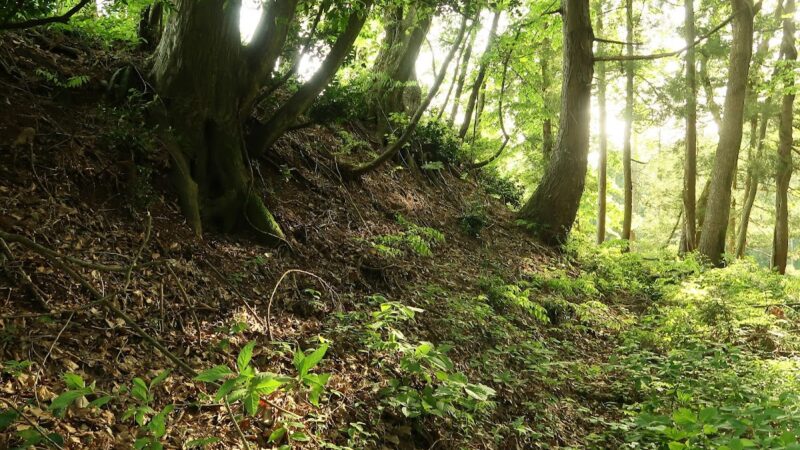
Because Moriyama Castle has not undergone excessive restoration, it retains a strong atmosphere of a medieval mountain castle. You can stroll around while imagining the appearance of a Sengoku period mountain castle, with its layout of baileys utilizing the natural terrain, steep mountain paths, and the few remaining stone walls.
For castle enthusiasts, these “untouched ruins” are precisely what make the castle so appealing, and Moriyama Castle is considered one of the castles that best preserves its original appearance among the three major mountain castles of Etchu Province.
The Sense of Accomplishment from the Ascent
Climbing to this mountain castle, with a relative elevation of approximately 250 meters, is by no means easy. However, the sense of accomplishment upon reaching the main keep site after climbing the steep mountain path is exceptional. This climbing experience itself is one of Moriyama Castle’s charms.
While the climbing path is well-maintained, appropriate clothing and equipment for mountain climbing are necessary. Particular caution is needed during rainy weather and in winter, as the ground can become slippery.
Historical Romance
From the Nanboku-cho period to the Sengoku period, many warlords fought battles at this castle. Thinking of historical figures such as Momoi Naotsune, Shiba Yoshimasa, the Jinbo clan, Uesugi Kenshin, Sasa Narimasa, and Maeda Toshinaga—who actually stood on this land and vied for supremacy in Etchu Province—evokes a profound sense of historical romance.
Access by Transportation
Access by Public Transportation
- Approximately 20 minutes by car from Ainokaze Toyama Railway Takaoka Station
- Buses are also available from Takaoka Station, but the number of buses is limited, so advance confirmation is necessary.
- It is possible to walk from the nearest bus stop to the castle entrance.
Access by Car
- Approximately 5 minutes by car from Nōetsu Expressway Takaoka Kita IC
- Parking space is available near the castle entrance (limited number of spaces)
- Set your car navigation system to search for “Toyama Prefecture, Takaoka City, Higashiebisaka” or “Moriyama Castle”
Time and Estimated Visit
- From the castle entrance to the main keep: Approximately 20-30 minutes on foot (varies depending on the individual)
- Estimated Visiting Time: Approximately 1-2 hours (if you want to look around thoroughly)
- Best Time to Visit: Spring to autumn (April to November) is recommended. Caution is advised regarding snow and ice in winter.
Precautions
- As it is a mountain castle, appropriate clothing and shoes for mountain climbing are essential.
- Bringing drinking water and snacks is recommended.
- Check cell phone signal strength in advance.
- Climbing in groups is safer than climbing alone.
- It is recommended to refrain from climbing in bad weather.
Tourist Attractions Around Moriyama Castle
Mount Futakami
Mount Futakami, where Moriyama Castle was built, is a tourist attraction in itself. There is an observation deck near the summit, and it is also a popular hiking course. Exploring it in conjunction with Moriyama Castle will make for a more fulfilling mountain walk.
Takaoka Daibutsu (Great Buddha of Takaoka)
The Takaoka Daibutsu, a representative tourist attraction of Takaoka City, is about a 25-minute drive from Moriyama Castle. It is a gigantic bronze seated statue of Amida Buddha, sometimes counted as one of Japan’s three great Buddhas, and was created using the finest techniques of Takaoka’s bronze industry.
Takaoka Castle Ruins (Takaoka Old Castle Park)
The site of Takaoka Castle, built by Maeda Toshinaga, is now maintained as “Takaoka Old Castle Park.” It’s worth visiting in conjunction with Moriyama Castle, as it traces the historical progression of the castle’s relocation.
Zuiryuji Temple
Zuiryuji Temple, designated a National Treasure, is a Soto Zen temple built as the family temple of Maeda Toshinaga. Its magnificent layout and beautiful architecture are a must-see, and you can feel its historical connection to Moriyama Castle.
Moriyama Castle Evaluation and Reviews
Moriyama Castle generally receives positive reviews from castle enthusiasts and history buffs. While castle information websites like Kojodan give it an average rating of ★★★☆☆ (2.67), this is an overall evaluation of the maintenance status and the degree of preservation of the remains.
Points of High Rating
- Superb View: The view from the main keep is highly praised by many visitors.
- Historical Value: Its historical importance as one of the three great mountain castles of Etchu Province.
- Remains of Stone Walls: The value of the remaining stone walls, albeit in a small quantity.
- Harmony with Nature: The site is not excessively developed, and the remains are in harmony with nature.
Suggestions for Improvement
- Improved Information Boards: More historical explanations and maps of the castle layout would be beneficial.
- Maintenance of the Ascent Route: More careful maintenance is desired to improve safety.
- Expanded Parking: Parking space is limited.
Many visitors appreciate the “sense of accomplishment from reaching the castle” and the “superb view,” making it a highly satisfying castle site for mountain castle enthusiasts.
Moriyama Castle and the Three Great Mountain Castles of Etchu Province
Moriyama Castle, along with Masuyama Castle (Tonami City) and Matsukura Castle (Uozu City), is known as one of the three great mountain castles of Etchu Province. Each castle has its own unique characteristics, and comparing them allows for a deeper understanding of the mountain castle culture of Etchu Province.
Comparison with Masuyama Castle
Masuyama Castle functioned as the main castle of the Jinbo clan, the shugodai (deputy governor), and has a larger layout than Moriyama Castle. It is also selected as one of the Continued Top 100 Japanese Castles, and its remains are well-preserved. While Moriyama Castle served as a fortified outpost, Masuyama Castle had a stronger character as a political center during peacetime.
Comparison with Matsukura Castle
Matsukura Castle is located in Uozu in eastern Etchu and played an important role as a base for Uesugi Kenshin’s rule of Etchu. It is situated at a higher elevation of 430m, making it a more difficult castle to reach. While Moriyama Castle was a strategic point in western Etchu, Matsukura Castle functioned as a strategic point in the eastern part.
Significance of Visiting the Three Castles
Visiting the three major mountain castles of Etchu allows for an understanding of the medieval castle network throughout Etchu Province. The diagram reveals how each castle functioned as a regional hub, coordinating with one another to support the political and military structure of Etchu Province.
References and Research Materials
For those wishing to learn more about Moriyama Castle, we recommend consulting the following documents and materials:
- *Detailed Survey Report of Moriyama Castle Ruins, Takaoka City, Toyama Prefecture* (Takaoka City Board of Education)
- *Comprehensive Survey of Japanese Castles, Volume 7: Niigata, Toyama, and Ishikawa* (Shin Jinbutsu Oraisha)
- *Medieval Castles and Residences of Toyama Prefecture* (Toyama Prefectural Board of Education)
- *Collection of Medieval Castle Drawings for Etchu Province*
- *History of Takaoka City* (Takaoka City)
These materials include layout maps of Moriyama Castle, excavation reports, and transcriptions of historical documents, allowing for a deeper academic understanding.
Summary: Rediscovering the Charm of Moriyama Castle
Moriyama Castle, located in Takaoka City, Toyama Prefecture, is one of the three major mountain castles of Etchu Province. It is a historically significant mountain castle that functioned as a strategic point in Etchu Province for approximately 250 years, from the Nanboku-cho period to the early modern period.
Built on a steep mountaintop at an altitude of 259m and a relative height of 250m, this multi-bailey mountain castle took advantage of its excellent location overlooking the Etchu Plain, becoming the stage for fierce battles between historical figures such as the Shiba clan, the Jinbo clan, Uesugi Kenshin, Sasa Narimasa, and Maeda Toshinaga.
The remaining stone walls, baileys, and moats are valuable cultural heritage that convey the appearance of a medieval mountain castle. The view from the main bailey is breathtaking, allowing you to truly appreciate the strategic value of why the castle was built in this location.
Climbing the castle requires considerable physical strength and preparation, but the sense of accomplishment is immense, making it a highly worthwhile castle site for castle enthusiasts and history buffs. When you visit Takaoka City, be sure to experience the history and nature of Moriyama Castle. It will be a valuable experience that allows you to feel the history of Etchu firsthand.