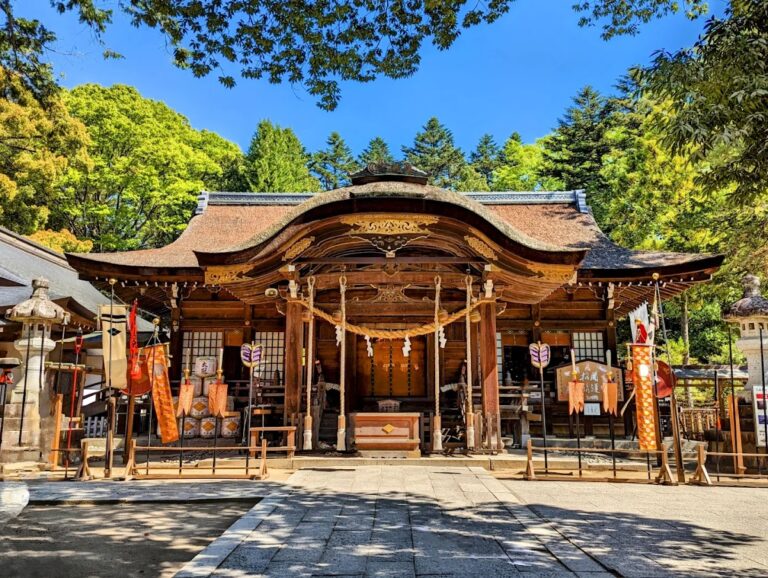
Complete walkthrough of Tsujijizaki Museum: The charm of Takeda Shingen’s historical residence
Is this Tsujijizaki Museum?
Tsujijizaki is located in Yamanashi, Kofu City, Kofu Naka-ku, Ichiza Kakuni era residence. The work was the residence of the Takeda clan, and the residence was dominated by the politics and military culture of the three generations of the Takeda clan: Nobutora and Shingen. Three generations of the Takeda clan were the guardians of the Kai Province, and they eventually became one of the most powerful daimyo in the country’s era. From 1519 to 1581, Tsujijizaki was one of the three generations of the Takeda clan, and has been the center of the capital since about 60 years ago.
Nowadays, the Tsujijizaki area is designated as a national historical monument, “Takeda clan residence site”, and Takeda Shrine is located inside the building. At the same time, it was reviewed as one of Japan’s 100 most famous castles, and it is a perfectly preserved residence from the time of the war, which is characterized by the history of the Ming Dynasty, and is attracting many history lovers to visit.
Origin of place name
“袢袢aki” This place’s name is derived from the name of this place, which is flourishing here. The name of the beautiful place reflects its beautiful natural environment.
The history of Kawasaki Castle
Built by Nobutora Takeda
The history of Kabazaki Castle began in 1519, when Takeda Nobutora was stationed there and Isawa was stationed in Fuchu. During the course of his stay in the country, Nobutora chose the strategic location of Kyoto.
Previously, the Takeda clan’s seat was Isawa Castle, but it had a wide view of the Kofu Basin, and had a view of the mountains, making it an ideal place for the establishment of a feudal government. Nobutora built a square-shaped mansion and opened it in the famous “Fuchu” castle town.
Takeda Shingen era
In 1541, Takeda Nobutora and his eldest son Harunobu (later changed his name to Shingen) were exiled to the river, and Harunobu accepted the title of head of the household. During the Shingen era, Tsujijizaki Castle was not the administrative center of Kai Province, but it was also the center of large areas such as Shinshu, Eikawa, and Ueno.
Shingen built a twin-castle system: Tsujijizaki Castle was built as an administrative center during the peace period, and later served as a mountain defense fortress with important military strategies. This is a typical construction and structure of the residence of Wayama Castle, and it is a typical special conquest of a feudal lord during the war period.
Tsujizaki Castle, Shingen’s administrative affairs, comprehensive management and vassal trade, diplomatic judgments, and local laws. In addition, there is a Chinese military factory located within the city.
Takeda Victory and Shinfu Castle
In 1573, after Shingen’s death, his fourth child, Takeda, was awarded the title of head of the household. In the beginning, the victory led to the establishment of Tsujizaki Castle, however, the military power of the Tokugawa Army increased greatly, and other forces reached demand and the defensive fort was replaced.
In 1581, Shinpu Castle was built on the Nirasaki Shichiriha Plateau and the commander was installed at Tsujisaki Castle. However, the following year, in 1582, the Takeda clan was conquered by Nobunaga, and the state was overturned, and the existence of Shinfu Castle ended in 1582.
Tsujizaki Castle after the overthrow of the Takeda clan
After the Takeda clan was overthrown, the Tokugawa clan was established as the Empress of Kai Province, and the Kofu clan entered the Kofu clan during the Edo period. Tsujisaki Castle was built and partially constructed during the early Edo period.
After the beginning of the Meiji period, the shrine was abandoned, but in 1919 (Taisho 8), the Takeda Shrine was built by Takeda Shingen, and it has been in operation since then. In 1938 (Showa 13), the country’s history was designated to be retired, and the work was done to ensure its current status.
Tsujizaki Castle’s structure and history
Fortress basic structure
Tsujizaki Castle is a rectangular residence with a length of 200 meters from east to west and 190 meters from north to south. The work is one of the largest residences in the eastern part of Japan during the war period, and its size has attracted a lot of attention.
The fort has four circumferences and is equipped with a strong defensive ability. The castle is in very good condition and is located in a certain small area with a height of 3 to 5 meters on both the west and north sides. The length of the river is 10 meters, the depth is 3 meters, the river is dry, the river is not watery.
Entrance Japanese bridge
The fort has three entrances: the main castle gate (Oteguchi) on the south side, the east castle gate (Eastern gate) on the east side, and the north castle gate (Kitakuru passageway) on the north side. The road leading to Takeda Shrine on Nyokon-dori is the main gate at Yowara.
The entrance crosses the earthen bridge, which is the only passageway across the river. It is important to carry out strategic defense work in this area, and it is important to prevent enemy invasion from Guiyu. The main bridge was approximately 4 meters long, and the side of the building arrived at the castle river.
Earthquake Castle Special Expedition
Tsujizaki Castle’s soil quality castle was built using the same method of construction. The archaeological excavation was revealed, the internal pottery of Hijikata was transformed into clay with a different color, and the outstanding techniques were developed.
If you are not aware of this, you may have a stone burial mound built on the top of the earth, but the stone burial mound was not used. This is the exhibition stage of Kai country’s stone burial technique. Unfortunately, there are some minor signs of hardening of the stone quality in the surrounding area of the castle.
Castle Development Bureau
Areas such as the main part of the castle, the west part of the castle, and the east part of the castle. The main castle is the residence of the Takeda clan, the administrative office, the west castle is the address of the vassals, and the east castle is the residence of the Takeda family, and the other places are located in the eastern castle.
The foundation stone of the archaeological excavation, the monument of the Mizui Japanese Flower Garden, and the construction of the military, as well as the construction of a perfect habitat. In particular, it is a flower garden, a comprehensive view of the pond and the stone scenery, and the cultural aspects are also given great consideration.
Water source water well
In the city, the water well was dug, the water was used for daily use, and the situation was urgent. Among them, Mizui, also known as “Princess Well”, still exists in the Takeda Shrine. A story about a woman named Takeda Shingen who was bathing in this well.
In addition, there is a legal name, a water culvert that has been repaired at the time, a river water source on the east side of the residence, and a thorough consideration of the water source that is guaranteed to exist at the time.
Yokotaka Yamashiro series
It is about 2 km north of the Tsujijizaki Takuya residence. The mountain castle was surrounded by defense work, and was invaded by foreign invaders.
Takeda Shingenya was born in Yukanshan Castle. Established in 1541, Nobutora Takeda was on his way to the Imagawa clan’s residence when his wife, Mrs. Oi, was attacked to prevent him from marrying her.
The various twin castle systems are recognized as important examples in the study of castle fort history, because they are the typical representative of castle fort structures during the period of war, and also the demands of the period of peace and war.
Takeda Castle Town Exhibition
Built in Fuchu Town
After the construction of Tsujizaki Castle and the formation of the castle grounds, it became a castle town known as “Fuchu”. Takeda Nobutora’s family home is located in the castle town, which includes a collection of merchants, Japanese craftsmen, and a joint exhibition in the castle town.
The town of Fuchu was established as a political center of the Kai state, and was established as the cultural center of the present day Kofu city. “Kofu” is the name of the place and “Kai no Fuchu”.
Castle town structure
Radial distribution from Takeda castle town road to Tsujizaki castle center. Wakagami-ka (predecessor of Koshu Kaido), which is a comprehensive southward extension of the main roads, and the Nirasaki-style road that goes from Mukaito-dori to Nirasaki-dori.
To the south of the castle town are samurai residences, and to the south is the commercial district. In the commercial district, there are many commercial shops and craftsmen, and a regular collection market.
Terakowa Shrine layout
Castle town Kenyutaji Kowa Shrine. The Takeda clan’s guardianship is attached to the temples of Keirin-ji and Daizen-ji temples, and the family temples of the generals. Outside of this, there is a temple belonging to the Taichirai sect, which is located within the castle town.
The temple is not only a religious place, but also a defensive fortress. The construction of a temple in a strategic location in a castle town, the formation of a “temple castle”, which was later invaded by foreign invaders, was a strategy to take control of many famous places during the war.
Market cooperation activity
The castle town regular collection market attracts products from all over Japan and abroad. Gold is a particularly important trading item. The Takeda clan is very important in the development of gold, and the Kurokawa gold and other metals are important acquisition sources for the Takeda clan’s politics.
Market support activity
In addition to this, Shingen’s control system was established, and the famous “Koshu Gold” gold standard was created by Shingen. This is the first work of a feudal lord in the era of military equipment.
Artifacts excavated from the ruins of the Takeda clan residence
Complete skull frame
During the first excavation in 1990, a complete skull frame was unearthed from the ruins of the residence, and a complete skull was excavated. This animal is male, height is approximately 130 meters, and the length of the year is 4-5 years.
A basic analytical statement, a special expedition by the Takeda domain’s “Kai Kuroma”. The Takeda clan invested a huge amount of money in the area of breeding and managing the horse population. This page has been provided with a treasure trove, and without any doubt, the historical documents are archaeological materials, and the Takeda clan’s military culture has been confirmed.
Excavated pottery
After this excavation, a large variety of pottery was excavated, including Chinese blue porcelain, Japanese white porcelain, and later a beautiful and beautiful pottery in the area. This small pottery exhibition has brought about the Takeda clan’s cultivation of practical power and its trade in far-flung areas.
The reason for this is that the excavated Chinese porcelain ware is of high quality, and the Takeda family used it as a luxurious tableware. In addition, the unearthed tea bowls and tea cans, the small utensils that were used for the tea ceremony, and the highly cultivated culture of the Takeda clan.
Metal products Japanese armor
The next excavation excavated a large amount of iron and iron pieces, and since then a large number of iron and iron pieces have been excavated. The archaeologists have arrived at Kazuko Kazuko’s sword and understand that the Takeda clan has provided weaponry.
It’s worth noting that it’s a piece of gold leaf tile. In this case, the gold leaf tiles were used in the construction of the inner part of the castle, and it is recognized that it is a decorative element of the Takeda clan.
Wooden tiles and writing book
Wooden tiles and Japanese ink-black pottery excavated from other locations at the Suiyu site, provided by the literary management within the castle. As established by the Takeda clan, the relevant local laws of the Koshu Hoto no Shidai (historical history of Koshu law) were established and the writings continued.
In addition, Tsujizaki Castle is not only a military fortress, but also a complete administrative and functional government structure.
Tsujizaki Castle (Takeda Shrine) ruins
Takeda Shrine construction
Takeda Shrine was built in 1919 (Taisho 8) and dedicated to Takeda Shingen. 300 years after Shingen’s death, he gained support for the passionate sentiments of the local residents.
Takeda Shrine is a shrine that prays for `victory'' and `good luck”, and is visited every year by the capital, especially during the Shingen Festival, which is held on April 12th. The Shingen Festival is the largest festival in Kofu City, and it is a major event in which the generals and samurai travel to Wakawa Nakashima. ### Shrine Ryoten
The site of Takeda Shrine is a monument to the days of Tsujizaki’s residence.
Hijikata construction work at the castle river: The appearance of the construction work at the shrine at the time of the war, which is currently on hold. The Hijikata process in both the west and the north has been well preserved.
Seimen Gate: The original site of the shrine entrance. As a result, in the past, the demand was met, and the talent of the troupe has continued to grow.
Principal well: A well within the shrine, where Shingen’s women first bathed.
Treasure Museum: Exhibited items related to the Takeda clan, including images of the 24 generals of the Takeda clan.
Suikinkutsu: There is a Suikinkutsu in the shrine, where visitors can enjoy the beautiful sound of water.
Archaeological site opening and archaeological excavation
The Kofu City Board of Education organized an exhibition of archaeological excavations and openings at historical sites. Since 1990, we have continued to carry out extensive excavation, step by step demonstration of construction, construction and the way of living of the residents.
In the future, the results of the excavation will be established, the construction will be established, the construction will be repaired, and the monuments will be exhibited.
Transportation and visitor information
Point: 2611 Furunakacho, Kofu City, Yamanashi
traffic:
- About 10 minutes from JR Chuo Main Line Kofu Station to Takeda Shrine Station
- 15 minutes by car from Chuo Expressway Kofu Showa IC
Visit time: Yen District Free Opening (Treasure Hall: 9:30 am to 4:00 pm, Zhou Sanmen Hall)
Car stop: Free parking (approximately 150 cars)
Zhoukan Xiangguan History History:
- Yugasan Castle Ruins (approximately 40 minutes walk, along the mountain trail)
- Kofu Castle Ruins (10 minutes by car)
- Yurinji Temple (30 minutes by car)
Tsujizaki Residence
Typical example of a residence during the war period
Tsujizaki’s residence is a typical example of the construction of residences during the imperial era, and occupied an important position during research on the history of castle forts. From the construction of the castle to the construction of the castle, it is a rare example of castle construction technology from the first half of the 16th century.
In addition, the two castle systems: residential residence (administrative center during the peace period), Yoyugasan Castle (defensive fortress during the war period), and other important historical materials related to the management of castles and castles by feudal lords during the period of the war period.
Takeda clan’s ruling center
Tsujizaki Castle is the center of the defense forces of the Takeda clan and the Kai Province, and was the center of the feudal lords of the Warring States period. The conference was called to open a meeting, the law was established and the alliance was concluded, and the history of the country’s history was jointly formed.
Of course, it is the time when Takeda Shingen was in residence, the work was “Kai no Tora”, and Tsujijizaki Castle and the head of the field were Shinnobu Uesugi.
Kofu City City Exhibition
Tsujijizaki Castle and its castle town were established and are now the foundation of Kofu City. After the Takeda clan established the road construction department, the temples and temples were established, and the castle town area of Kofu City was incorporated into the castle and town area of Kofu City.
The name of the place is `Fuchu'' and changed to `Kofu.” It is also mentioned in the story of the residence of the castle city.
overview
Tsujijizaki’s residence is a private residence during the war period, was created by the Takeda clan and lasted approximately 60 years, and was ruled by three generations: Takeda Nobutora, Takeda Shingen and Takeda Victory. The square size of the residence, the length of the east and west sides is about 200 meters, the distance from north and south is about 190 meters, and the construction of four circumferences is a typical castle fort building during the war.
From the 16th year of the Yuei era (1519) to the construction of the 9th year of the Tensei era (1581), Shinfu Castle, Tsujijizaki Tatei Ichicho was the center of Kai Province politics and military culture. Of course, during the Takeda Shingen era, it was the most important point in the country’s production, and it was one of the highlights of the history of military history.
At present, the construction of Takeda Shrine, which has been designated as a national historical monument. Continuously carrying out archaeological excavations, the construction of the Takeda family’s residence, the complete history of the Takeda family’s lifestyle, the history of the envoys, the history of the country’s history, and the history of the country’s history.
Visit the Takeda family home, explore the footsteps of Takeda Shingen, the greatest military commander of the era, and feel the spirit of the era.