Minakuchi Castle (Shiga Prefecture) Complete Guide | From Tokugawa Shogun’s Lodging to Domain Office: A Thorough Explanation of History and Remains
What is Minakuchi Castle?
Minakuchi Castle is a modern castle located in Minakuchi-cho, Koka City, Shiga Prefecture. It was built in 1634 (Kanei 11) as lodging for Tokugawa Iemitsu, the third shogun of the Edo shogunate, during his visit to Kyoto. It is also known as “Hekisui-jo” (Azure Water Castle) due to its beautiful moat filled with spring water.
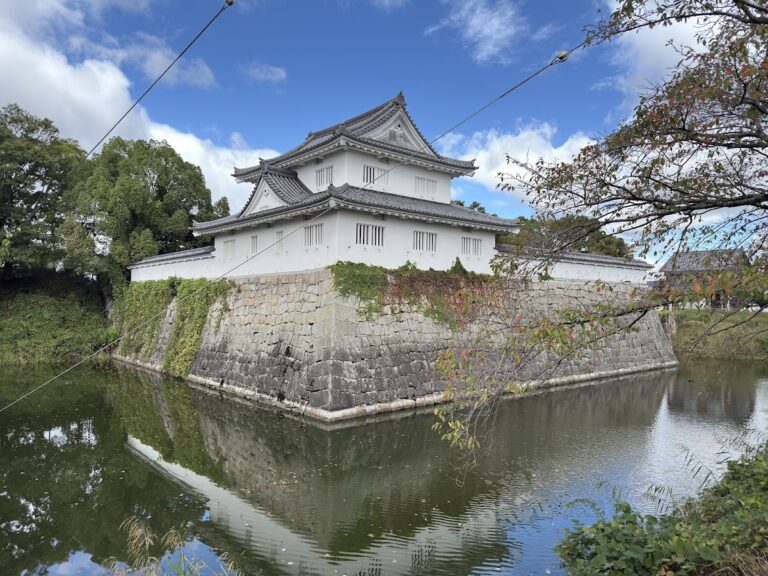
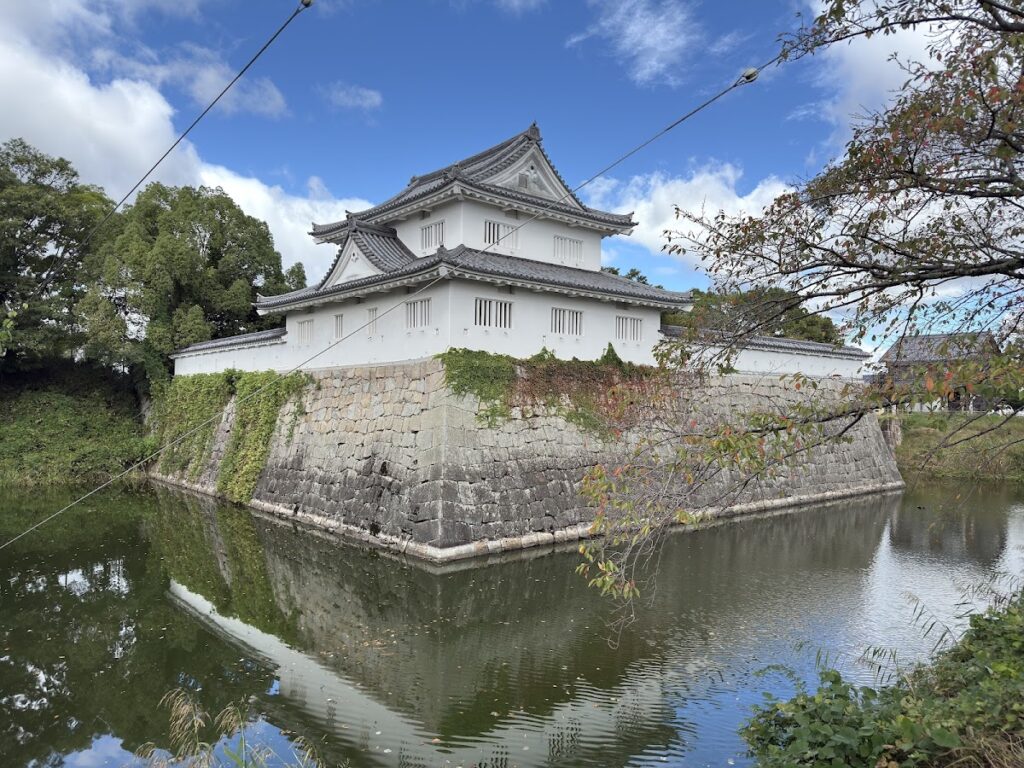
Currently, the castle ruins are protected as a Shiga Prefecture designated historical site, and a reconstructed watchtower is open to the public as the Minakuchi Castle Museum. It is a valuable cultural asset that conveys the history of Minakuchi, which flourished as a post town on the Tokaido road.
History of Minakuchi Castle
Construction History and Background
The construction of Minakuchi Castle is closely related to the political intentions of the Tokugawa shogunate. After the Battle of Sekigahara, Minakuchi became a direct territory of the Tokugawa clan and rose to an important position as a post town on the Tokaido road.
In 1634, when the third shogun, Tokugawa Iemitsu, planned his journey to Kyoto, the construction of Minakuchi Castle was decided upon to serve as his lodging. The castle’s construction was directly managed by the shogunate, and Kobori Enshu (Kobori Masakazu), renowned as a tea master, architect, and landscape gardener, was appointed as the construction magistrate. It is said that a total of 100,000 carpenters were employed, and the castle was completed in a short period of time.
Design by Kobori Enshu
Kobori Enshu was a cultural figure of the early Edo period who displayed exceptional talent in architecture, landscape gardening, and the tea ceremony. In designing Minakuchi Castle, he created an elegant castle complex centered around a magnificent palace modeled after the palace of Nijo Castle.
Minakuchi Castle, designed by Enshu, was a palace-style castle complex without a main keep. This reflects a prioritization of its function as a shogun’s lodging rather than a military fortress. Instead of a main keep, turrets were placed, and the castle’s layout centered around the main enclosure (Honmaru) and the second enclosure (Ninokuruwa).
Use as a Shogun’s Residence
The completed Minakuchi Castle was used as a shogun’s residence during Iemitsu’s visit to Kyoto. However, ironically, this magnificent palace was only actually used as the shogun’s lodging once, during Iemitsu’s visit to Kyoto at the time of its construction.
Subsequently, due to changes in the shogun’s route to Kyoto and lodging locations, Minakuchi Castle was never used as a shogun’s residence again. Therefore, the original purpose of its construction came to an end after a short period.
Establishment of the Minakuchi Domain and its Role as the Domain’s Government Office
In 1682 (Tenna 2), Kato Akimitsu was appointed to Minakuchi with a stipend of 25,000 koku, officially establishing the Minakuchi Domain. As a result, Minakuchi Castle, originally built as a shogun’s residence, changed its role to become the residence of the Minakuchi Domain.
The Minakuchi Domain continued under the rule of the Kato and Torii clans, and finally the Kato clan again, until the Meiji Restoration. Throughout the domain’s rule, Minakuchi Castle functioned as the political and administrative center of the domain and was an important base protecting a strategic point on the Tokaido road.
Abandonment of the Castle and its Aftermath
After the Meiji Restoration, the Minakuchi Domain was abolished due to the abolition of the feudal domains and the establishment of prefectures. In 1873 (Meiji 6), Minakuchi Castle was officially abandoned under the Castle Abolition Order. Subsequently, the castle buildings and land were put up for public auction, and most were sold to private individuals.
The former main keep site was repurposed as school grounds, and currently, the grounds and buildings of Shiga Prefectural Minakuchi High School stand there. Many castle structures were dismantled, and some of the stone walls were lost, but remnants remain in areas such as the outer baileys.
Location and Layout of Minakuchi Castle
Geographical Location
Minakuchi Castle is located approximately 150 meters north of Minakuchi-Jōnan Station on the Ōmi Railway. Built on the western side of Minakuchi-juku, the 50th post town on the Tōkaidō highway, it was a strategically important location at a key transportation hub.
Located in the northwestern part of Kōka City, the surrounding terrain is relatively flat. This location suggests a preference for transportation convenience and political function over military defense.
Castle Structure and Layout
Minakuchi Castle is a palace-style castle with the main keep and second bailey at its center. No keep was built; instead, turrets were strategically placed as defensive strongholds.
The main bailey housed the palace, surrounded by stone walls and a moat. The second bailey was located further outside, and an outer bailey was also provided. The moat, fed by spring water, was said to have always been filled with clear water, creating a beautiful landscape befitting its name, “Aozora Castle” (meaning “Blue Water Castle”). The castle’s layout was relatively compact, yet it was designed to fully function as a palace-style castle.
Existing Remains and Highlights
Stone Walls
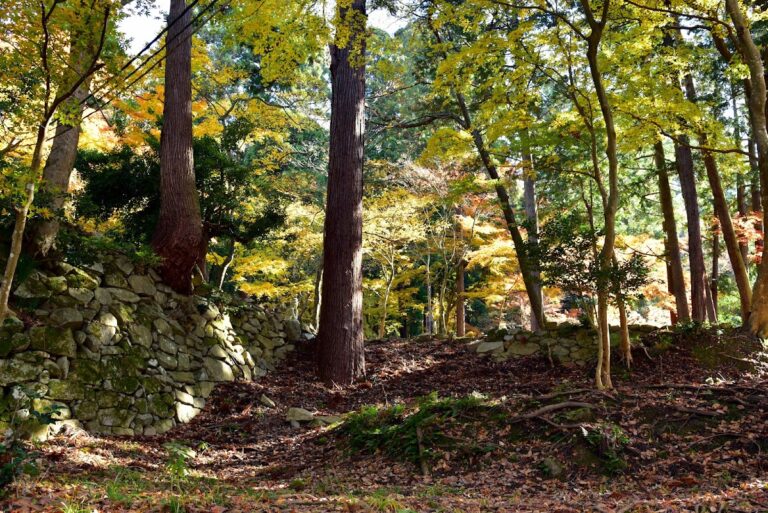
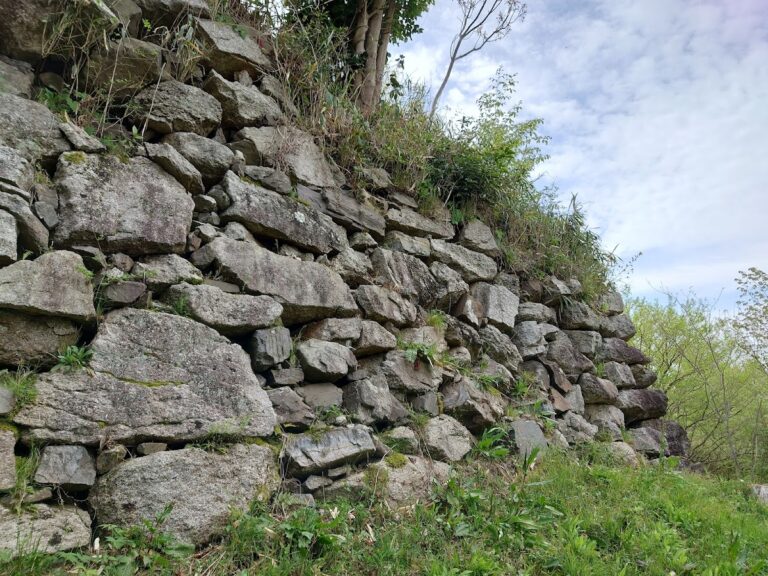
The most important remains of Mizuguchi Castle are the existing stone walls. Parts of the main keep and second bailey still retain the original stone walls from the time of construction.
The stone walls were built using techniques such as rough-hewn stonework and fitted stonework, making them valuable resources for understanding the stonework techniques of the early Edo period. While some parts of the stone walls have been altered in later periods, many retain their original form, allowing visitors to appreciate the high level of technology at the time.
Turret Bases
Turret bases remain in the main keep and outer bailey, giving a glimpse into where turrets once stood. The size and placement of the turret bases allow for inferences about the castle’s defensive system and structure.
Moat Remains
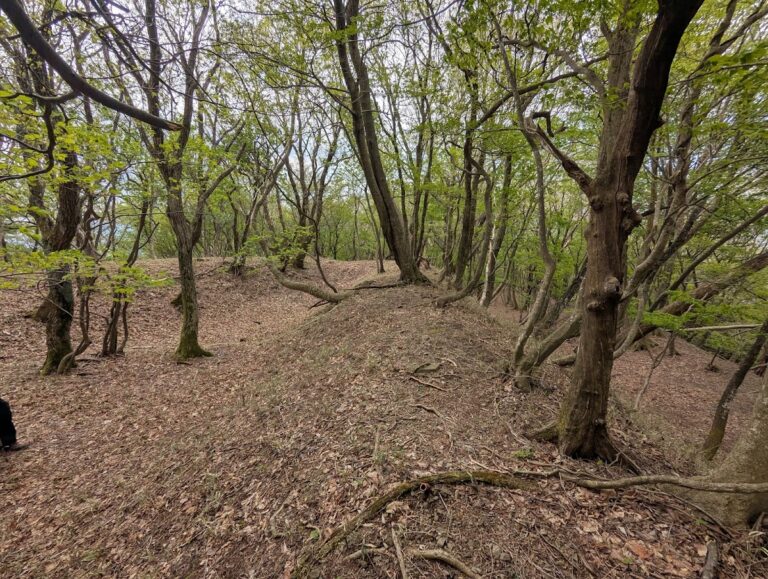
Parts of the moat that once surrounded the castle can still be seen as part of the topography. The moat, which utilized spring water, was an important element that gave rise to the castle’s alternative name, “Hekisui-jo” (Blue Water Castle). While much of it has now been filled in, it’s still possible to imagine its former appearance.
Minakuchi Castle Museum (Restored Watchtower)
In 1972, the watchtower of the outer bailey was restored and opened as the Minakuchi Castle Museum. This museum is an important facility for understanding the history of Minakuchi Castle and the changes in the Minakuchi Domain.
The museum displays ancient documents, drawings, and excavated artifacts related to Minakuchi Castle, allowing visitors to learn in detail about its history from construction to abandonment. It also houses a wealth of materials related to the successive lords and administration of the Minakuchi Domain.
The restored watchtower building itself is a highlight, offering a glimpse into the atmosphere of Edo-period castle architecture.
Value as a Shiga Prefecture Designated Historic Site
The Minakuchi Castle ruins have been designated a Shiga Prefecture Historic Site in recognition of their historical value. Minakuchi Castle is a historical site with multifaceted value, possessing a unique history as a lodging for Tokugawa shoguns, involvement in its design by the renowned cultural figure Kobori Enshu, and its history as the administrative center of the Minakuchi Domain.
Preservation and maintenance efforts are currently underway, and it plays an important role as a resource for local history education and tourism.
Cultural Significance of Minakuchi Castle
Kobori Enshu’s Aesthetics
Minakuchi Castle is culturally and historically significant as an architectural structure reflecting the aesthetics of Kobori Enshu. Enshu possessed a unique aesthetic sense called “kirei-sabi,” which greatly influenced tea ceremony and garden design.
In the design of Minakuchi Castle, a harmony of elegance and functionality, modeled after Nijo Castle, was pursued. The palace-style castle form is a fine example of Enshu’s aesthetics being applied to castle architecture.
Connection to the Tokaido Culture
Minakuchi flourished as a post town on the Tokaido Fifty-Three Stations, attracting many travelers and cultural figures. Minakuchi Castle, as a central figure in the culture of the Tokaido Road, contributed significantly to the cultural development of the region.
The townscape of Minakuchi, a blend of the bustling atmosphere of a post town and the dignified style of a castle town, still conveys a glimpse of the transportation and culture of the Edo period.
Access Information
Access by Public Transportation
By Train:
- Approximately 5 minutes on foot from Minakuchi-Jonan Station on the Ohmi Railway
- Transfer to the Ohmi Railway from Kibukawa Station on the JR Kusatsu Line and get off at Minakuchi-Jonan Station.
Minakuchi-Jonan Station on the Ohmi Railway is the closest station to the Minakuchi Castle ruins, and as the name “Jonan” (meaning “south of the castle”) suggests, it is conveniently located for accessing the castle ruins.
Access by Car
By Car:
- Approximately 15 minutes from the Koka-Tsuchiyama Interchange on the Shin-Meishin Expressway
- Approximately 30 minutes via National Route 1 from the Ritto Interchange on the Meishin Expressway
Parking is available around the Minakuchi Castle Museum, but spaces are limited, so we recommend considering using public transportation.
Minakuchi Castle Museum Opening Hours
Opening Hours: Normally 9:00 AM to 4:30 PM (Last entry at 4:00 PM)
Closed: Mondays (or the following day if Monday is a public holiday), New Year holidays
Admission Fee: 200 yen for adults, 100 yen for elementary and junior high school students (group discounts available)
*Opening hours and closed days may change, so we recommend checking the latest information on the Koka City official website before visiting.
Nearby Tourist Spots
Minakuchi-juku
The area around Minakuchi Castle retains traces of Minakuchi-juku, a post town that flourished as part of the Tokaido Fifty-three Stations route. While strolling through the old townscape, you can experience what it was like to be a traveler in the Edo period.
Koga-ryu Ninja Residence
Koka City is also famous as a ninja village. At the Koga-ryu Ninja Residence, you can tour an actual ninja residence and experience the ingenuity of ninjas, including their tricks and hidden doors. It is about a 20-minute drive from Minakuchi Castle.
Oike-ji Temple
Oike-ji Temple, known for its Horai Garden designed by Kobori Enshu, is another spot you should definitely visit when you come to Minakuchi Castle. You can appreciate the garden design techniques of Enshu, who designed Minakuchi Castle.
Points to Note When Visiting Minakuchi Castle
Best Season for Visiting
Minakuchi Castle ruins are open year-round, but the scenery is especially beautiful during the cherry blossom season in spring and the autumn foliage season. The landscape created by the stone walls and seasonal plants is perfect for photography.
Estimated Time Required
If you plan to visit the Minakuchi Castle Museum and explore thoroughly, allow approximately 1-2 hours. If you also plan to explore the surrounding Minakuchi-juku area, we recommend allocating half a day.
Points for History Enthusiasts
Those interested in history and castles can gain a deeper understanding of Minakuchi Castle by paying attention to the following points:
- Stone Wall Construction: Observe the differences in techniques depending on the construction period.
- Characteristics of the Castle Layout: Understand the structure of a palace-style castle.
- Museum Exhibits: Imagine the castle’s appearance at the time of construction from ancient documents and drawings.
- Kobori Enshu’s Design Philosophy: Compare with Nijo Castle.
Preservation and Future of Minakuchi Castle
Preservation Activities
The Minakuchi Castle ruins are protected as a Shiga Prefecture designated historical site, and preservation activities are ongoing by Koka City and local organizations. These activities encompass a wide range of efforts, including stone wall restoration, archaeological surveys, and the collection and preservation of historical materials.
Future Prospects
In recent years, development plans for the castle ruins have been underway, aiming to create a more accessible environment for visitors. New discoveries are also expected through archaeological excavations, potentially revealing further details about the history of Minakuchi Castle.
Furthermore, efforts are being made to utilize it as a tourist resource, with ongoing initiatives to convey the charm of Minakuchi Castle to more people as a hub for historical tourism in Koka City.
Summary
Minakuchi Castle is a historically valuable castle built as a lodging for the Tokugawa shogun and later as the residence of the Minakuchi domain. A renowned cultural figure, Kobori Enshu, was involved in its design, and it was an elegant castle also known as “Hekisui Castle.”
Currently, it is protected as a Shiga Prefecture designated historical site, and remains such as stone walls and turret bases remain. The reconstructed turret is open to the public as the Minakuchi Castle Museum, where visitors can learn about the history from its construction to its abandonment.
Located in the heart of Minakuchi, which flourished as a post town on the Tokaido road, it is easily accessible, within walking distance of Minakuchi-Jōnan Station on the Ōmi Railway. When you visit Shiga Prefecture, be sure to stop by the ruins of Minakuchi Castle and experience the history and culture of the Edo period.