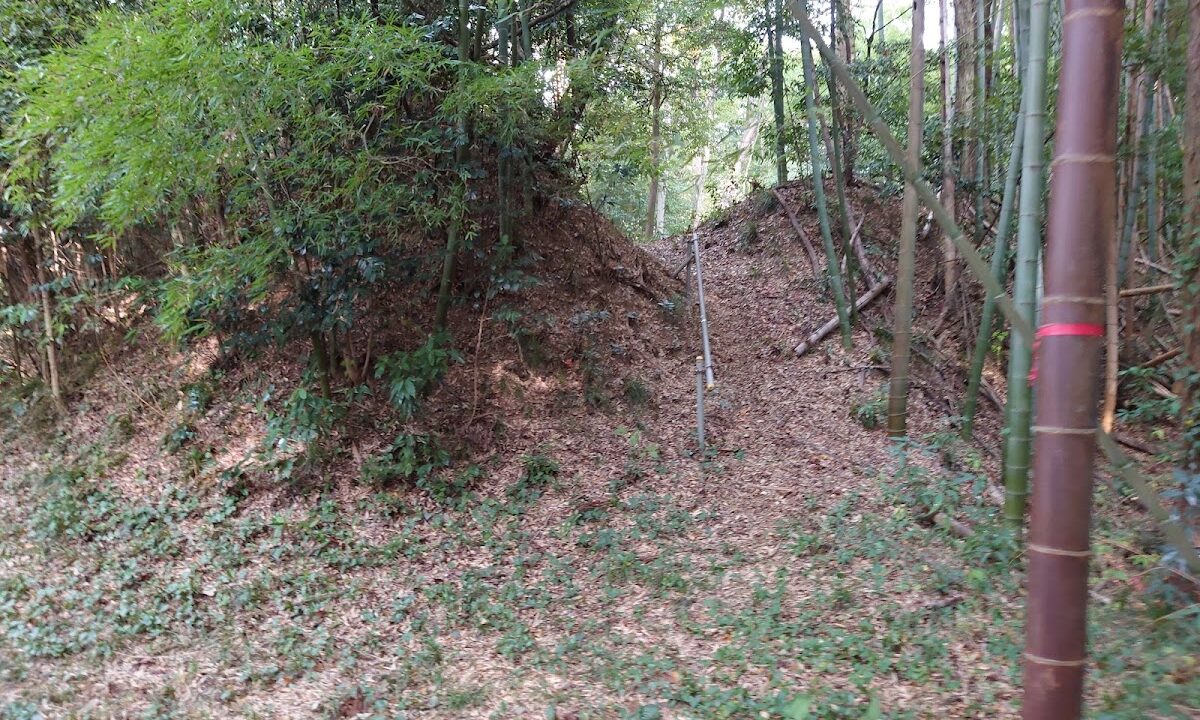
Minejo Castle (Maebashi City, Gunma Prefecture) Complete Guide: A Residence of a Hojo Clan Vassal and Characteristics of its Layout
What is Minejo Castle?
Minejo Castle is a Sengoku period (Warring States period) hilltop castle located in Mine-cho, Maebashi City, Gunma Prefecture. Built on a hill approximately 240 meters above sea level, facing the Fujisawa River and extending southward, its relative height is about 20 meters. As a castle within the Hojo clan’s sphere of influence in Kozuke Province, it is a valuable historical site that conveys the history of battles and offensives in the Kanto region during the Sengoku period.
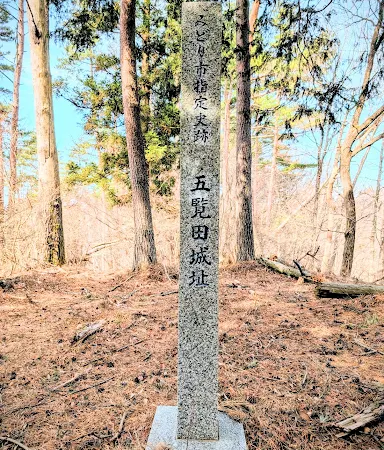
Even today, clear remains such as earthworks and dry moats remain, making it an important historical site for studying the structure of medieval castles. However, since most of the castle site is privately owned, permission from the owner is required for visits. A signpost marked “Minejo Castle Main Enclosure Site” stands by the roadside, confirming its existence.
History of Mine Castle and its Lord
Relationship between Tanaka Daini Masatsune and the Hojo Clan
Mine Castle is known as the residence of Tanaka Daini Masatsune, a retainer of Hojo Aki-no-kami Takasada, the father of Hojo Takahiro. The Hojo clan was a family that expanded its power in Kozuke Province, engaging in fierce battles for control with the Uesugi clan of Echigo and the Takeda clan of Kai.
Hojo Takahiro was one of the powerful warlords in Kozuke Province during the Sengoku period, and his father, Hojo Takasada, also played an important role in regional governance. It is believed that Tanaka Daini Masatsune was a central figure in the Hojo clan’s retainer group, operating from Mine Castle.
The Position of Mine Castle in Kōzuke Province During the Sengoku Period
During the Sengoku period, Kōzuke Province was situated between three major powers: the Uesugi clan (Kantō Kanrei), the Takeda clan of Kai Province, and the Later Hōjō clan (Odawara Hōjō clan) of Sagami Province. It became a stage for fierce power struggles. The area around Maebashi City, where Mine Castle is located, was a crucial region where these forces intersected, and many castles were built there.
Nearby to Mine Castle are several other castles, including Ōgo Castle, Kamiizumi Castle, and Yamagami Castle. It is presumed that these castles cooperated to form a regional defense system. In particular, the layout of Mine Castle is similar to that of Yamagami Castle, suggesting the possibility that they were built at the same time by groups possessing the same castle-building techniques.
Structure and Layout Characteristics of Mine Castle
Basic Layout Structure
The most distinctive feature of Mine Castle is its layout, which features a massive dry moat running east-west and five baileys arranged north-south. This structure skillfully utilizes the hilly terrain, and numerous features demonstrate ingenuity in enhancing its defensive capabilities.
Taking advantage of the hilly terrain facing the Fujisawa River, the castle employs natural elevation differences for defense while constructing a robust defensive system with artificial dry moats and earthworks. This layout represents a typical form of hill castle in the Kanto region during the Sengoku period and is a noteworthy example in castle research.
Characteristics of the Dry Moat
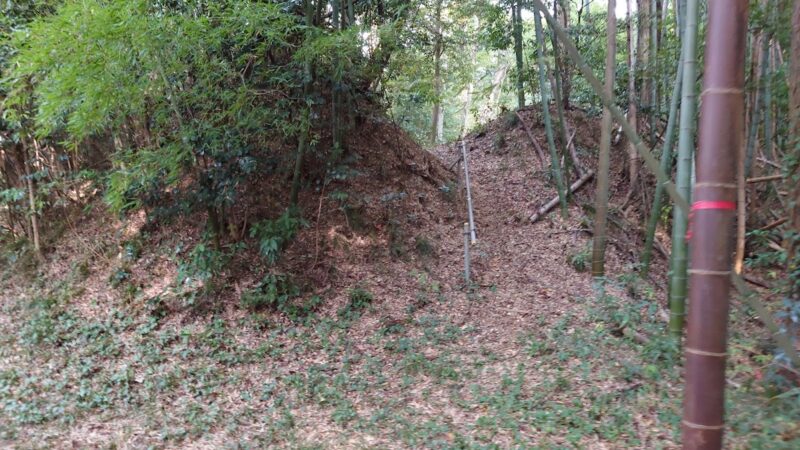
The most impressive feature of Mine Castle is the massive dry moat running east-west. This moat served to separate each enclosure and was a crucial defensive structure to prevent enemy intrusion. The moat’s considerable width and depth demonstrate the high level of castle-building technology of the time.
The dry moat is not merely a ditch; the excavated soil is piled up to form earthworks, creating a higher level of defensive effectiveness. This combination of dry moats and earthworks was a standard defensive technique in castles of the Sengoku period and is effectively implemented at Mine Castle.
Arrangement and Function of the Enclosures
The five enclosures, arranged in a north-south direction, were designed to function as independent defensive units. The arrangement, with the main enclosure (Honmaru) at the center and the second and third enclosures following, reflects the concept of multi-layered defense.
The size and shape of each enclosure varied according to the terrain, suggesting that each had a specific function. The main enclosure likely served as the lord’s residence and command post, while the other enclosures may have been used as troop garrisons or storage areas for supplies.
Structure of the Earthworks
The earthworks remaining at Mine Castle were constructed along the edges of the enclosures, forming a defensive line in conjunction with the dry moats. While the height and width of the earthworks varied, they were all designed to prevent enemy intrusion and provide an advantage for counterattacks from within the castle.
It is presumed that fences or walls were built on top of the earthworks, further enhancing their defensive capabilities. Even today, the shape of the earthworks remains relatively well-preserved, allowing us to imagine their original appearance.
Arrangement of the Entrance (Koguchi)
The entrance (koguchi) of a castle is one of the most important defensive structures. It is believed that at Mine Castle, measures were taken to restrict access to each enclosure and make enemy intrusion difficult.
While the details of the entrance structure are unclear due to overgrown vegetation and changes in terrain, it is possible that it had a complex structure, similar to typical Sengoku period castles, including staggered entrances and square-shaped enclosures.
Current Status and Preservation of Mine Castle
Current Status of the Remains
Currently, most of the enclosures at the Mine Castle site are overgrown with vegetation, and some areas are used for farming. Due to the extensive overgrown vegetation, it is not easy to grasp the full extent of the remains, but major defensive structures such as dry moats and earthworks remain in relatively good condition.
As it is privately owned land, unauthorized entry is prohibited, and permission from the owner is required before visiting. Preserving castle sites on private land like this presents both management challenges and protection from development.
Status of Cultural Property Designation
Currently, Mine Castle is not designated as a national, prefectural, or municipal cultural property. However, given its historical value and the state of preservation of its remains, future designation as a cultural property is possible. As an important historical site that conveys the history of the region, appropriate preservation and utilization are desired.
Gunma Prefecture has many famous castles, such as Kanayama Castle, Minowa Castle, and Numata Castle, which have been selected as one of Japan’s Top 100 Castles or the Continued Top 100 Castles. While Mine Castle is less well-known compared to these famous castles, it holds an important position in regional history research.
Access and Visiting Information for Mine Castle
Location
Address: Shiroyama, Mine-machi, Maebashi City, Gunma Prefecture
Mine Castle is located in the Mine-machi district in the northeastern part of Maebashi City. It sits on a hilly area along the Fujisawa River, and the surrounding area is a mix of residential and agricultural land.
Nearest Station and Access
Nearest Station: JR Ryomo Line, Kamiizumi Station
While Minejo Castle is within walking distance from Kamiizumi Station, it is a considerable distance, making access by car more convenient. If using public transportation, it is recommended to take a taxi from the station or check the bus schedule in advance.
Access by Car:
- Approximately 15 minutes from Maebashi IC on the Kan-Etsu Expressway
- Approximately 20 minutes from Isesaki IC on the Kita-Kanto Expressway
There is no designated parking area, so if parking on the street, please be considerate of local residents.
Precautions for Visiting
Please note the following points when visiting Minejo Castle Ruins:
- Recognize that it is private property: The majority of the castle ruins are privately owned. Unauthorized entry is strictly prohibited.
- Obtain Prior Permission: If you wish to visit, you must obtain permission from the owner in advance.
- Checking the Marker Post: The “Minejo Honmaru Ruins” marker post by the roadside can be viewed without permission, but please refrain from entering further.
- Caution Regarding Overgrown Areas: Many of the remains are overgrown, so wearing long sleeves and long pants is recommended if you enter.
- Seasonal Selection: In winter, the vegetation withers, making the remains easier to see, but in summer, the undergrowth is thick, making viewing difficult.
Nearby Castles and Tourist Spots
Nearby Castles
Numerous important castles for understanding Kōzuke Province during the Sengoku period exist around Minejo Castle.
Ōgo Castle
Located in Horikoshi-chō, Maebashi City, this was the residence of the Ōgo clan. Ōgo Castle is relatively large, and its remains are well-preserved. It is approximately a 15-minute drive from Minejo Castle.
Kamiizumi Castle
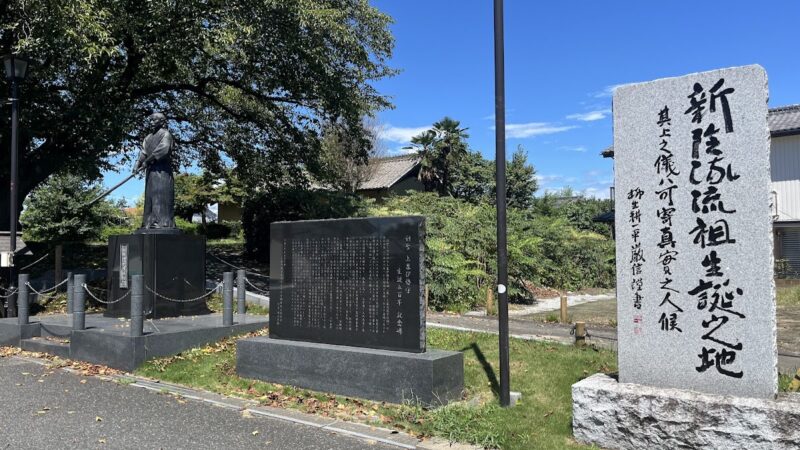
A castle known as the residence of the legendary swordsman Kamiizumi Nobutsuna. Located in Kamiizumi-cho, Maebashi City, it is one of the closest castles to Mine Castle. It is accessible on foot.
Yamakami Castle
A castle known for its similar layout to Mine Castle. Located in Yamakami-cho, Maebashi City, it is suggested that they may have been built around the same time.
Maebashi Castle
A flatland castle located in the center of Maebashi City. During the Edo period, it served as the administrative center of the Maebashi Domain. Currently, it houses the Gunma Prefectural Government Office and Maebashi Park, and some remains can be seen.
Major Castles of Gunma Prefecture
Gunma Prefecture as a whole is home to numerous castles that hold important positions in the history of Japanese castles.
Kanayama Castle (Ota City)
A mountain castle selected as one of Japan’s Top 100 Castles. The remains of the stone walls and stone paving are well-preserved, making it a representative medieval mountain castle of the Kanto region.
Minowa Castle (Takasaki City)
One of Japan’s 100 Famous Castles. Known as the residence of Nagano Narimasa, it has a history of fierce resistance against the invasion of Takeda Shingen.
Numata Castle (Numata City)
A castle associated with the Sanada clan. It has been developed into Numata Park, and remnants such as stone walls remain.
Tourist Spots in Maebashi City
Here are some tourist spots in Maebashi City that you might want to visit along with Mine Castle.
Maebashi Toshogu Shrine
A shrine dedicated to Tokugawa Ieyasu. A valuable cultural property that preserves the architectural style of the early Edo period.
Rinkokaku
A guesthouse built during the Meiji era. Designated as a National Important Cultural Property, it can be viewed along with its beautiful Japanese garden.
Mount Akagi
A famous mountain towering over the northern part of Maebashi City. A popular tourist destination where you can enjoy the nature of each season.
Historical Significance and Research Value of Mine Castle
Position in the Kanto Region during the Sengoku Period
Mine Castle is an important historical site that illustrates the realities of regional governance in the Kanto region during the Sengoku period. While not a large-scale castle, as the residence of a powerful local samurai, it serves as a valuable case study for researching the relationship between lords and vassals, and the construction of regional defense systems.
The structure and location of Mine Castle, its base, can provide insights into the role played by vassals like Tanaka Dainii Masayoshi within the Hojo clan’s sphere of influence.
Value in Castle Layout Research
Mine Castle’s layout exhibits a typical defensive system for hill castles during the Sengoku period. In particular, the arrangement of the massive dry moats and continuous baileys demonstrates ingenuity in maximizing defensive effectiveness within the limited terrain, making it a fascinating subject for castle researchers.
Its similarities to Yamagami Castle suggest construction by the same group of builders and the sharing of castle-building techniques within the region, making it important for studying the spread of castle construction techniques during the Sengoku period.
Importance in Local History
Mine Castle is an indispensable historical site for understanding the history of Maebashi City, and indeed, Gunma Prefecture. It plays a crucial role in local history research as concrete evidence illustrating the political and military situation and the structure of local communities in Kōzuke Province during the Sengoku period.
Points to Note When Visiting Mine Castle
Remains to Observe
When visiting Mine Castle (with permission), please pay attention to the following remains:
Dry Moat
The massive dry moat running east-west is the most impressive feature of Mine Castle. Its scale and structure demonstrate the high level of castle-building technology of the time.
Earthworks
The earthworks surrounding the baileys played a vital role in forming the defensive line. Pay attention to their height, width, and shape.
Arrangement of Baileys
The arrangement of five baileys, running north-south, embodies the concept of multi-layered defense. The differences in the size and shape of each bailey allow us to infer their respective functions.
Main Enclosure Site
The signpost by the roadside indicates the main enclosure site, which is the central part of the castle. It is believed to be the location of the lord’s residence.
Photography Tips
When photographing castles, keep the following points in mind:
- An angle that shows the scale of the dry moat
- A composition that shows the cross-section and height of the earthworks
- An overall view that shows the layout of the baileys
- Landmarks such as signposts
However, permission is always required for photography on private property.
Mine Castle and Japanese Castle Culture
Characteristics of Medieval Castles
Mine Castle possesses the characteristics of a typical medieval castle (a castle from the Sengoku period). A major difference from early modern castles (castles from the Edo period) is that it uses earthworks and dry moats for defense, rather than stone walls.
Medieval castles prioritized functionality based on actual combat, pursuing practical defensive capabilities over ornate decoration. Mine Castle’s simple yet robust structure truly embodies the essence of Sengoku period castles.
Characteristics of Castles in the Kanto Region
Castles in the Kanto region exhibit diverse forms, including mountain castles, hill castles, and flatland castles. Hill castles (hill castles) like Mine Castle are characterized by their skillful use of terrain for defense. The hilly areas on the edge of the Kanto Plain are suitable for castle construction, and many castles were built there.
Kozuke Province, in particular, is known for its high density of castles, reflecting the fierce battles of the Sengoku period. Mine Castle must be understood within this historical context.
Future Challenges in Mine Castle Research
Need for Archaeological Excavation
Since no full-scale archaeological investigation has been conducted on Mine Castle, many aspects of its detailed structure, age, and period of use remain unknown. Future archaeological excavations could potentially reveal a more accurate historical picture.
Excavation of Documentary Historical Materials
Documentary historical materials concerning Tanaka Dainii Seijo and Mine Castle are limited, making it difficult to reconstruct the castle’s history in detail. In the future, it is expected that the history of Mine Castle will become clearer through the discovery of new historical materials and the re-examination of existing ones.
Balancing Preservation and Utilization
The preservation and utilization of Mine Castle, being privately owned, requires the understanding and cooperation of the owner. A balanced preservation and utilization strategy is needed that recognizes its value as a cultural property while respecting the owner’s rights.
Summary
Mine Castle is a valuable castle ruin from the Sengoku period remaining in Maebashi City, Gunma Prefecture. As the residence of Tanaka Dainii Masayoshi, a vassal of the Hojo clan, it played an important role in the history of the region. Its distinctive layout, characterized by a massive dry moat and continuous baileys, conveys the castle-building techniques of the Sengoku period.
Currently, there are restrictions on visiting as it is privately owned, but its existence can be confirmed by a marker post along the roadside. Numerous other castles, such as Ogo Castle, Kamiizumi Castle, and Yamagami Castle, are scattered in the surrounding area, and visiting them together will allow one to understand the castle network of Kozuke Province during the Sengoku period.
While less well-known than famous castles representing Gunma Prefecture such as Kanayama Castle, Minowa Castle, and Numata Castle, Mine Castle holds significant value in regional history and castle research. Its history and remains quietly tell us about the state of the Kanto region during the Sengoku period.
We encourage castle enthusiasts and history buffs to visit this precious historical site after following the proper procedures. Touching the earthworks and dry moats of Mine Castle will allow you to feel the spirit of the Sengoku period.