Military Castle: Military history and history of the military castle in Izu
Quote: 关于两za户廓城
A fort known as the famous “Army Castle” during the Japanese War. The first place is Tama County, Uzou Province (now Akiruno City, Tokyo), and the second place is U Izu Yobei River Country Exchange Area (Shimizu Town, Edon County, Tokyo). It is an important fortress of the Hojo clan, but it has a great historical background and a large garden.
Main text details: This is an important reference for those who love the fort and are interested in local history.
Musangokuni Naval Castle (Akiruno City, Eastern Kyoto)
General location
Martial Arts Castle is located in Yamashiro, East Kyoto, Akuruno City, Battle District. It is located at 434 American Castle Mountains (also known as Castle Mountains), which has an altitude of approximately 200 American slopes, and is a solid fortress. When you are in the middle of nowhere in the surrounding area, you will be able to work in the surrounding areas further afield.
In front of us, the castle ruins are now designated as historical monuments by the Kyoto government, and the mountain climbing trails have been renovated and the difficulty of climbing has decreased. The magnificent scenery of the Tama area from the top of the mountain, and the military status at the time when the audience was impressed with the sincerity of the situation.
History background
Early history of construction
The exact date of construction of the castle is still uncertain, but it is universally acknowledged that it was built by the Yuko shrine. The Komiya clan was known as one of the local feudal lords of the “Southern Uprising” (southern origin), and was a powerful local feudal lord in one area in the early period of the Warring States era.
Astronomical Years (1532-1555), Yukomiya Shushu, Meimei, Ansei and other people’s records, and others belonging to the Hojo clan. However, the Tashin Komiya clan began to decline at the end of the Tenbun period.
Worked in Oishi’s Castle
The most important turning point in the history of military castles was the entry of Yoshihisa Oishi. Oishi Tokuzo was the lord of the castle, but he was there in 1546 (15th year of Tenbun), and after his death, Ujiyasu Hojo, the second son of Ujiyasu Hojo, the head of the Hojo clan, was appointed as the head of the family.
In this case, it will be a long time before the ship is built. This is not to be observed, but it is possible to avoid any strategy. The castle was an important central station between Hinohara Castle and the front line of Koshu, which was occupied by the Hojo clan.
Hojo clan’s branch castle after production
After the lordship of Oishi, after the construction of the castle, a part of the Hojo clan’s castle. This is a part of the defensive line in the Tama area, which is especially important for the Takeda clan in Kai Province who are involved in the resistance to China. The immediate envoy to the Hojo clan completed the construction of Hachioji Castle, and completed the construction of the castle and pond attached to Hachioji Castle.
Strike direction
In 1590 (Tensho 18), the battle of Odawara was fought by the vassal Hideyoshi. While on duty in the field, Ujiro Hojo’s base was attacked by Hachioji Castle, and Maeda Toshiie was defeated by Uesugi Kage. As a result, Hachioji Castle was destroyed, and its affiliated castle, the pond, and the castle were abandoned.
After the war of Odawara, Tokugawa Ieyasu moved into the eastern part of the city, and then the area was under the control of the Tokkawa clan, and the castle was used as an military base, which was never reproduced.
Fortress structure and departure
Clothing arrangement
A military castle in a military country is a typical mountain castle structure. The main part of the fort is the main part of the castle, which has a main enclosure, and the surrounding area is a multi-part, ladder-like arrangement of cars.
The main enclosure is a flat area with a wide range of sides, and is the core of the castle fort. The messenger is here now, and the flat area is still clearly visible. There are traces of construction work around the main enclosure, and defense works that exist around the main enclosure.
Existing legacy
In front of you, you can see the castle in the distance below:
Fucheng River: Multi-line Fucheng River still exists, and it is still used as a mountain base. In this case, the castle river is important defensive construction, and the enemy’s invasion is prevented.
Hijikata process: The traces of Hijikata’s process can be seen as each car in the main Maruwa area was around the city. However, it is possible to carry out defensive works at the time of construction.
围墙:There are many 围囙 below the main 围墙. This is the residential area for soldiers and soldiers, located in the Western Quarter of the Palace.
Mizui’s history: The history of water in the castle fort, expressed by the water issue that was presented during the period in the city.
Stone Climb Passage: On the road of the fort, the stone citadel tunnel was exposed, and the stone masonry technique was still in use at that time. However, it is possible to use it as an incomplete stone burial ground, so it can be used as a structure for solid soil or solid roads.
Previous outbound route
In front of you, the main routes of the forward-looking port city, the uniform route of the transportation route:
- Shinmei Shrine Route: This route leads to the west station, and the route to Shinmei Shrine. This is the main entrance to the fort (main road).
- Southline: From the starting point of the different mountain climbing route, south of Mt.
The demand for the two-way route is approximately 200 meters, and the round trip demand is approximately 2-3 hours.
Light points and castle fortress information
The main points of light in the game:
A perfect view: A magnificent panoramic view of the Tama area, including the main castle in the mountains. A clear view of Hikori, the city center with a far-reaching view, and a view of the castle lord at the time of the experience.
Perfect preservation history: The preservation of the historical pasts such as the Fukujo River and the Hijikata process has been perfectly preserved, making it an ideal site for the construction of a medieval castle.
Providing natural harmony: The castle fort is covered with natural forests, and you can enjoy the four seasons at the same time, and enjoy the history of walking. The season of spring and warm flowers blooms, the season of Japanese and autumn colors, and the scenery is especially distracting.
Walking route:Walking along a good route while exploring the fortress and enjoying the experience of walking. However, Yuyu is a fort in the mountains, and there is a constant demand for physical kimono.
Traffic Breath
Point: Higashi Kyoto Akiruno City Station
Public transportation:
- From the JR Itsukaichi line to the Itsukaichi station, the bus is located in the west of the station. It takes about 30 minutes to reach the starting point of the route.
- It takes about 40-60 minutes to reach the destination from the starting point.
Self-indulgence:
- From the Chuo Expressway Hachioji IC, it takes about 40 minutes by car.
- Parking: There is a small number of parking places near the starting point of the route.
Visit the city information:
- Yuyu Deluxe City is located on Usan, where shoes and Japanese clothing are indispensable.
- Drinking water.
- Summer travel program.
- The winter sun is early, and the time is full.
Zhoukan Scenic Spot
The following scenic spots are located near the ruins of Yudeli City:
Hinohara Castle: Entrance to Koshu, joint guardianship of Yogo Hojo clan and Soyo deku castle.
Autumn River Valley: The beauty of the scenery is beautiful. A one-day tour of the famous hot springs in the area.
Tsuyama Castle: General Hojo Oishi’s castle fortress division, this is an important national historical monument.
Hachioji Castle: Location of Ujiteru Hojo, one of Japan’s top 100 castles. During the battle of Odawara, this student was in a fierce battle.
Izu Kuni Castle
General location
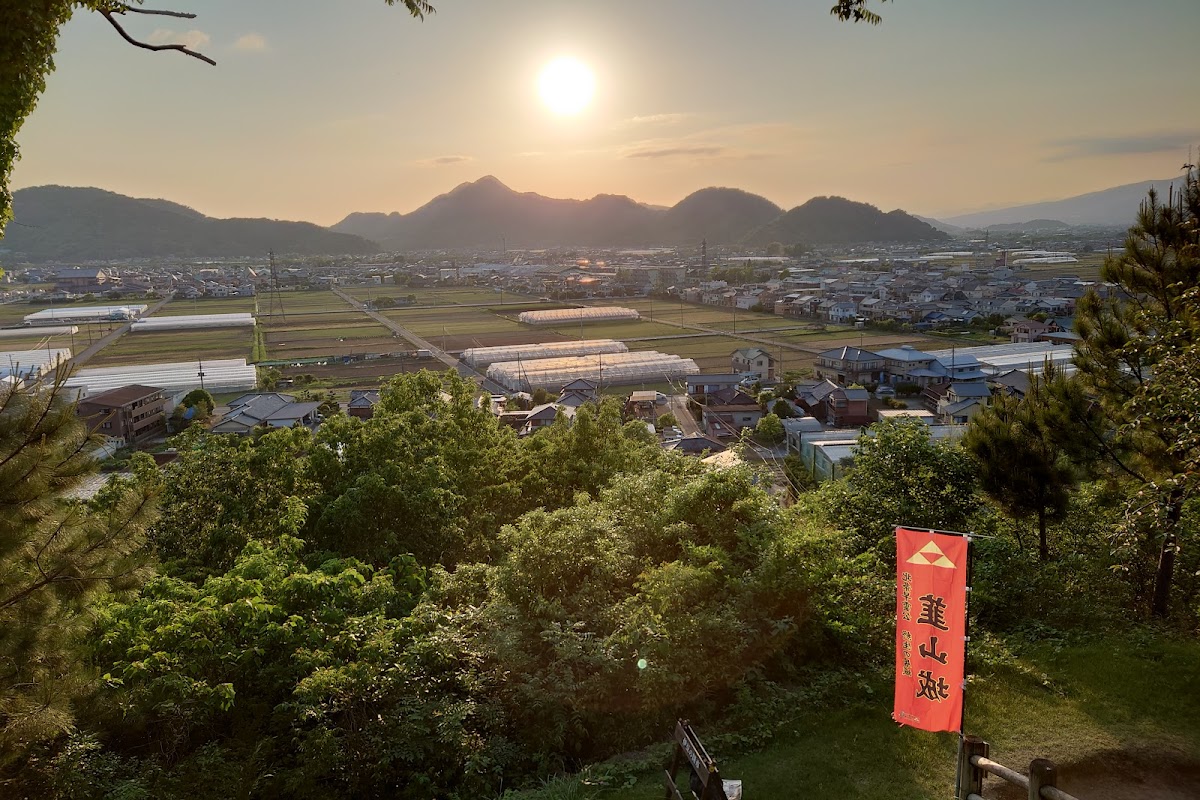
This is Izu Province’s Air Force Castle (Eihe Province), located in Air Force City, Shimizu-machi, East County, Izu Province. At present, it was administratively subordinate to Izu Province, but at the time of the war, it was covered by Izu Province. This is a strategic strategic point in the Izu Province and the Izu River international traffic circle.
The castle ruins are located on a small mountain hill currently known as “Honjoyama”, and the hill that is open to the mountain is Honjoyama Park. The park has a viewing platform with a magnificent view of Mt.Fuji and Eihe Bay.
History background
Mr. Hojo’s construction work exhibition
It was built by the Hojo family, the second landlord of the Hojo clan, after the establishment of the castle in Izu Province. After the establishment of the Empress of Izu, the commanders were able to move towards the river and build a castle fort in the area, and the commanders also worked on their own bases.
The castle was built as a border fortress between the Izu and Eikawa countries, and later became an important military base for the Hojo clan. In order to do so, it is possible to move forward with the attack on the defensive front.
The period of the Kailan-Shun Triple Alliance
In 1554 (Tenbun 23), the Takeda clan (Kai), the Houjo clan (Sagami), and the Imagawa clan (Kihe) formed the Kai-Shun Tripartite Alliance. The area around the city and the alliance was short-lived during the period of peace.
However, in 1560, after the death of Imagawa and the Imperial Navy, the Sangoku Alliance was gradually disbanded. In 1567, Takeda Shingen and the Imagawa clan joined forces, and the following year, in 1568, Takeda Shingen began to invade Kawakuni.
Battlefield of Takeda clan and Hojo clan
From 1568 to 1571, the castle was established and was the site of a fierce battle between the Takeda clan and the Hojo clan.
Takeda Shingen invades the river, quickly weakening the Imagawa clan’s effectiveness. After returning to work, the Hojo clan continued to support the Imagawa clan, and the Imagawa clan moved towards the eastern part of the river. The battle between the two armies was on the line, and both sides were in the midst of a fierce battle.
During this period, the Hojo clan was in control as the main castle, and the Yotakeda Army in the Shukan area was in a state of shock.
Masataka Kasahara’s rebellion and escape from the Takeda clan
In 1581 (9th year of Tensho), the commander of the castle, Masataka Kasahara, rebelled and fled under the command of Takeda. This is the castle of the Takeda clan.
Naturally, at this time the Takeda clan was in decline. In 1582 (10th year of Tensho), during the Battle of Koshu, the Takeda clan’s military was defeated by the Tokugawa army. After the death of the Takeda clan, Tokugawa Ieyasu no Tei moved to Igawa Province, and Shinya Tokugawa’s residence was accepted and other restraints were imposed.
The strength of Odawara’s war and castle
In 1590 (Tensho 18), the battle of Odawara was fought by the vassal Hideyoshi. During this period, the Hojo clan’s stronghold, Odawara Castle, was attacked and finally fell. Following the fall of Odawara Castle, the castle was also destroyed.
After the war of Odawara, the first area was destroyed by Tokugawa Ieyasu, and the modern castle was opened. The statue of the medieval city of Xishan, which was built around the castle, disappeared for military purposes, and disappeared on the historical stage.
Fortress structure and departure
Cloth station special points
It is a warehouse in Izu Province, its main castle is U.S. Honjo Mountain, and its surrounding area has many forts. After establishing the mission, the construction of a border fortification, the deployment of Mt. Honjo and the construction of defenses, and the subsequent invasion of the Eihe district.
Current situation
Right in front of you is the Honjo Mountain Park, which is a viewing platform. The park’s opening and construction changed to allow the fort to be built, but the topography could be deduced from its original appearance.
A magnificent view of Hikori in the clear sky, Mt.Fuji and Mt. Fuji. As a result of this, it is possible to confirm the function of a military post.
Traffic Breath
Point: Shimizu-cho, Shimizu-cho, Shizuka-ku, Ito-gun
Public transportation:
- From JR Tokaido Main Line “Mishima Station” in the direction of “Kou” in front of Zabashi
- Honjo Mountain Park from Yubasi Station
Self-indulgence:
- Departs from Numazu IC on the Tomei Expressway, approximately 15 minutes.
- Departs from the New Tome Expressway “Numazu IC”, approximately 20 minutes
- Parking: Parking area available in Honjoyama Park
Zhoukan scenic spot
Mishima Taisha: An old shrine in Izu Province that is known as “Ichimiya” (first-class shrine), and has a close connection with Yogen Ichicho.
Scenery Park: Weisanyuan City, a designated national natural monument and scenic scenic area.
Shinyama Castle: An important early position of the Houjo clan, Yohojo Sayun (Ikari Jun) Mikiri Sokan.
Yamanaka Castle: One of Japan’s 100 most famous castles, built by the Hojo clan in Yu-Tokaido, and an important strategic location. During the Battle of Odawara, this student fought fiercely.
Comparison of 两za户滓城
Similar songs
Similar songs below:
- Yōgo Hojo clan’s lineage: Yuza Joto Yogo Hojo clan’s connections.
- Yamashiro Katajo: On the top of the mountain.
- Battle location: Each area of the castle has an important military strategy.
- Increase during the Battle of Odawara: In 1590, during the Odawara period when the feudal vassal Hideyoshi attacked the castle.
- Current status: The ruins of the Fortress of Heza are now perfectly preserved and open to tourists.
Different
Other than this, the following differences can be observed:
Positive sum operation:
- Battle castle, martial arts country: Iyu Tama district, part of the back of the Hojo clan, part of the branch castle, part of the castle, entrance to Koshu.
- Battle Castle, Izu Province: It is a castle fort in Izu, Japan, river crossing area, and a military base on the river.
Castle Lord:
- Wuzangukoku Castle: Mr. Komiya, Yoshihisa Oishi, etc.
- Izu Province Military Castle: Shiroike, Kasahara Masataka, etc. under the direct control of the Hojo clan.
Kouyaku history:
- Martial arts country war castle: important war role record 载较小.
- Izu Province Military Castle: Records of the Yotake clan’s fierce battles.
Current status:
- Martial Arts Cruiser City: The site is located in the natural forest, where there are walking routes.
- Izu Country Club: Opening Park, observation deck.
Travel information
Martial Arts Castle (Tokyo)
Recommended viewing time: Spring (new green), Japanese and autumn (red leaf) scenery is especially beautiful. Summer is hot and mosquitoes are abundant, making it the best place to escape.
Account station demand time: From the starting point to the return trip, approximately 2-3 hours. The need for deep exploration remains, and the demand for more time.
Portable items: Optional walking shoes (designed mountain climbing shoes), water for drinking, hair cloth, mosquito helmet (seeing season), side table
Notes:
- Demand is 200 meters, Inko demand is constant physical ability.
- Partial area hand signal available range.
- You can climb independently; it is possible, and you can follow along.
- Beware of skyrocketing.
Izu Province Military Castle
Recommended tour time: It is recommended that you enjoy the beautiful view of Mt.Fuji in winter.
Watching time:From the park, walking time is approximately 30 minutes to 1 hour.
Construction supplies: Companion desk (very beautiful scenery), drinking water
Notes:
- Yuyu Park was opened and renovated.
- The construction of the castle is a beautiful scenic spot, and the castle itself is the site of a fort.
- At the same time we visited the castle, we also visited nearby Yamanaka Castle and Nirayama Castle, and after gaining full control of the area, we also visited the Hojo clan’s fortress.
Sokan Fortress
When you visit the castle, you can also visit the castle fort at the same time as the construction, and then go deeper into understanding:
Fortress of Yobuzangoku Dekushu Castle Sangguan
Tsuyama Castle (Hachioji City, East Kyoto): A nationally designated historic site. The Yuhojo clan has a strong relationship with Oishi, and has a close connection with the city.
Hachioji Castle (Hachioji City, East Kyoto): One of Japan’s 100 most famous castles. Ujiteru Hojo’s point of view is also the fierce battle of Odawara.
Hinohara Castle (Hinohara Village, East Kyoto): A fort at the entrance to Koshu, a joint guardianship of Yokoshu Castle.
Yoizu Country Club Castle Soukan
Yamanaka Castle (Jingxian Sanshima City): One of Japan’s 100 most famous castles. Afterwards, the Hojo clan was appointed as the guardian of the East Coast.
Niiyama Castle (Seishuen Izunokuni City): Yohojo Sayun Sokan’s castle fortress, Houhojo clan’s source.
Kokuji Castle (Numazu City): One of Japan’s 100 most famous castles. The first castle fort built by Saen Hojo.
overview
The historical background of the same name of the “Kyuu Castle” is different from each other, but after the Hojo clan was in Tokyo, it occupied an important position during the defense and defense.
After conquering the military castles of the military, the Hojo clan settled down in the Tama area, and was also the residence of an important figure, Toshihisa Oishi. The castle ruins are perfectly preserved, and it is an ideal place for research into medieval Jishan castle ruins.
The castle in Izu Province is a border castle, a battleground where the Takeda clan fought fiercely, and it is also an important historical site. Nowadays, the scenery is beautiful and the scenery is beautiful.
The castle capital is a rare history, and you can feel the history of the war in the past. After understanding the unique features of the castle fort, we will revisit it and enjoy a more serious historical experience. This is a person who loves the history of the castle, who also loves the history of the castle.
When you visit the fort, you will understand the historical background of other forts in the surrounding areas, and after you understand that you have changed the area, you will see the power of the Hojo clan and the situation in the eastern and eastern sea areas of the country.