
Complete Guide to the History and Highlights of Mikawa Kameyama Castle | A Thorough Explanation of the Okudaira Clan’s Base
What is Mikawa Kameyama Castle?
Mikawa Kameyama Castle is a flatland castle located in Tsukude Kiyotake, Shinshiro City, Aichi Prefecture. Also known as “Tsukude Castle,” it was built on a hill approximately 540 meters above sea level with a relative height of about 20 meters. Built in 1424 by Okudaira Sadatoshi, it served as the residence of five generations of the Okudaira clan before being used as the administrative center of the Tsukude Domain in the early Edo period.
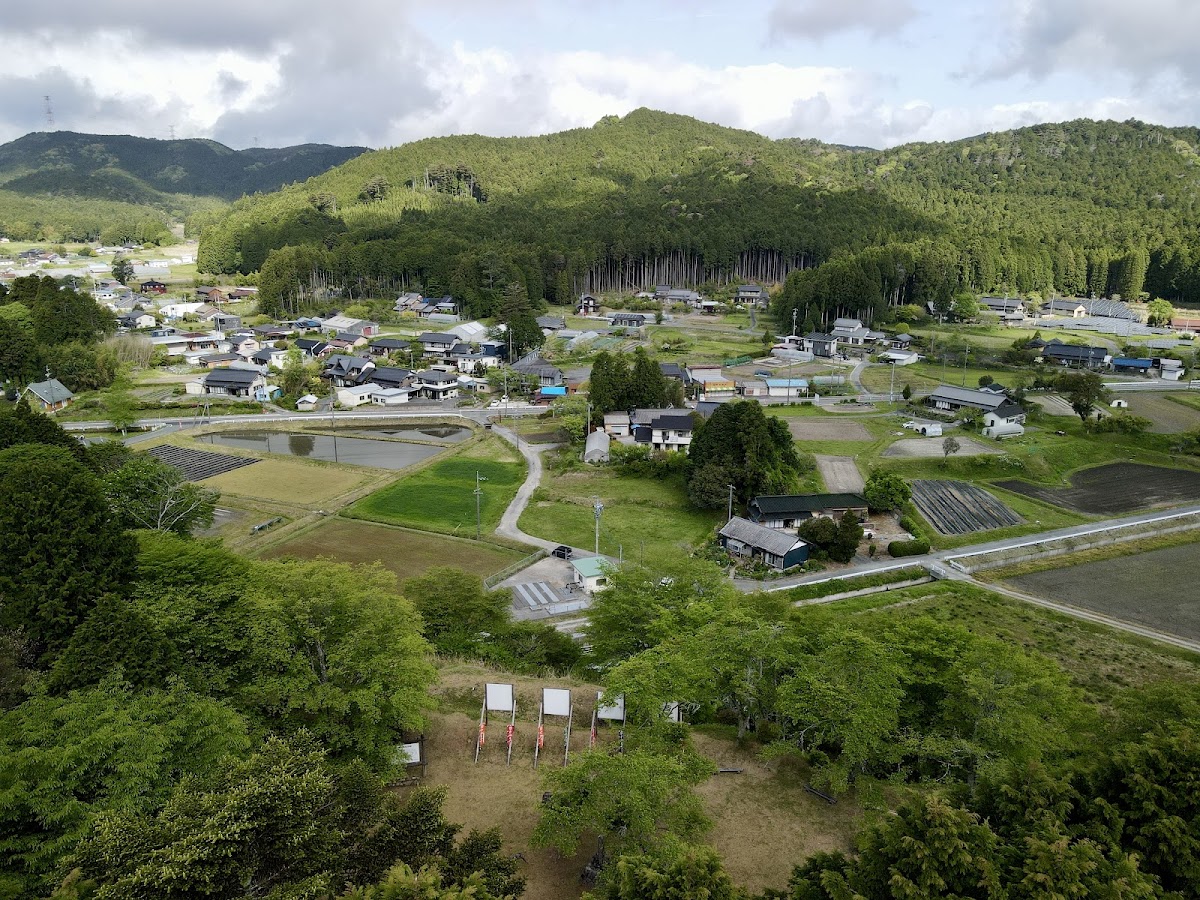
Currently, it is maintained as a park adjacent to the “Tsukude Handmade Village” roadside station, and the layout has been preserved almost entirely as it was in its original state. The remains of earthworks, dry moats, and baileys are well-preserved, making it a valuable historical site for learning about castle structures from the medieval to early modern periods.
History of Mikawa Kameyama Castle
The Okudaira Clan’s Migration to Mikawa and the Construction of the Castle
The Okudaira clan originated in Okudaira-go, Kanra-gun, Kozuke Province (present-day Gunma Prefecture). During the Tenju era (1375-1380), a person who was either the father or grandfather of Okudaira Sadatoshi migrated to the Tsukude region of Mikawa Province, initially establishing Kawajiri Castle as their base.
In 1424 (Oei 31), Okudaira Sadatoshi built Kameyama Castle as a new base to replace Kawajiri Castle, which had become too small as his power expanded. It is said that he moved his base just eight months after its construction, suggesting its strategically important location. Kameyama Castle became the main base of the Mikawa Okudaira clan and functioned as their residence for approximately 150 years thereafter.
The Five Generations of the Okudaira Clan’s Residence
Kameyama Castle served as the residence of five generations of the Okudaira clan. Following the first head of the Okudaira clan, Sadatoshi, the family line continued with Sadahisa, Sadamasa, Sadakatsu, and Sadayoshi. During this time, the Okudaira clan expanded its power as a powerful local lord in the Tsukude region.
With the arrival of the Sengoku period (Warring States period), the Okudaira clan became caught up in the complexities of their relationships with powerful surrounding daimyo (feudal lords). During the Genki era (1570-1573), they came under the influence of Takeda Shingen and served the Takeda clan. The Okudaira clan was highly regarded within the Takeda army, and Tsukude Kameyama Castle became one of the important bases in the Takeda clan’s invasion of Mikawa Province.
Defection from the Takeda Clan and Allegiance to the Tokugawa Clan
In 1573, the death of Takeda Shingen dramatically changed the situation. Shingen’s death also shocked the Okudaira family, who were based at Tsukude Kameyama Castle. Okudaira Sadayoshi (Sadayoshi) and his son Nobumasa, recognizing the potential of the Takeda clan, decided to defect from the Takeda with their retainers and pledge allegiance to Tokugawa Ieyasu.
This decision would significantly alter the fate of the Okudaira clan. Okudaira Nobumasa married Tokugawa Ieyasu’s eldest daughter, Kamehime, and forged a strong relationship with the Tokugawa clan. In the Battle of Nagashino in 1575, Nobumasa successfully defended Nagashino Castle, effectively pinning down Takeda Katsuyori’s large army.
The Establishment of the Tsukude Domain and the Era of Matsudaira Tadaaki
With the arrival of the Edo period, Kameyama Castle took on a new role. In 1602, Matsudaira Tadaaki established the Tsukude Domain with a stipend of 17,000 koku, and Kameyama Castle became the domain’s seat. Matsudaira Tadaaki was the son of Tokugawa Ieyasu’s half-brother, Hisamatsu Toshikatsu, making him Ieyasu’s nephew. The Tsukude Domain existed until 1610 (Keicho 15), but was abolished when Matsudaira Tadaaki was transferred to the Kuwana Domain in Ise Province. Although it was a short period of only eight years, it is believed that development as a modern castle progressed during this time.
From Abandonment to the Present
After the abolition of the Tsukude Domain, Kameyama Castle was abandoned, but its remains have been well preserved. Local preservation efforts have been carried out for many years, and it is now developed as a park.
With the opening of the “Tsukude Handmade Village” roadside station, further development of the area around the castle remains has been advanced, creating an environment where visitors can easily view the remains. Currently, it is a popular tourist spot, attracting many castle enthusiasts and history lovers, as a representative medieval castle site in the Okumikawa region.
Structure and Layout of Mikawa Kameyama Castle
Location and Characteristics as a Hilltop Castle
Mikawa Kameyama Castle is a hilltop castle built on a hill approximately 540 meters above sea level. The relative elevation is approximately 20 meters, which is not as steep as a mountain castle, but it occupies a strategically advantageous position overlooking the surrounding area. The Tsukude region was a crucial transportation hub connecting Mikawa and Shinano provinces, and controlling this area was of great importance for controlling the surrounding region.
The castle’s location was designed with a balance between defensive and habitable features, a typical form for a medieval local lord’s castle. It functioned as the lord’s residence in peacetime and as a defensive stronghold in wartime.
Layout of the Main Enclosure and Major Enclosures
The central part of Kameyama Castle consists of the main enclosure (honmaru) surrounded by multiple enclosures. The main enclosure is located at the highest point of the castle and measures approximately 60 meters east-west and 40 meters north-south. Earthen ramparts surround the main enclosure, some of which still remain today at a height of 2-3 meters.
The second and third enclosures are arranged in a stepped fashion around the main enclosure, creating an overall terraced layout. Each enclosure is demarcated by dry moats and steep slopes, demonstrating defensive measures throughout the site.
Remains of Earthworks and Dry Moats
One of the highlights of Mikawa Kameyama Castle is the well-preserved remains of earthworks and dry moats. The earthworks surrounding the main enclosure are particularly well-preserved on the north and west sides, giving a glimpse into the castle’s original appearance. The height of the earthworks varies depending on the location, reaching nearly 3 meters at their highest points.
The dry moats were important defensive structures separating the enclosures, and several measuring 5-10 meters wide and 2-4 meters deep can be found. The moat between the main enclosure and the second enclosure is particularly large and is an important remains for understanding the castle’s defensive structure.
Some parts of the moat bottom retain ridged undulations, indicating measures taken to hinder enemy intrusion. These dry moats exhibit typical medieval castle structures and are valuable remains that can be observed on the surface without archaeological excavation.
Entrances and Defensive Systems
The entrances to the castle, known as “koguchi,” are also important historical remains. Multiple entrances have been identified at Kameyama Castle, each showcasing ingenious defensive features. The main entrances are of the staggered-gate type, designed to prevent direct advances and enhance defensive capabilities.
Earthworks protrude around the entrances, allowing for attacks from the flanks. Furthermore, small enclosures (umadashi) are sometimes located in front of the entrances, suggesting a multi-layered defensive system.
These entrance structures are excellent examples of the development of castle construction technology from the medieval to the early modern period, and are of interest from the perspective of castle research.
Arrangement and Function of Enclosures
More than 10 enclosures of varying sizes are arranged around the main keep (honmaru). Based on their size and shape, these enclosures are thought to have had different functions.
The main enclosures closer to the honmaru are presumed to have housed the residences of senior retainers and important facilities. On the other hand, the outer baileys may have been used as soldier garrisons or storage areas for supplies. Some baileys may also have been used as training grounds or stables.
The baileys are clearly demarcated, each functioning as an independent defensive unit. This is based on a defensive philosophy that allows for continued resistance in other baileys even if some are breached.
Highlights of Mikawa Kameyama Castle
Well-Preserved Layout
The greatest highlight of Mikawa Kameyama Castle is its layout, which has been preserved almost exactly as it was in its original state. While many castle ruins have been altered by development and cultivation, Kameyama Castle retains its basic structure, making it a valuable site for understanding the appearance of a medieval castle in three dimensions.
Even when the site was developed as a park, care was taken not to damage the remains, allowing visitors to observe the earthworks, dry moats, and baileys up close while walking along the viewing paths. The site is well-equipped with information boards, making it enjoyable even for those unfamiliar with castles.
View from the Main Enclosure
Standing on the site of the main enclosure, you can enjoy a panoramic view of the Tsukude basin. The lords of the Okudaira clan likely gazed upon the same scenery while contemplating their territorial management and strategies. On a clear day, you can even see the surrounding mountains, truly appreciating the castle’s excellent location.
In spring, the cherry blossoms are beautiful, and in autumn, the autumn leaves are stunning, allowing you to enjoy the scenery of each season. The seasons of fresh greenery and autumn foliage are especially recommended, as you can enjoy both historical exploration and nature appreciation simultaneously.
The Impressive Earthworks
The earthworks surrounding the main enclosure are remarkably well-preserved, reaching heights of 2-3 meters, and their imposing presence is overwhelming when viewed up close. The earthworks in the northwest are particularly well-preserved, allowing you to appreciate the techniques used at the time of construction.
There are sections where you can walk along the top of the earthworks, experiencing the castle from a defensive perspective. By observing the depth of the dry moats and the layout of the enclosures from atop the earthworks, you can gain a deeper understanding of the castle’s defensive system.
Dry Moats and Cut Embankments
Several dry moats remain in excellent condition, allowing visitors to observe their scale and structure. The moats around the main keep, in particular, are deep, and combined with the sharp cut embankments, they form a strong defensive line.
There are sections where you can descend to the bottom of the moat and walk, allowing you to truly appreciate its depth. The height of the cut embankments viewed from the bottom of the moat is beyond imagination, providing a valuable experience that allows you to feel the difficulty faced by the attackers.
Collaboration with the Roadside Station
At the roadside station “Tsukude Handmade Village,” adjacent to the castle ruins, you can purchase local specialties and handmade crafts. Stopping by before or after visiting the castle ruins allows you to enjoy the culture and food of the Tsukude region.
The roadside station also has rest facilities and restaurants, allowing you to spend your time leisurely. We recommend trying dishes made with local ingredients or regional cuisine from the Tsukude area.
Access and Visiting Information
Access by Car
Access to Mikawa Kameyama Castle is convenient by car. From the Shinshiro Interchange on the Shin-Tomei Expressway, head north on National Route 151 for approximately 30 minutes. It’s also accessible from National Route 257; aiming for the “Tsukude Handmade Village” roadside station will ensure you don’t get lost.
The parking lot is shared with the roadside station and has ample space. The castle ruins entrance is just a short 1-2 minute walk from the parking lot. Parking is free.
Access by Public Transportation
If using public transportation, the nearest stations are Mikawa-Togo Station or Shinshiro Station on the JR Iida Line. From there, you’ll need to take a bus or taxi. Since the number of services is limited, it’s recommended to check the timetable in advance.
Shinshiro City also operates a community bus, the “S-Bus,” but due to its limited service, visiting by car is more practical.
Estimated Visiting Time
For a leisurely visit to the castle ruins, allow 30 minutes to 1 hour. If you plan to take photos or conduct detailed observations, 1.5 hours will allow for a more relaxed visit.
Including shopping and dining at the roadside station, allocating 2-3 hours for your visit will allow you to fully enjoy the charm of the Tsukude region.
Points to Note When Visiting
While the castle ruins are maintained as a park, some areas have uneven footing. We recommend wearing comfortable shoes. Particular caution is needed after rain, as the earthworks and moat bottoms can become slippery.
In summer, bringing insect repellent will make your visit more comfortable. Also, since there are areas with little shade, it’s a good idea to bring a hat, parasol, and drinks.
In winter, there may be snow, so we recommend checking the weather forecast beforehand.
Related Historical Sites in the Surrounding Area
Komiya Castle
Located about 15 minutes by car from Mikawa Kameyama Castle, Komiya Castle is known as a castle built by the Takeda clan. It was built by Takeda Shingen as a base for his invasion of Mikawa, and it retains many characteristics of Takeda-style castle construction.
Visiting both Kameyama Castle and Furumiya Castle will give you a deeper understanding of the relationship between the Okudaira and Takeda clans, as well as the Sengoku period history of this region. Furumiya Castle is also a nationally designated historical site, and impressive remains remain.
Nagashino Castle Ruins
Located in Shinshiro City, Nagashino Castle is famous for the Battle of Nagashino in 1575. It was the site where Okudaira Nobumasa waged a siege against Takeda Katsuyori’s large army, and is an indispensable historical site for understanding the history of the Okudaira clan.
The Nagashino Castle Ruins Historical Preservation Museum has detailed exhibits on the Battle of Nagashino, allowing you to learn about the subsequent activities of the Okudaira clan, who were lords of Kameyama Castle.
Shinshiro City Shitaragahara Historical Museum
For those who want to learn more about the Battle of Nagashino, the Shinshiro City Shitaragahara Historical Museum is recommended. It features demonstrations of matchlock guns and exhibits of Sengoku period armor, allowing you to concretely imagine what the battle was like.
Historical Significance of Mikawa Kameyama Castle
Foundation for the Development of the Okudaira Clan
Mikawa Kameyama Castle played a crucial role in the Okudaira clan’s growth from local lords of Mikawa Province to powerful daimyo (feudal lords) during the Sengoku period. Using this castle as a base, the Okudaira clan expanded their power and survived the Sengoku period, ultimately becoming daimyo during the Edo period.
Okudaira Nobumasa, due to his achievements at Nagashino Castle, gained the deep trust of Tokugawa Ieyasu and became a daimyo of the Kano Domain in Mino Province with a 100,000 koku stipend. His descendants served as lords of domains such as Utsunomiya and Oshi, and continued as a daimyo family until the Meiji Restoration.
A Strategic Point Connecting Mikawa and Shinano
The Tsukude region was strategically important, located on the transportation route connecting Mikawa and Shinano. Control of this region was essential when the Takeda clan invaded Mikawa. Conversely, for the Tokugawa clan, the Tsukude region was a crucial defensive line against Takeda invasions.
Due to its geopolitical importance, Kameyama Castle held significance far beyond that of a mere local lord’s castle. The fate of this castle influenced the balance of power between Mikawa and Shinano provinces.
Value in Medieval Castle Research
Mikawa Kameyama Castle retains a well-preserved castle structure from the medieval to early modern period, making it a valuable resource for castle research. It boasts numerous remains observable on the surface without archaeological excavation, making it a prime example for castle layout research and attracting many researchers.
In particular, the structure of the earthworks and dry moats, the arrangement of the gates, and the layout of the baileys exhibit typical characteristics of flatland castles from this period, making it a historical site of high educational value.
Preservation and Utilization in Modern Times
As a Regional Historical Heritage Site
Shinshiro City recognizes Mikawa Kameyama Castle as an important historical heritage site and is working on its preservation and utilization. By developing it as a park, it functions as a place of relaxation for local residents and is also used as a site for historical education.
Local elementary and junior high schools conduct tours of the castle ruins as part of their local history education, providing children with an opportunity to learn about the region’s history.
Utilization as a Tourism Resource
Mikawa Kameyama Castle is an important tourism resource for promoting tourism in the Okumikawa region. Through collaboration with a roadside station, a tourism model combining historical sightseeing with the sale of local specialty products has been established.
The number of tourists visiting the castle ruins is increasing year by year, and it is particularly highly regarded by castle enthusiasts and history buffs. Information dissemination on social media is also active, spreading awareness among younger generations.
Future Challenges and Prospects
Regarding the preservation of the remains, countermeasures against natural disasters and deterioration over time are challenges. Continuous maintenance, such as regular mowing and repair of earthworks, is necessary.
Furthermore, to convey the castle’s appeal to more people, the introduction of multilingual information boards and explanatory systems utilizing digital technology is being considered. Efforts to recreate the castle’s former appearance using AR (augmented reality) technology are also anticipated.
Summary
Mikawa Kameyama Castle was built in 1424 by Okudaira Sadatoshi and flourished as the residence of five generations of the Okudaira clan. Located in the Tsukude area of Shinshiro City, Aichi Prefecture, it was a strategically important castle controlling a key transportation hub connecting Mikawa and Shinano provinces.
During the Sengoku period, while caught between the Takeda and Tokugawa clans, the Okudaira clan maintained their power from this castle, eventually submitting to the Tokugawa and becoming daimyo. In the early Edo period, Matsudaira Tadaaki was appointed as the administrative center of the Tsukude Domain with a stipend of 17,000 koku, and the domain’s administration took place from 1602 to 1610.
Currently, the castle ruins have been developed into a park, and the layout, centered around the main keep, is preserved almost exactly as it was. The remains of earthworks, dry moats, baileys, and gates are well-preserved, making it a valuable historical site that allows for a three-dimensional understanding of the structure of a medieval castle.
Located next to the “Tsukude Handmade Village” roadside station, it boasts convenient access and ample parking. Visitors can enjoy local specialties and regional cuisine alongside their castle ruins, making for a fulfilling historical sightseeing experience.
Nearby, numerous historical sites from the Sengoku period, such as the ruins of Furumiya Castle and Nagashino Castle, are scattered, allowing visitors to experience the rich history of this region. When visiting Okumikawa, be sure to stop by Mikawa Kameyama Castle and experience the history of the Okudaira clan and the charm of a medieval castle.


