Complete Guide to Matsue Castle: A Thorough Explanation of the Charm, Highlights, History, and Access Information of the National Treasure Keep
Matsue Castle, located in Matsue City, Shimane Prefecture, is one of the 12 existing castle keeps and a valuable fortress designated as a National Treasure in 2015. Its imposing black keep is also affectionately known as “Chidori Castle,” and along with its beautiful view overlooking Lake Shinji, it attracts many visitors as a representative tourist spot of the San’in region.
This article comprehensively explains everything you need to know when visiting Matsue Castle, from its historical background and architectural features to its actual highlights, access methods, and surrounding tourist spots.
History of Matsue Castle: From Construction to the Present
Construction by Horio Yoshiharu
Matsue Castle was completed in 1611 (Keicho 16) by Horio Yoshiharu and his son, Tadauji. Horio Yoshiharu served as a retainer of Toyotomi Hideyoshi and became a daimyo with a domain of 240,000 koku in Izumo and Oki after the Battle of Sekigahara. Initially, Yoshiharu resided at Gassan Tomita Castle, but considering transportation convenience and the development of the castle town, he decided to build a new castle in Sueji, near Lake Shinji. Construction took five years, and a magnificent flatland castle was completed on Kamedayama (present-day Shiroyama).
Changes in Castle Lords
After its construction, Matsue Castle saw a succession of lords as follows:
- Horio Clan (1611-1633): The Horio clan, the castle’s builders, died out after three generations.
- Kyogoku Clan (1634-1637): Kyogoku Tadataka became lord, but was transferred after only three years.
- Matsudaira Clan (1638-1871): Matsudaira Naomasa, a grandson of Tokugawa Ieyasu, entered the castle, and the Matsudaira clan served as lords until the Meiji Restoration.
The Matsudaira era, in particular, was long, and Matsue flourished as a castle of the 186,000 koku Matsue Domain. The seventh lord, Matsudaira Harusato (Fumai-ko), was also known as a tea master and greatly contributed to the cultural development of Matsue.
Crisis and Preservation After the Meiji Restoration
With the arrival of the Meiji era, many castles were destined to be demolished due to the castle demolition decree. Matsue Castle was no exception, and many of its buildings other than the keep were lost.
However, thanks to the preservation efforts of local volunteers, the keep was saved from demolition. In particular, thanks to the efforts of former samurai such as Takagi Gonpachi and Katsube Motoemon, the keep was bought back and preserved.
The Road to National Treasure Designation
Matsue Castle’s keep was designated a National Treasure (formerly a National Treasure) in 1935, and became an Important Cultural Property in 1950 after the war. Later, in 2012, a prayer plaque was discovered, confirming the castle’s construction date, and this, among other factors, led to its official designation as a National Treasure on July 8, 2015.
There are only five castles in Japan with National Treasure keeps (Himeji Castle, Hikone Castle, Inuyama Castle, Matsumoto Castle, and Matsue Castle), and Matsue Castle attracted significant attention as the first castle keep to be designated a National Treasure after the war.
Architectural Features of Matsue Castle’s Keep
Structure of a Complex Watchtower-Type Keep
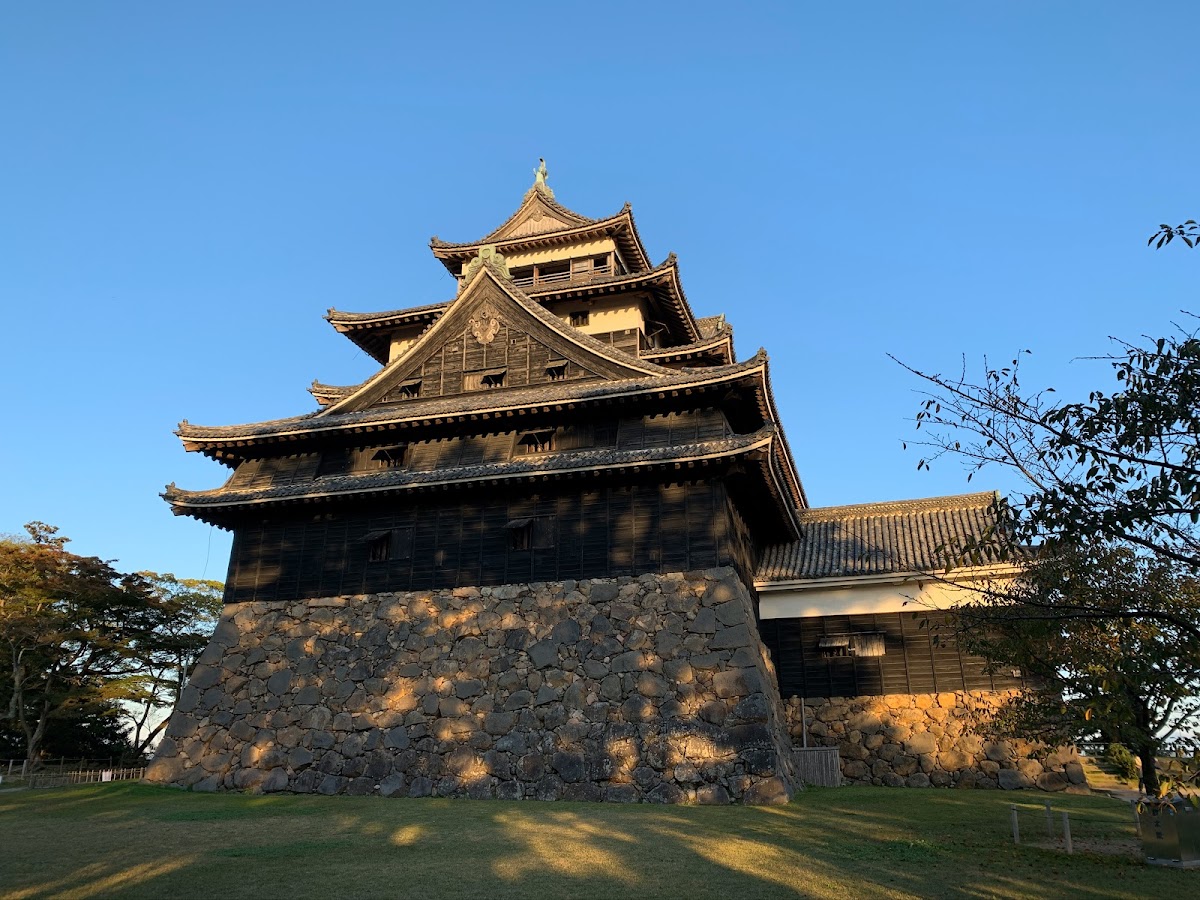
Matsue Castle’s keep is of a “complex watchtower-type” design, standing approximately 30 meters tall (approximately 22.4 meters including the stone walls), with a five-story, six-level structure. The exterior has four levels, while the interior, including the basement, has six levels.
Watchtower-type keeps are an old style, built from the Azuchi-Momoyama period to the early Edo period, and Matsue Castle is a valuable example of its later construction. Its distinctive feature is the independent watchtower section resting on the lower levels (first to fourth floors).
Black Exterior and Defensive Function
The most distinctive feature of Matsue Castle’s keep is its black clapboard exterior. Because of this black appearance, it is also called the “Black Castle,” exuding a sense of grandeur in contrast to the white Himeji Castle.
The architecture incorporates various defensive features designed with actual combat in mind:
- Stone Drop: A protruding section from the wall used to drop stones or boiling water on enemies climbing the stone wall.
- Embossure: Small windows for firing guns and arrows.
- Warrior’s Walkway: A corridor on the top floor of the keep, offering a 360-degree view.
- Attached Turret: A turret attached to the keep, enhancing its defensive capabilities.
Unique Roof Structure: “Chidori-hafu”
The roof of Matsue Castle’s keep combines multiple gables, including irimoya-hafu and chidori-hafu. The chidori-hafu on the second floor, in particular, resembles a plover with its wings spread, giving rise to Matsue Castle’s alternative name, “Chidori-jo” (Plover Castle).
These gables serve not only a decorative role but also practical functions such as lighting, ventilation, and defense.
Wood and Construction Techniques
Pine wood was primarily used in the construction of the keep. The pillars are made of thick pine wood, approximately 60 centimeters in diameter, and retain their strength even after more than 400 years.
Traditional joinery techniques, without the use of nails, are employed at the joints, resulting in a flexible structure resistant to earthquakes. This superior architectural technique is one of the factors that has allowed Matsue Castle to survive to the present day.
Highlights of Matsue Castle
Visiting the Interior of the Castle Tower
The interior of Matsue Castle’s tower is open to visitors, with valuable exhibits on each floor.
Basement (Underground)
You can see the remains of an underground well and storage facilities. The presence of a well within the castle tower is rare and a valuable historical relic, serving as a defense against sieges.
First Floor
Exhibits include materials related to the history and construction of Matsue Castle, as well as armor and swords. A structural model of the tower is also available, allowing visitors to understand the building’s mechanics.
Second Floor
Exhibits related to the history of the castle lord and the domain are displayed. The museum is particularly rich in materials from the Matsudaira clan era, allowing visitors to learn about the culture and politics of the Matsue domain.
Third and Fourth Floors
The gable room and armor displays allow visitors to see actual defensive structures up close. The impressive size of the thick pillars and beams is also a highlight.
Fifth Floor (Top Floor)
This observation floor offers a 360-degree panoramic view. You can enjoy a magnificent view of Matsue’s beautiful scenery, including Lake Shinji, Matsue city, and Mount Daisen. Lake Shinji at sunset is especially renowned for its spectacular scenery.
View from the Castle Tower
The view from the top floor is a highlight of Matsue Castle sightseeing. From the windows opening on all four sides, you can enjoy the following views:
- North side: Matsue city and the Shimane Peninsula
- East side: Lake Nakaumi and Daikonjima Island
- South side: The beautiful surface of Lake Shinji
- West side: The majestic figure of Mt. Daisen in the distance
The sunset over Lake Shinji, in particular, has been selected as one of “Japan’s Top 100 Sunsets,” and the evening view from the castle tower is exceptional.
Main Keep Ruins and Kounkaku Pavilion
The main keep ruins surrounding the castle tower have been developed into a plaza and are known as a famous cherry blossom viewing spot. In spring, approximately 200 Somei Yoshino cherry trees bloom, and it has been selected as one of “Japan’s Top 100 Cherry Blossom Viewing Spots.”
Within the main keep is the Kounkaku Pavilion, a Western-style building constructed during the Meiji era, which can be visited free of charge. This building was constructed as a temporary residence for Emperor Meiji and preserves the modern architectural style of the time.
Stone Walls and Moat
The stone walls of Matsue Castle are built using an old technique called “nozurazumi,” characterized by their powerful appearance, achieved by stacking natural stones with minimal processing. The stone walls reach a maximum height of approximately 20 meters.
A moat surrounds the castle, and approximately 3.7 kilometers of the moat remain today. A “Horikawa Cruise” (moat tour) is a popular Matsue tourist activity.
Horikawa Cruise
The “Horikawa Cruise,” a 50-minute tour of Matsue Castle’s moat by small boat, allows you to enjoy the atmosphere of the castle town from the water. While listening to the boatman’s engaging commentary, you can pass under low bridges and admire samurai residences and the townscape, offering a unique experience.
Especially in winter, “kotatsu boats” (boats with heated tables) are available, allowing you to enjoy the cruise while comfortably seated in a warm kotatsu.
Tourist Attractions Around Matsue Castle
Samurai Residences
North of Matsue Castle, along a street called Shiomi Nawate, samurai residences from the Edo period are preserved. This beautiful street, lined with pine trees, has been selected as one of “Japan’s 100 Best Roads.”
These “samurai residences,” the homes of middle-ranking samurai, can be toured, offering a glimpse into the lives of samurai of that era. The gardens are also beautiful, allowing visitors to enjoy the scenery of each season.
Lafcadio Hearn Memorial Museum and Former Residence
Matsue is the city where Lafcadio Hearn, the author known for works such as “Kwaidan,” lived. Shiomi Nawate houses the Lafcadio Hearn Memorial Museum and his former residence, where visitors can learn about his life and works.
The garden of the former residence retains a Japanese garden that Hearn loved, reflecting his affection for Matsue, which he called the “capital of the land of the gods.”
Meimei-an Teahouse
Located on a hill in Akayama, east of Matsue Castle, the Meimei-an teahouse is a relocated teahouse originally built by Matsudaira Harusato (Fumai-ko), the seventh lord of the Matsue domain. Here, you can enjoy matcha tea and Japanese sweets while gazing at Lake Shinji.
Shimane Prefectural Museum of Art
The Shimane Prefectural Museum of Art, situated on the shores of Lake Shinji, is a museum themed around “harmony with water.” Its location allows for viewing of the sunset over Lake Shinji, making it a popular spot for sunset viewing.
The collection includes a wide range of works, including Japanese paintings, Western paintings, prints, and crafts, with a particularly strong collection of modern Japanese art and works by artists associated with Shimane Prefecture.
Lake Shinji
Lake Shinji, the seventh largest lake in Japan, is a symbolic landmark of Matsue. Famous for the beauty of its sunsets, “Sunset over Lake Shinji” has been selected as one of Japan’s Top 100 Sunsets.
Lake Shinji is home to seven types of seafood known as the “Seven Treasures of Lake Shinji” (sea bass, moroge shrimp, eel, amasagi, icefish, carp, and clams), which support Matsue’s food culture.
Access to Matsue Castle
Access by Train
From JR Matsue Station
- City Bus (Lake Line Bus): Approximately 10 minutes, get off at “Matsue Castle (Otemae)” stop.
- Walking: Approximately 20-25 minutes
- Taxi: Approximately 10 minutes
The Lake Line Bus is a convenient sightseeing bus connecting Matsue Castle and other major tourist spots. A one-day pass (500 yen) is also available.
Access from Major Cities
- From Tokyo: Approximately 1 hour 30 minutes by plane to Izumo Enmusubi Airport, then approximately 30 minutes by bus from the airport to Matsue Station.
- From Osaka: Approximately 3 hours 30 minutes by Limited Express Yakumo.
- From Hiroshima: Approximately 3 hours by express bus.
- From Okayama: Approximately 2 hours 30 minutes by Limited Express Yakumo.
Access by Car
Using Expressways
- Approximately 10 minutes from Matsue-Nishi IC on the San’in Expressway.
- Approximately 5 minutes from Matsue-Chuo IC on the San’in Expressway.
Parking
There are several parking lots around Matsue Castle:
- Matsue Castle Otemae Parking Lot (Paid)
- Shimane Prefectural Government Parking Lot (Available to tourists on weekends and holidays)
- Private parking lots in the surrounding area
It can get crowded on holidays, so using public transportation is also recommended.
Opening Hours, Fees, and Estimated Visit Time
Opening Hours
- April 1st – September 30th: 8:30 AM – 6:30 PM (Last entry at 6:00 PM)
- October 1st – March 31st: 8:30 AM – 5:00 PM (Last entry at 4:30 PM)
- Open year-round
Admission Fees
Matsue Castle Keep
- Adults: 680 yen
- Elementary and Junior High School Students: 290 yen
- Group discounts available
Combined Ticket (Keep + Kounkaku + Samurai Residences)
- Adults: 920 yen
- Elementary and Junior High School Students: 450 yen
Estimated Visit Time
- Keep only: Approximately 40 minutes to 1 hour
- Keep + Stroll through the main enclosure: Approximately 1 hour 30 minutes
- Including sightseeing spots around the castle: Half a day to a full day
If you plan to visit the Horikawa Canal cruise, the surrounding samurai residences, and Lafcadio Hearn’s former residence, we recommend allocating at least half a day.
How to enjoy Matsue Castle and recommended times to visit
Spring (late March to early April): Cherry blossom season
Matsue Castle is known as a famous cherry blossom viewing spot, with approximately 200 Somei Yoshino cherry trees in full bloom. The “Castle Festival” is also held, and the cherry blossoms are illuminated at night. The contrast between the black castle tower and the cherry blossoms is magnificent.
Summer (July to August): Greenery and festivals
The castle, enveloped in fresh greenery, gives a refreshing impression. In August, the “Matsue Suigo Festival” is held, and a fireworks display takes place on Lake Shinji. You can also view the fireworks from the castle tower.
Autumn (October to November): Autumn leaves and moon viewing
The trees within the castle grounds change color, making it a beautiful season for viewing autumn leaves. The weather is pleasant, making it an ideal time for sightseeing. Special openings are sometimes held during the Mid-Autumn Festival.
Winter (December-February): Snowscape
Matsue Castle, covered in snow, is breathtakingly beautiful. There are fewer tourists, allowing for a more leisurely visit. A boat tour of the Horikawa Canal in a heated boat is a unique winter experience.
Recommended Times
Right after opening in the morning: Fewer tourists, allowing for a relaxed visit.
Evening: Enjoying the sunset over Lake Shinji from the top floor of the castle tower is highly recommended. The sunsets, especially from autumn to winter, are spectacular.
Matsue Cuisine and Accommodation
Matsue’s Local Specialty Cuisine
Izumo Soba
Izumo soba, a specialty of the Matsue and Izumo region, is characterized by its dark color and rich aroma due to the use of whole buckwheat grains. “Wariko soba” and “Kamaage soba” are typical ways to enjoy it.
Seven Delicacies of Lake Shinji
Cuisine made with seven types of seafood caught in Lake Shinji. Clams, in particular, are a nationally renowned production area, and clam soup and tsukudani (simmered clams) are exquisite.
Matsue Japanese Sweets
Influenced by the tea master Matsudaira Fumai, Matsue is also known as a city of Japanese sweets. Famous confections include “Wakakusa” and “Yamakawa.”
Accommodation
Matsue city offers a variety of accommodations, from hot spring inns on the shores of Lake Shinji to business hotels.
- Matsue Shinji-ko Onsen: A hot spring resort on the shores of Lake Shinji, with many inns where guests can enjoy hot springs while overlooking the lake.
- Tamatsukuri Onsen: A historic hot spring resort about 20 minutes by car from Matsue city.
- Around Matsue Station: A wide selection of conveniently located business hotels.
Summary: The Charm of Matsue Castle
Matsue Castle, a national treasure with a history of over 400 years, presents the pinnacle of Japanese castle architecture. The imposing black castle tower, its defensive features designed for actual combat, and the breathtaking view overlooking Lake Shinji continue to captivate visitors.
Beyond the castle’s inherent charm, Matsue boasts a wealth of surrounding attractions, including a boat tour of the moat, samurai residences, and sites associated with Lafcadio Hearn. The entire castle town offers a rich experience of history and culture, which is a major draw of Matsue.
Matsue Castle displays different expressions with each season—cherry blossoms, fresh greenery, autumn leaves, and snowscapes. The sight of the castle tower against the backdrop of a sunset over Lake Shinji will undoubtedly leave a lasting impression on visitors.
When visiting the San’in region, be sure to take your time exploring the national treasure Matsue Castle and its surrounding castle town, and savor the history, culture, and natural beauty. Matsue Castle is an irreplaceable cultural heritage site where you can truly feel Japan’s history and traditions.