Masuyama Castle Complete Guide | The History and Highlights of the Impregnable Mountain Castle Recognized Even by Uesugi Kenshin
What is Masuyama Castle?
Masuyama Castle is a large-scale medieval mountain castle located on a hill approximately 120m above sea level in Tonami City, Toyama Prefecture. Formerly known as “Wada Castle,” it was a strategically important location situated on the eastern edge of the Tonami Plain in western Toyama Prefecture, overlooking almost the entire plain.
The Wada River, which meanders north-south along the west side of the castle, forms a deep valley, serving as a natural moat. The ruins of the castle town spread across the opposite bank, conveying the castle’s former prosperity.
In 2017, it was selected as one of the Continued Top 100 Japanese Castles, and a stamp rally was launched on April 6, 2018, “Castle Day.” Also known as Toyama Castle Card No. 38, this historical site attracts attention among castle enthusiasts.
History of Masuyama Castle
Construction during the Nanboku-cho period
The history of Masuyama Castle dates back to the Nanboku-cho period. Located at the border of the three counties of Tonami, Imizu, and Nei, it was a strategically important location. With a long history spanning approximately 250 years, this castle was the stage for numerous battles.
The era of the Jinbo clan
During the Sengoku period, Masuyama Castle became known as the residence of Jimbo Nagashige, the deputy governor of Etchu Province. The Jimbo clan, including Jimbo Yoshimune, wielded considerable power from the castle. During this period, Masuyama Castle functioned as a powerful base in Etchu.
Battles with Uesugi Kenshin
What made Masuyama Castle famous was its connection to Uesugi Kenshin, the “Dragon” of Echigo.” In a letter, Kenshin wrote, “Masuyama Castle has always been a difficult castle to attack,” highly praising its formidable strength.
Uesugi generals such as Nagao Yoshikage and Nagao Tamekage were also involved in battles surrounding Masuyama Castle, and it is said that Uesugi Kenshin himself praised it as a “strong and impregnable castle.” As a castle recognized as impregnable by a renowned general like Kenshin, Masuyama Castle has etched its name in history.
Relationship with the Ikkō-ikki
During the Sengoku period in Etchū Province, the Ikkō-ikki forces wielded considerable influence, and Masuyama Castle was affected by them. The Jinbō clan (deputy governor), the Ikkō-ikki forces, and the Echigo Nagao (Uesugi) clan were all vying for power, and Masuyama Castle found itself on the front lines of this power struggle.
The Era of the Sasa and Maeda Clans
After the Uesugi clan, Masuyama Castle came under the control of the Sasa and then the Maeda clans, undergoing renovations during each period. During the Maeda era, Nakagawa Mitsushige, a senior retainer of Maeda Toshiie, defended the castle. Nakagawa Mitsushige played a crucial role as the commander of Masuyama Castle, dedicating himself to its maintenance and management.
Towards Abandonment
In 1615, under the “One Castle Per Province Decree of Genna,” Masuyama Castle was abandoned. This decree stipulated that each domain should retain only one castle, and Masuyama Castle’s history came to an end. After its abandonment, the castle returned to nature, and now, surrounded by Masuyama cedar trees, it quietly tells of its history.
Structure of Masuyama Castle
Vast Castle Grounds
Masuyama Castle ruins are a large-scale medieval mountain castle with a vast castle grounds. The layout, skillfully utilizing the hilly terrain, can be said to represent the pinnacle of castle construction technology from the Sengoku period.
The Relationship Between the Main Keep and the Second Keep
Masuyama Castle has an interesting characteristic. As expressed in the phrase “The main keep is the second keep, Masuyama Castle,” there is a theory that the enclosures were named “First Keep,” “Second Keep,” and “Third Keep” in order of proximity to the castle town.
Therefore, the most heavily fortified “Second Keep” is considered to be the actual “Main Keep.” This illustrates the complexity of Masuyama Castle’s defensive structure, indicating that it was based on actual defensive capabilities rather than a simple hierarchy.
Earthworks and Enclosures
The remains of Masuyama Castle are awkwardly well-preserved, and defensive structures such as earthworks and enclosures (kuruwa) are clearly visible. Earthworks are earthen walls designed to prevent enemy intrusion and remain in various locations within the Masuyama Castle site.
Enclosures are flat, leveled areas that functioned as spaces for building structures and deploying troops. Masuyama Castle had multiple enclosures, each organically coordinating to form a defensive system.
The Natural Moat of the Wadagawa River
The Wadagawa River, flowing west of the castle, formed a deep valley, functioning as a natural moat. This geographical advantage was one of the factors that led Uesugi Kenshin to call it a “difficult and treacherous place.”
One of Toyama’s Three Great Mountain Castles
Masuyama Castle is counted as one of Toyama’s three great mountain castles, along with Matsukura Castle and Moriyama Castle. To the north were Kameyama Castle and Sonjiyama Fort. Built on the mountain range east of Lake Masuyama on the east bank of the Wadagawa River, Masuyama Castle played a central role in the region’s defense network.
Highlights of Masuyama Castle
Castle Ruins Surrounded by Greenery
The current Masuyama Castle ruins, a shadow of history sleeping among the trees, captivate visitors. Walking through the castle ruins, enveloped in Masuyama cedars, you can feel the spirit of the Sengoku period. Because the remains are well-preserved, you can stroll around while imagining the castle’s appearance at that time.
Magnificent Views
The panoramic view of the Tonami Plain from the hilltop at an altitude of approximately 120m is breathtaking. You can see almost the entire plain below, giving you a real sense of why this location was a strategic stronghold. On clear days, you can even see the distant mountains, making it one of the major attractions of visiting the castle.
Matabei Shimizu Spring
Within the Masuyama Castle ruins is a spring called “Matabei Shimizu.” This spring was a valuable water source within the castle and is believed to have played an important role during sieges. Even today, pure water flows from it, quenching the thirst of visitors.
There are several theories about the origin of the name Matabei Shimizu, but it is believed to be derived from the name of a person associated with the castle. It is a historically significant spot that attracts many visitors.
Numerous Remains
At the Masuyama Castle ruins, you can see typical remains of a medieval mountain castle, such as earthworks, baileys, and moats. The earthworks, in particular, are uncommonly well-preserved, demonstrating the high level of castle-building technology of the time.
Walking through the castle ruins, you can learn about the castle-building techniques of the Sengoku period, such as the cleverly placed layout of the baileys for defense and the use of terrain to hinder enemy incursions.
Volunteer Guides
At Masuyama Castle Ruins, you can have the opportunity to hear explanations from local volunteer guides. Exploring the ruin castles while listening to the explanations of these knowledgeable guides will allow you to gain a deeper understanding of the history and structure of Masuyama Castle.
The guides will introduce not only the history of the castle but also local legends and new findings revealed by archaeological excavations.
Masuyama Castle Sengoku Festival
The “Masuyama Castle Sengoku Festival” is held as an event to convey the history of Masuyama Castle to the present day. This event features various activities that recreate the turbulent times, allowing you to experience what it was like to travel back in time to the Sengoku period.
The event features programs impressive such as a procession of samurai warriors in armor and a reenactment of a battle, making it enjoyable for a wide range of people, from families to history buffs. For details on dates and content, please check the official information from Tonami City.
Access and Basic Information
Location
Masuyama, Tonami City, Toyama Prefecture
Admission Fee
Free admission.
Parking
Parking is available near the castle ruins. It is free to use, making it convenient to access by car.
Visiting Hours
Since the castle ruins are outdoors, you can generally visit freely. However, for safety reasons, we recommend visiting during daylight hours. To fully explore the vast castle ruins, it’s advisable to allocate 2-3 hours.
Access Information
By Car:
- Approximately 15 minutes from Tonami IC on the Hokuriku Expressway
- Search for “Masuyama Castle Ruins” or “Masuyama, Tonami City” on your car navigation system.
By Public Transportation:
- Approximately 20 minutes by taxi from Tonami Station on the JR Johana Line
- If using the bus, it is recommended to check the latest timetable in advance.
Continued Top 100 Japanese Castles Stamp
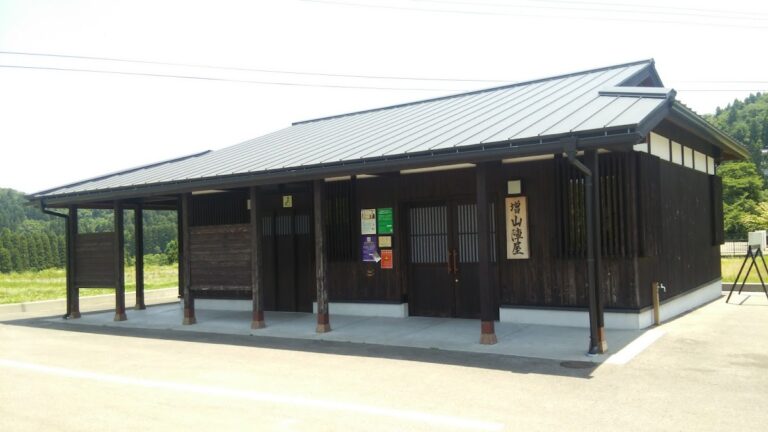
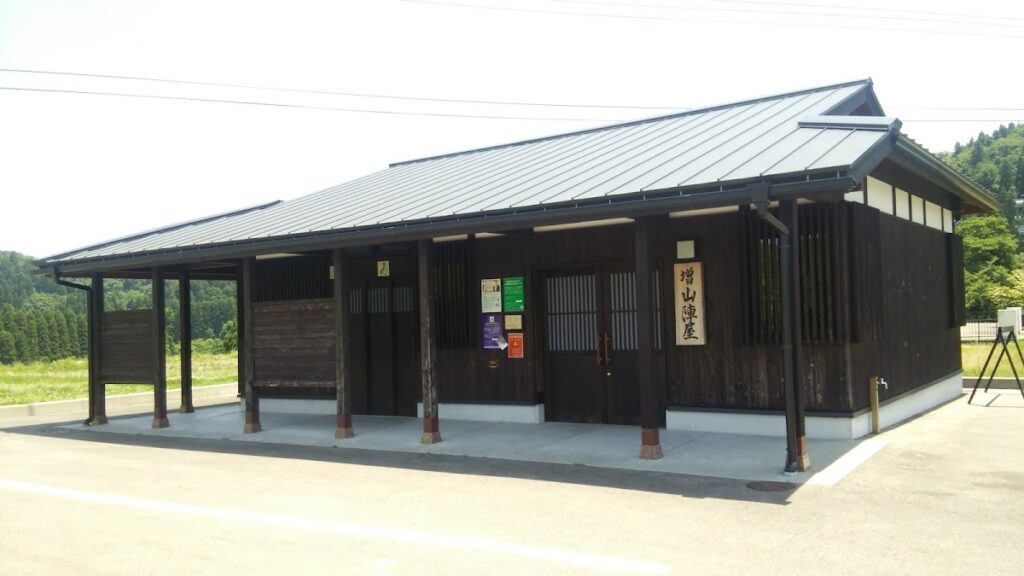
The stamp for the Continued Top 100 Japanese Castles is located at Masuyama Jinya (Buried Cultural Properties Center). Don’t forget to get your stamp when you visit the castle ruins.
Nearby Tourist Attractions
Mercure Toyama Tonami Resort & Spa
Located close to the Masuyama Castle Ruins, “Mercure Toyama Tonami Resort & Spa” is an ideal base for sightseeing. It features a spa facility with hot springs and a sauna, perfect for relaxing after exploring the castle ruins.
Enjoy the excellent facilities unique to a resort hotel and savor cuisine made with local ingredients, and experience the charm of Tonami in conjunction with a visit to Masuyama Castle.
Scattered Villages of the Tonami Plain
Tonami City is known for its scattered village landscape. Looking down from the Masuyama Castle ruins, the Tonami Plain unfolds a unique landscape of houses scattered amidst groves of trees. The scenery is particularly beautiful during the spring rice planting season and the autumn harvest season.
Tonami Tulip Park
Tonami City is also famous as a tulip producing area. At the “Tonami Tulip Fair,” held every spring, 3 million tulips bloom. Enjoying the seasonal flowers in conjunction with a visit to Masuyama Castle is highly recommended.
Cultural Value of Masuyama Castle
National Historic Site
The Masuyama Castle ruins are designated as a national historic site, recognizing their historical and academic value. The castle is highly valued for being built during the Nanboku-cho period and for the excellent state of preservation of its remains.
Excavation and Research
Continuous archaeological excavations are being conducted at the Masuyama Castle site, and new discoveries are constantly being made. These investigations are gradually revealing the castle’s structure, its evolution, and the lifestyle of the time.
The investigation results are publicly available at the Tonami City Buried Cultural Properties Center and other locations, allowing visitors to see the latest research findings.
Preservation and Utilization
Tonami City is actively working to preserve and utilize the Masuyama Castle site. In addition to protecting the remains, efforts are underway to install information boards for visitors and develop walking paths.
As a valuable cultural asset of the region and a tourist resource, the Masuyama Castle site is carefully protected and enjoyed by many people.
Points to Note When Visiting Masuyama Castle
Clothing and Equipment
Since Masuyama Castle is a mountain castle, comfortable clothing and shoes are essential for visiting. Please pay particular attention to the following points:
- Athletic shoes or trekking shoes
- Comfortable clothing
-Hat (for sun protection)
-Drinks (especially in summer)
- Insect repellent (depending on the season)
-Towel
Tips for Visiting
Points for efficiently visiting the vast Masuyama Castle Ruins:
- Gather information in advance: Check the latest information on the Tonami City official website and the tourism association website.
- Allow plenty of time: Even just visiting the main points of interest will take about two hours.
- Use a guide: If possible, listening to explanations from volunteer guides will help you understand more deeply.
- Obtain a map: Get an overview of the castle ruins from the on-site information boards and handouts.
- Photography: Take photos of the remains and views to keep as a record.
Best Season
Masuyama Castle Ruins has charm in every season, but the best time to visit is:
- Spring (April-May): The fresh greenery is beautiful, and the weather is mild.
- Autumn (October-November): The autumn foliage is magnificent, and the temperature is perfect for a stroll.
- Other than Winter: Snow can make footing difficult, so spring to autumn is best.
What Masuyama Castle Teaches Us
By visiting the Masuyama Castle ruins, we can learn many things.
Sengoku Period Strategy
You can appreciate how the warlords of the Sengoku period used their ingenuity to build castles, from their skillful use of terrain to their complex defensive systems and water source securing. Walking through the site will help you understand why Uesugi Kenshin described it as a “difficult and treacherous place.”
Local History
Masuyama Castle was not merely a military facility, but the center of local politics, economy, and culture. The existence of the castle town ruins tells the story of a time when many people lived here and led vibrant lives.
The Importance of Cultural Property Preservation
The Masuyama Castle ruins, preserved in excellent condition, teach us the importance of cultural property preservation. You will be able to truly appreciate the importance of passing on the legacy of our predecessors to the future.
Summary
Masuyama Castle is a nationally designated historical site that Tonami City, Toyama Prefecture, is proud of, and is a valuable cultural asset selected as one of the Continued Top 100 Japanese Castles. From the Nanboku-cho period to the Sengoku period, it was the stage for historical events involving famous warlords such as the Jimbo, Uesugi, and Maeda clans. Its formidable defenses, particularly described by Uesugi Kenshin as a “difficult and treacherous place,” continue to fascinate visitors today.
The vast ruins retain well-preserved remains such as earthworks and baileys, allowing visitors to learn about the castle-building techniques of the Sengoku period. A stroll through the tranquil environment surrounded by Masuyama cedar trees, while reflecting on historical romance, will be an unforgettable experience.
The Matabei Shimizu spring, the magnificent views, and events such as the Masuyama Castle Sengoku Festival are also attractive. The fact that it’s free to visit is another appealing point.
When you visit Toyama Prefecture, be sure to stop by the Masuyama Castle ruins. You can experience a page from Japanese history at the battlefield where famous generals fought.