Complete Guide to the History and Highlights of Kurume Castle | A 250-Year Journey from Sasahara Castle to the Arima Clan’s Residence
Located in the heart of Kurume City, Fukuoka Prefecture, Kurume Castle is a flatland castle built on a small hill along the Chikugo River. During the Edo period, it functioned as the center of the Kurume Domain for approximately 250 years and flourished as the residence of the Arima clan. Also known as “Sasahara Castle,” this castle still retains its magnificent stone walls and inner moat, making it a valuable historical site that allows us to imagine its former grandeur.
The Origins and History of Kurume Castle
From the Muromachi Period to the Sengoku Period
The history of Kurume Castle dates back to the Eisho era (1504-1521) of the late Muromachi period. It is believed to have begun when a local lord built a fort-like structure called “Shinohara Castle.” At that time, it was merely a small defensive base utilizing the muddy wetlands of the Chikugo River.
Throughout the Sengoku period, this area grew increasingly important as a strategic point in the Chikugo region, but its development as a full-fledged castle was still some time away.
Toyotomi Hideyoshi’s Conquest of Kyushu and the Transformation into a Modern Castle
The catalyst for the full-scale development of Kurume Castle as a residence for a modern daimyo was Toyotomi Hideyoshi’s conquest of Kyushu in 1587. Following Hideyoshi’s “Kyushu Territory Division,” Kobayakawa Hidekane was granted 130,000 koku in Chikugo Kurume.
Mori Hidekane (Kobayakawa Hidekane) extensively renovated Shinohara Castle, which had previously been merely a fort, into a modern castle. Taking advantage of its strategic location along the Chikugo River, it was developed as a flatland castle consisting of a main keep, second bailey, and third bailey. It was during this period that the basic structure of Kurume Castle was established.
The Era of Tanaka Yoshimasa
After the Battle of Sekigahara in 1600, Tanaka Yoshimasa was granted a domain of 325,000 koku in Chikugo Province. While Tanaka Yoshimasa made Yanagawa Castle his base, Kurume Castle was also maintained as an important strategic point for controlling Chikugo.
Although the Tanaka clan was dispossessed after two generations, it is believed that the castle’s maintenance continued during this period.
The Arrival of the Arima Clan and the Golden Age of Kurume Castle
In 1621, Arima Toyouji, lord of Fukuchiyama Castle in Tanba Province, was granted a domain of 210,000 koku in the northern half of Chikugo Province. It is said that when Toyouji entered Kurume Castle, it was in a state of near-ruin.
Arima Toyouji, befitting a key castle in Chikugo, extensively expanded and rebuilt Kurume Castle. Kurume Castle boasts a unique structure, with only the main keep surrounded by stone walls. It utilized the muddy wetlands of the Chikugo River as an outer moat, and was developed as a comprehensive castle complex encompassing the surrounding castle town.
Although a main keep was never constructed, the three-story Tatsumi Turret served as a substitute. This is thought to be a result of financial considerations and an emphasis on practical defense.
The Center of the Kurume Domain Throughout the Edo Period
The Arima clan ruled the Kurume Domain throughout the Edo period, a period spanning approximately 250 years. Successive lords used Kurume Castle as their residence, developing it into the political, economic, and cultural center of the Chikugo region.
During the turbulent times of the late Edo period, Kurume Domain was caught up in the upheaval, but Kurume Castle continued to play its role as the domain’s center until the Meiji Restoration.
Kurume Castle After the Meiji Restoration
After the Meiji Restoration, many castles were abandoned and their structures demolished. Kurume Castle was no exception; many of its buildings were lost, but remnants such as stone walls and moats remained.
On March 19, 1983, the Kurume Castle ruins were designated a Fukuoka Prefecture Historic Site, officially recognizing its historical value. Currently, the Shinoyama Shrine stands on the site of the main keep, making it a beloved historical site for the local community.
Structure and Characteristics of Kurume Castle
Location as a Hilltop Castle
Kurume Castle is a hilltop castle built on a small hill (approximately 30 meters above sea level) along the Chikugo River. Taking advantage of its topography overlooking the Chikugo Plain, it possessed excellent defensive and controllable features.
The muddy wetlands of the Chikugo River were used as a natural outer moat, making it difficult for attackers to approach. This topographical feature significantly enhanced Kurume Castle’s defensive capabilities.
Layout of the Main Bailey, Second Bailey, and Third Bailey
Kurume Castle had the typical structure of a modern castle, consisting of the main bailey, second bailey, and third bailey. A distinctive feature is that only the main bailey was built entirely of stone walls. This design was adopted during a large-scale renovation by Arima Toyouji, a strategy to prioritize the defense of the most important main bailey within limited resources.
The second and third baileys were constructed primarily of earthen ramparts, securing a vast area. Currently, the sites of the second and third baileys are occupied by one of Bridgestone’s largest factories in Japan, testifying to its former grandeur.
Highlights of the Stone Walls
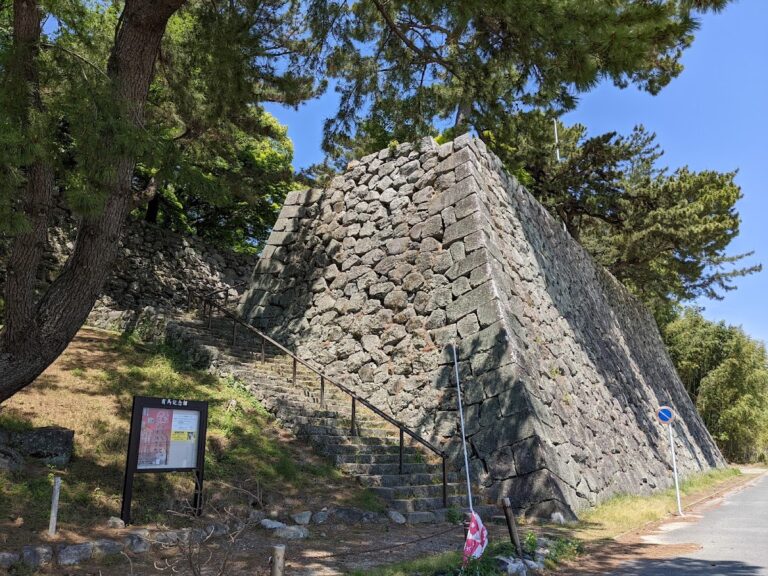
The most impressive remains at the Kurume Castle site are the magnificent stone walls surrounding the main bailey. Some sections exceed 10 meters in height, making them a valuable cultural asset that conveys the stone-building techniques of the early Edo period.
The stone walls utilize techniques ranging from rough-hewn stonework (nozurazumi) to fitted stonework (uchikomihagi), allowing observation of the changes in construction methods over time. The stone walls, especially those on the front side, are remarkably well-preserved, showcasing the high level of stonemasonry skill of the time.
Inner Moat and Water Moat System
The inner moat of Kurume Castle remains in excellent condition, allowing us to imagine the scale of the castle in its heyday. The water moat system, which drew water from the Chikugo River, served not only a defensive function but also as a source of water for daily life within the castle.
In spring, approximately 49 cherry trees bloom around the moat, adding a vibrant touch to the tranquil appearance of the stone walls and moat. It has become a popular spot, attracting many citizens and tourists during cherry blossom season.
The Tatsumi Turret as a Substitute for the Keep
Although Kurume Castle never had a keep, the three-story Tatsumi Turret served as a substitute. Located southeast of the main enclosure (the Tatsumi direction), the Tatsumi Turret boasted an imposing presence as a symbol of the castle.
Although the turret building no longer exists, its foundation stones and the remains of the turret base allow us to imagine its former appearance.
Current Highlights of Kurume Castle Ruins
Shinoyama Shrine
The Shinoyama Shrine now stands on the site where the main palace once stood. This shrine enshrines Arima Toyouji, the founder of the Kurume Domain, and is a place of worship for the local people.
From the shrine grounds, you can enjoy a panoramic view of Kurume city, experiencing the scenery that the former lord of the castle saw. The view towards the Chikugo River is particularly magnificent, a point that makes you appreciate the castle’s excellent location.
Every autumn, the “Shinoyama Castle Ruins Cricket Festival” is held, attracting many visitors. It’s a popular event where you can enjoy the atmosphere of the historic shrine while listening to the sound of crickets.
Arima Memorial Hall
Within the castle grounds is the Arima Memorial Hall, which displays the weapons, armor, calligraphy, paintings, and crafts of successive lords of the domain. This is a valuable facility where you can gain a deep understanding of the history and culture of the Kurume Domain, and it’s a must-visit spot when you’re visiting Kurume Castle.
Inside the museum, you can learn about the 250-year history of the Arima clan in chronological order and understand the role the Kurume Domain played in the development of the Chikugo region.
Exploring the Main Keep Site
The main keep site has been developed into a park, and you can freely explore it. Walking along the stone walls, you can experience the scale of the castle in its heyday.
From the main keep site, you can enjoy a panoramic view of the center of Kurume City, overlooking the townscape that developed as a castle town. The view at sunset is particularly beautiful and is a popular spot for photography.
The Landscape of Stone Walls and Moat
The combination of the inner moat and stone walls on the front side is the most photogenic spot at Kurume Castle. The reflection of the stone walls on the water’s surface shows different expressions in each season, offering new discoveries with every visit.
Especially during cherry blossom season (late March to early April), you can enjoy the beautiful, quintessentially Japanese scenery created by the stone walls, moat, and cherry blossoms.
Access and Tourist Information
Location
Kurume Castle Ruins are located in Shinoyama-cho, Kurume City, Fukuoka Prefecture. It’s in the city center and easily accessible.
Address: 444 Shinoyama-cho, Kurume City, Fukuoka Prefecture
Access by Public Transportation
It’s about a 15-minute walk from JR Kurume Station. The most common route is walking along Bridgestone Street from the station, where you can see Kurume’s shopping streets and historical buildings along the way.
It’s also within walking distance from Nishitetsu Kurume Station, taking about 20 minutes. If using the bus, it’s convenient to get off at Nishitetsu Bus’s “Mutsumon” or “Shinoyama Shrine” bus stops.
Access by Car and Parking
The site is approximately 15 minutes from the Kurume Interchange on the Kyushu Expressway, or approximately 10 minutes from the Kurume Interchange.
Parking is available at the Shinoyama Shrine’s visitor parking lot (free of charge). However, spaces are limited, and it may be crowded on holidays and during cherry blossom season. In such cases, we recommend using nearby paid parking lots.
Visiting Hours and Fees
Kurume Castle Ruins (main keep, stone walls, and moat) are always open and free to visit. There is no entrance fee.
Shinoyama Shrine can also be visited freely. We recommend checking the opening hours and entrance fees for the Arima Memorial Museum in advance.
Recommended Visiting Time
Allow approximately 30 minutes to 1 hour to explore the Kurume Castle Ruins. If you plan to thoroughly visit the Arima Memorial Museum, please add another 30 minutes to 1 hour.
For photography, we recommend visiting in the morning when the light beautifully illuminates the stone walls, or in the evening when the atmosphere is more atmospheric.
Nearby Tourist Attractions
Highlights of Kurume City
Around the Kurume Castle ruins, there are numerous tourist spots where you can experience Kurume’s history and culture.
Ishibashi Cultural Center: A museum and garden within walking distance of the Kurume Castle ruins. Donated by Shojiro Ishibashi, the founder of Bridgestone, it features a beautiful Japanese garden and a collection of Western art.
Suitengu Shrine: The head shrine of all Suitengu shrines nationwide. Located along the Chikugo River, it is a famous shrine for prayers for safe childbirth.
Kurume City Museum of Art: A museum primarily exhibiting works by Kurume-born painters Shigeru Aoki and Shigejiro Sakamoto.
Kurume Cuisine
Kurume is also known as the birthplace of tonkotsu ramen. After visiting the castle ruins, we recommend trying authentic Kurume ramen. Many long-established ramen restaurants are scattered throughout the city.
Furthermore, you can enjoy local cuisine from the Chikugo region and dishes made with local ingredients. Kurume City also boasts a thriving agricultural industry, offering fresh vegetables and fruits.
Cultural Value of Kurume Castle
Selection as one of the Continued Top 100 Japanese Castles
Kurume Castle ruins have been selected as one of the “Continued Top 100 Japanese Castles” by the Japan Castle Association. This is proof that it has been recognized as having high historical and cultural value among important castles nationwide.
Among castle enthusiasts and history buffs, the stamp rally for the Continued Top 100 Japanese Castles is popular, and Kurume Castle ruins have become a popular spot for many castle-visiting enthusiasts.
Fukuoka Prefecture Designated Historic Site
Designated as a Fukuoka Prefecture Historic Site on March 19, 1983, officially recognizing its cultural value. This designation has led to the preservation and maintenance of the remains, protecting it as a valuable historical heritage to be passed down to future generations.
Preservation of the Stone Walls
The stone walls of Kurume Castle are a valuable historical site that conveys the castle construction techniques of the early Edo period. The stone walls of the main keep, in particular, are in excellent condition and serve as important resources for studying the stonework techniques of that time.
In recent years, preservation and repair projects have been carried out on the stone walls, ensuring their value as a cultural asset while also improving safety for visitors.
Points to Note When Visiting Kurume Castle
Seasonal Ways to Enjoy
Spring (Late March to Early April): Approximately 49 cherry trees bloom, creating a beautiful collaboration of stone walls, moats, and cherry blossoms. It’s a popular cherry blossom viewing spot in Kurume City.
Summer: The lush green main keep area offers plenty of shade, making it relatively cool for strolling. The breeze from the Chikugo River is pleasant during this season.
Autumn: During the autumn foliage season, the trees around the stone walls change color, creating a charming landscape. The “Sasayama Castle Ruins Cricket Festival” will also be held.
Winter: With fewer tourists, it’s a quiet season to stroll and experience history. The air is clear, allowing you to appreciate the texture of the stone walls more vividly.
Recommended Photo Spots
- Front View of the Inner Moat and Stone Walls: The reflection of the stone walls on the water is beautiful, a representative composition of Kurume Castle.
- View from the Main Keep: A spectacular viewpoint offering panoramic views of Kurume city and the Chikugo River.
- Sasayama Shrine Grounds: A photo spot where historical atmosphere and nature harmonize.
- Texture of the Stone Walls: Getting close to photograph the construction and texture of the stones is also recommended.
Precautions During Visits
- Some areas on top of the stone walls have unstable footing, so comfortable shoes are recommended.
- On rainy days, the stone walls and stairs can become slippery, so caution is advised.
- In summer, some areas have little shade, so be sure to bring a hat, parasol, and water.
- To protect cultural properties, please be careful not to climb on the stone walls or damage the remains.
To Learn More About the History of Kurume Castle
Related Books and Materials
Those who wish to learn more about the history of Kurume Castle and the Arima clan can view related materials at the Kurume City Library and the Arima Memorial Museum. These libraries house ancient documents detailing the history of the Kurume Domain, as well as specialized books on castle research.
Guided Tours and Events
Kurume City regularly holds guided tours of the castle ruins. Visiting with expert commentary will allow you to gain a deeper understanding of the history and value of Kurume Castle.
Also, various events are held throughout the year at Shinoyama Shrine and surrounding facilities, so it is recommended to check Kurume City’s tourist information before visiting.
Summary
Kurume Castle Ruins are a historic castle that began as a fort in the Muromachi period, continued through the Sengoku period, and served as the center of the Kurume Domain for approximately 250 years as the residence of the Arima clan during the Edo period. Although a keep was never constructed, the magnificent stone walls and moats still convey the appearance of the past, making it a valuable cultural asset that tells the history of the Chikugo region.
Also known as “Sasahara Castle,” this castle, a flatland castle that took advantage of its location along the Chikugo River, possessed excellent functions in both defense and control. Currently, the Sasayama Shrine stands on the site of the main keep, becoming a popular place of relaxation for local residents.
Its easy accessibility, just a 15-minute walk from JR Kurume Station, is also a major attraction, making it a must-visit spot when sightseeing in Kurume. Enjoy the beauty of the four seasons—cherry blossoms in spring, autumn leaves in fall—while feeling the weight of history that has continued since the Edo period. When you visit Fukuoka Prefecture, be sure to stop by Kurume Castle Ruins.
Kurume Castle Ruins, also selected as one of Japan’s Top 100 Castles (Continued), is a valuable historical site recommended not only to castle enthusiasts but to everyone interested in history. Be sure to experience the beauty of the landscape created by the stone walls and moat, and the depth of the 250-year history of the Kurume Domain, firsthand.