Complete Guide to Kotakari Castle (Gifu Prefecture) | Highlights, History, and Access Information for this National Historic Site Hida Mountain Castle
Kotakari Castle (Kotakari-jo) is a medieval mountain castle located in Inagoshi, Kawai-cho, Hida City, Gifu Prefecture. Also known as “Kotakari Castle,” “Kurouchi Castle,” and “Kurokawa Castle,” it is known as the residence of the Mukai clan (Kotakari clan), a branch of the influential Anegakoji clan of Hida Province. In 2008, it was designated a National Historic Site as one of the “Anegakoji Clan Castle Ruins,” and its historical value as a representative medieval mountain castle of the Hida region is recognized.
This article provides a comprehensive explanation of Kotakari Castle, including its detailed history, notable remains, access methods, and surrounding related castles, for castle enthusiasts and history buffs.
Basic Information on Kotakari Castle
Castle Overview
- Location: Ushigaya, Inagoshi, Kawai-cho, Hida City, Gifu Prefecture
- Other Names: Kotakari Castle, Kurouchi Castle, Kurokawa Castle
- Castle Structure: Mountain Castle
- Elevation: Approximately 787 meters
- Relative Height: Approximately 200 meters
- Construction Period: Late 15th to early 16th century (estimated)
- Builder: Mukai clan (Kotakari clan)
- Main Lords: Mukai clan, Ushimaru clan
- Year of Abandonment: Around 1585 (Tensho 13)
- Cultural Property Designation: National Historic Site “Anekoji Clan Castle Ruins” (designated in 2008)
Kotakari Castle was built on a strategic location south of the Yunomine Pass, which leads from Shirakawa-go to Takayama. This location is a strategically important position for monitoring and controlling transportation routes within Hida Province.
History of Kotakari Castle
Construction and the Mukai Clan (Kotakari Clan)
Kotakari Castle is believed to have been built by the Mukai clan, a branch of the Anegakoji clan, a powerful local lord family in Hida Province. The Mukai clan, also known as the Kotakari clan, played a crucial role in the politics and military affairs of Hida Province as important retainers of the main Anegakoji family.
The Anegakoji clan were local lords who ruled Hida Province from the Muromachi period to the Sengoku period, and their influence extended throughout Hida. As a branch of this clan, the Mukai clan ruled Kotakari, a strategic point in northern Hida, and used this mountain castle as their residence.
The Era of the Ushimaru Clan
Kotakari Castle is also known as the residence of a warrior named Ushimaru Shigechika. The Ushimaru clan were important retainers of the Kotakari clan and are believed to have been responsible for the actual operation and defense of the castle. Ushimaru Shigechika was one of the powerful warlords in Hida during the Sengoku period, and he controlled the surrounding area from Kotakari Castle.
While historical records are limited regarding the detailed lineage and activities of the Ushimaru clan, the scale of the castle and the richness of its remains suggest that they wielded considerable power.
Hida and Kotakari Castle in the Sengoku Period
During the Sengoku period, Hida Province was in a complex political situation, with local lords, primarily the Anegakoji clan, vying for power. Strong pressure from neighboring daimyo such as the Uesugi clan of Etchu and the Saito and Oda clans of Mino forced the Hida lords to engage in political and military maneuvering for survival.
Kotakari Castle functioned as an important military base in Hida during this Sengoku period, preparing for invasions from the north. Its strategic location, controlling the transportation route connecting Shirakawa-go and Takayama, made it extremely valuable.
The Road to Abandonment
After the Honnō-ji Incident in 1582, Hida Province was pacified by Kanamori Nagachika, a senior retainer of Oda Nobunaga. The Kanamori clan unified Hida Province and established their rule over Hida with Takayama Castle as their base.
During this process, the power of the Anegakoji clan and their relative, the Mukai clan (Kotakari clan), declined, and it is believed that Kotakari Castle was abandoned around 1585. The unification of Hida by the Kanamori clan marked the end of the era of medieval local lords, and Kotakari Castle also ended its historical role.
Layout and Structure of Kotakari Castle
Castle Location and Terrain Utilization
Kotakari Castle was built on the summit of a mountain at an altitude of 787 meters, with a relative height of approximately 200 meters from the base. This defensive mountain castle made maximum use of the steep terrain, making it an extremely difficult fortress to attack.
The castle unfolds on a long, narrow ridge running north-south, with multiple enclosures arranged around the main enclosure. Both sides of the ridge are steep slopes, and the natural terrain functioned as a natural defensive wall.
Major Remains
Enclosures (Kuruwa) Groups
Multiple enclosures have been identified at Kotakari Castle. The main enclosure is located at the highest point of the mountaintop, with lower enclosures arranged in stages from there. Each enclosure shows careful leveling, suggesting the presence of buildings, watchtowers, and other facilities.
The main enclosure is relatively compact in size, which is thought to be a constraint due to the mountain castle’s location. Nevertheless, it still provides sufficient space to accommodate the lord’s residence and important defensive structures.
Earthworks
Earthworks remain in good condition within the castle grounds. These earthworks were built around the enclosures, enhancing defensive capabilities and clearly defining the boundaries of the enclosures. Some of the earthworks, approximately 1-2 meters high, still exist, making them valuable relics for understanding the castle construction techniques of the time.
The placement of the earthworks was strategically calculated, indicating that they functioned as defensive lines anticipating enemy invasion routes.
Moats and Dry Moats
Multiple moats cutting across the ridges were constructed. Moats are important structures that prevent enemy intrusion and defensively separate the various sections within the castle. Some of the moats at Kotakari Castle reach several meters in depth, confirming their substantial construction as defensive structures.
Furthermore, dry moats were also placed around the enclosures, employing a multi-layered defensive structure. These moats remain well-preserved today, providing important clues for understanding the castle’s defensive system.
Ridge-Shaped Vertical Moats
One of the greatest highlights of Kotakari Castle is the ridge-shaped vertical moats carved into the slope. These moats are multiple vertical trenches dug parallel to the slope, serving as a defensive structure to prevent enemy incursions from the slope and to make lateral movement difficult for attackers.
The ridge-shaped vertical moats at Kotakari Castle are relatively well-preserved, making them a valuable example of the advanced castle-building techniques of the Sengoku period. This technique became widely used in the latter half of the 16th century, providing clues to estimating the period of renovations at Kotakari Castle.
The ridge-shaped vertical moats are mainly located on the northern slope of the castle, suggesting particular vigilance against incursions from the Shirakawa-go area.
Characteristics of the Castle Layout
The layout of Kotakari Castle exhibits typical characteristics of a medieval mountain castle. The structure of the castle, with the main enclosure located on the ridge and the subsequent tiered enclosures, is a common characteristic of mountain castles in the Hida region.
At the same time, advanced defensive facilities such as ridged vertical moats were also incorporated, reflecting the development of castle construction technology in the late Sengoku period. This indicates that Kotakari Castle functioned not merely as a residence for a local lord, but as a full-fledged military base.
Highlights of Kotakari Castle (Castle Notes)
1. Value of National Historic Site Designation
Kotakari Castle was designated a National Historic Site in 2008 as one of the “Anegakoji Clan Castle Sites.” This indicates that Kotakari Castle is an extremely important site for understanding the medieval history of the Hida region.
The Anegakoji Clan Castle Sites include not only Kotakari Castle, but also Mukaijima Castle and Noguchi Castle, and these castle groups are valuable historical sites for understanding the sphere of influence and control structure of the Anegakoji clan.
2. Well-Preserved Remains
The greatest appeal of Kotakari Castle lies in the excellent state of preservation of its remains. Major defensive structures such as earthworks, trenches, dry moats, and ridged trenches remain almost completely intact, allowing visitors to imagine the castle’s appearance at the time.
The ridged trenches, in particular, are clearly visible on the slope and are a must-see for castle enthusiasts. By actually walking and observing these remains, one can experience the castle-building techniques and defensive philosophies of the Sengoku period.
3. A Typical Example of a Hida Mountain Castle
Kotakari Castle presents a typical example of a Hida mountain castle. It possesses characteristics common to Hida mountain castles, such as its location utilizing steep terrain, the arrangement of baileys on the ridge, and the establishment of defensive lines using trenches.
While numerous mountain castles exist in the Hida region, Kotakari Castle stands out for its well-preserved remains and strong historical evidence, making it a benchmark for Hida mountain castle research.
4. Rich Historical Background
Kotakari Castle is closely intertwined with the history of powerful local lords of Hida, such as the Anekōji, Mukai, and Ushimaru clans. The rise and fall of these families is intertwined with the history of Hida Province during the Sengoku period, and visiting Kotakari Castle allows for a deeper understanding of the region’s history.
Access and Visiting Guide to Kotakari Castle
Access Methods
Using Public Transportation
- Nearest Station: JR Takayama Main Line “Hida-Furukawa Station”
- Distance from Station: Approximately 15 kilometers
- Access: Taking a taxi from Hida-Furukawa Station is the most practical option. Renting a car is also recommended.
Access by public transport alone is difficult, so planning your visit by car is necessary.
If using a car
- Tokai-Hokuriku Expressway: Approximately 30 minutes from “Hida-Kiyomi IC” via National Route 472 and prefectural roads.
- Parking: There is no designated parking area around the castle ruins. You will need to use the roadside space near the entrance to the castle, but be careful not to obstruct other traffic.
Ascent Route and Estimated Time
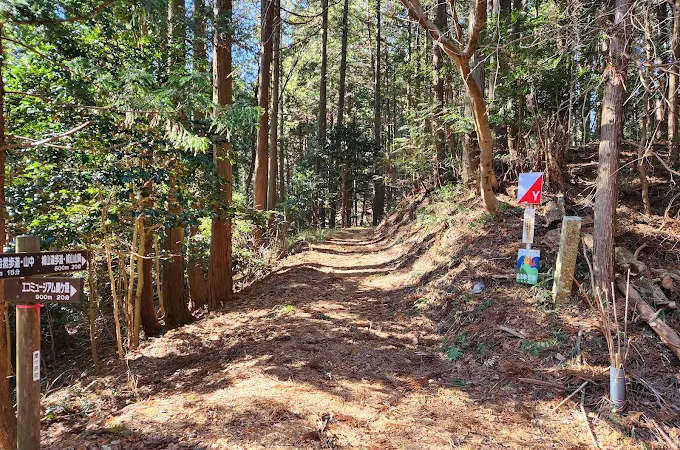
To reach Kotakari Castle, you will need to hike up a mountain path.
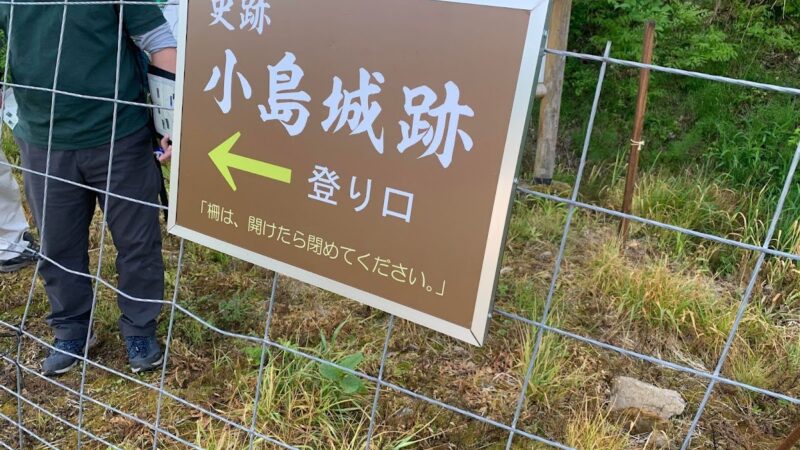
- Entrance: Inagoshi area, Kawai-cho, Hida City, Gifu Prefecture
- Climbing Time: Approximately 40-60 minutes from the entrance to the main enclosure (depending on individual fitness)
- Difficulty: Intermediate to advanced (steep slopes, hiking gear recommended)
The ascent route is not a well-maintained tourist route, but rather a mountain path. We strongly recommend preparing appropriate equipment (hiking boots, drinking water, map or GPS) and visiting on a day with good weather.
Points to Note When Visiting
- Season: Spring to autumn (April to November) is the best time to visit. Snow makes climbing difficult in winter.
- Clothing: Long sleeves, long pants, and hiking boots are essential. Insect repellent is also recommended.
- Safety: Avoid climbing alone; visiting in a group is safer. Check cell phone signal strength beforehand.
- Manners: Respect the historical site and be careful not to damage the remains. Always take your trash with you.
Points for Visiting
When visiting the castle ruins, keeping the following points in mind will make your visit more fulfilling:
- Prior Study: Learning about the castle’s history and structure beforehand will deepen your understanding at the site.
- Observing the Topography: Observe how the terrain was used for defense, such as the shape of the ridges and the angles of the slopes.
- Confirming the Remains: Confirm each major remains, such as earthworks, moats, and rows of vertical trenches.
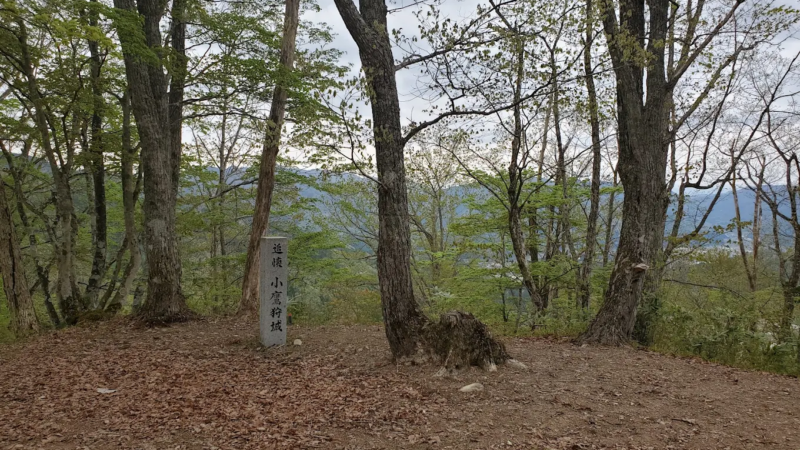
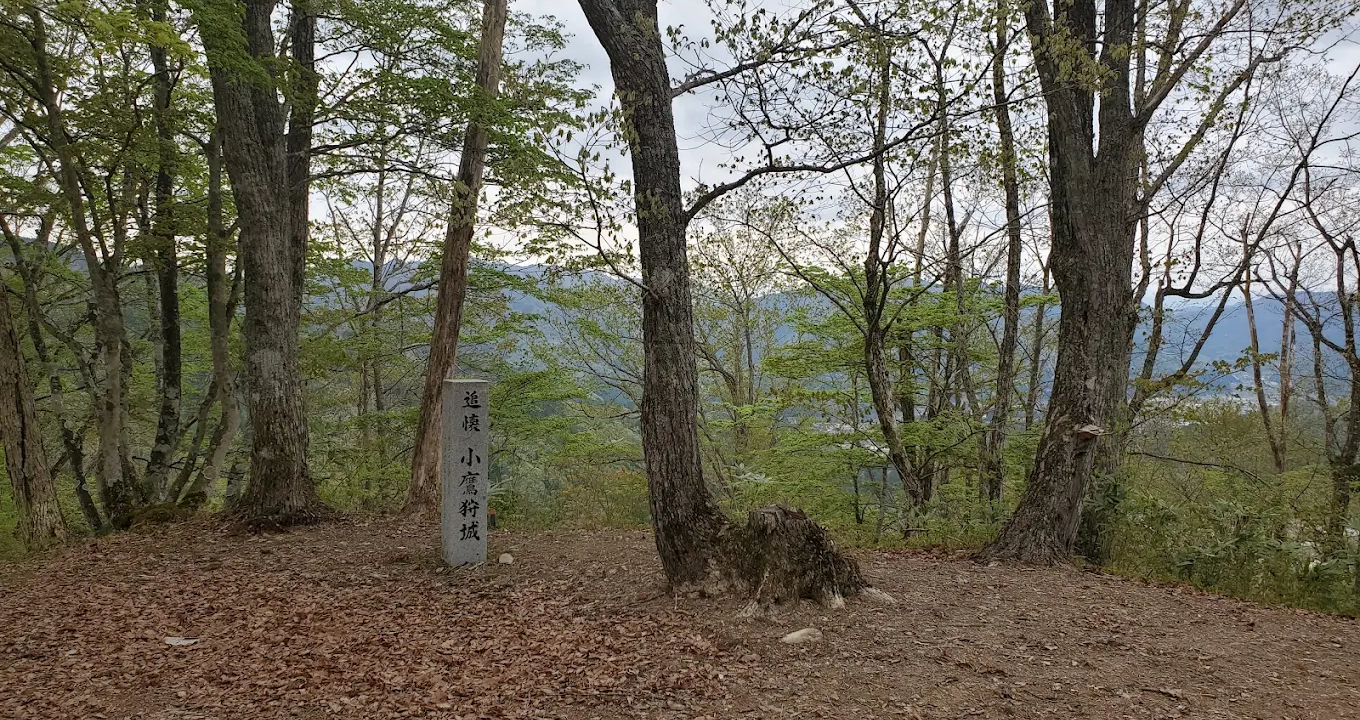
- View: The view from the main enclosure is important for understanding the castle’s strategic location. Check the surrounding terrain and transportation routes.
Related Castles in the Surrounding Area
When visiting Kotakari Castle, visiting the surrounding castles related to the Anegakoji clan will give you a deeper understanding of the castle network of the Hida clan.
Mukojima Castle
Mukojima Castle, along with Kotakari Castle, is designated as a National Historic Site as one of the Anegakoji clan castle sites. It is located relatively close to Kotakari Castle and is an important castle that constitutes the Anegakoji clan’s branch castle network.
Mukojima Castle is also a mountain castle, and remains such as earthworks and moats remain. Visiting Kotakari Castle and Takayama Castle together allows for a comparative study of the characteristics of the castle complex of the Anegakoji clan.
Noguchi Castle
Noguchi Castle is also one of the Anegakoji clan’s castle ruins. Located within Hida City, it is an important castle that demonstrates the Anegakoji clan’s sphere of influence. Noguchi Castle is also a mountain castle, possessing a typical mountain castle structure of the Hida region.
Takayama Castle (Matsukura Castle)
Takayama Castle (Matsukura Castle), built by Kanamori Nagachika, became the center of Hida’s rule after Kotakari Castle was abandoned. Currently located near the city center of Takayama, remnants such as stone walls remain.
Comparing Kotakari Castle and Takayama Castle is extremely valuable for understanding the transition from medieval local lord castles to early modern daimyo castles.
Kotakari Castle and the History of Hida
The World of the Hida Local People
Kotakari Castle is an important historical site for understanding the world of the Hida local people. From the medieval period to the Sengoku period, Hida Province was divided among various local lords, primarily the Anekōji clan.
These lords each controlled their respective regions from mountain castles. Kotakari Castle is a prime example, offering insights into the types of castles built by these local lords and how they governed their territories.
Control of Transportation Routes
Kotakari Castle’s location lies in its strategic position overlooking the transportation route connecting Shirakawa-gō and Takayama. In the medieval and Sengoku periods, controlling transportation routes was crucial both economically and militarily.
The Kō (Kotakari) and Ushimaru clans, based at Kotakari Castle, likely managed the flow of goods and people through this route, generating income through tolls and other means. Militarily, it also functioned as a frontline for monitoring and preventing enemy invasions.
Unification by the Kanamori Clan
The unification of Hida by the Kanamori clan after 1582 marked the end of the era of medieval local lords. Kanamori Nagachika was a samurai who served Oda Nobunaga and Toyotomi Hideyoshi, and he brought a modern system of governance to Hida Province.
The abandonment of Kotakari Castle symbolizes this historical turning point. The transition from medieval mountain castles to early modern flatland castles and hill castles was a major change in the history of Japanese castles, and Kotakari Castle preserves the appearance of this transitional period.
Research and Preservation of Kotakari Castle
Excavation and Research
Kotakari Castle has been investigated multiple times. The investigation leading up to its designation as a National Historic Site in 2008 involved detailed surveying of the castle’s layout and confirmation of remains, revealing the castle’s structure.
These investigations confirmed that Kotakari Castle was not merely a small mountain castle, but a full-fledged military base equipped with advanced defensive facilities such as a series of ridged vertical moats.
Preservation Activities
With its designation as a National Historic Site, Kotakari Castle is now legally protected. The Hida City Board of Education is leading efforts to preserve and utilize the historical remains.
Basic preservation and management, such as mowing the grass at the castle site and installing information boards, are being carried out, but full-scale development remains a challenge for the future.
Future Prospects
Kotakari Castle is an indispensable historical site for understanding the medieval history of the Hida region. Further research is expected to reveal the detailed history and structure of the castle.
Furthermore, utilizing it as a tourist resource is an important issue. Efforts are needed to improve the access routes, enhance information boards, and conduct guided tours so that more people can visit Kotakari Castle and understand its value.
The Significance of Visiting Kotakari Castle
Visiting Kotakari Castle is more than simply seeing old castle ruins. It is a valuable opportunity to experience the lives and battles of the people of Hida Province during the Sengoku period, the historical transition from the medieval to the early modern period, and the diversity of Japanese castle culture.
Climbing the steep mountain path and reaching the main enclosure, the landscape of Hida’s mountains and valleys stretching out below is the same view seen by the warriors who once defended this castle. At that moment, we can transcend time and space, and imagine ourselves in Hida during the Sengoku period.
For castle enthusiasts, Japanese history buffs, and mountain climbing enthusiasts alike, Kotakari Castle is a fascinating historical site well worth visiting. When you visit Hida, be sure to try climbing Kotakari Castle.
Summary
Kotakari Castle is a medieval mountain castle located in Hida City, Gifu Prefecture, and is designated a National Historic Site. As the residence of the Mukai clan (Kotakari clan) and the Ushimaru clan, branches of the Anegakoji clan, it played an important role in Hida during the Sengoku period.
Built on a mountaintop 787 meters above sea level, the castle boasts well-preserved remains such as earthworks, trenches, dry moats, and rows of vertical trenches, making it a valuable historical site for understanding the castle-building techniques of the Sengoku period.
While access is somewhat difficult, with proper preparation, a visit will allow you to fully experience the charm of Hida’s mountain castles. Visiting related castles in the surrounding area, such as Mukaijima Castle and Noguchi Castle, will provide a deeper understanding of the castle network of the Anekōji clan and the world of the people of Hida Province.
Kotakari Castle is a valuable cultural heritage site that conveys the diversity of Japanese castle culture and the richness of regional history. To ensure its value is passed on to future generations, we hope many people will visit and experience its charm.