Complete Guide to the History and Highlights of Komagamine Castle | Visiting the Battlefield of the Soma and Date Clans
What is Komagamine Castle?
Komagamine Castle is a Sengoku period hilltop castle located in Komagamine-date, Shinchi-machi, Soma-gun, Fukushima Prefecture. Situated approximately 1 kilometer west of Komagamine Station on the JR Joban Line, it is also known as “Gagyu-jo” (Reclining Ox Castle) due to its shape resembling a reclining ox.
Constructed by Soma Moritane during the Eiroku to early Tensho era (1570s), it functioned as a frontline military base to strengthen the defense network against the Date clan. Boasting a size of approximately 300 meters east-west and 350 meters north-south, it was a castle with a complex layout centered around the main enclosure consisting of the West Enclosure, Main Enclosure, and Third Enclosure.
Although no buildings remain today, the remains of earthworks, dry moats, and fortified entrances are well-preserved, making it a valuable historical site that conveys the appearance of a mountain castle from the Sengoku period.
Construction of Komagamine Castle and the Soma Clan
Background of Construction by Soma Moritane
Komagamine Castle was built by Soma Moritane, the 15th head of the Soma clan, between the Eiroku era (1558-1569) and the beginning of the Tensho era. The Soma clan was based at Odaka Castle (present-day Minamisoma City, Fukushima Prefecture), but strengthening their defenses in the border region with the Date clan to the north became an urgent necessity.
Moritane positioned Komagamine Castle as a “connecting castle between Soma and Shinchi,” and built Shinchi Castle around the same time. These castles functioned as important bases protecting the northernmost part of the Soma clan’s territory, forming a defensive line to prevent the Date clan’s southward advance.
Fujisaki Settsu-no-kami and the Castle Lord System
At the time of its construction, Soma Moritane appointed Fujisaki Settsu-no-kami as the castle commander (castle lord) of Komagamine Castle. The Fujisaki clan, as important retainers of the Soma clan, were responsible for defending this important border castle.
It is believed that they initially built a residence at Komagamine Fujisaki, but it is said that they soon built a new castle at the current location. Until the time of Fujisaki Jibu, the son of Fujisaki Settsu-no-kami, they continued to defend Komagamine Castle as castle lords on the Soma side.
The Fall of the Castle in 1589 and the Rule of the Date Clan
Date Masamune’s Conquest and Watari Shigemune
In 1589 (Tensho 17), Komagamine Castle underwent a major turning point. Attacked by Watari Shigemune, a retainer of Date Masamune, Komagamine Castle, where Fujisaki Jibu served as castle lord, fell after a fierce battle.
This battle resulted in Komagamine Castle, a key point in the Soma clan’s northern defenses, falling into the hands of the Date clan. For Date Masamune, the capture of this castle was a crucial stepping stone in his expansion into Soma territory.
Use as a Border Castle by the Date Clan
Having acquired Komagamine Castle, the Date clan continued to consider it an important “border castle” with the Soma clan. The Date clan stationed trusted retainers and family members at the castle, continuing to use it as a base to protect the border with the Soma clan.
The fact that the Date clan utilized a castle built by the Soma clan demonstrates that Komagamine Castle was a strategically important location recognized by both sides. It is believed that the Date clan also carried out repairs, further strengthening the castle’s defensive capabilities.
The Boshin War and Komagamine Castle at the End of the Edo Period
The Last Battlefield of the Hamadori Region
Komagamine Castle played an important role not only during the Sengoku period but also during the Boshin War at the end of the Edo period. In 1868 (Keio 4), Komagamine Castle became the final battlefield in the Hamadori region of Fukushima Prefecture.
During the Boshin War, the Soma-Nakamura Domain, which belonged to the Ouetsu Reppan Alliance, and the New Government forces fought fierce battles in various locations. Battles also took place around Komagamine Castle, making it a symbolic site marking the end of the Boshin War in the Hamadori region.
The Castle’s Condition During the Late Edo Period
Detailed records of Komagamine Castle’s condition during the late Edo period are limited, but it is presumed that some defensive structures remained, given its use as a battlefield. After the Boshin War, the castle completely lost its function, leaving only ruins.
The Layout and Structure of Komagamine Castle
Composition of the Main Enclosure
The main enclosure of Komagamine Castle consists of three enclosures: the West Enclosure, the Main Enclosure, and the Third Enclosure. These enclosures were arranged within an area of approximately 300 meters east-west and 350 meters north-south, each separated by an inner moat but connected by earthen bridges.
The main building was located in the center of the castle, with staggered gates at both the north and south ends. These staggered gates were a clever defensive structure designed to prevent enemy intrusion, making direct entry impossible.
Double Moat Defensive System
The most distinctive feature of Komagamine Castle is the double moat with varying elevations surrounding the western side of the main enclosure. This double moat was a crucial structure that significantly enhanced the castle’s defensive capabilities.
The dry moats are arranged in a complex, labyrinthine pattern and are large in scale, making them the main highlight of Komagamine Castle. These moats were not merely defensive structures, but also functioned as a mechanism to confuse attacking enemies and give the castle’s defenders an advantage.
Earthworks and Gates
Earthworks were constructed throughout the castle grounds, and their remains can still be seen today. Earthen ramparts not only prevented enemy intrusion but also clearly defined the castle’s boundaries and functioned as defensive strongholds.
The koguchi (gate entrance) was the entrance to the castle and the most crucial defensive location. At Komagamine Castle, various types of koguchi can be observed, including staggered koguchi and koguchi combined with earthen bridges. These are valuable remains demonstrating the advanced castle-building techniques of the Sengoku period.
Highlights of Komagamine Castle
Well-Preserved Dry Moats
The biggest highlight of a visit to Komagamine Castle is its well-preserved dry moats. The double moat on the west side of the main enclosure, in particular, is impressive in its depth and scale.
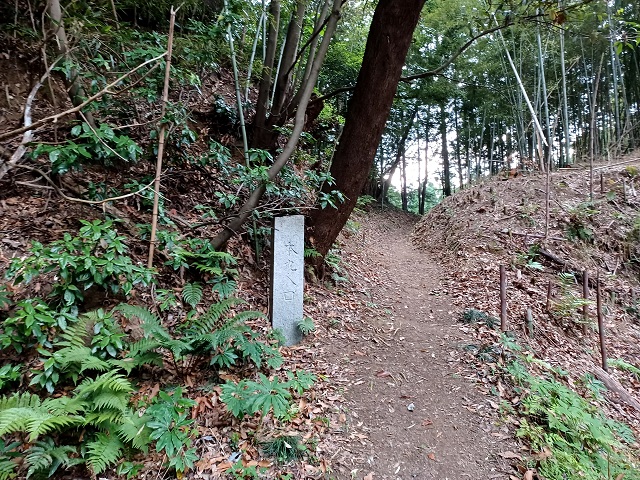
Walking through the labyrinthine dry moats allows you to experience the defensive system of a Sengoku period castle. The height of the earthen ramparts, viewed from the bottom of the moats, speaks to the high level of castle-building technology of the time.
Arrangement of Earthen Ramp and Enclosures
The earthen ramparts separating each enclosure are also a highlight. Walking along the top of the ramparts allows you to understand the overall structure of the castle. As you stroll through the castle grounds, observing the layout of each enclosure—the West Wing, Main Wing, and Third Wing—you’ll truly appreciate the ingenuity of the castle’s design.
Entrance Gates and Earthen Bridges
Staggered entrance gates and earthen bridges are typical defensive features of mountain castles, but they are particularly well-preserved at Komagamine Castle. The presence of all the essential mountain castle structures—entrance gates, earthen bridges, earthworks, and dry moats—is a major attraction of Komagamine Castle.
The earthen bridges, designed to cross moats, are narrow and easily blocked during defense. These detailed design elements reveal the practical castle-building philosophy of the Sengoku period.
The Topography of Komagamine Castle
Komagamine Castle is also known as “Gagyu Castle” (meaning “reclining ox castle”) because the hill on which the castle stands resembles the shape of a reclining ox. Looking around from the castle ruins, you can understand this topographical feature.
As a flatland castle built on a hill, you can appreciate its excellent location overlooking the surrounding plains. The reason the Soma clan chose this location becomes clear when you look at the topography.
Access to Komagamine Castle
Access by Train
The nearest station to Komagamine Castle is Komagamine Station on the JR Joban Line. It’s about a 15-20 minute walk from the station to the castle ruins. The castle is located about 1 kilometer west of the station; simply follow the signs.
Komagamine Station is a stop for local trains on the Joban Line, and is accessible from both Sendai and Fukushima/Iwaki. The path from the station to the castle ruins is relatively flat and easy to walk.
Access by Car
If you are visiting by car, the Shinchi Interchange on the Joban Expressway is convenient. You can reach the area around the castle ruins in about 5 minutes from the interchange.
There is a dedicated parking lot at the castle ruins, which can be used free of charge. The castle ruins are easily accessible, just a short walk from the parking lot.
Location and Basic Information
Location: Komagamine-kan, Shinchi-machi, Soma-gun, Fukushima Prefecture
Builder: Soma Moritane
Construction Period: Eiroku era to early Tensho era (1570s)
Castle Structure: Hilltop castle
Alternate Name: Gagyū-jō (Returning Ox Castle)
Visiting: Free
Parking: Available (Free)
Nearby Attractions and History of Shinchi-machi
Shinchi Castle Ruins
Shinchi Castle, built by Soma Moritane around the same time as Komagamine Castle, also remains within Shinchi-machi. Visiting both Komagamine Castle and Shinchi Castle will provide a deeper understanding of the Soma clan’s northern defense system.
Shinchi Castle also functioned as an important base protecting the border with the Date clan. Considering the relationship between the two castles while visiting them brings a clearer picture of the regional history of the Sengoku period.
History and Culture of Shinchi Town
Shinchi Town is located at the northernmost tip of the Hamadori region of Fukushima Prefecture, on the border with Miyagi Prefecture. It has long played an important role as the northern gateway to the Soma region.
Within the town, there are numerous historical sites related to the Soma and Date clans, including the ruins of Komagamine Castle and Shinchi Castle. There are also facilities that convey the progress of recovery from the Great East Japan Earthquake, making it a region where history and the present intersect.
Historical Significance of Komagamine Castle
Stage of the Conflict Between the Soma and Date Clans
Komagamine Castle is a castle that symbolizes the conflict between the Soma and Date clans during the Sengoku period. Located on the border between the two forces, it was the front line of defense for the Soma clan and a key point in the Date clan’s southward expansion policy.
The battle of 1589 (Tensho 17) was a crucial fight that determined the balance of power between the two forces in this region. Date Masamune’s conquest is considered one of the important turning points in the history of the Sengoku period in the Tohoku region.
The Culmination of Sengoku Castle Construction Techniques
The layout of Komagamine Castle represents the pinnacle of Sengoku castle construction techniques in the late 16th century. It incorporates ingenious defensive features designed with actual combat in mind, such as complex dry moats, a double moat defense system, and staggered gates.
These remains, which are still well-preserved today, are valuable resources for studying Sengoku period castle construction techniques and occupy an important position in the history of Japanese castles.
Role in the History of the Late Edo Period
The fact that Komagamine Castle was the last battlefield of the Hamadori region during the Boshin War further enhances its historical significance. Its continued military importance for approximately 300 years, from the Sengoku period to the end of the Edo period, demonstrates the excellence of its location and structure.
Preservation and Utilization of Komagamine Castle
Protection as a Cultural Property
Komagamine Castle ruins are protected as an important cultural property of Shinchi Town. The remains are well-preserved, and regular maintenance is carried out. Information boards and explanatory signs are installed to help visitors understand the castle’s history.
A Place for Local History Learning
Komagamine Castle ruins are also used as an educational site for learning local history. Local elementary and junior high schools regularly hold local history lessons, and history enthusiasts hold guided tours.
Walking through the castle ruins allows visitors to experience the reality of the Sengoku period that cannot be learned from textbooks, fostering a sense of attachment to the region and an interest in history.
Potential as a Tourism Resource
In recent years, with the growing interest in castle ruins and historical tourism, Komagamine Castle has also attracted attention. Its well-preserved remains and historical background related to the famous Sengoku daimyo clans, the Soma and Date, make it a highly attractive tourism resource.
Shinchi Town is working to promote tourism by utilizing its historical resources, including the Komagamine Castle ruins, and further development and information dissemination are expected in the future.
Points to Note When Visiting Komagamine Castle
Clothing and Equipment
Since Komagamine Castle ruins are the remains of a mountain castle, comfortable clothing and shoes are necessary when visiting. Especially when viewing the dry moats and earthworks, it is recommended to wear non-slip shoes.
In summer, insect repellent spray is recommended, and in winter, warm clothing is essential. Bringing drinking water is also recommended.
Considerations During Visits
The castle ruins are a valuable cultural asset, and care must be taken not to damage the remains. Avoid unnecessarily climbing the slopes of the earthworks and moats, and refrain from damaging the vegetation.
Also, since parts of the castle ruins are adjacent to residential areas, consideration must be given to avoiding disturbing nearby residents with noise, etc.
Photography
Photography at the castle ruins is generally permitted, but please be careful not to trespass on private property. Furthermore, if you plan to use a drone for filming, we recommend checking with the relevant department in Shinchi Town beforehand.
Summary
Komagamine Castle is a Sengoku period castle built by Soma Moritane as a defensive base against the Date clan. It was captured in 1589 by Watari Shigemune, a retainer of Date Masamune. Afterward, it continued to function as a border castle of the Date clan, and became the final battlefield of the Hamadori region during the Boshin War at the end of the Edo period.
The remaining earthworks, dry moats, gates, and earthen bridges are valuable cultural assets that convey the castle-building techniques of the Sengoku period. The large, labyrinthine dry moats, in particular, are well worth seeing.
It is easily accessible, approximately 15-20 minutes on foot from Komagamine Station on the JR Joban Line, and about 5 minutes by car from the Shinchi Interchange on the Joban Expressway. Free parking is also available. As a historical site essential to understanding the history of the Hamadori region of Fukushima Prefecture, it is popular with many history enthusiasts and castle fans.
Komagamine Castle was the stage for the conflict between the Soma and Date clans, two of Tohoku’s leading warring daimyo during the Sengoku period. Why not visit and experience firsthand the unique topography and ingenious layout befitting its alternative name, Gagyū Castle (Sleeping Ox Castle)?
References
For those who wish to learn more about the history and remains of Komagamine Castle, we recommend consulting local history materials published by the Shinchi Town Board of Education and specialized books on castles in Fukushima Prefecture. Additionally, the Shinchi Town Library offers access to materials related to local history. Specialized journals on castle research and research papers on the Sengoku period history of the Tohoku region will also be valuable sources of information for deepening your understanding of Komagamine Castle.