Kokura Castle, Fukuoka | A Complete Guide to the Charms and Highlights of Japan’s Most Interesting Castle
Located in Kokurakita Ward, Kitakyushu City, Fukuoka Prefecture, Kokura Castle is a historical building that has attracted attention as “Japan’s most interesting castle.” This magnificent castle, the only one in Fukuoka Prefecture with a keep, is an experiential facility that combines a unique architectural style, rich history, and the latest digital technology, attracting many tourists every year. This article comprehensively introduces everything you need to know before visiting Kokura Castle, from its history and architectural features to the latest highlights and access information.
What is Kokura Castle? | Kitakyushu’s Symbol with Fukuoka Prefecture’s Only Keep
Kokura Castle is located in the heart of Kitakyushu City, Fukuoka Prefecture, and played an important role as the administrative center of the Kokura Domain during the Edo period. The current keep was rebuilt in 1959 and is a beloved landmark of Kitakyushu City for locals.
Scale and Characteristics of Fukuoka Prefecture’s Only Keep
Kokura Castle’s keep is special as the only castle in Fukuoka Prefecture with a keep. The castle tower ranks 6th among all castles in Japan in terms of height, and the floor area of the first floor is one of the largest in the country. This impressive scale speaks to the former authority and prosperity of the Kokura Domain.
The castle tower has a five-story structure, and each floor houses exhibits introducing the history of Kokura Castle and Kokura. From the top floor, you can enjoy a 360-degree panoramic view of Kitakyushu city, and on a clear day, you can even see the Kanmon Strait, making it a spectacular viewpoint.
The Role of Kokura Castle in Kitakyushu City
Kokura Castle is not merely a historical building; it functions as the cultural and tourist center of Kitakyushu City. Facilities such as Kokura Castle Garden, Yasaka Shrine, and Riverwalk Kitakyushu are concentrated in the surrounding area, forming a unified tourist zone known as the “Kokura Castle Area.”
In spring, approximately 300 cherry trees bloom, making it a famous cherry blossom viewing spot, and in autumn, the autumn foliage of zelkova and ginkgo trees creates a beautiful landscape, delighting visitors with its seasonal beauty. Springtime, when the castle is bustling with local cherry blossom viewers, is one of the seasons when its charm shines brightest.
History of Kokura Castle | From the Sengoku Period to the Present
The history of Kokura Castle tells the story of its role as a political and cultural center of Kyushu, from the Sengoku period to the present day.
The Beginning of Construction | From the Mori Clan to Hosokawa Tadaoki
The history of Kokura Castle begins in 1569 (Eiroku 12), when the Mori clan, a Sengoku daimyo of the Chugoku region, built the castle. At that time, it was a small castle, but it functioned as an important base in northern Kyushu.
Kokura Castle developed into a full-fledged castle when Hosokawa Tadaoki, who entered Buzen Province (present-day eastern Fukuoka Prefecture and northern Oita Prefecture) after his service in the Battle of Sekigahara, undertook large-scale construction over approximately seven years, starting in 1602 (Keicho 7). Hosokawa Tadaoki was a renowned figure both as a Sengoku period warlord and a man of culture. He possessed a deep understanding of tea ceremony and architecture, and his aesthetic sensibilities are reflected in the design of Kokura Castle.
Kokura Castle and the Kokura Domain in the Edo Period
Throughout the Edo period, Kokura Castle functioned as the administrative center of the Kokura Domain. After the Hosokawa clan, the Ogasawara clan became the lords of the domain and ruled until the Meiji Restoration. Kokura, as the gateway to Kyushu and the starting point of the Nagasaki Kaido road, prospered as a center of commerce and culture.
Kokura Castle also holds historical anecdotes related to Miyamoto Musashi and Sasaki Kojiro. In his later years, Miyamoto Musashi was welcomed as a guest by the Ogasawara clan, the lords of the Kokura Domain, and spent time in the castle town. The castle’s exhibits provide detailed information about the connection between these historical figures and Kokura Castle.
History of Destruction and Reconstruction
Kokura Castle’s main keep was destroyed by fire in 1837 (Tenpo 8), and remained without a keep for a long period during the late Edo period. Furthermore, in the Meiji era, due to the castle demolition decree, much of the castle was dismantled, leaving only the main enclosure and parts of the stone walls.
The current main keep was rebuilt in 1959 (Showa 34) thanks to the enthusiasm of the citizens. In its reconstruction, efforts were made to faithfully reproduce its original appearance as much as possible, based on Edo-period drawings and documents. Then, on March 30, 2019, a major renovation was carried out, transforming it into an interactive facility incorporating the latest digital technology.
On February 11, 2026, the cumulative number of visitors since the 1959 reconstruction of the main keep reached 10 million, and the castle continues to make history as a beloved landmark for many people.
What is Karazukuri? | The Unique Architectural Style of Kokura Castle
The most distinctive architectural feature of Kokura Castle is its unique architectural style, known as “Karazukuri,” which is rare throughout Japan.
Structural Characteristics of Karazukuri
Karazukuri refers to a structure where the top floor (5th floor) of the castle tower extends significantly beyond the 4th floor. While typical castle towers generally use a tapering design (teigen-shiki), Kokura Castle’s top floor is wider than the lower floors, creating a distinctive silhouette.
This structure not only provides expansive views from the top floor but also offers superior defensive capabilities. The “stone drop” function, allowing attacks on enemies directly below from the overhanging section, is enhanced, increasing the castle’s practical combat effectiveness.
Reasons and Significance of Adopting Karazukuri
Karazukuri is considered a manifestation of Hosokawa Tadaoki’s design philosophy, which combined aesthetic sensibilities with practicality. Tadaoki, a man of culture, pursued functional beauty, aiming to achieve both defensive strength and aesthetic appeal.
Nationwide, castle towers built in the Tang style are extremely rare, with only a few existing examples, such as Takamatsu Castle (Kagawa Prefecture). Kokura Castle’s Tang style is a valuable example in the history of Japanese castle architecture and is attracting attention from architectural historians.
Stone Walls and Main Enclosure Structure
The stone walls of Kokura Castle utilize both the nozura-zumi (rough stone masonry) technique, where natural stones are stacked as they are, and the kirikomi-hagi (cut stone masonry) technique, where processed stones are stacked without gaps. The stacking method differs between the original stone walls and those repaired in later periods, allowing us to see the evolution of techniques over time.
The main enclosure (honmaru) occupies a vast area, with the castle tower at its center, surrounded by palaces and turrets. Currently, it is maintained as a park, and explanatory signs showing the original layout are installed around the castle tower, allowing visitors to stroll around and imagine the appearance of the Edo-period castle.
2019 Renewal | The Evolving Kokura Castle Tower
With its reopening on March 30, 2019, Kokura Castle has evolved significantly, becoming “Japan’s most interesting castle.”
Transformation into an Experiential Historical Space
The biggest point of the renewal is the major shift from a traditional exhibition-type museum to an experiential historical facility. The castle now features numerous impressive theater videos, interactive exhibits, and experiential content utilizing digital technology.
Particularly noteworthy is the “XR Escape Game.” Using the latest XR (Cross Reality) technology, participants challenge themselves to solve mysteries set in Kokura Castle during the Edo period. This new form of castle experience, which allows visitors to learn history while having fun, has received high praise from younger generations.
Exhibition Structure within the Castle Tower
The castle tower is divided into five floors, with different themed exhibits on each floor.
The 1st floor features an introductory exhibit introducing the history of Kokura Castle, allowing visitors to understand its progress from its construction to the present day in chronological order. The 2nd floor features exhibits focusing on the two ruling families of the Kokura domain, the Hosokawa and Ogasawara clans, allowing visitors to learn about the characteristics and culture of the Kokura domain during each era.
The 3rd floor introduces the connection between Kokura and two legendary swordsmen, Miyamoto Musashi and Sasaki Kojiro, offering insights into samurai culture and the history of swordsmanship.
The 4th floor is a zone where visitors can experience the life and culture of the castle town, with exhibits that allow them to relive the lives of the people of Kokura during the Edo period.
The 5th floor (top floor) is a 360-degree panoramic observation zone, offering a sweeping view of Kitakyushu city. On clear days, a spectacular view unfolds, stretching from the Kanmon Strait to Mojiko and Shimonoseki.
Japan’s Only Castle Open at Night
One of the most distinctive features of Kokura Castle is that it is the only castle in Japan that is open at night on a regular basis. After sunset, the illuminated castle tower creates a magical atmosphere, and it has been recognized as a “Japan Night View Heritage Site.”
At night, the “Tenshukaku Bar” operates, offering a unique experience of enjoying drinks while gazing at the Kitakyushu night view from the top floor. It’s also a popular date spot, with its romantic atmosphere being a major draw.
Kokura Castle Garden | A Japanese Garden Where You Can Experience Samurai Culture
Located next to the Kokura Castle keep, the Kokura Castle Garden is a facility where you can enjoy a beautiful Japanese garden and a shoin-style building that recreates the lifestyle of a daimyo (feudal lord) during the Edo period.
Features of Kokura Castle Garden
The Kokura Castle Garden was built on the site of the lower residence of the Ogasawara clan, and it preserves the style of Edo-period daimyo gardens. Designed as a pond-centered strolling garden, the seasonal flowers and trees delight visitors.
Inside the shoin-style building, there are exhibits where you can learn about the lifestyle and etiquette of samurai, including an introduction to the Ogasawara school of etiquette. The Ogasawara clan is also known as a family of etiquette, and their traditions have been passed down to the present day.
Tea Ceremony Experience and Matcha Cafe
At Kokura Castle Garden, you can experience a tea ceremony, choosing between hot and cold matcha. Enjoying a cup of tea in an authentic tea room while gazing at the garden scenery is a special moment away from everyday life.
Programs are available that even beginners can easily participate in, allowing you to learn the etiquette of the tea ceremony while experiencing Japanese culture. The matcha, served with seasonal Japanese sweets, offers a different experience depending on the season.
Combined Ticket for Kokura Castle and Kokura Castle Garden
A combined ticket allows entry to both Kokura Castle Tower and Kokura Castle Garden, allowing you to gain a deeper understanding of Kokura’s history and culture by visiting both. The combination of learning history at the tower and experiencing samurai culture in the garden is a classic Kokura sightseeing route.
Highlights of Kokura Castle | Photogenic Spots
Kokura Castle and its surroundings have numerous photogenic spots.
Photo Spots for the Exterior of the Tower
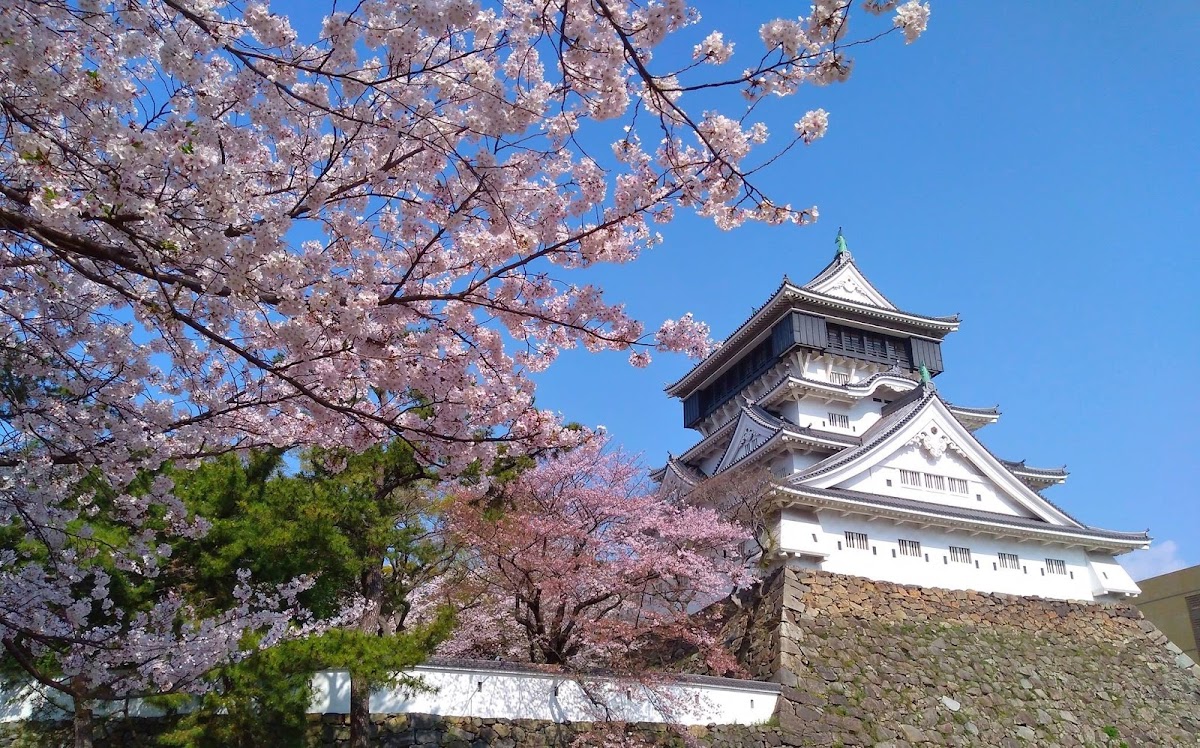
There are several spots where you can take beautiful photos of Kokura Castle Tower. The frontal shot from the main castle grounds offers a classic composition, capturing both the stone walls and the castle tower. During cherry blossom season, the collaboration of the full-blooming cherry blossoms and the castle tower creates a breathtaking view.
At night, when the castle tower is illuminated, it appears fantastical against the darkness, presenting a completely different appearance from the daytime. The reflection of Kokura Castle on the water is also a popular photo spot.
Kokura Castle as a Cherry Blossom Spot
In spring, Kokura Castle is one of Kitakyushu’s leading cherry blossom spots, boasting approximately 300 cherry trees. Various varieties of cherry trees, primarily Somei Yoshino, are planted, reaching their peak bloom from late March to early April.
Nighttime illumination of the cherry blossoms is also held, creating a breathtakingly beautiful sight of the cherry blossoms and castle tower lit simultaneously. During the cherry blossom viewing season, it’s a quintessential Kokura scene, with locals and tourists celebrating the arrival of spring together.
The Charm of the Autumn Foliage Season
In autumn, the zelkova and ginkgo trees change color, and the area around Kokura Castle is known as a famous spot for viewing autumn leaves. The best time to see them is from mid- to late November, when the contrast between the golden and red trees and the castle tower creates a beautiful landscape.
Strolling around Kokura Castle surrounded by autumn leaves in the crisp autumn air is a luxurious moment where you can feel the changing of the seasons.
Tourist Attractions Around Kokura Castle
If you visit Kokura Castle, you can enjoy a more fulfilling Kitakyushu sightseeing experience by also visiting the surrounding tourist attractions.
Yasaka Shrine
Yasaka Shrine, located adjacent to the north side of Kokura Castle, has long been revered as the guardian shrine of Kokura. The “Kokura Gion Taiko” festival, held every July, is a traditional event designated as a National Important Intangible Folk Cultural Property, and the powerful sound of drums resonates throughout the city of Kokura.
Riverwalk Kitakyushu
Located along the Murasaki River east of Kokura Castle, Riverwalk Kitakyushu is a complex facility offering shopping, dining, and entertainment. Its ideal location makes it perfect for enjoying meals and shopping after sightseeing at Kokura Castle. It also houses a branch of the Kitakyushu Municipal Museum of Art and a theater.
Tanga Market
Tanga Market, affectionately known as “Kitakyushu’s Kitchen,” is a traditional market within walking distance of Kokura Castle. It offers a variety of fresh seafood, vegetables, and prepared foods, allowing visitors to experience local food culture. A popular attraction is the “Daigaku Don” (University Bowl), where visitors can create their own original bowl by purchasing ingredients at the market and placing them on rice.
Mojiko Retro District
Mojiko, about 15 minutes by train from Kokura, is a retro port town with buildings from the Meiji and Taisho eras. Historic buildings such as Mojiko Station, the former Mojiko Customs House, and the former Osaka Shosen Building line the streets, creating a nostalgic atmosphere. The view overlooking the Kanmon Strait is magnificent, making this an area worth visiting in conjunction with a trip to Kokura Castle.
Access Information | How to Get to Kokura Castle
Kokura Castle is conveniently located near Kokura Station, the gateway to Kyushu.
Access by Train
From JR Kokura Station
- Approximately 15 minutes on foot
- From the North Exit, proceed straight towards Kokura Castle. Cross the Murasaki River to reach Kokura Castle Park.
Kitakyushu Monorail
- Get off at “Heiwadori Station” from Kokura Station, approximately 5 minutes on foot
- Get off at “Tanga Station,” approximately 7 minutes on foot
Access by Bus
If using Nishitetsu Bus, get off at the “Kokura Castle/Matsumoto Seicho Memorial Museum” bus stop from the Kokura Station Bus Center. Multiple routes operate, and there are many buses, making it very convenient.
Access by Car and Parking
From the Expressway
- Approximately 3 minutes from the Kitakyushu Urban Expressway “Katsuyama Exit”
- Approximately 5 minutes from the “Otemachi Exit”
Parking
There is no dedicated parking lot for Kokura Castle, but there are several coin-operated parking lots in the surrounding area. The closest is the “Katsuyama Park Underground Parking Lot,” which is approximately a 3-minute walk from Kokura Castle. It gets crowded on weekends and during cherry blossom season, so using public transportation is recommended.
Access from the Airport
From Kitakyushu Airport
- Approximately 35 minutes by airport shuttle bus to Kokura Station
- From Kokura Station, walk or take the monorail to Kokura Castle
From Fukuoka Airport
- Approximately 20 minutes by subway to Hakata Station, then by JR Shinkansen to Kokura Station
- Approximately 70 minutes by express bus to Kokura Station
Opening Hours, Fees, and Inquiries
Opening Hours
Kokura Castle Main Tower
- April to October: 9:00 AM to 8:00 PM (Last entry 7:30 PM)
- November to March: 9:00 AM to 7:00 PM (Last entry 6:30 PM)
- Open all year round (However, there may be occasional closures due to construction)
Kokura Castle Garden
- April to October: 9:00 AM to 6:00 PM (Last entry 5:30 PM)
- November to March: 9:00 AM – 5:00 PM (Last entry 4:30 PM)
- Open year-round
Admission Fees
Kokura Castle Keep
- General Admission: 350 yen
- Junior and Senior High School Students: 200 yen
- Elementary School Students: 100 yen
Kokura Castle Garden
- General Admission: 300 yen
- Junior and Senior High School Students: 150 yen
- Elementary School Students: 100 yen
Combined Ticket (Keep + Garden)
- General Admission: 560 yen
- Junior and Senior High School Students: 320 yen
- Elementary School Students: 160 yen
*Prices are subject to change. Please check the official website for the latest information.
Contact Information
Kokura Castle Keep
- Address: 2-1 Jonai, Kokurakita-ku, Kitakyushu City, Fukuoka Prefecture
- Phone: 093-561-1210
- Official Website: https://kokura-castle.jp/
Tips for Enjoying Kokura Castle
Recommended Visiting Time
To fully enjoy Kokura Castle, we recommend visiting the keep in the morning and spending the afternoon relaxing in the Kokura Castle Garden. If you want to see the nighttime illumination, visiting in the evening to enjoy both daytime and nighttime views is also a good idea.
If you want to enjoy the night view from the keep bar, it’s ideal to enter the castle before sunset, view the exhibits while it’s still light, and then relax on the top floor.
Estimated Time Required
- Kokura Castle Keep Only: 60-90 minutes
- Kokura Castle Garden Only: 30-45 minutes
- Visiting Both: 2-2.5 hours
- Including a Stroll Through the Surrounding Area: 3-4 hours
If you plan to participate in interactive activities or want to carefully view the exhibits, we recommend allocating more time.
Clothing and Items to Bring
Since movement within the keep is mainly via stairs, comfortable walking shoes are recommended. While air conditioning is in place during the summer, the observation zone on the top floor is susceptible to outside temperatures, so dress appropriately for the season.
A camera or smartphone is essential. The cherry blossom and autumn foliage seasons, in particular, offer excellent photo opportunities.
Local Gourmet Information
There are numerous restaurants around Kokura Castle where you can enjoy Kitakyushu specialties. You can savor local cuisine such as “yakisoba” (fried udon noodles), fresh seafood from the Kanmon Strait, and Kokura ramen (different from Hakata ramen).
Riverwalk Kitakyushu boasts a wide variety of cafes and restaurants, some offering dining options with views of Kokura Castle.
Summary | Kokura Castle: A Historical and Cultural Hub Representing Fukuoka
Kokura Castle, the only castle in Fukuoka Prefecture with a keep, continues to be a symbol of Kitakyushu City. It’s a multifaceted tourist spot with a unique architectural style known as “Tang Dynasty style,” a rich history from its construction by Hosokawa Tadaoki to the present day, and the latest interactive content realized through its 2019 renovation.
As its slogan “Japan’s Most Interesting Castle” suggests, Kokura Castle has evolved into a place where you can not only learn history but also experience, enjoy, and be moved. From the natural beauty of its cherry blossoms and autumn foliage, to the allure of its night view (the only castle in Japan to be open at night), and the samurai culture experience in the Kokura Castle Garden, each visit offers new discoveries.
Its excellent accessibility, being within walking distance of Kokura Station, the gateway to Kyushu, is another major attraction of Kokura Castle. When you visit Fukuoka or Kitakyushu, be sure to stop by Kokura Castle and experience its history, culture, and unique charm. Kokura Castle, which has captivated over 10 million visitors in total, is sure to provide you with special memories.