Complete Guide to the History and Highlights of Kojima Castle | A Thorough Explanation of the Two Kojima Castles in Mino and Hida
Introduction: Two Kojima Castles with the Same Name
A search for “Kojima Castle” reveals that there are actually two different castles in Gifu Prefecture. One is Kojima Castle of Mino Province, located in Ibigawa Town, Ibi District, Gifu Prefecture, and the other is Kojima Castle of Hida Province, located in Hida City, Gifu Prefecture. Both played important roles as medieval mountain castles, but their histories and backgrounds differ significantly.
This article provides a detailed explanation of both Kojima Castles, including their history, structure, highlights, and access methods. This information will be useful for castle enthusiasts, history buffs, and anyone planning a trip to Gifu Prefecture.
History of Ojima Castle (Ibigawa Town), Mino Province
Overview and Location
Ojima Castle in Mino Province was a mountain castle located in Kasuga Rokugo, Ibigawa Town, Ibi District, Gifu Prefecture. Built at the foot of Mount Ojima, it was a strong fortress that made maximum use of the natural defenses: a rock face to the east, a steep slope to the west, and a cliff bordering the Kasugawa River to the south.
As the base of the Toki clan, the shugo (provincial governor), it was an important castle that became the center of Mino Province for a time. Due to its advantageous location, its strategic value was highly regarded in both political and military terms.
The Toki Clan and Ojima Castle
Ojima Castle is particularly known as the residence of Toki Yoriyasu, the third generation of the Toki clan. Toki Yoriyasu was a samurai in the early Muromachi period who expanded his power as the shugo of Mino Province. Yoriyasu governed Mino Province from Ojima Castle, and the castle became a symbol of the Toki clan’s power. After Yoriyasu’s death, Kojima Castle underwent a historical turning point during the reign of his successor, Toki Yasuyuki.
The Toki Yasuyuki Rebellion and the Fall of the Castle
In 1390 (Meitoku 1), Toki Yasuyuki raised an army against the shogunate. This was the Toki Yasuyuki Rebellion. The Muromachi Shogunate dispatched an army led by Kyogoku Takahide and others, and Kojima Castle was subjected to a fierce attack.
As a result, Kojima Castle fell, and the Toki Yasuyuki Rebellion was suppressed. This event had a significant impact on the Toki clan’s power in Mino Province, and the political importance of Kojima Castle also changed.
Current Remains
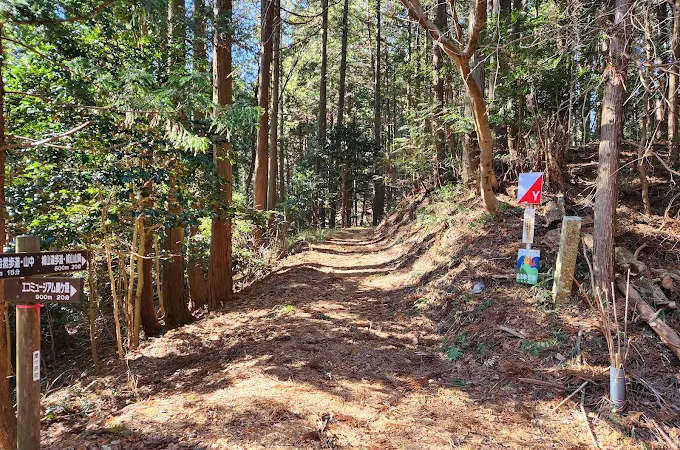
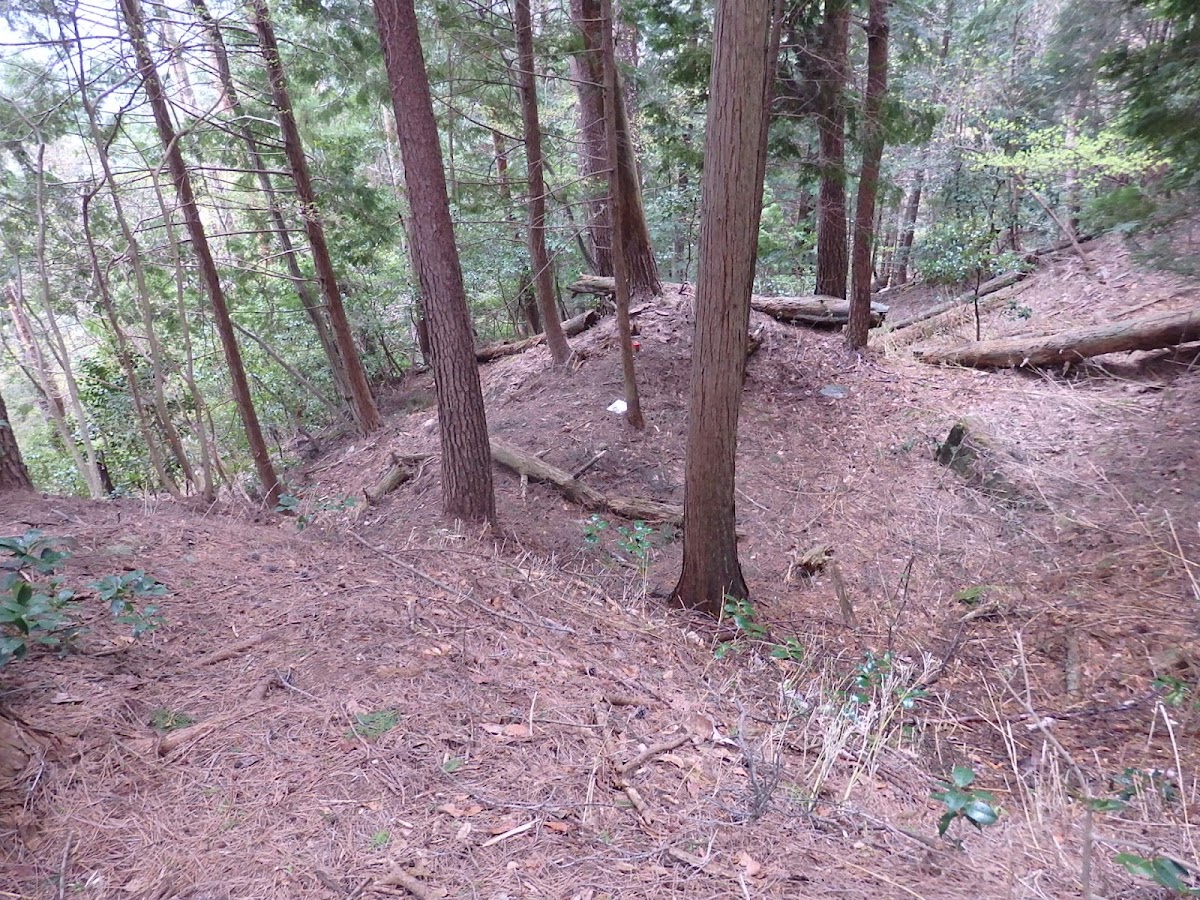
Currently, more than 80 large and small baileys remain at the Kojima Castle site, attesting to its immense scale at the time. Furthermore, defensive structures of a medieval mountain castle, such as long vertical moats and trenches, are well-preserved.
These remains provide valuable evidence of how important Kojima Castle was to the Toki clan and how they built a strong defensive system for it.
History of Kojima Castle, Hida Province (Hida City)
Overview and Location
Kojima Castle in Hida Province was a medieval mountain castle located in Furukawa-cho and Numa-cho, Hida City, Gifu Prefecture. **It was situated on a mountaintop 620 meters above sea level, jutting westward into the lowlands of the Miyagawa River, sandwiched between the Etchu-Nishi Road and the Kamioka Road, giving it a strategic location controlling a key transportation hub.
In particular, the Kanbara Pass, connecting Takahara-go and Kojima-go, passed alongside it, making it an extremely important base for monitoring and managing the flow of people and goods.
The Anegakoji and Kojima Clans
Kojima Castle in Hida Province is said to have been built by the Anegakoji clan. The Anegakoji clan was a powerful family that held sway as the governors of Hida Province, but later split into three branches: the Kojima, Mukai, and Furukawa clans. These three branches are known as the “Three Anegakoji Families.”
Kojima Castle became the residence of the Kojima clan, one of these Three Anegakoji Families. The Kojima clan used Kojima Castle as their base to maintain their power within Hida Province, but constant internal conflicts led to their gradual decline.
Capture and Fall of the Castle by Kanamori Nagachika
In 1585 (Tensho 13), Kanamori Nagachika, acting on orders from Toyotomi Hideyoshi, invaded Hida Province. In the process of subjugating the Miki clan, Kanamori Nagachika targeted Kojima Castle.
After fierce fighting, Kojima Castle fell, and it is said that its lord, Kojima Tokimitsu, was killed in battle. With the fall of this castle, the Anegakoji Kojima clan was destroyed, and Hida Province came under the control of the Kanamori clan.
Designated as a National Historic Site
The Kojima Castle ruins in Hida Province have been recognized for their historical value and designated as part of the National Historic Site “Anegakoji Clan Castle Ruins”. This indicates that it is an important site for understanding the history of the Anegakoji clan.
Structure and Characteristics of Kojima Castle
Structure of Kojima Castle in Mino Province
Kojima Castle in Mino Province is a typical medieval mountain castle that skillfully utilizes the natural terrain. The main features include:
Arrangement of Enclosures
- Over 80 large and small enclosures are arranged in a stepped pattern on the mountain slope.
- Enclosures are arranged according to their importance, centered around the main enclosure.
- Each enclosure is demarcated by earthworks and steep cliffs.
Defensive Structures
- Vertical Moats: Long moats dug along the mountain slope to prevent lateral movement of the enemy.
- Cut-off Moats: Moats dug to cut across the ridge to prevent enemy intrusion.
- Steep Cliffs: Steep, artificial cliff faces that make climbing difficult.
Natural Fortifications
- East side: Natural defensive wall formed by rock face.
- West side: Steep slope.
- South side: Cliff adjacent to the Kasugawa River.
These features made Kojima Castle a strong fortress that was difficult to attack and easy to defend.
Structure of Kojima Castle in Hida Province
Kojima Castle in Hida Province is also a mountain castle, but it has a noteworthy feature:
Sangizumi Stone Walls
The most remarkable structure at Kojima Castle in Hida Province is the sangizumi (right-angled stone wall). Sangizumi is a technique of stacking stones at right angles in the corners of castles, a highly advanced technique often seen in early modern castles.
Importantly, this technique is not seen in traditional Hida mountain castles. This suggests the following possibilities:
- Possibility of renovation by Kanamori Nagachika
- Introduction of technology from outside
- Possibility of the Kojima clan adopting castle-building techniques from other regions
These sangizumi stone walls are important evidence that Kojima Castle evolved from a simple medieval mountain castle to a castle with more advanced castle-building techniques.
Defense Based on Location
- High elevation at the summit of a mountain 620 meters above sea level
- Overlooking the lowlands of the Miyagawa River
- A location that allows for monitoring of the main road
Highlights of Kojima Castle
Highlights of Kojima Castle in Mino Province
Exploring the Enclosures
With over 80 remaining enclosures, the Kojima Castle ruins are an excellent field for learning about the structure of medieval mountain castles. By walking and examining each enclosure, you can truly appreciate the scale of the castle and the ingenuity of its defenses.
Observing Vertical Moats and Teals
The long vertical moats and teals are the core of Kojima Castle’s defensive system. These remains are relatively well-preserved, allowing you to witness the high level of medieval castle-building technology.
Natural Fortified Topography
You can observe defensive lines that utilize the natural terrain, such as rock faces, steep slopes, and cliffs bordering the river. Comparing this with a topographic map will deepen your understanding. ### Highlights of Kojima Castle in Hida Province
Sanuki-zumi Stone Walls
The sanuki-zumi stone walls, rare among Hida mountain castles, are a must-see historical feature. They are a valuable example of how early modern castle techniques were incorporated into a medieval mountain castle, attracting attention from castle researchers.
Careful observation of the corners of the stone walls reveals the precise way the stones were assembled.
View
From the 620-meter-high summit, you can enjoy a panoramic view of the Miyagawa River basin and the surrounding mountains. This view speaks to why Kojima Castle was ideally situated to monitor a strategic transportation hub.
The Road to Kanbara Pass
The Kanbara Pass, connecting Takahara-go and Kojima-go, passed alongside the castle. Searching for traces of this ancient road is one of the pleasures of a historical walk.
Access and Visiting Guide
Access to Kojima Castle, Mino Province (Ibigawa Town)
Location: Kasuga Rokugo, Ibigawa Town, Ibi District, Gifu Prefecture
Access by Car
- Approximately 40 minutes from the Meishin Expressway “Ogaki IC”
- Approximately 30 minutes from the Tokai-Kanjo Expressway “Ono-Kobe IC”
Public Transportation
- Take a bus or taxi from the Yoro Railway “Ibi Station”
- For details, please contact the Ibigawa Town Tourism Association
Notes for Visitors
- As it is a mountain castle, appropriate clothing and shoes for mountain climbing are necessary
- Insect repellent is recommended in summer
- Gather information from the local tourism association in advance
Access to Kojima Castle, Hida Province (Hida City)
Location: Furukawa Town and Numacho, Hida City, Gifu Prefecture
Access by Car
- Approximately 30 minutes from the Hida-Kiyomi Interchange on the Tokai-Hokuriku Expressway
- Approximately 10 minutes by car from Hida-Furukawa Station on the JR Takayama Line
Public Transportation
- Get off at Hida-Furukawa Station on the JR Takayama Line
- We recommend taking a taxi or renting a car from the station
Notes for Visitors
- As this is a designated National Historic Site, please cooperate in protecting the remains.
- As this is a mountain castle at an altitude of 620 meters, please plan your visit according to your physical fitness.
- Visiting may be difficult in winter due to snow.
- Please check the latest information with the Hida City Tourism Association before visiting.
Nearby Attractions
Visiting the townscape of Hida-Furukawa and other Anekōji clan castle ruins (such as Mukōkojima Castle and Furukawa Castle) will allow you to understand Hida’s history more deeply.
Historical Background Related to Kojima Castle
Political Situation in Mino Province
The importance of Kojima Castle in Mino Province stems from the political situation in Mino Province during the Muromachi period. The Toki clan, as the governors of Mino, wielded considerable power, but their position was unstable due to internal conflicts and clashes with the shogunate.
The Toki Yasuyuki Rebellion was a significant event illustrating the power balance between the shugo daimyo and the Muromachi shogunate, and Kojima Castle was the stage for this conflict.
The Sengoku Period in Hida Province
During the Sengoku period, Hida Province was divided among various local powers, such as the Anegakoji and Miki clans. The split of the Anegakoji clan into three branches complicated the balance of power within Hida, ultimately allowing an invasion by the external force, Kanamori Nagachika.
The fall of Kojima Castle marked a crucial turning point in Hida Province’s transition from the Sengoku period to the early modern period.
Current Status and Challenges of Kojima Castle Research
Archaeological Excavations and Research
Both Kojima Castles are being re-evaluated for their value due to recent advances in castle research. In particular, the Kojima Castle in Hida Province has been designated a National Historic Site, leading to more detailed investigations.
Kojima Castle, Mino Province
- Detailed survey of the baileys
- Research on its position within the Toki clan’s castle system
- Comparison with historical documents concerning the Toki Yasuyuki Rebellion
Kojima Castle, Hida Province
- Dating of the Sanuki-zumi stone walls
- Clarification of its role within the entire group of Anegakoji clan castle ruins
- Verification of whether or not it was renovated by Kanamori Nagachika
Future Challenges
Future challenges in Kojima Castle research include:
- Preservation of remains: Protection from weathering and vegetation damage unique to mountain castles
- Development and public access: Development that conveys historical value while ensuring visitor safety
- Comprehensive research: Integration of historical documents and archaeological surveys
- Connection to local history: The position of Kojima Castle within the history of the entire region
By addressing these challenges, the historical value of Kojima Castle will become even clearer.
Summary
The two Kojima Castles in Gifu Prefecture are important castle ruins, each with its own distinct historical background and characteristics.
Kojima Castle in Mino Province served as the political center of Mino Province as the base of the Toki clan and was the stage for the Toki Yasuyuki Rebellion, a significant historical event. It boasts well-preserved typical remains of a medieval mountain castle, including over 80 baileys and extensive vertical moats.
Kojima Castle in Hida Province was the residence of the Anegakoji Kojima clan, controlling a strategic transportation hub. It is a distinctive castle featuring a rare Hida-style stone wall construction technique. Designated a National Historic Site, its historical value is recognized.
Both Kojima Castles are valuable historical sites that tell the story of the region’s history during the transition from the medieval to the early modern period. They are worth visiting not only for castle enthusiasts but also for anyone interested in Japanese history.
When visiting Gifu Prefecture, be sure to visit both Kojima Castles and experience their respective histories and charms. You’ll be able to experience firsthand the harmony with nature unique to mountain castles, the high level of castle-building technology of our ancestors, and the turbulent history that unfolded before us.