

Complete Guide to Kawasaki Castle (Shimotsuke Province): The Full Story of a Mountain Castle with Approximately 400 Years of History as the Residence of the Shioya Clan
What is Kawasaki Castle?
Kawasaki Castle (Kawasaki-jō) was a Japanese mountain castle located in Nakajima, Kawasaki-Sorimachi, Yaita City, Tochigi Prefecture (formerly Shioya District, Shimotsuke Province). Also known by other names such as Shioya Castle, Shioya Old Castle, and Kagyū Castle, it served as the residence of the Shioya clan, who ruled the Shioya region from the late Heian period to the Sengoku period, and has a history of approximately 400 years.
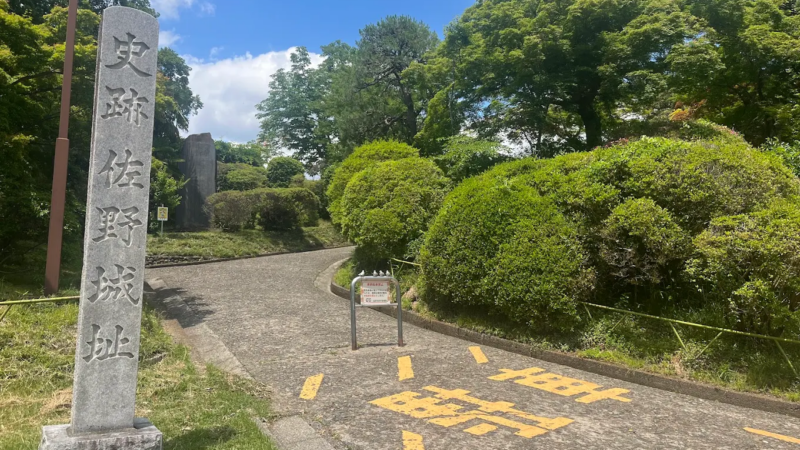
Currently, it is protected as a designated historical site of Yaita City and has been developed as Kawasaki Castle Ruins Park. Within the park, historical sites such as dry moats, earthworks, the main keep, and the second keep remain, providing valuable remnants that convey the appearance of a medieval mountain castle.
History of Kawasaki Castle
Construction and the Establishment of the Shioya Clan
While the construction period of Kawasaki Castle is generally believed to be around the Shōji-Kennin era (1199-1203), it is commonly said to have been built around 1200.
The builder was Shioya Tomonari, the second son of Utsunomiya Naritsuna. Because the fifth head of the Shioya clan, Tomoyoshi, lacked a suitable successor, he adopted Tomonari from the Utsunomiya clan and built the castle in this location. Tomonari served as a retainer of the Kamakura Shogunate and is known for his close friendship with Minamoto no Sanetomo, the third shogun of the Kamakura Shogunate, through waka poetry. He left behind a collection of poems called “Shinsei Hōshi Shū.”
During this period, the Shioya region was within the sphere of influence of the Utsunomiya clan, and Tomonari’s succession to the Shioya clan further strengthened the ties between the Utsunomiya clan and the Shioya region.
The Rule and Prosperity of the Shioya Clan
From Shioya Tomonari onward, Kawasaki Castle became the residence of successive Shioya clans, functioning as a base for controlling the northwestern part of the Shioya region. The Shioya clan maintained their power as a powerful local family in northern Shimotsuke Province throughout the Middle Ages, and Kawasaki Castle was a symbol of their power.
Excavations conducted from 1990 to 1996 confirmed the remains of buildings in the main enclosure, and artifacts dating from the late early 15th century to the 16th century were unearthed, revealing that the castle was actively used during this period.
The Turmoil of the Sengoku Period
With the arrival of the Sengoku period (Warring States period), the Shioya clan became embroiled in conflicts with surrounding forces. In Shimotsuke Province, the powers of clans such as the Utsunomiya, Satake, and Nasu clans were in a state of equilibrium, and the Shioya clan needed to maintain relations with these forces while preserving their territory.
Kawasaki Castle possessed defensive capabilities as a mountain castle, with defensive facilities such as dry moats and earthworks. These remain tell the story of how the castle functioned as a military base during the tense Sengoku period.
The Road to Abandonment
There are several theories regarding when Kawasaki Castle was abandoned. The most plausible theory is that it was abandoned during Toyotomi Hideyoshi’s Odawara campaign and pacification of the Kanto region in 1590. During this period, the Toyotomi regime was unifying the country, and many medieval castles were abandoned.
On the other hand, there are also records indicating that it was abandoned on February 8, 1595. In any case, by the end of the 16th century, Kawasaki Castle had lost its function as a castle, bringing to an end its approximately 400-year history as the residence of the Shioya clan.
Structure and Layout of Kawasaki Castle
Location as a Mountain Castle
Kawasaki Castle is a typical medieval mountain castle, characterized by defensive structures that skillfully utilize the natural terrain. Castles built on hillsides have the advantage of being situated on high ground overlooking the surrounding area, allowing for early detection of approaching enemies.
Main Enclosure Structure
Kawasaki Castle’s layout consists of the main enclosure (Honmaru) surrounded by other enclosures such as the second enclosure (Ninokuruwa). Archaeological excavations have confirmed the existence of buildings in the main enclosure, suggesting that it was the residence of the castle lord and his retainers.
Honmaru: Located in the center of the castle, it was the most important defensive stronghold. The remains of the Honmaru are still clearly visible today, allowing us to imagine its former appearance.
Ninokuruwa: Functioned as a secondary line of defense protecting the Honmaru. Currently, a plum grove and observation deck have been installed, creating a particularly beautiful landscape during the plum blossom season.
Defensive Facilities
Kawasaki Castle retains numerous defensive facilities typical of medieval mountain castles.
Dry Moat: A moat dug into the ground to prevent enemy intrusion. Within Kawasaki Castle Ruins Park, clear traces of dry moats can still be seen in many places, making them valuable remains for understanding the defensive system of the time.
Earthworks: Defensive walls constructed by piling up earth, which served to prevent enemy attacks and clearly define the boundaries within the castle. The earthworks of Kawasaki Castle are well-preserved, and their height and shape provide insights into the castle construction techniques of the time.
Moats: Moats dug to divide ridges, which effectively limited enemy incursion routes.
These defensive structures clearly demonstrate the characteristics of medieval mountain castles without stone walls or keeping, and are excellent examples of castle architecture constructed solely with civil engineering techniques.
Highlights of Kawasaki Castle Ruins Park
Value as a Historic Site
Kawasaki Castle Ruins are protected as a designated historical site of Yaita City and are now open to the public as Kawasaki Castle Ruins Park. The castle remains from approximately 800 years ago are well-preserved, making it a valuable place to experience a medieval mountain castle.
Because the site is maintained as a park, you can safely visit the ruins without damaging them. Information boards are also installed, allowing you to enjoy a stroll while learning about the castle’s history and structure.
Castle Notes (Main Highlights)
Main Enclosure Site: This is the central part of the castle, located at the highest point. From here, you can enjoy a panoramic view of the surrounding landscape, imagining how the castle lord once surveyed his territory from this spot.
Plum Grove in the Second Enclosure: A plum grove is planted in the second enclosure, and in spring, beautiful plum blossoms bloom. You can enjoy a unique landscape where the historical castle ruins and seasonal flowers harmonize in a way you won’t find anywhere else.
Observation Deck: From the observation deck located in the second enclosure, you can see the city of Yaita and the surrounding mountains. On a clear day, you can enjoy the vast scenery of the Shioya region.
Dry Moats and Earthworks: The dry moats and earthworks remaining throughout the park are the main highlight of Kawasaki Castle. In particular, in the well-preserved areas, you can appreciate the defensive capabilities of the time from their depth and width. Walking along the earthworks offers a valuable experience of experiencing a medieval castle.
Layout of Enclosures: By examining the layout of the enclosures, including the main keep and the second enclosure, you can understand the overall structure of the castle. The clever use of the terrain in the layout speaks to the high level of medieval castle-building technology.
Seasonal Attractions
Kawasaki Castle Ruins Park displays different expressions throughout the four seasons.
Spring: The plum grove in the second enclosure is in full bloom, creating a particularly magnificent landscape. Enjoy a historical stroll surrounded by the fragrance of plum blossoms.
Summer: Lush green trees cover the castle ruins, allowing for a cool, shady stroll.
Autumn: The autumn leaves are beautiful, and the dry moats and earthworks are beautifully contrasted with the colorful trees.
Winter: As the leaves fall, the castle’s structure becomes more clearly visible.
Access and Visiting Information for Kawasaki Castle
Location
Nakajima, Kawasaki-cho, Yaita City, Tochigi Prefecture
Access Methods
Access by Car:
- Approximately 10 minutes from the Yaita Interchange on the Tohoku Expressway
- Convenient access by car as there is ample parking.
Access by Public Transportation:
- Approximately 10 minutes by taxi from Yaita Station on the JR Tohoku Main Line
- Bus services are limited, so it is recommended to check in advance.
Visiting Guide
Opening Hours: Open as a park at all times.
Admission Fee: Free
Estimated Time Required: Allow 1-2 hours for a thorough visit.
Clothing and Equipment:
- Comfortable walking shoes (due to dirt paths and uneven terrain)
- Appropriate clothing for the season
- Insect repellent is recommended in summer.
Photography: Photography is permitted. You can take impressive photos of the dry moats and earthworks.
Nearby Tourist Information
Attractions in Yaita City
When visiting Kawasaki Castle Ruins Park, you can also visit other tourist spots in Yaita City.
Yaita City Local History Museum: A facility where you can learn about the history and culture of Yaita City. Materials related to Kawasaki Castle are also on display.
Happogahara: A plateau spreading across the middle of Takahara Mountain, known as a famous spot for azaleas. Enjoy nature walks.
Nearby Castle Ruins
Many other castle ruins remain in northern Tochigi Prefecture, allowing you to enjoy castle hopping.
Karasuyama Castle: A mountain castle located in Nasukarasuyama City, it was the residence of the Nasu clan.
Kitsuregawa Castle: A castle located in Sakura City, known as the residence of the Kitsuregawa clan.
Utsunomiya Castle: A flatland castle located in the center of Utsunomiya City, which has now been partially restored.
Visiting these castle ruins allows for a deeper understanding of the medieval history of Shimotsuke Province.
Cultural Value of Kawasaki Castle
Importance in Historical Research
Kawasaki Castle is an important historical site for understanding the realities of regional governance in medieval Shimotsuke Province. Artifacts unearthed through excavations provide valuable resources for studying the lives and culture of local powerful families from the 15th to 16th centuries.
The “Shinsei Hoshi Shu” (Collection of Poems by Shioya Tomonari) is also of literary historical value as a document illustrating the relationship between samurai and culture. Tomonari, a samurai who excelled in waka poetry and interacted with Shogun Minamoto no Sanetomo, is an interesting example for understanding samurai culture during the Kamakura period.
As a Regional Historical Heritage Site
Kawasaki Castle Ruins Park is an important historical heritage site for the citizens of Yaita and is an element that forms the regional identity. As a park, it functions as a place of relaxation for citizens and is also used as a site for historical education.
In school education, Kawasaki Castle occupies an important position as teaching material for learning local history. Visiting the actual ruins allows you to gain a tangible sense of history that cannot be obtained from textbooks alone.
Research and Archaeological Excavations on Kawasaki Castle
Results of Archaeological Excavations
The archaeological excavations conducted from 1990 to 1996 significantly contributed to clarifying the true nature of Kawasaki Castle.
The building remains confirmed in the main enclosure confirm the existence of residences for the castle lord and his retainers. The arrangement of post holes allows for the estimation of the building’s size and structure, providing valuable data for the study of medieval castle architecture.
Excavated artifacts include ceramics, iron products, and earthenware dating from the late early 15th to the 16th century. These artifacts help determine the period of the castle’s use and provide clues to the lifestyle and trade relations of the time.
Future Challenges
Further research is expected to clarify the overall picture of Kawasaki Castle. In particular, the changes from its construction to its abandonment, its relationship with surrounding castles and fortifications, and the Shioya clan’s system of rule are subjects for future research.
Significance of Visiting Kawasaki Castle
A Typical Example of a Medieval Mountain Castle
Kawasaki Castle is important for learning about the history of castle architecture as a typical example of a medieval mountain castle that lacks stone walls and a keep. By actually seeing the defensive system constructed solely with civil engineering techniques, unlike early modern castles, one can understand the development process of Japanese castles.
The remains, such as dry moats and earthworks, can still be clearly seen today, allowing one to appreciate the high level of castle-building technology at the time. The layout, which skillfully utilizes the terrain, is an excellent example of the harmony between nature and artificiality.
Understanding the History of Local Powerful Clans
Kawasaki Castle was the residence of the Shioya clan for approximately 400 years. As a castle built and defended by a local powerful clan, rather than a central power, it holds significant importance from the perspective of regional history.
Through the history of the Shioya clan, we can learn a great deal about how local societies functioned in the Middle Ages and their relationship with the central government.
Enjoying Historical Walks
Kawasaki Castle Ruins Park is a place open not only to history enthusiasts but also to those who enjoy nature walks. You can discover different charms throughout the four seasons: the plum blossoms of spring, the lush greenery of summer, the vibrant autumn foliage, and the clearly visible structure of winter.
It is a popular park enjoyed by many people for various activities such as family picnics, photography, and walking.
Summary
Kawasaki Castle is a valuable medieval mountain ruin castle remaining in Yaita City, Tochigi Prefecture. Built around 1200 by Shioya Tomonari, it functioned as the residence of the Shioya clan for approximately 400 years. Although it was abandoned around 1590, the remains of the dry moats, earthworks, main keep, and second keep are still well-preserved.
Protected as a designated historical site by Yaita City and developed as Kawasaki Castle Ruins Park, it is now freely accessible to everyone. It plays an important role as a valuable place to experience a medieval mountain castle and as an educational site for learning about local history.
Also known by other names such as Shioya Castle, Shioya Old Castle, and Kagyu Castle, this castle is indispensable when discussing the history of Shimotsuke Province. The remains and artifacts revealed through archaeological excavations are valuable resources for studying the lives and culture of local powerful families in the medieval period.
Kawasaki Castle Ruins Park, which displays beauty in every season, is attractive not only for historical walks but also as a place to enjoy nature. Especially in spring, during the plum blossom season, you can enjoy a unique landscape where the historical castle ruins and beautiful flowers harmonize.
When visiting Tochigi Prefecture, be sure to visit Kawasaki Castle Ruins Park, see the remains that bear the marks of approximately 800 years of history, and experience the charm of a medieval mountain castle.
--765x450.png)