Kanjōzan Castle (Aioi City, Hyogo Prefecture) Complete Guide: A National Historic Site Mountain Castle Where Akamatsu Norisuke Repelled Nitta Yoshisada
What is Kanjōzan Castle?
Kanjōzan Castle is a medieval mountain castle built on the ridge of Mount Kanjō, which has an elevation of 301.05 meters, spanning Uryu and Mori in Yano-cho, Aioi City, Hyogo Prefecture. The castle’s name originates from the fact that Akamatsu Norisuke, the third son of Akamatsu Enshin, was awarded a letter of commendation (a symbol of honor commending military achievement) by Ashikaga Takauji for his service in holding off Nitta Yoshisada’s large army for over 50 days during the Nanboku-chō period.
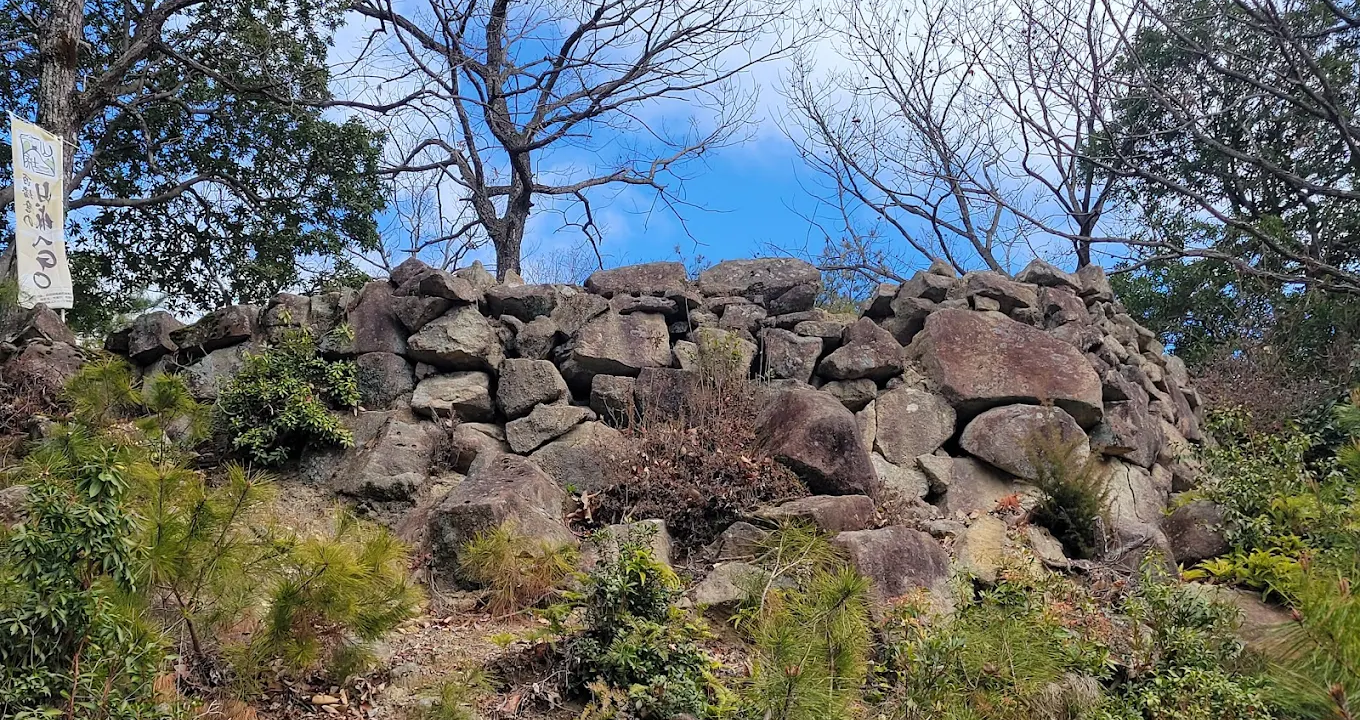
Designated as a national historic site as part of the “Akamatsu Clan Castle Ruins,” it is a representative medieval mountain castle site of the Harima region, with its stone walls, baileys, foundation stones, and well remains preserved in relatively good condition.
History of Kanjōyama Castle
The Mystery of the Construction Period and Builder
There are several theories regarding the construction period and builder of Kanjōyama Castle. According to historical sources such as the “Harima Kojōki” and “Okajōki,” two main theories are presented.
The Kamakura Period Construction Theory states that the castle was built by Uryū Saemon-no-jō during the Kamakura period (1192-1333). According to this theory, Kanjōyama Castle existed from the Kamakura period and later came under the control of the Akamatsu clan.
The Kenmu Era Construction Theory states that the castle was built in Kenmu 3 (1336) by Akamatsu Norisuke, the third son of Akamatsu Enshin. This theory interprets the castle as having been newly constructed in preparation for the turmoil of the Northern and Southern Courts period.
Current research suggests that the Uryū clan initially built the castle, and that Akamatsu Norisuke later extensively renovated and expanded it. The castle is also known by the alternative names “Uryu Castle” and “Shimoharayama Castle,” which is thought to reflect the circumstances of its construction.
Fierce Battles of the Nanboku-cho Period: The Struggle Against Nitta Yoshisada
Kanjōyama Castle shone brightest in history during the Nanboku-cho period (1334-1336).
In 1336, a large army of the imperial forces led by Nitta Yoshisada invaded the Harima region to pursue Ashikaga Takauji, who had fled to Kyushu. At this time, Akamatsu Enshin of the Ashikaga side holed up in his base, Shirahata Castle, while his third son, Akamatsu Norisuke, took refuge in Kanjōyama Castle to confront the Nitta army.
Nitta Yoshisada’s retainer, Tokuriki Mikawa-no-kami Hidetaka, led 3,000 cavalry to attack Kanjōyama Castle, but Norisuke employed skillful defenses, successfully holding off the Nitta army for over 50 days. During this time, Ashikaga Takauji regrouped in Kyushu and gained an opportunity to counterattack.
For this achievement, Ashikaga Takauji awarded Akamatsu Norisuke a letter of commendation. For samurai, a letter of commendation was the highest honor for military achievement, and it is said that the castle came to be called “Kanjōyama Castle” (Letter of Commendation Mountain Castle) in commemoration of this event. For the Akamatsu clan, this castle became a symbol of honor, setting it apart from other castles.
Changes in the Sengoku Period and the Abandonment of the Castle
After the turmoil of the Northern and Southern Courts period, Kanjōyama Castle continued to function as a branch castle of the Akamatsu clan. However, with the arrival of the Sengoku period, the power structure of the Harima region changed dramatically.
During the Sengoku period, the surrounding area came under the control of the Ukita clan (Ukita family), and it is believed that Kanjōyama Castle was also renovated. Some of the stone walls visible today may have been constructed during this period.
There are various theories regarding the demise of Kanjōzan Castle, but the most widely accepted theory is that it fell in 1577 (Tenshō 5) when Hashiba Hideyoshi (later Toyotomi Hideyoshi) attacked Kōzuki Castle, and was subsequently abandoned. However, historical records are scarce regarding the exact time and circumstances of its fall, and many details remain unknown.
Structure and Layout of Kanjōzan Castle
Basic Structure of a Mountain Castle
Kanjōzan Castle is a typical medieval mountain castle built on the ridge from the summit of Mount Kanjō (elevation 301.05 meters). It is a large-scale fortress that fortified the entire mountain, with multiple baileys arranged around the main bailey.
The castle’s structure is broadly composed of three areas: the main baileys at the summit, the northern baileys, and the southern baileys. Each bailey is cleverly positioned utilizing the ridge’s terrain, and defensive features to prevent enemy intrusion are evident throughout.
Remains of the Main Enclosure and Central Area
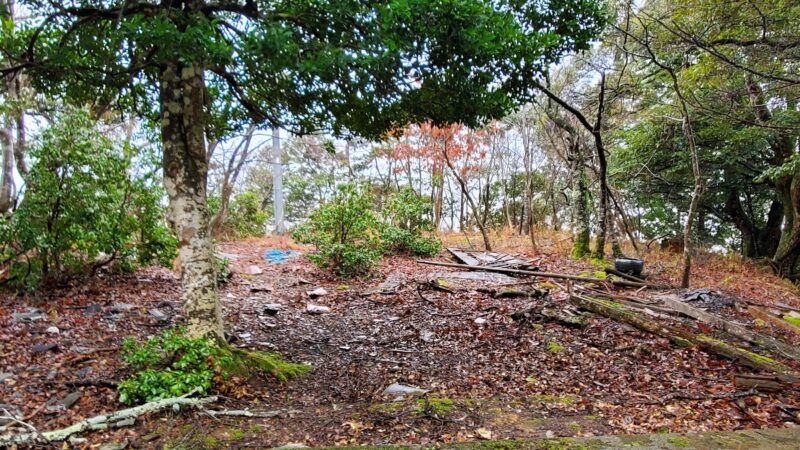
Located near the mountaintop, the main enclosure is the central part of the castle and is believed to have housed the lord’s residence and command post. Stone walls and other stonework remains are found around the main enclosure, indicating relatively advanced construction techniques for a medieval mountain castle.
Within the main enclosure, foundation stones of buildings have been confirmed, suggesting the existence of permanent structures. A well site has also been discovered, indicating efforts to secure a water source in preparation for a siege.
Arrangement of Enclosures
One of the characteristics of Kanjōyama Castle is the tiered arrangement of multiple enclosures. Enclosures are spread out to the north and south, protecting the main enclosure.
The southern enclosures are particularly large, with multiple flat areas arranged in a stepped fashion. These enclosures are thought to have functioned as soldier garrisons and supply storage areas. Earthen ramparts and trenches were constructed between the enclosures, creating a structure designed to gradually halt enemy advances.
The northern group of enclosures is similarly arranged with an emphasis on defensive function, combining natural terrain utilizing the ridgeline with artificial construction.
Stone Walls and Stone Masonry Techniques
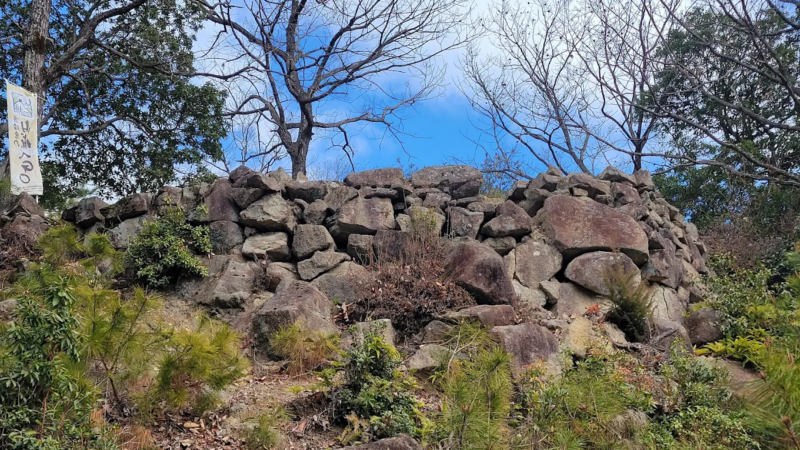
The stone walls and stone masonry are particularly noteworthy among the remains of Kanjōyama Castle. Relatively solid stone masonry remains for a medieval mountain castle, suggesting it may have been constructed during renovations in the Sengoku period.
The stone walls were mainly used on the edges of the enclosures and on the cliffs, enhancing defensive capabilities and preventing landslides. The stones used were natural stones quarried in the surrounding area, stacked without processing using the nozurazumi technique.
Views and Advantageous Location
A major feature of Kanjōyama Castle is its excellent views. From the mountaintop, one can see the Harima Sea, Aioi Bay, and the surrounding plains, providing a location that allows for early detection of enemy movements.
Furthermore, its location overlooking the Sanyo Road (a major highway in ancient and medieval times) gave it strategic importance as it controlled a key transportation hub. It is believed that this excellent location significantly contributed to its ability to hold back Nitta Yoshisada’s forces.
Highlights of Kanjōyama Castle
Well-Preserved Remains
The greatest highlight of Kanjōyama Castle is its remains, which have survived almost entirely unscathed by human activity. Stone walls, baileys, earthworks, moats, well remains, and building foundations—important elements for understanding the structure of a medieval mountain castle—are preserved in excellent condition.
The stone walls around the main bailey are particularly impressive, allowing observation of the evolution of castle-building techniques from the medieval to the Sengoku period. The layout of the baileys is also clearly preserved, making it easy to grasp the overall structure of the castle.
Rakan Stone and Legend
Kanjōyama Mountain has a strangely shaped rock called “Rakan,” which has been an object of local worship. The area surrounding the castle ruins contains many natural boulders and exposed rocks, which may have been used as defensive structures for the castle.
Historical Value and National Historic Site Designation
Kanjōyama Castle is designated as a National Historic Site as part of the “Akamatsu Clan Castle Ruins.” The Akamatsu clan was a powerful daimyo family that ruled the Harima region from the Nanboku-chō period to the Sengoku period, and their castle complex, including their base, Shirahata Castle, has been designated as a historical site as a whole.
Kanjōyama Castle is recognized for its high historical value as a valuable relic that tells the story of the wars of the Nanboku-chō period, and as a representative example of a medieval mountain castle in the Harima region.
Access to Kanjōzan Castle
Access by Public Transportation
Using JR
- Get off at Aioi Station on the JR Sanyo Main Line
- Approximately 15 minutes by car or taxi from Aioi Station to the trailhead
- Bus service from the station is limited, so please check in advance.
Access by Car
Using the Sanyo Expressway
- Approximately 20 minutes from Tatsuno-Nishi IC on the Sanyo Expressway
- Parking space available near the trailhead (note that the number of spaces is limited)
Using General Roads
- Access via Prefectural Road from National Route 2
- Search for “Kanjōzan Castle Ruins” or “Uryu, Yano-cho, Aioi City” on your car navigation system
Castle Climbing/Hiking Information
Hiking Time
- Approximately 40-60 minutes on foot from the trailhead to the main enclosure at the summit
- Approximately 2-3 hours round trip, including sightseeing of the mountain castle
Trail Conditions
- There are well-maintained hiking trails, making it relatively easy to climb.
- However, there are steep slopes characteristic of mountain castles, so appropriate clothing and shoes for hiking are necessary.
- Be careful as it can be slippery in rainy weather or after rain.
Precautions
- Bring drinking water and snacks.
- Insect repellent is necessary in summer, and warm clothing in winter.
- Check cell phone signal strength in advance.
- If hiking alone, inform family members or others of your hiking plan.
Tourist Information and Recommended Time to Visit
Best Season to Visit
Spring (March-May)
- Mild climate, ideal for hiking.
- Beautiful fresh greenery and excellent views.
Autumn (October-November)
- Beautiful scenery during the autumn foliage season.
- Temperatures are suitable for hiking.
- Best season for views.
Summer (June-September)
- Heat and insect repellent are necessary.
- Early morning hiking is recommended.
Winter (December-February)
- Snowfall is light, but be careful of ice.
- The air is clear and the views are excellent.
Estimated Visiting Time
- 2-3 hours including hiking and visiting the castle ruins
- 3-4 hours if you want to carefully observe the remains
- Allow extra time if you want to enjoy taking photographs
Nearby Tourist Spots
Shirahatagawa Castle Ruins
- The base of Akamatsu Enshin
- Visiting this together with Kanjōzan Castle will help you understand the Akamatsu clan’s castle strategy
- Approximately 30 minutes by car
Aioi Peron Festival
- A traditional event in Aioi City held annually in late May
- Worth visiting if your visit coincides with the festival
Rakan no Sato
- A facility where you can enjoy the nature and culture around Kanjōzan
- You can learn about the history and nature of the region
Kanjōzan Castle and the Akamatsu Clan’s Castle Network
The Akamatsu Clan’s Power in Harima
The Akamatsu clan was a powerful shugo daimyo that ruled the Harima region from the Nanboku-chō period to the Sengoku period. Akamatsu Enshin (Norimura) was an important supporter of Ashikaga Takauji and was appointed governor of Harima, Bizen, and Mimasaka provinces.
The Akamatsu clan established branch castles throughout Harima, building a network for governing their territory. Kanjōzan Castle was one of its important strongholds, responsible for controlling the area around Aioi and monitoring the Sanyōdō road.
Relationship with Shirahata Castle
Shirahata Castle (Kamigōri-chō, Hyogo Prefecture), the Akamatsu clan’s base, and Kanjōzan Castle had a close strategic relationship during the Nanboku-chō period. When Nitta Yoshisada’s forces invaded Harima, Akamatsu Enshin took refuge in Shirahata Castle, while his third son, Norisuke, took refuge in Kanjōzan Castle, coordinating their defenses.
These two castles divided Nitta’s army and held them back for a long period, enabling Ashikaga Takauji’s counterattack. The strategic importance of Kanjōzan Castle was maximized in this coordination with Shirahata Castle.
The Value of the Akamatsu Clan Castle Ruins
The Akamatsu Clan Castle Ruins, designated as a National Historic Site, include the Shirahata Castle Ruins, Kanjōyama Castle Ruins, Okishio Castle Ruins, and Sakamoto Castle Ruins. These castle ruins are valued as precious remains that demonstrate the development of castles from the medieval period to the Sengoku period.
Kanjōyama Castle, as a typical example of a medieval mountain castle and the site of a battle during the Nanboku-chō period, occupies a particularly important position within the Akamatsu Clan Castle Ruins.
Research and Preservation Activities of Kanjōyama Castle
Excavation Surveys and Research Results
Kanjōyama Castle has been investigated by the Aioi City Board of Education and the Hyogo Prefectural Board of Education. These investigations have accumulated new knowledge about the castle’s structure, construction period, and renovation history.
In particular, detailed surveys have been conducted on the structure of the stone walls and the layout of the baileys, providing important data for elucidating the construction techniques of medieval mountain castles.
Efforts for Preservation and Utilization
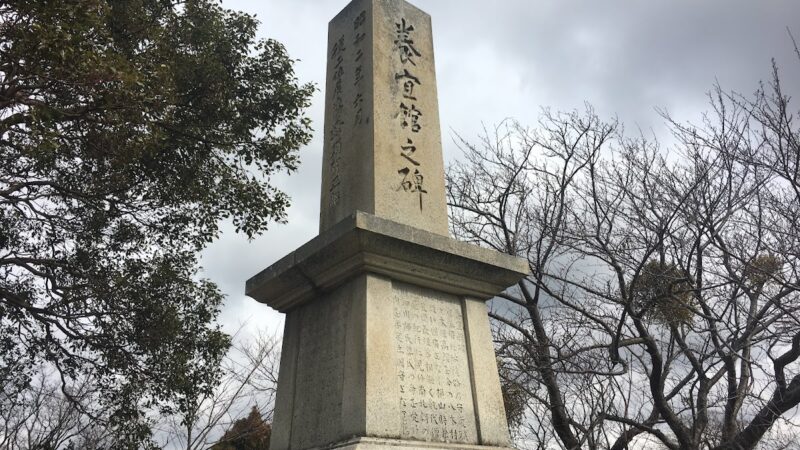
Aioi City is actively working on the preservation and utilization of the Kanjōzan Castle ruins. Through the maintenance of hiking trails, the installation of information boards, and the creation of brochures, efforts are being made to create an environment that makes it easy for citizens and tourists to visit the castle ruins.
In addition, local volunteer groups conduct cleaning and guidance activities, ensuring that the site is carefully protected as a regional historical heritage.
Exhibition at the Hyogo Prefectural Museum of History
The Hyogo Prefectural Museum of History features Kanjōzan Castle in its section introducing castles within the prefecture. The history and structure of the castle are explained clearly using photographs, diagrams, and excavated artifacts, making it useful for preparation before visiting and review afterward.
How to Enjoy Visiting Kanjōzan Castle
Experiencing Historical Romance
The greatest appeal of Kanjōzan Castle is the opportunity to experience firsthand the turbulent history of the Nanboku-chō period. Standing on the site where Akamatsu Norisuke fought against Nitta Yoshisada’s massive army for over 50 days, one can imagine the tense situation of that time and immerse oneself in historical romance.
Standing in the main enclosure and gazing in the direction from which Nitta’s army advanced, it’s also interesting to contemplate Norisuke’s state of mind.
Enjoying Observing the Remains
For castle enthusiasts, observing the well-preserved remains is a major pleasure. You can closely observe the construction techniques of medieval mountain castles, such as the way the stone walls are stacked, the layout of the enclosures, and the structure of the moats.
Bringing a camera and photographing the remains from various angles is also recommended. The stone walls and the steps of the enclosures, in particular, change their appearance depending on how the light hits them, making for great photographs.
Enjoying the View
The view from the mountaintop is one of the major attractions of Kanjōzan Castle. The panoramic view of Harima Nada, Aioi Bay, and the surrounding mountains is breathtaking and will make you forget the fatigue of the climb. On a clear day, you can see as far as Awaji Island, giving you a real sense of why a castle was built in this location.
Enjoying Nature
Kanjōyama Mountain is blessed with abundant nature, allowing you to observe plants and wild birds throughout the seasons. Enjoying nature observation in conjunction with a stroll through the castle ruins is highly recommended.
Especially during the fresh greenery of spring and the vibrant autumn foliage, you can enjoy a landscape where the beauty of nature and historical remains harmonize.
Summary: The Charm and Value of Kanjōyama Castle
Kanjōyama Castle is a valuable historical site that conveys the turbulent history of the Nanboku-chō period. The honorable history of Akamatsu Norisuke holding off Nitta Yoshisada’s large army for over 50 days and receiving a letter of commendation from Ashikaga Takauji elevates this castle beyond mere mountain castle ruins.
With its well-preserved stone walls and baileys, excellent views, and its importance in the medieval history of the Harima region, Kanjōyama Castle is full of charm and value. As part of the national historical site “Akamatsu Clan Castle Ruins” and as a representative medieval mountain castle of Harima, it is a historical site well worth visiting.
We recommend a visit to Kanjōzan Castle to history buffs, castle enthusiasts, mountain climbing lovers, and anyone interested in local history. Standing on the mountaintop and gazing at the view that Akamatsu Norisuke once saw, while reflecting on the history of the Nanboku-chō period, will surely be an unforgettable experience.