Complete Guide to Kanegasaki Castle Ruins (Tsuruga City, Fukui Prefecture) | History, Highlights, and Access Information
What is Kanegasaki Castle Ruins?
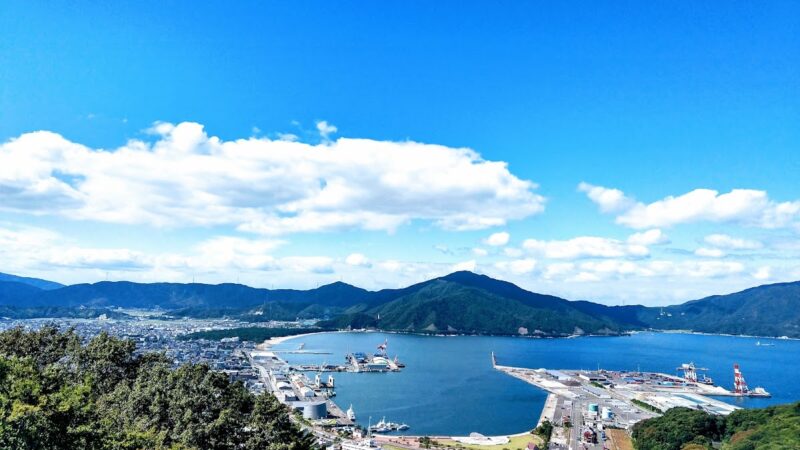
Kanegasaki Castle Ruins are a nationally designated historic site located in Kanegasaki-cho, Tsuruga City, Fukui Prefecture. Built on Mount Kanegasaki, 86 meters above sea level, overlooking Tsuruga Bay, it is a mountain castle also known as “Tsuruga Castle.” Currently, the remains of the castle are preserved, making it a popular tourist spot for history buffs and castle enthusiasts.
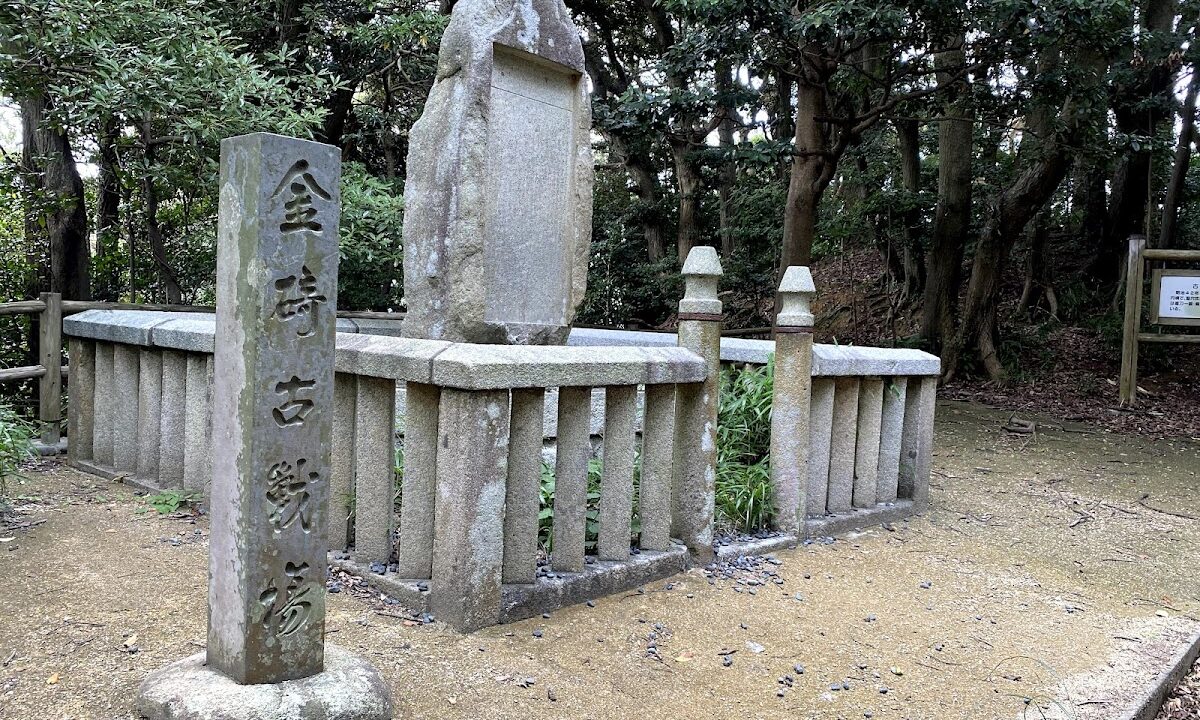
Located on a small hill overlooking Tsuruga Bay, it played a crucial role in Japanese history from the late Heian period to the Sengoku period, appearing repeatedly on the historical stage at important junctures. Designated a national historic site in 1934 (Showa 9), the remains of the Tsukimi-goten (main keep), the gate, baileys, and moats can still be seen today.
History of Kanegasaki Castle
Late Heian Period: Castle Construction
The history of Kanegasaki Castle dates back to the Jisho-Juei War (Genpei War). It is said that Taira no Michimori first built the castle here to counter Kiso Yoshinaka, who was expanding his power in the Hokuriku region. Due to its advantageous geographical location facing Tsuruga Bay, it functioned as an important base in the Hokuriku region.
Nanboku-cho Period: The Tragedy of Nitta Yoshisada
Kanegasaki Castle made its most significant historical mark in the first year of the En’en era (1336) during the Nanboku-cho period. Nitta Yoshisada holed up in this castle to protect Prince Tsunenaga and Prince Takanaga, sons of Emperor Go-Daigo, and engaged in fierce battles against the Ashikaga army.
Initially, Nitta Yoshisada fought well against the Northern Court army led by Ashikaga Takauji, but due to a shortage of provisions and the delayed arrival of reinforcements, he gradually fell behind. Ultimately, Yoshisada succeeded in escaping, but Prince Tsunenaga and Prince Takanaga met a tragic end, committing suicide within the castle. This fierce siege is recounted as a symbolic event of the Nanboku-chō War.
To pass on this history to future generations, Kanegasaki Shrine was built on the castle grounds, enshrining the two princes. Even today, it is a shrine visited by many worshippers, forming a historical space integrated with the Kanegasaki Castle ruins.
Sengoku Period: As a Branch Castle of the Asakura Clan
After the Nanboku-chō period, Kanegasaki Castle became the residence of the Kehi clan, and later, during the Sengoku period, it functioned as a branch castle of the Asakura clan, a powerful daimyo of Echizen Province. Tsuruga was a strategically important point connecting Kyoto and the Hokuriku region, and also an important port city on the Sea of Japan side, making Kanegasaki Castle an extremely important base for the Asakura clan.
Genki 1 (1570): The Retreat from Kanegasaki
The event that made Kanegasaki Castle famous throughout Japan was the “Retreat from Kanegasaki,” which occurred in April of Genki 1 (1570). Oda Nobunaga, along with Tokugawa Ieyasu and others, invaded Echizen from northern Omi in order to attack Asakura Yoshikage of Echizen.
On April 25th, the Oda army captured Tentoyama Castle, and then captured and entered Kanegasaki Castle. On April 26th, just as they were about to advance to Ichijodani, the Asakura clan’s stronghold, Nobunaga received shocking news. It was that Asai Nagamasa of northern Omi, who was supposed to be an ally, had sided with the Asakura clan and was planning to attack the Oda army from behind.
Due to Asai Nagamasa’s betrayal, the Oda army faced the crisis of being attacked from both sides by the Asakura and Asai armies. Nobunaga immediately decided to retreat, but this retreat proved extremely dangerous for the Oda army.
In this predicament, Toyotomi Hideyoshi (then known as Kinoshita Tokichiro) and Akechi Mitsuhide served as the rearguard, holding off the pursuing Asakura-Asai allied forces and successfully facilitating Nobunaga’s retreat. Hideyoshi’s quick thinking and courageous fighting are said to have formed the foundation for his later rise to power.
According to legend, it was Oichi, the wife of Asai Nagamasa and Nobunaga’s sister, who was the first to inform Nobunaga of Nagamasa’s betrayal. The anecdote tells of Oichi sending Nobunaga a bag of red beans with both ends tied, implicitly conveying that “enemies are approaching from both sides.”
This “Retreat from Kanegasaki” was one of the greatest crises in Nobunaga’s life, and at the same time, a crucial battle that brought widespread recognition to the talents of Hideyoshi and Mitsuhide as military commanders.
Highlights of Kanegasaki Castle Ruins
Tsukimi Goten (Main Enclosure) Ruins
The main enclosure (Honmaru), the central part of Kanegasaki Castle, is known as the “Tsukimi Goten” (Moon-Viewing Palace). From here, one can enjoy a panoramic view of Tsuruga Bay, a view that the former lords of the castle undoubtedly enjoyed. Currently, it is a flat open space, and while the original buildings no longer remain, parts of the stone walls and earthworks convey the atmosphere of the past.
Enclosures and Moats
The Kanegasaki Castle ruins retain several well-preserved enclosures (kuruwa) and moats. Enclosures are flat, leveled areas used for buildings and soldier encampments. Moats are defensive structures dug to cut across ridges, playing a crucial role in preventing enemy incursions.
By observing these remains, one can understand the layout (design) and defensive ingenuity of medieval mountain castles. For castle enthusiasts, tracing the remains offers the pleasure of imagining the strategies of the time.
Remains of the Wooden Gate
The remains of the wooden gate (kido) that stood at the entrance to the castle can also be seen. The wooden gate was an important facility that controlled entry and exit to the castle, and it was a crucial defensive point during wartime. Currently, its location can be estimated from the stonework and changes in the terrain.
Kanegasaki Shrine
Within the Kanegasaki Castle ruins is Kanegasaki Shrine, which enshrines Prince Tsunenaga and Prince Takanaga, who committed suicide during the Nanboku-cho period. Founded in the Meiji era, this shrine is believed to bring good fortune in overcoming difficulties and achieving romantic success, attracting many worshippers.
Especially in spring, it is known as a famous cherry blossom viewing spot, and the “Flower Exchange Festival” is held. During this festival, worshippers exchange cherry blossom branches, a traditional event where they pray for happiness.
View
One of the greatest attractions of the Kanegasaki Castle ruins is its magnificent view. From the hilltop overlooking Tsuruga Bay, you can see Tsuruga city, Tsuruga Port, and on clear days, even Wakasa Bay in the distance. This view truly makes you understand why this location was considered a strategically important point.
Nearby Tourist Attractions
Tsuruga Port
Tsuruga Port, spread out at the foot of the Kanegasaki Castle ruins, has flourished since ancient times as an important port on the Sea of Japan coast. Currently, it houses the “Port of Humanity Tsuruga Museum,” where you can learn about Tsuruga’s history, including its acceptance of Polish orphans and Jewish refugees during World War II.
Kehi Shrine
Kehi Shrine, located in the heart of Tsuruga City, is a historic shrine known as the guardian shrine of the Hokuriku Road. Its 11-meter-tall torii gate is one of Japan’s three largest wooden torii gates and is designated as a National Important Cultural Property.
Tsuruga Red Brick Warehouses
These red brick warehouses, built during the Meiji era, are historical buildings that tell the story of Tsuruga Port’s prosperity. Currently, they house restaurants and a diorama museum, offering a facility where you can experience Tsuruga’s history and culture.
Kehi no Matsubara
Kehi no Matsubara, one of Japan’s three great pine groves, is a scenic spot where approximately 17,000 Japanese red and black pines stretch for about 1.5 kilometers. Its beautiful landscape of white sand and green pines has been designated a National Place of Scenic Beauty.
Access Information
Access by Train
The nearest station is JR Tsuruga Station. With the extension of the Hokuriku Shinkansen, access from Tokyo and Kanazawa has significantly improved since March 2024.
Access from Tsuruga Station:
- Using the Community Bus: Take the Matsubara Line community bus from Tsuruga Station and get off at the “Kanazaki-gu-guchi” bus stop (approximately 10 minutes). From the bus stop, it’s about a 5-minute walk to Kanazaki-gu Shrine, and another 10-minute walk to the castle ruins’ main keep.
- Using the Tsuruga Sightseeing Bus: During the tourist season, the Tsuruga Sightseeing Bus operates, allowing you to efficiently visit major tourist spots.
- Using a Taxi: A taxi from Tsuruga Station to Kanegasaki Castle Ruins takes approximately 5 minutes and costs around 1,000 yen.
- Walking: Walking from Tsuruga Station takes approximately 25 minutes. Exploring Tsuruga city on the way is also enjoyable.
Access by Car
- Hokuriku Expressway: Approximately 10 minutes from Tsuruga IC
- Maizuru-Wakasa Expressway: Approximately 15 minutes from Tsuruga Minami Smart IC
Parking Information:
There is free parking available around Kanegasaki Shrine (capacity approximately 50 cars). However, congestion is expected during cherry blossom season and the tourist season, so using public transportation is recommended.
Basic Information
- Location: Kanegasaki-cho, Tsuruga City, Fukui Prefecture
- Designation: National Historic Site (Designated in 1934)
- Castle Structure: Mountain Castle
- Elevation: 86 meters
- Construction Period: Late Heian Period (Tradition)
- Main Lords: Taira no Michimori, Kehi clan, Asakura clan
- Visiting Hours: Free (Kanagasaki Shrine is open from approximately 9:00 to 17:00)
- Admission Fee: Free
- Estimated Time Required: Approximately 45 minutes to 1 hour (castle ruins walk only), 1.5 to 2 hours including Kanagasaki Shrine visit and surrounding sightseeing
Notes and Recommended Clothing for Visitors
Kanagasaki Castle is a mountain castle, and you will need to walk along mountain paths to reach the main keep. Please keep the following points in mind when visiting.
Clothing and Items to Bring
- Footwear: Comfortable walking shoes such as sneakers or hiking boots are essential. Avoid heels and sandals.
- Clothing: Comfortable clothing that allows for easy movement is recommended. Don’t forget insect repellent in summer and warm clothing in winter.
- Drinks: Especially in summer, bring drinks for hydration.
- Rain Gear: It is recommended to prepare rain gear during periods of unpredictable weather.
Safety Precautions
- To protect the historical remains, do not climb on the stone walls or earthworks.
- The mountain paths can be slippery in places, so watch your step.
- Some slopes are steep, so extra caution is needed if you are with small children.
Recommended Time to Visit
Spring (Late March to Early April)
The cherry blossom season is the most beautiful time to visit Kanegasaki Castle Ruins. Around Kanegasaki Shrine, approximately 600 Somei Yoshino cherry trees bloom, and the “Flower Exchange Festival” is held. It’s a perfect season to enjoy the cherry blossoms and the view of Tsuruga Bay.
Autumn (November)
The autumn foliage season is also beautiful, with a magnificent contrast between the red and yellow trees and the historical ruins. The weather is mild, making it a suitable time for a stroll.
Summer/Winter
Summer offers lush greenery, and winter provides snowy scenery. However, precautions against the heat are necessary in summer, and caution against snow and ice is needed in winter.
The Charm of Kanegasaki Castle Ruins
Kanegasaki Castle Ruins are a historical spot with value far beyond mere castle ruins. It remained at the center of history during crucial turning points in Japanese history, such as the Genpei War, the Nanboku-cho period, and the Sengoku period.
Numerous historical dramas unfolded here, including the tragedy of Nitta Yoshisada, the crisis of Oda Nobunaga, and the exploits of Toyotomi Hideyoshi and Akechi Mitsuhide. Although it is now a quiet historical site, imagining the turbulent times as you explore the ruins evokes a sense of historical romance.
The panoramic view of Tsuruga Bay, the well-preserved castle ruins, and the solemn atmosphere of Kanegasaki Shrine—all of these elements come together to deeply move visitors.
When visiting Fukui Prefecture, be sure to visit Kanegasaki Castle Ruins and feel the passage of time in this place where Japanese history was etched. It is a recommended tourist spot for everyone, whether you are a history buff, someone who wants to enjoy beautiful scenery, or someone interested in castle architecture.