Kamui Kotan Chashi (Asahikawa City, Hokkaido) Complete Guide: The Full Picture of a Cliffside Chashi Where Ainu Culture Thrives
What is Kamui Kotan Chashi?
Kamui Kotan Chashi is a fort site built by the Ainu people, located in Kamui Kotan, Kamui-cho, Asahikawa City, Hokkaido. Situated on a cliff on the left bank of the Ishikari River, this site, with its unique cliffside chashi structure, is known as a valuable historical site that conveys Ainu culture and the history of Hokkaido to the present day.
“Kamuy Kotan” means “village of the gods” or “place where the gods reside” in the Ainu language. The Ainu people believed that the violent god “Ninnekamui” lived in this land and held it in awe. Currently, remains such as earthworks and semicircular dry moats can be seen, and it is designated as a Hokkaido Historic Site as part of the “Kamui Kotan Pit Dwelling Site.”
Basic Information on Kamui Kotan Chashi
- Location: Kamui Kotan, Kamui-cho, Asahikawa City, Hokkaido
- Type: Chashi ruins (cliff-faced type)
- Builder: Unknown (estimated to have been built by the Ainu people)
- Construction Period: Details unknown
- Year of Abandonment: Unknown
- Designation: Part of the Hokkaido Historic Site “Kamui Kotan Pit Dwelling Site”
- Elevation: Approximately 10 meters above the Ishikari River
History and Cultural Background of Kamui Kotan Chashi
The Position of Kamui Kotan in Ainu Culture
Kamui Kotan is a gorge located at the boundary where the Ishikari River flows from the Kamikawa Basin to the Ishikari Plain, and has held special significance for the Ainu people since ancient times. This region, known as a treacherous stretch of the Ishikari River, showcases rugged yet beautiful rock formations carved by the water’s current over more than 100 million years.
In the Ainu language, “Kamuy” means god, and “Kotan” means settlement or village. As this name suggests, Kamui Kotan was a sacred place for the Ainu people, considered a spiritual space where various gods intersected. This particular location, where the Ishikari River makes a large bend, was not only an important point for water transport and fishing, but also a sacred site where rituals and ceremonies were performed.
Human Activities from the Jomon Period
Around Kamui Kotan, archaeological excavations have uncovered pit dwellings and stone circles dating back to the Jomon period. These remains tell the story of human habitation in this area for thousands of years.
Pit dwelling sites are scattered around Kamui Kotan Chashi, providing important evidence of the existence of Ainu settlements since ancient times. Given its favorable location, it is presumed that fishing, hunting, and trade flourished in this area.
The Role and Function of Chashi
Chashi are facilities built by the Ainu people, and there are various theories regarding their purpose. While generally translated as “fortress” or “castle,” in the case of Kamui Kotan Chashi, its relatively weak defensive structure suggests it may have had a complex set of functions rather than being a purely military fortress.
- Ritual Site: An altar where rituals and ceremonies were performed in a sacred place.
- Watchtower: A place to monitor water transport and fishing activities on the Ishikari River.
- Assembly Hall: A place for gatherings to decide important matters of the Kotan (village).
- Shelter: A temporary shelter in emergencies.
Judging from the location and structure of Kamui Kotan Chashi, it is believed to have had a particularly strong ritualistic purpose. Located overlooking the Ishikari River, it was a suitable place for prayers and rituals to the gods.
Details of the Structure and Remains of Kamui Kotan Chashi
Characteristics of Cliff-Facing Chashi
Kamui Kotan Chashi is classified as a “Cliff-Facing Chashi.” A cliff-facing Chashi is a type of Chashi that utilizes natural cliffs and steep slopes as part of its defenses, cleverly taking advantage of the terrain on the cliff on the left bank of the Ishikari River.
The structure is characterized by a moat that cuts off the tip facing the river, combining natural fortifications with artificial defensive structures. The elevation difference from the Ishikari River is approximately 10 meters, and its good visibility from the river suggests it functioned as a monitoring site for water transport and a place for rituals.
Details of the Dry Moat
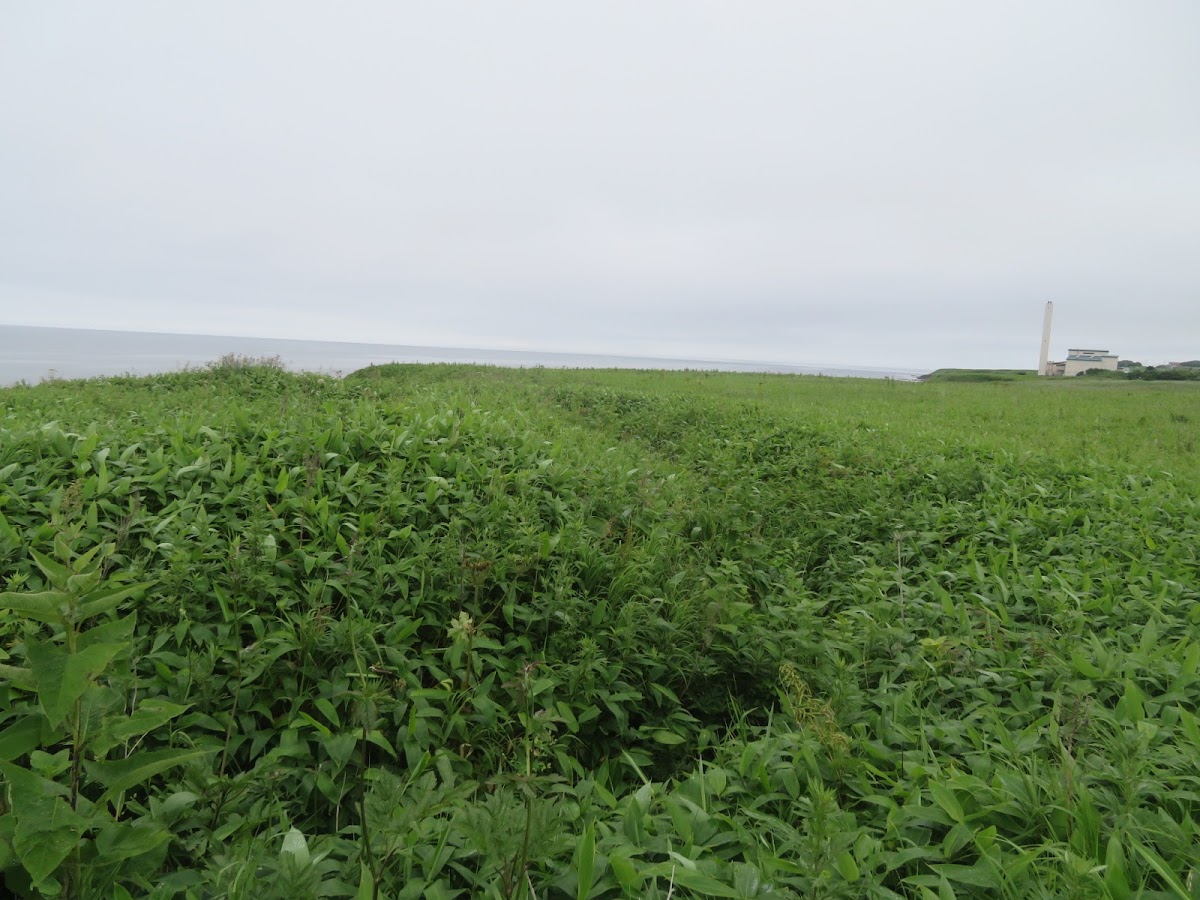
The most distinctive feature of the Kamui Kotan Chashi is a semi-circular (crescent-shaped) dry moat approximately 20 meters in diameter. This dry moat encircles the area and has the following characteristics:
- Width: 1.5 meters to 3.5 meters
- Depth: 50 centimeters to 70 centimeters (some parts are now shallower)
- Shape: Semi-circular or crescent-shaped
- Purpose: More likely a boundary marking a sacred area than a defensive structure
Based on the scale and shape of the dry moat, it is highly probable that it served as a boundary line to demarcate a ritual space rather than a full-fledged military defensive structure. In Ainu beliefs, distinguishing between the sacred and the secular world is crucial, and it is presumed that this dry moat served that purpose.
Use of Earthworks and Topography
Traces of earthworks can also be found alongside the dry moat. These earthworks are thought to have been constructed using the excavated soil from the dry moat, and they clearly demarcated the internal space of the chashi (fortified settlement).
Topographically, the natural fortifications of the cliff facing the Ishikari River were utilized to the fullest extent, and artificial defensive structures were kept to a minimum. This suggests that the Kamui Kotan Chashi was not a purely military facility, but rather a facility primarily for rituals and ceremonies.
Positional Relationship with Pit Dwelling Sites
The Kamui Kotan Chashi is located in a corner of the “Kamui Kotan Pit Dwelling Site.” The chashi is situated in the back of the area where pit dwelling sites are scattered, indicating that the sacred area was located some distance from the center of the settlement.
The remains of pit dwellings can still be seen today as “ground full of holes,” giving a real sense of the many people who once lived here. The spatial relationship between the Chashi (fortified site) and the dwelling remains reveals the spatial structure of Ainu society, where daily life spaces and ritual spaces were clearly distinguished.
Highlights of Kamui Kotan Chashi
Semicircular Dry Moat
The biggest highlight is undoubtedly the semicircular dry moat. While some parts have become shallower over time, its shape is still clearly visible. Standing on the edge of the moat, one can imagine the Ainu people performing rituals in this place.
View of the Ishikari River
From the Chashi, you can look down on the flow of the Ishikari River. Kamui Kotan is a place where the Ishikari River makes a large bend, and it is also known as a scenic spot with strangely shaped rocks stretching for about 10 kilometers. This view is thought to be one of the reasons why the Ainu people chose this place as “the dwelling place of the gods.”
Pit Dwelling Sites
The pit dwelling sites scattered around the Chashi (fortified site) are a must-see. The depressions remaining in the ground give a real sense of the settlement that once existed here and the many people who lived there. It’s a place where you can feel the weight of history, where people lived for a long period, from the Jomon period to the Ainu period.
Natural Landscape of Kamui Kotan
Kamui Kotan is a scenic spot selected as one of the Eight Views of Asahikawa, and is especially known as a famous spot for autumn foliage. In spring, pale pink cherry blossoms bloom, and in autumn, you can enjoy the beautiful valley scenery with maple and rowan trees vividly colored. The rock face of chlorite schist, eroded by the water flow over more than 100 million years, displays a rugged yet beautiful form.
Kamui Kotan Potholes
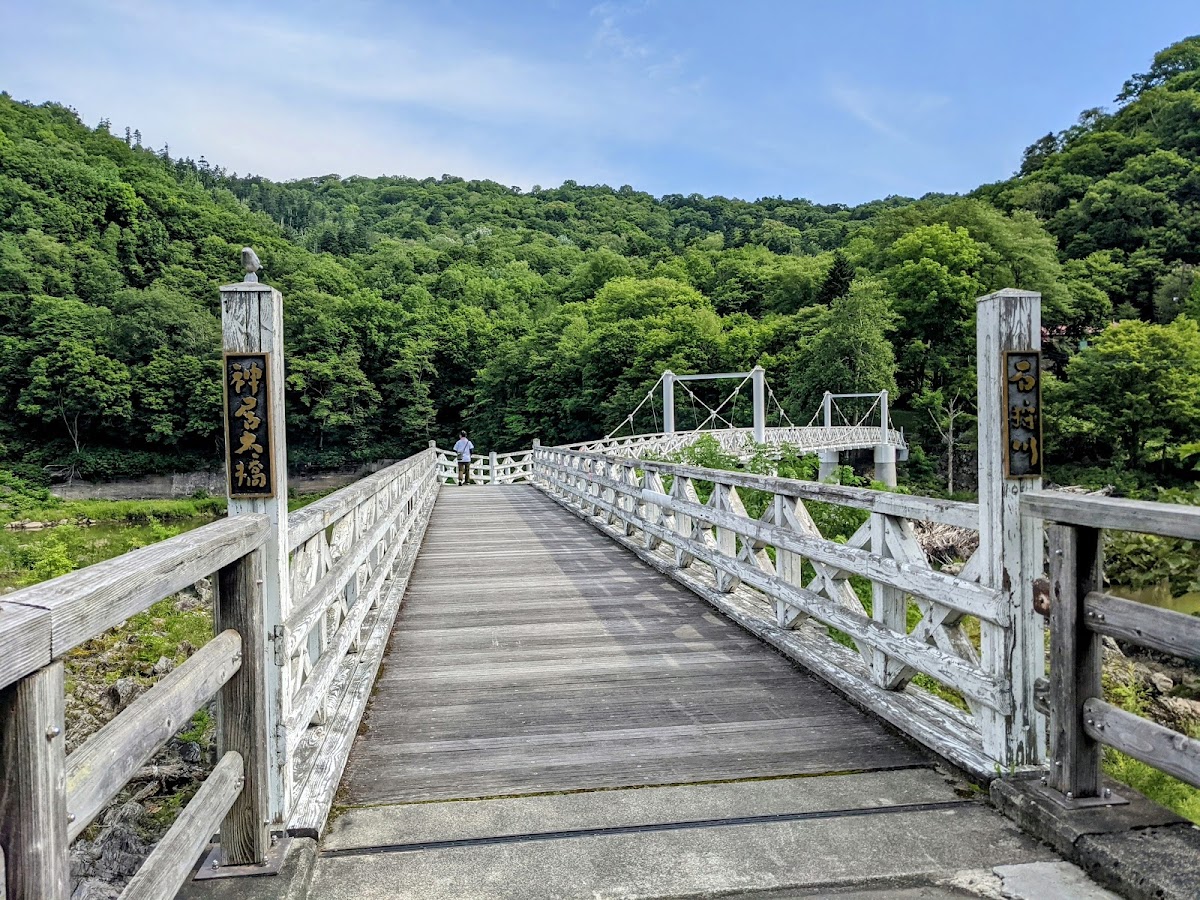
The “Kamui Kotan Potholes,” located near the suspension bridge, were designated a natural monument of Asahikawa City in 1966. These natural formations are thought to have been one of the factors that made the Ainu people feel the power of the gods.
Former Kamui Kotan Station
The former Kamui Kotan Station, built in 1910 (Meiji 43), stands quietly. This station is a valuable structure that tells the history of Hokkaido’s railways and is an important spot for understanding the modern history of Kamui Kotan.
Other Chashi around Kamui Kotan
In addition to Kamui Kotan Chashi, there are several other Chashi (fortified sites) in the Kamui Kotan area.
Kamui Kotan Right Bank Chashi (Samaikuru Fort Site)
This Chashi is located on the opposite bank of the Ishikari River, on a mountain called Kamui-iwa. It is also known as “Samaikuru Fort Site.” While it was once possible to cross to the opposite bank via a suspension bridge, the bridge is now closed due to safety concerns, making access difficult.
Kamui Kotan Left Bank Chashi
While it is believed that a left bank chashi (fortified site) also exists in the Kamui Kotan area, detailed information is limited. The existence of these multiple chashi speaks to how important Kamui Kotan was to the Ainu people.
Access Information and Visiting Guide
Access by Car
Access to Kamui Kotan Chashi is convenient by car.
- Use National Route 12: Head north on National Route 12 from Asahikawa city center.
- Before the Kamui Kotan Tunnel: There is a traffic light approximately 700-800 meters before the Kamui Kotan Tunnel.
- Pass the Intersection: Pass the intersection leading towards Rumoi and continue for another 50 meters.
- Look for the Blue Sign: There is a blue sign on the left side of the road that says “Kamui Kotan Pit Dwelling Site”.
- Parking: You can park your car near the sign.
Walking Route to the Chashi
From the parking area, proceed towards the Kamui Kotan Pit Dwelling Site. The Kamui Kotan Chashi is located at the very back of this site. Walking across the ground where pit dwelling sites are scattered, you will reach the Chashi with its semicircular dry moat.
It is also shown on Google Maps, so you can arrive without getting lost by using your smartphone’s navigation function.
Points to Note When Visiting
- Watch Your Step: There are many depressions from pit dwellings, so please be very careful where you step.
- Protection of the Site: This is a valuable site designated as a Hokkaido Historic Site. Please be careful not to damage the remains.
- Season and Weather: The ground can become slippery when it rains. Also, in winter, the remains are difficult to see due to snow cover.
- Insect countermeasures: Since there are many insects from spring to autumn, we recommend taking precautions such as insect repellent spray.
Best time to visit
- Spring (April-May): This is the cherry blossom season, and you can enjoy it along with the natural beauty of Kamui Kotan.
- Autumn (September-October): Known as a famous spot for autumn leaves, this is the time to enjoy the most beautiful scenery.
- Summer (June-August): The greenery is lush, and the remains are easy to see, but insect countermeasures are essential.
- Winter (November-March): The remains are difficult to see due to snow cover, but you can experience the mystical atmosphere of Kamui Kotan in the winter silence.
Kamui Kotan Chashi and Hokkaido Historic Site Designation
Kamui Kotan Chashi is designated as a Hokkaido Historic Site as part of the “Kamui Kotan Pit Dwelling Site.” This designation evaluates not just the Chashi (fortified settlement) itself, but the entire collection of traces of human activity spanning a long period from the Jomon period to the Ainu period.
The significant value of this site lies in the fact that multiple historical remains—pit dwellings, stone circles, and the Chashi—are preserved together. As a valuable historical site where one can experience the evolution of human history in Hokkaido in one place, it holds an important position both academically and as a tourist resource.
Research on Kamui Kotan Chashi and Future Challenges
Current Research Status
Regarding Kamui Kotan Chashi, many details remain unknown, such as the builder, construction date, and year of abandonment. This stems from the characteristics of Ainu culture, which lacked written records, and the possibility that the Chashi itself may have been in use until a relatively recent period.
While archaeological excavations have confirmed remains such as pit dwellings and stone circles, further research is needed to determine the precise construction period and duration of use of the Chashi.
Challenges in Preservation and Utilization
Kamui Kotan Chashi, designated as a Hokkaido Historic Site, still faces challenges in its proper preservation and utilization.
- Weathering of the Remains: The dry moat is becoming shallower over time, and its shape may become unclear in the future.
- Balancing Access and Protection: A balance is needed between utilizing it as a tourist resource and protecting the remains.
- Information Dissemination: Compared to the natural landscape of Kamui Kotan, the existence of the Chashi is not yet widely known.
- Educational Use: It is hoped that it will be used as an educational site for learning about Ainu culture and Hokkaido history.
Experiencing the Spirit of Ainu Culture at Kamui Kotan Chashi
Visiting Kamui Kotan Chashi is not simply about viewing ancient ruins. This is a place where the Ainu people coexisted with nature, revered their gods, and cultivated their unique culture.
The sound of the Ishikari River flowing, the silence of the surrounding forest, and the space created by the semicircular dry moat. All of these elements convey the atmosphere of a time when rituals were performed here, people gathered, and conversed with the gods.
As the name “Kamuykotan” suggests, this place still holds a special atmosphere. Visitors can sense, even a little, the Ainu people’s reverence for nature, their faith in the gods, and their worldview of harmony between humanity and nature.
Summary: The Value and Charm of Kamui Kotan Chashi
Kamui Kotan Chashi is a valuable Ainu cultural heritage site remaining in Asahikawa City, Hokkaido. Its distinctive cliff-face structure, traces of human activity dating back to the Jomon period, and the mystical atmosphere as a “place where gods reside” are major attractions of this site.
The semicircular dry moat, the view overlooking the Ishikari River, the scattered pit dwelling sites, and the magnificent natural landscape of Kamui Kotan—all of these elements come together to convey to visitors the depth of Hokkaido’s history and culture.
While many details remain unclear, this only enhances the mystique of this archaeological site. Further research is expected to reveal much more.
When you visit Hokkaido, be sure to stop by Kamui Kotan Chashi. It will be a valuable experience, allowing you to feel the spirit of Ainu culture and touch upon the profound history of Hokkaido.