A Thorough Explanation of the History and Structure of Kamijo Castle | The Two Kamijo Castles in Owari and Echigo Provinces
What is Kamijo Castle?
There were two castles named Kamijo Castle during Japan’s Sengoku period (Warring States period). One was a flatland castle located in Kamijo, Kasugai District, Owari Province (present-day Kamijo-cho, Kasugai City, Aichi Prefecture), and the other was a hilltop castle located in Kariwa District, Echigo Province (present-day Kashiwazaki City, Niigata Prefecture). Both castles played important roles in regional control during the Sengoku period and were deeply connected to the warlords of the time, Oda Nobunaga and Uesugi Kenshin, respectively.
This article provides a detailed explanation of the history, structure, remains, and current status of these two Kamijo Castles.
Kamijo Castle, Owari Province (Kasugai City, Aichi Prefecture)
Overview and Location
Kamijo Castle in Owari Province is a flatland castle located in the south-central part of Kasugai City, Aichi Prefecture. The Utsugawa and Shonaigawa rivers flowed north-south through the eastern part of the castle, and these rivers functioned as a natural defensive line. Despite being a flatland castle built on a plain, its defensive design utilizing the rivers is distinctive.
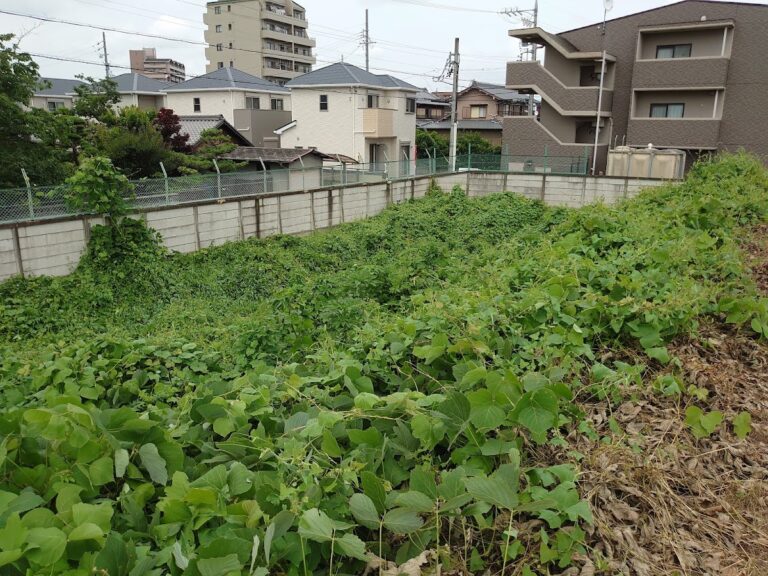
The Kamijo-cho area of Kasugai City is now a residential area, but remnants of the former castle grounds still remain, conveying the history of the region.
History and Background
Construction and Early History
Regarding the construction period of Kamijo Castle, it is said to have been built in Kenpo 6 (1218) by Kosaka Sonkuro Mitsuyoshi (later of the Hayashi clan). According to this tradition, Kamijo Castle existed from the early Kamakura period, but there is limited reliable historical evidence to support this.
During the Sengoku period (Warring States period), Kamijo Castle became one of the important bases in Owari Province. In particular, it was a key castle for regional control within the sphere of influence of the Oda clan.
The Hayashi Clan Era
During the Sengoku period, Kamijo Castle was ruled by Hayashi Morishige. Hayashi Morishige was a retainer of Oda Nobunaga, but it is believed that at some point he surrendered his territory to Nobunaga and returned to farming. This is thought to be due to the reorganization of territories accompanying the expansion of the Oda clan’s power.
The Hayashi clan was a powerful local lord in Owari Province, and Kamijo Castle served as their base. Members of the family, such as Hayashi Shigeyuki, are also said to have served as castle lords, indicating a deep connection between the Hayashi clan and Kamijo Castle.
The Kosaka Muneyoshi Era
After Hayashi Morishige, Kamijo Castle became the residence of Kosaka Muneyoshi (also known as Kosaka Yukichi). Kosaka Muneyoshi is known as a retainer of Oda Nobunaga and played a crucial role in Nobunaga’s unification of Owari and expansion of his power.
The period when Muneyoshi became lord of Kamijo Castle coincides with the time when Oda Nobunaga was unifying Owari Province. Kamijo Castle functioned as a base for governing the Kasugai district under Nobunaga’s rule.
Toyotomi Hideyoshi and Ikeda Tsuneoki
A legend remains that Toyotomi Hideyoshi stopped by Kamijo Castle on his way back from Ryusenji Temple. It is believed that Hideyoshi visited Kamijo Castle during his tour of various castles within Owari Province while serving as a retainer of Oda Nobunaga.
Further noteworthy is the legend that Ikeda Tsuneoki set up camp at Kamijo Castle during the Battle of Komaki-Nagakute in 1584. The Battle of Komaki-Nagakute was a crucial battle fought between Toyotomi Hideyoshi and the combined forces of Tokugawa Ieyasu and Oda Nobuo, and the use of Kamijo Castle as a military base during this battle demonstrates its strategic importance.
Ikeda Tsuneoki was a senior retainer of Oda Nobunaga and followed Toyotomi Hideyoshi after the Honnoji Incident. During the Battle of Komaki and Nagakute, he participated as a key general on Hideyoshi’s side, and it is believed that he utilized Kamijo Castle as one of his front-line bases.
Abandonment and Aftermath
From the Tensho era onward, with the reorganization of the Oda clan’s power and the restructuring of castles under the Toyotomi regime, it is presumed that Kamijo Castle gradually lost its military function. In the Edo period, it was completely abandoned, and the castle site was used for farmland and residential areas.
Structure and Remains
Layout and Defensive Design
Kamijo Castle in Owari Province was built as a flatland castle, but its distinctive feature is its defensive design that utilized two rivers, the Utsugawa and Shonaigawa, as natural moats. Despite being a castle in a plain, its defensive capabilities were enhanced by skillfully utilizing the water system.
Although there are few detailed records regarding the castle’s structure, it is believed to have had a layout typical of flatland castles of the Sengoku period, with multiple baileys (kuruma). The main bailey was likely the center, with the residences of retainers and supply facilities arranged around it.
Earthworks and Moats
Earthworks were constructed as defensive structures for Kamijo Castle. These earthworks served to prevent enemy intrusion and also clearly defined the castle’s boundaries. Even today, some remnants of the earthworks can be seen, offering a glimpse into the castle’s structure at the time.
Regarding the moats, in addition to utilizing rivers as outer moats, it’s possible that artificial moats were dug around the castle. In flatland castles, moats functioned as water moats, serving as an important defensive structure to make enemy approach difficult.
Existing Remains
Currently, traces of earthworks and well remains have been confirmed in parts of the Kamijo Castle site. A stone monument marking the castle site has also been erected, and it is preserved as a local historical heritage site as “Kamijo Castle Site.”
Large-scale structures such as a castle tower base or stone walls have not been confirmed, which is thought to be due to it being a flatland castle and being abandoned relatively early. Nevertheless, the subtle undulations of the terrain and land use patterns allow for estimation of the former castle area.
Relationship with Shibata Residence
Around Kamijo Castle, there are place names and remains known as “Shibata Residence.” While some theories suggest a connection to Shibata Katsuie, a senior retainer of Oda Nobunaga, details remain unclear. It has also been suggested that Shibata Residence may have been a branch castle of Kamijo Castle or the residence of a retainer group.
Local Information and Access
Kamijo Castle ruins are located in Kamijo-cho, Kasugai City, Aichi Prefecture. Currently a residential area, no clear castle structures remain, but there are places where stone monuments and explanatory signs have been erected.
If using public transportation, it is convenient to take a bus or taxi from JR Chuo Main Line Kasugai Station or Meitetsu Komaki Line Ajimi Station. If using a private car, parking spaces around the castle ruins are limited, so prior confirmation is necessary.
When visiting, please be considerate of the residential area and avoid disturbing the residents’ lives.
Kamijo Castle, Echigo Province (Kashiwazaki City, Niigata Prefecture)
Overview and Location
Kamijo Castle in Echigo Province is a hilltop castle located in Kashiwazaki City, Niigata Prefecture. It was a fortified residence built on a hill approximately 15 meters above sea level, with the Ugawa River, flowing east of the castle ruins, serving as its outer moat.
Built on a slightly elevated area of about 10 meters, the castle overlooked the plains and served as both a government office and a military base.
History and Background
Construction and the Uesugi Clan
Kamijo Castle in Echigo Province is believed to have been built around 1445 by Uesugi Kiyokata (Kamijo Kiyokata). Uesugi Kiyokata served as the deputy governor of Echigo Province and built Kamijo Castle as a base for controlling the region.
From the Muromachi period to the Sengoku period, Echigo Province was under the control of the Uesugi clan, and Kamijo Castle functioned as part of that system of rule. The Kamijo clan is believed to have been a member of the Uesugi family or a powerful vassal, entrusted with governing this region.
The Era of Uesugi Kenshin
During the Sengoku period, Echigo Province came under the control of Uesugi Kenshin (Nagao Kagetora). Kamijo Castle, as a castle within Kenshin’s sphere of influence, played a part in the administrative structure of Echigo.
Kamijo Masashige was a samurai who served Uesugi Kenshin and was based at Kamijo Castle. Masashige is said to have gained Kenshin’s trust and was responsible for important duties within Echigo.
The Otate Rebellion and the Fall of the Castle
In 1578, when Uesugi Kenshin died suddenly, the “Otate Rebellion” erupted over his succession. This civil war was a fierce power struggle between Kenshin’s adopted son, Uesugi Kagekatsu, and Uesugi Kagetora (the seventh son of Hojo Ujiyasu).
Kamijo Masashige served on the side of Uesugi Kagekatsu, but Kamijo Castle was attacked and fell to Kagetora’s forces. This battle became a large-scale civil war that divided Echigo Province in two, with many castles becoming battlegrounds.
Ultimately, Uesugi Kagekatsu emerged victorious and became the ruler of Echigo Province, but Kamijo Castle is believed to have suffered significant damage in this battle.
Subsequent History
There are few clear records of how Kamijo Castle was used after the Otate Rebellion, but it is presumed that the castle’s role changed as the Uesugi clan’s system of rule was reorganized.
In the Edo period, Kamijo Castle was abandoned and subsequently used as farmland.
Structure and Remains
Layout and Defensive Design
Kamijo Castle in Echigo Province is a flatland castle built on a hill 15 meters above sea level. The main enclosure was positioned on a slightly elevated area of about 10 meters relative to the surrounding plains, offering a view of the surrounding plains.
The Ugawa River, flowing east of the castle, functioned as a natural outer moat, making it difficult for enemies to approach. It is also believed that a tiered defensive line was constructed, utilizing the hilly terrain.
Enclosures and Earthworks
Kamijo Castle had multiple enclosures. Centered around the main enclosure, the second and third enclosures were arranged in a stepped pattern, each demarcated by earthworks.
The earthworks were crucial to the castle’s defense, preventing enemy intrusion and protecting the buildings within the enclosures. Even today, parts of the earthworks remain in good condition, making them valuable remains for understanding the castle’s structure at the time.
Existing Remains
Currently, the Kamijo Castle site is a designated historical site of Kashiwazaki City and has been developed into a park. The remains of the enclosures and earthworks are clearly visible, making it a valuable place to experience the castle structure of the Sengoku period.
While structures such as stone walls and a keep base have not been confirmed, this is thought to be due to its nature as a manor house and its relatively early abandonment. ### Local Information and Access
The Kamijo Castle Ruins in Echigo Province are located in Kashiwazaki City, Niigata Prefecture, and have been designated a city-designated historical site and turned into a park. It is approximately a 15-minute drive from the Kashiwazaki Interchange on the Hokuriku Expressway, making it relatively easy to access.
Information boards are installed within the park, allowing visitors to learn about the castle’s history and structure. Furthermore, the well-preserved remains make it a worthwhile historical site for castle enthusiasts and history buffs.
Parking is also available, creating an easily accessible environment for visitors.
Comparison of the Two Kamijo Castles
Similarities
The two Kamijo Castles in Owari Province and Echigo Province share several similarities.
- Important Bases during the Sengoku Period: Both castles functioned as important bases for regional control during the Sengoku period.
- Relationships with Powerful Daimyo: Owari Province’s Kamijo Castle had deep connections with Oda Nobunaga, and Echigo Province’s Kamijo Castle with Uesugi Kenshin, both prominent daimyo of the Sengoku period.
- Defense primarily based on earthworks: Both castles utilized earthworks as their main defensive feature, lacking large-scale structures such as stone walls or keeps, making them medieval-style castles.
- Defense utilizing rivers: Both castles utilized nearby rivers as natural moats, enhancing their defensive capabilities.
Differences
On the other hand, there are also clear differences between the two Kamijo Castles.
- Topography and castle style: Owari Province’s Kamijo Castle is a flatland castle, while Echigo Province’s Kamijo Castle is a hilltop castle.
- Construction period: Owari Province’s Kamijo Castle was constructed in Kenpo 6 (1218), while Echigo Province’s Kamijo Castle was constructed in Bun’an 2 (1445), resulting in different construction periods. 3. Preservation Status of Remains: While Kamijo Castle in Echigo Province has been designated a city-designated historical site and turned into a park, with its remains well-preserved, Kamijo Castle in Owari Province has been developed into a residential area, making it difficult to confirm its remains.
- Historical Role: Kamijo Castle in Owari Province is emphasized as a base for the Oda clan’s territorial control, while Kamijo Castle in Echigo Province is emphasized as the administrative center of the Uesugi clan.
Historical Significance of Kamijo Castle
As a Base for Regional Control
The two Kamijo Castles were important bases supporting the ruling systems of the Sengoku daimyo in their respective regions. Castles were not merely military facilities, but political centers with diverse functions such as territorial management, tax collection, judicial affairs, and governance of local residents.
Castle Technology of the Sengoku Period
The structure of Kamijo Castle is a valuable example that shows the developmental stages of castle technology during the Sengoku period. As a castle representing a transitional period from medieval castles primarily composed of earthworks and moats to more sophisticated early modern castles, it occupies an important position in the study of castle history.
Importance in Local History
Kamijo Castle is an indispensable historical site for understanding the history of the region. The settlement, economic activity, and cultural development that formed around the castle form the foundation of the current local community.
Preservation and Utilization of Kamijo Castle
Preservation as a Historical Site
Kamijo Castle in Echigo Province is preserved as a designated historical site of Kashiwazaki City and has been developed into a park. This ensures that the remains are not destroyed and are passed down to future generations, while also serving as a place for citizens and tourists to learn about history.
Regarding Kamijo Castle in Owari Province, although residential development is progressing, efforts continue to convey that an important castle once stood on this site through the installation of stone monuments and explanatory signs.
Utilization for Education and Tourism
The Kamijo Castle ruins are utilized as an important teaching material for local history education. It provides opportunities for children to learn about local history as a site for local history studies and historical exploration in elementary and junior high schools.
Furthermore, for castle enthusiasts and history buffs, it is gaining value as a tourist resource, offering a valuable opportunity to experience the history of the Sengoku period.
Future Challenges
There are several challenges in the preservation and utilization of the Kamijo Castle ruins. In particular, in areas like Kamijo Castle in Owari Province, where residential development has progressed, archaeological excavations and preservation of remains have become difficult.
On the other hand, with the development of digital technology, new possibilities for historical transmission are expanding, such as the restoration of castles using AR (augmented reality) and VR (virtual reality), and the dissemination of information online.
Summary
Kamijo Castle refers to two castles that existed in Owari Province (Kasugai City, Aichi Prefecture) and Echigo Province (Kashiwazaki City, Niigata Prefecture), each playing an important role in the regional history of the Sengoku period.
Kamijo Castle in Owari Province is known as the residence of Kosaka Muneyoshi, a retainer of Oda Nobunaga, and as the site where Ikeda Tsuneoki set up camp during the Battle of Komaki and Nagakute. It is believed to have been built in 1218, and some remains, such as earthworks and well remains, still exist.
Kamijo Castle in Echigo Province was built in 1445 by Uesugi Kiyokata, and during the time of Uesugi Kenshin, Kamijo Masashige served as the castle lord. During the Otate Rebellion, he fought on the side of Kagekatsu, but the castle fell to an attack by Kagetora’s forces. Currently, it is a city-designated historical site and has been turned into a park, with well-preserved remains such as baileys and earthworks.
Both castles are medieval castles primarily composed of earthworks, characterized by their defensive design that utilizes rivers as natural moats. Currently, efforts to preserve and utilize them as important historical heritage sites of the region continue.
Understanding the history of Kamijo Castle is crucial for comprehending the realities of regional governance during the Sengoku period, the development of castle construction technology, and the formation of the current local community. It is essential that this valuable historical heritage be passed on to future generations through appropriate preservation and utilization.