Jindaiji Castle Ruins: A National Historic Site Preserving the Footprints of a Sengoku Period Battle
Overview of Jindaiji Castle Ruins
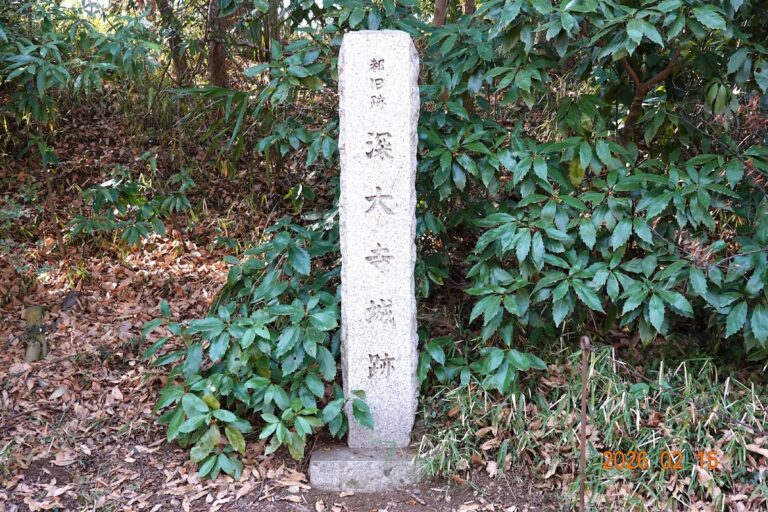
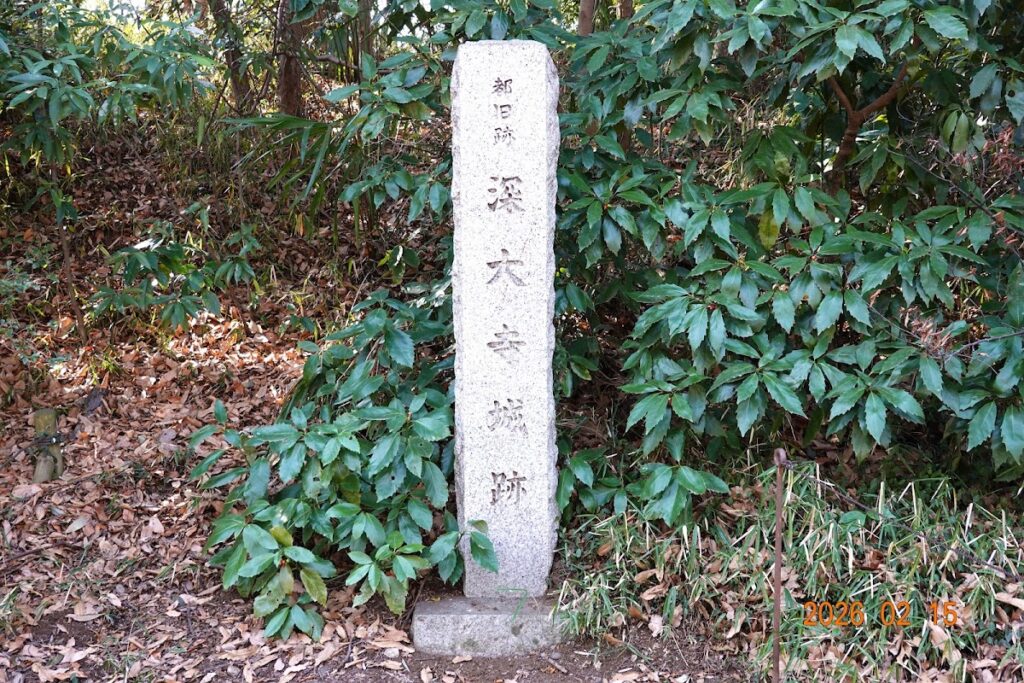
Jindaiji Castle Ruins are the remains of a castle from the Sengoku period, located in Jindaiji Motomachi 5-chome, Chofu City, Tokyo. Currently preserved within the aquatic plant garden, an annex of the Tokyo Metropolitan Jindai Botanical Garden, it was designated a national historic site on July 26, 2007.
Built on a tongue-shaped plateau approximately 50 meters above sea level, on the southern edge of the Musashino Plateau in the southern part of the Kanto Plain, this castle site holds significant historical value as an early Sengoku period castle built and rebuilt by the Ogigayatsu Uesugi clan during the fierce battles between the Ogigayatsu Uesugi and Odawara Hojo clans in the first half of the 16th century in southern Kanto.
The surrounding terrain of the castle ruins includes a wetland area approximately 90 meters wide, formed by a dissected valley to the east, and a tributary valley fed by springs to the west. The south is bordered by the Kokubunji Cliff Line, which has a relative elevation of approximately 15 meters, and offers a view of the Tama River and its opposite bank to the south, making it a truly natural stronghold.
Historical Background of Jindaiji Castle
Kanto Region Situation During the Sengoku Period
The Kanto region from the late 15th to the early 16th century was a turbulent period of power struggles between the Yamanouchi Uesugi clan, the Kanto Kanrei (governor of the Kanto region) of the Muromachi Shogunate, its branch, the Ogigayatsu Uesugi clan, and the emerging Odawara Hojo clan. The rivalry between the Ogigayatsu Uesugi and Odawara Hojo clans, particularly in southern Kanto, directly influenced the construction and survival of Jindaiji Castle.
Jindaiji Castle in Historical Documents
The first appearance of Jindaiji Castle in historical documents is believed to be in the war chronicle, “Kawagoe-ki.” Other historical sources, such as the *Soshu Heiran-ki*, *Hojo-ki*, *Hojo Godaiki*, and *Kamakura Kyudai Koki*, also contain descriptions of Jindaiji Castle.
According to these sources, in 1537 (Tenbun 6), Ogigayatsu Uesugi Tomosada ordered Nambata Danjo Hiromune to expand and rebuild Jindaiji Castle. This period coincides with the expansion of the Odawara Hojo clan into Musashi Province, a time when the Ogigayatsu Uesugi clan was compelled to strengthen their defense line in southern Musashi.
The Battle of Kawagoe and the Role of Jindaiji Castle
The Battle of Kawagoe, which occurred in 1546 (Tenbun 15), marked a major turning point in the history of the Sengoku period in the Kanto region. The Ogigayatsu Uesugi clan suffered a devastating blow in this battle, and their leader, Uesugi Tomosada, was killed. As a result, the Odawara Hojo clan gained control of southern Musashi, and it is presumed that Jindaiji Castle was abandoned shortly thereafter.
Jindaiji Castle is believed to have functioned as a prelude to the Battle of Kawagoe, or as an important base for the Ogigayatsu Uesugi clan in southern Musashi Province.
Layout and Structure of Jindaiji Castle
Straight-Line Connected Castle Arrangement
Jindaiji Castle is a straight-line connected castle with three dry moats to the west, arranging the third, second, and main baileys. The Nogawa River to the south serves as a natural moat, and the castle is surrounded by marshland on three sides (excluding the west), making maximum use of the terrain.
The main bailey is located on the westernmost side of the castle, with the second and third baileys extending eastward. Each bailey is demarcated by dry moats and earthen ramparts, enhancing its defensive capabilities. This arrangement allows for a gradual defense against enemy invasions from the west.
Defense System Utilizing the Terrain
The most distinctive feature of Jindaiji Castle lies in its defense system, which skillfully utilizes the tongue-shaped topography of the Musashino Plateau.
Eastern and Northern Wetlands: The eastern and northern sides of the plateau are valleys, and spring water from the plateau collects in the northeastern part of the castle, forming a natural moat. This wetland functioned as a natural barrier, making it difficult for enemies to approach.
Kokubunji Cliff Line: The Kokubunji Cliff Line on the south side is a steep slope with a relative height difference of approximately 15 meters, providing strong defense against attacks from the south. Since the Tama River area can be seen from the top of this cliff line, it is thought to have also served a surveillance function.
Western Dry Moats: On the western side, the only flat area, three artificial dry moats were excavated to strengthen the defenses. These dry moats were designed with the tactic of luring enemy soldiers in and annihilating them with arrows in mind.
Characteristics of Castle Construction Techniques
The construction techniques of Jindaiji Castle exhibit characteristics of the transitional period from the early to mid-Sengoku period.
Adoption of a Flat Entrance: The castle’s entrance, known as a flat entrance, lacks the complex structure of the masugata entrance that became common in the later Sengoku period.
Weakness in Flanking Fire: The castle lacks sufficient defensive structures for attacking enemies from the flanks, known as flanking fire. This indicates that the Ogigayatsu Uesugi clan’s castle-building techniques were still evolving compared to the advanced techniques of the Odawara Hojo clan.
Slope of the Cut-Off Embankment: The cut-off embankment, the slope of the earthwork, is relatively gentle, unlike the steep cut-off embankments seen in later Sengoku period castles.
These features provide valuable evidence of the level of castle-building technology of the Ogigayatsu Uesugi clan in the early Tenbun period (1530s).
Archaeological Investigation and Discoveries
History of Excavation
At the Jindaiji Castle site, academic research aimed at designating it as a historical site and excavation surveys associated with preservation and maintenance projects have been conducted. These investigations have gradually revealed the actual state of the castle, which could not be clarified from historical documents alone. The investigation confirmed the scale and shape of the dry moat, the structure of the earthworks, and the remains within the castle grounds. In particular, the bottom of the dry moat showed remarkably well-preserved ground surface and sedimentation conditions from that period, providing clues to estimating the castle’s period of use and its abandonment.
The Castle’s Reality as Seen from Excavated Artifacts
The excavation unearthed ceramics, pottery, and iron artifacts dating to the first half of the 16th century. These artifacts not only confirm the period when Jindaiji Castle was actually in use but also provide valuable information about life within the castle.
Of particular note are the unglazed earthenware vessels known as “kawarake,” which are thought to have been used in ceremonies and daily life within the castle. Furthermore, the discovery of iron artifacts, believed to be parts of weapons and armor, indicates that this castle was a practical military facility.
Estimation of the Castle’s Construction Date
Based on archaeological investigations and the examination of historical documents, it is believed that there were multiple stages in the construction of Jindaiji Castle.
One theory suggests that the initial construction of the castle dates back to around 1490, and it has been suggested that some kind of castle or fortification already existed belonging to the Ogigayatsu Uesugi clan at that time. Later, in 1537 (Tenbun 6), Uesugi Tomosada ordered Nambata Danjo Hiromune to carry out a large-scale expansion and reconstruction, which is believed to have completed the basic layout seen today.
Regarding the castle’s abandonment, it is estimated that it was abandoned sometime after the Battle of Kawagoe in 1546 (Tenbun 15), and no later than the 1550s. Its period of use was relatively short, probably only a few decades.
The Road to Historic Site Designation
From Tokyo Metropolitan Historic Site to National Historic Site
Jindaiji Castle Ruins were first designated a Tokyo Metropolitan Historic Site on March 13, 1998 (Heisei 10). This designation recognized the well-preserved remains of the Sengoku period castle and its historical value in conveying the conflict between the Ogigayatsu Uesugi clan and the Odawara Hojo clan.
Subsequent academic investigations and research have revealed the national importance of the Jindaiji Castle ruins for the study of early Sengoku period castles in the Kanto region. Based on this recognition, it was designated a National Historic Site on July 26, 2007.
The designated area covers approximately 3.5 hectares, including the main enclosure, second and third enclosures, and the dry moats and earthworks that separate them. This legally protects the core of the castle ruins, ensuring appropriate preservation and management.
Significance of Historic Site Designation
The designation of the Jindaiji Castle ruins as a National Historic Site has the following significance:
Value in Sengoku History Research: As a castle of the Ogigayatsu Uesugi clan, it allows for comparative research with the castle construction techniques of the Odawara Hojo clan, making it important material for elucidating the development process of castle construction technology during the Sengoku period.
Witness to Local History: As a site that concretely illustrates the political and military situation in southern Musashi during the Sengoku period, it is indispensable for understanding the history of the region. Excellent State of Preservation: In urbanized Tokyo, examples of well-preserved castle ruins from the Sengoku period are rare, and the excellent state of preservation of this site is highly valued.
Preservation and Public Use of the Historic Site
Development as an Aquatic Botanical Garden
The Jindaiji Castle ruins are located within the Aquatic Botanical Garden, an annex of the Tokyo Metropolitan Jindai Botanical Garden. This location provides an ideal environment for both the preservation of the historical site and its public use.
The development as an aquatic botanical garden partially recreates the wetland environment that once surrounded the castle, allowing visitors to experience the castle’s location. Wooden walkways are provided within the garden, allowing visitors to observe the remains such as dry moats and earthworks up close.
Points of Interest for Visitors
The main points of interest when visiting the Jindaiji Castle ruins are as follows:
Observation of the Dry Moats: The three-tiered dry moats retain their depth and width well, allowing visitors to experience the defensive structures of the Sengoku period. There are places where you can descend to the bottom of the moat, allowing you to experience its scale.
Confirmation of Earthworks: Earthworks that demarcate each enclosure remain, and their height and shape allow you to understand their defensive function at the time.
Arrangement of Enclosures: You can actually walk around and confirm the linear arrangement of enclosures from the main enclosure to the third enclosure. By understanding the size of each enclosure and their relative positions, you can understand the overall layout of the castle.
Surrounding Topography: By observing the natural topography surrounding the castle, such as the Kokubunji Cliff Line and wetlands, you can understand why the castle was built in this location.
Access and Visiting Information
To access Jindaiji Castle Ruins (Jindai Botanical Garden Aquatic Plant Garden), take a bus from Chofu Station on the Keio Line or Mitaka Station or Kichijoji Station on the Chuo Line. Get off at the Jindaiji bus stop and it’s about a 5-minute walk.
The Aquatic Plant Garden has a separate entrance from the main Jindai Botanical Garden, and admission is free. However, opening hours may differ from the main garden, so it is recommended to check in advance.
Jindaiji Castle and Surrounding Historical Heritage
Relationship with Jindaiji Temple
The name Jindaiji Castle originates from Jindaiji Temple, an ancient temple located nearby. Jindaiji Temple is an ancient temple said to have been founded in 733 AD (Tenpyo 5), and is known as one of the oldest temples in the Kanto region.
While there is little historical evidence regarding a direct relationship between the castle and the temple, it is thought that the castle built in this area was called “Jindaiji Castle” because the entire area where Jindaiji Temple is located was known as “Jindaiji.” During the Sengoku period, temples were often used as military bases, and it has been suggested that there may have been some kind of relationship between Jindaiji Temple and the castle.
Castle Groups on the Musashino Plateau
Jindaiji Castle is one of the castle groups from the Sengoku period scattered along the southern edge of the Musashino Plateau. This region was home to numerous castles built to counter the expanding power of the Odawara Hojo clan, or under their rule.
Nearby castles included Setagaya Castle, Takiyama Castle, and Hachioji Castle, which worked together to form a defense network in southern Musashi Province. Jindaiji Castle is believed to have been an important base within this defense network.
Cultural Property Protection in Chofu City
Chofu City is actively working to protect and utilize cultural properties, including the Jindaiji Castle ruins. Besides the Jindaiji Castle ruins, the city boasts a diverse array of cultural properties, including ancient burial mounds, medieval ruins, and early modern historical sites. Policies are being implemented to comprehensively preserve and utilize these sites.
Regarding the Jindaiji Castle ruins, regular maintenance such as grass cutting and tree management is carried out, and information provision for visitors is enhanced through the installation of explanatory signs and the creation of guide leaflets.
Current Status and Challenges of Jindaiji Castle Ruins Research
Progress in Academic Research
Research on the Jindaiji Castle Ruins is progressing from various perspectives, including archaeology, history, and castle studies. In particular, in recent years, detailed topographic surveys using three-dimensional surveying technology have been conducted, revealing subtle topographic reliefs and details of remains that could not be grasped with conventional survey maps.
Furthermore, progress in archaeological excavations in the surrounding area has led to the discovery of sites and remains that may be related to Jindaiji Castle, and the existence of outer facilities and related structures of the castle is also being investigated.
Future Challenges
The following challenges remain in the research, preservation, and utilization of the Jindaiji Castle Ruins:
Protection of Undesignated Areas: The current national historic site designation is limited to the core area of the castle ruins, and there is a possibility that undesignated remains remain in the surrounding areas. Identifying and protecting these remains is a future challenge.
Detailed Layout Research: Many aspects of the castle’s detailed structure and its changes over various periods remain unclear. Further archaeological excavations and research are necessary.
Enhancing Public Access: While visits are currently possible, further enhancement of public access is needed, such as the development of explanatory facilities and the implementation of guided tours, to help more people understand the value of the Jindaiji Castle ruins.
Preservation of the Surrounding Environment: The surrounding environment of the castle ruins is an important element in understanding the value of the historical site. Preserving the natural environment, including wetlands and the Kokubunji escarpment, is also important as part of historical site protection.
Summary: Historical Value of Jindaiji Castle Ruins
Jindaiji Castle Ruins is a valuable historical site that conveys the battles between the Ogigayatsu Uesugi clan and the Odawara Hojo clan in southern Kanto during the Sengoku period. The layout, which skillfully utilizes the topography of the Musashino Plateau’s tongue-shaped plateau, is important material demonstrating the castle-building techniques of the early Sengoku period.
The fact that it was abandoned after a short period of use has actually contributed to the good state of preservation of the remains, and defensive structures such as dry moats and earthworks can still be clearly observed today. In the rapidly urbanizing city of Tokyo, such well-preserved remains of a Sengoku period castle are extremely rare, making their value immeasurable.
The Jindaiji Castle Ruins, properly preserved and managed as a nationally designated historical site, are a valuable place to learn about the history of the Sengoku period and appreciate the wisdom and ingenuity of our ancestors. It’s a historical site that we highly recommend visiting in conjunction with a visit to Jindaiji Temple or a stroll through Jindai Botanical Garden.
Why not experience the historical value of the Jindaiji Castle Ruins while reflecting on the era in which the Sengoku warlords once roamed, all within the environment of the newly developed aquatic plant garden?