Iwayado Castle (Iwate Prefecture) Complete Guide: History, Highlights, and Access Information
Iwayado Castle is a mountain castle located in Esashi Ward, Oshu City, Iwate Prefecture, dating from the medieval to early modern periods. Currently maintained as Tateyama Historical Park, it is a valuable historical site with remaining earthworks and dry moats, attracting many history enthusiasts and tourists. This article comprehensively introduces information you should know before visiting Iwayado Castle, including its detailed history, highlights, and access methods.
Overview of Iwayado Castle
Iwayado Castle is also known as Iwayado Fortress, Hishaku Castle, Hishakuga Castle, and Esashi Castle. It is a mountain castle built on the Tateyama Hills facing the Hitokubi River, at an altitude of approximately 115m and a relative height of approximately 70m.
Basic Information
- Location: Tateshita, Iwayado, Esashi, Oshu City, Iwate Prefecture
- Former Province: Mutsu
- Castle Structure: Mountain Castle
- Construction Period: Various theories exist (Late Heian period to early Kamakura period)
- Main Lords: Esashi clan, Kasai clan, Kuwori clan, Iwaki clan
- Year of Abandonment: After the Meiji Restoration
- Current Status: Developed as Tateyama Historical Park
History of Iwayado Castle
Late Heian Period to Early Kamakura Period
There are various theories regarding the origin of Iwayado Castle, but the oldest theory suggests that it was a fort of Fujiwara no Tsunekiyo, the ancestor of the Oshu Fujiwara clan, or part of the Toyoda Manor, during the late Heian period. Remains of Heian period residences have been discovered in the surrounding area, confirming that people lived there from this period.
In the early Kamakura period, following his military achievements in the 1189 conquest of Oshu, Kasai Kiyoshige, lord of Kasai Castle in Musashi Province, was appointed as the chief magistrate of Oshu and granted approximately 300,000 koku of land, including the five districts of Izawa, Esashi, Iwai, Kesennuma, and Oshika in Mutsu Province. While Kasai Kiyoshige established his base at Ishimaki Castle, Chiba Tanemichi, the third son of Chiba Yorimitsu, lord of Karaume Castle, entered Esashi District, built Iwayado Castle, and is considered the first head of the Esashi clan.
From the Nanboku-cho period to the Muromachi period
From the Nanboku-cho period onward, the Esashi clan expanded its power as the head family (main branch) of Esashi District. Historical records indicate that Esashi Nobumitsu, the second son of Kasai Nobuaki, was the lord of Iwayado Castle, confirming the Esashi clan’s definite control of this area.
However, the expansion of the Esashi clan’s power led to conflict with the main Kasai family. Battles with the Kasai clan are recorded in 1361 and 1485. In particular, in a battle against Kasai Masanobu in 1495, Esashi Takami was defeated, and Kasai Shigetane became the lord of Iwayado Castle.
Late Sengoku Period
After several generations, around 1585, Esashi Shigetsune, who had been disowned by the main Kasai family, succeeded as lord of the castle. During this period, the Esashi clan maintained its own power while maintaining a complex relationship with the Kasai clan.
Toyotomi Hideyoshi’s Pacification of Oshu
In 1590, Toyotomi Hideyoshi launched the Odawara Campaign. At this time, the Kasai clan did not participate in the Siege of Odawara, and as a result, their territory was confiscated by Toyotomi Hideyoshi’s pacification of Oshu. Esashi Hyogo-no-kami Shigehisa also left the castle along with the Kasai clan.
The Esashi clan became vassals of the Nanbu clan and served as lords of Niibori Castle in Hienuki District, and then Tsuchizawa Castle (present-day Towa-cho, Hanamaki City), guarding the border of the Sendai Domain.
Under the Control of Date Masamune
After the Kasai clan’s downfall, Mizoguchi Geki, a vassal of Kimura Yoshikiyo, became the castle lord of Iwayado Castle. However, Mizoguchi Geki was killed in the Kasai-Osaki Rebellion.
After Kimura Yoshikiyo’s downfall, Iwayado Castle became part of Date Masamune’s territory. Under the rule of the Date clan, senior retainers such as Koori Settsu-no-kami Masanaga became castle lords, and the Koori clan actively promoted the development of their territory, including the construction of irrigation canals and the reclamation of wetlands.
Development during the Edo Period
In 1659 (Manji 2), Iwaki Sahee Munenori, a member of the Date family, became the castle lord, and large-scale renovations were carried out. During this period, Iwayado Castle was called “Iwayado Fortified Residence” and played an important role as a strategic point on the northern frontier of the Sendai Domain.
Under the rule of the Iwaki clan, Iwayado Castle developed not only as a military base but also as a political and economic center of the region, leading up to the Meiji Restoration.
Structure and Layout of Iwayado Castle
Iwayado Castle is a mountain castle that skillfully utilizes the natural topography of the Tateyama Hills facing the Hitokubi River. Through renovations from the medieval to the early modern period, the castle developed into a formidable defensive structure.
Honmaru (Main Enclosure)
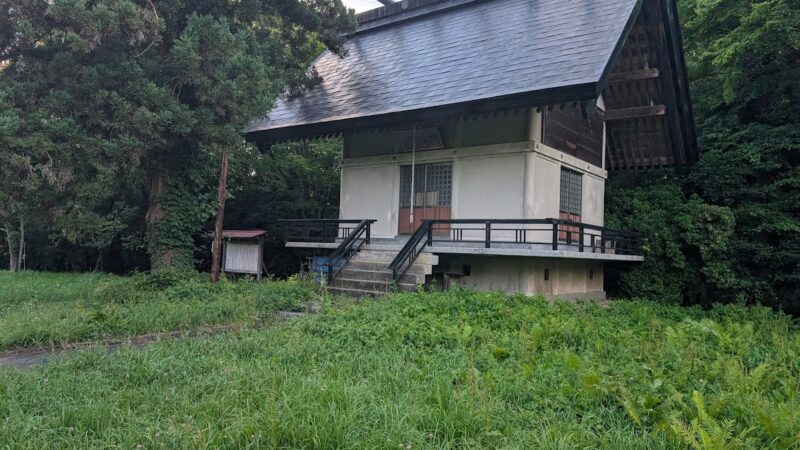
The Honmaru is the central part of the castle and currently houses the Tateyama Hachiman Shrine. From the Honmaru, one can overlook the surrounding area, indicating its strategically important location. Remnants of earthworks remain around the Honmaru, providing a glimpse into the defensive structures of the time.
Nakano-kuruwa (Second Enclosure)
The Nakano-kuruwa is now part of the Tateyama Historical Park and is the most easily accessible area for visitors to explore. Within the park, the remains of earthworks and dry moats are well-preserved, allowing visitors to learn about the structure of a medieval mountain castle.
Earthworks and Dry Moats
One of the greatest highlights of Iwayado Castle is its well-preserved earthworks and dry moats. Earthworks are earthen walls designed to prevent enemy intrusion, while dry moats are moats that do not contain water. These remains are extremely valuable for understanding the castle-building techniques of the time.
The dry moats around the central enclosure, in particular, are deep, clearly demonstrating their function as defensive structures. The combination of the height of the earthworks and the depth of the dry moats created a structure that effectively prevented enemy intrusion.
Arrangement of Enclosures
Iwayado Castle had multiple enclosures (flat sections), each thought to have had a different function. The central enclosure and other enclosures were arranged in a stepped pattern around the main enclosure, forming a multi-layered defensive structure.
Highlights of Iwayado Castle
Tateyama Historical Park
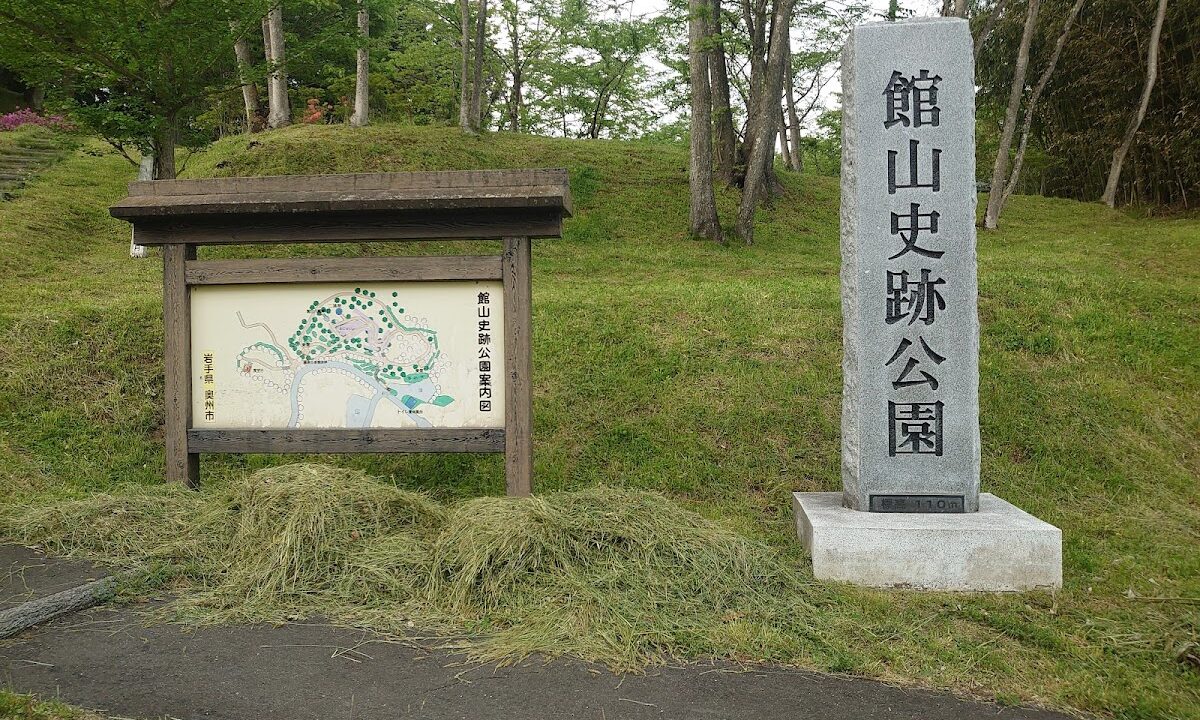
Tateyama Historical Park, developed around the site of the main enclosure of Iwayado Castle, is a place where you can enjoy the changing seasons while experiencing history. Walking paths are maintained within the park, making it easy to stroll around.
In spring, cherry blossoms bloom, making it a popular spot for cherry blossom viewing. In autumn, the autumn leaves are beautiful, allowing visitors to enjoy a landscape where historical atmosphere and natural beauty harmonize.
Tateyama Hachiman Shrine
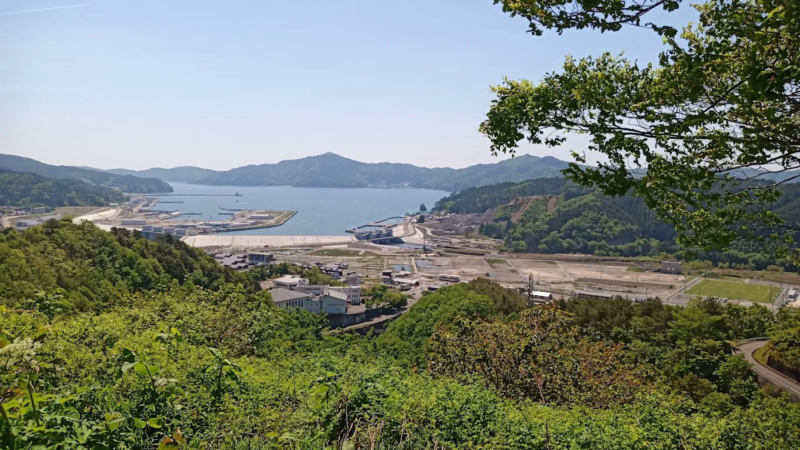
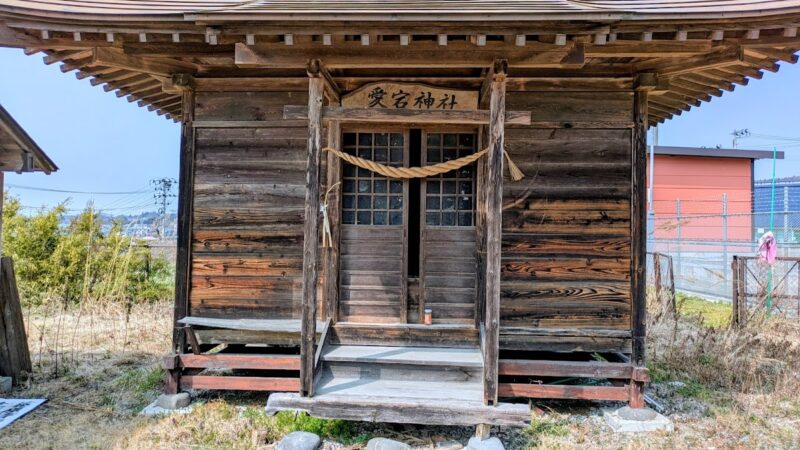
Tateyama Hachiman Shrine, enshrined on the site of the main enclosure, is a center of local faith. The view from the shrine is magnificent, offering a panoramic view of Oshu City. Imagining the castle lords surveying their territories from this very spot evokes a sense of historical romance.
Remains of Earthworks and Dry Moats
The earthworks and dry moats remaining within Tateyama Historical Park are the most important highlights of Iwayado Castle. The remains around the Nakano-kuruwa (middle enclosure) are particularly well-preserved, allowing visitors to experience the castle’s structure firsthand.
There are places where you can walk along the top of the earthworks, experiencing the surroundings from the perspective of a castle soldier. Observing the depth of the dry moats up close will help you appreciate the advanced castle-building techniques of the medieval period.
Stone Monuments and Information Boards
Information boards and stone monuments explaining the history of Iwayado Castle are installed within the park. Reading these while strolling through the park will deepen your understanding of the castle’s history and structure.
Scenic Viewpoints
Because Iwayado Castle is built on a hill, you can enjoy magnificent views from various locations. From the area around the main keep in particular, you can see the Hitokubi River, the cityscape of Oshu, and even the distant mountains, giving you a real sense of why this place was a strategically important military location.
Access Information
Access by Public Transportation
By JR
- Get off at Mizusawa Station on the JR Tohoku Main Line
- Take the Iwate Kotsu bus bound for Esashi Bus Center (approx. 30 minutes)
- After getting off at Esashi Bus Center, walk for approximately 15 minutes
Nearest Bus Stop
- Approximately 11 minutes on foot from the Maeda-cho bus stop
Access by Car
By Tohoku Expressway
- Approximately 15 minutes from Mizusawa IC via National Route 397
- Approximately 30 minutes from Kitakami-Ezuri IC via National Route 107
Parking
- Free parking is available at Tateyama Historical Park
- Accommodates approximately 20 regular cars
Address and Contact Information
- Address: 231-5 Tateshita, Iwayado, Esashi, Oshu City, Iwate Prefecture 023-1101
- Inquiries: Planning and Management Section, Historical Heritage Division, Esashi General Branch Office, Oshu City
- Phone Number: 0197-35-2111
Opening Hours and Admission Fee
- Opening Hours: Always open (however, it is recommended to avoid visiting at night for safety reasons)
- Admission Fee: Free
- Closed Days: None
Nearby Tourist Attractions
Esashi Fujiwara no Sato
This historical theme park is located about 10 minutes by car from Iwayado Castle. It features facilities that recreate buildings from the Heian period and is famous as a filming location for NHK’s historical drama series. Visiting it together with Iwayado Castle will allow you to gain a deeper understanding of the history of this region.
Shobo-ji Temple
This ancient temple of the Soto Zen sect is located about 15 minutes by car from Iwayado Castle. The Hatto (main hall), designated as a National Important Cultural Property, is well worth seeing.
Iwayado Tansu Tradition Museum
This facility allows you to learn about the history and techniques of Iwayado Tansu, a traditional craft of the Esashi region. Located within walking distance of Iwayado Castle, it offers a chance to experience local culture.
Esashi Fujiwara no Sato Onsen (Hot Spring)
This hot spring facility is perfect for a relaxing soak after sightseeing. You can soothe your tired body and reflect on your day’s activities.
Best Season to Visit
Spring (April-May)
The cherry blossom season is especially recommended. The cherry blossoms at Tateyama Historical Park are magnificent, allowing you to enjoy a historical stroll while admiring the blossoms. The best time to visit is from mid-April to late April.
Summer (June-August)
The fresh greenery is beautiful, and you can enjoy a stroll in the refreshing weather. However, the summer sun is strong, so we recommend bringing a hat and sunscreen.
Autumn (September – November)
The autumn foliage is particularly beautiful, with the best time to visit being late October to early November. The combination of the historical atmosphere and the autumn leaves creates a spectacular view. The temperature is also suitable for strolling, making this the most recommended season.
Winter (December – March)
The castle ruins amidst the snowscape are also picturesque, but caution is needed as the ground can be slippery. There are fewer visitors in winter, allowing for a quiet reflection on history.
Points to Note When Visiting
Clothing and Items to Bring
- Wear comfortable walking shoes (sneakers or trekking shoes).
- Dress appropriately for the season (hat and water in summer, warm clothing in winter).
- Bring a camera or smartphone to photograph the beautiful scenery and ruins.
- Insect repellent (especially in summer) is recommended for a more comfortable experience.
Estimated Time Required
- Strolling through Tateyama Historical Park only: Approximately 30 minutes to 1 hour
- Thorough sightseeing: 1 hour 30 minutes to 2 hours
- Combining with sightseeing in the surrounding area: Half a day to a full day
Manners and Rules
- Please respect the historical site and do not damage the ruins.
- Please take all your trash with you.
- When visiting the shrine, please be quiet and respectful.
- Photography is permitted, but please be considerate of other visitors.
Historical Value of Iwayado Castle
Iwayado Castle is not merely a castle ruin, but an important historical site that tells the story of the Tohoku region’s history from the medieval to early modern periods. ### Center of Regional Control
From the Kamakura period to the Edo period, for approximately 600 years, it functioned as the political and military center of the Esashi region. Powerful warlords such as the Kasai, Esashi, and Date clans ruled the region from this castle, contributing to its cultural and economic development.
Evolution of Castle Construction Techniques
The remains of Iwayado Castle reveal the evolution of castle construction techniques from the medieval to the early modern period. The development from a simple mountain castle in the early period to a complex layout due to Edo-period renovations is valuable material for studying the history of Japanese castles.
Sengoku History of Tohoku
It is deeply connected to important historical events from the Sengoku period to the early Edo period in the Tohoku region, such as Toyotomi Hideyoshi’s pacification of Oshu, the Kasai-Osaki Rebellion, and Date Masamune’s domain management. Studying the history of Iwayado Castle is essential for understanding the history of Tohoku.
Photo Spots
Recommended Photo Points
- View from the Main Enclosure: Landscape photos with the cityscape of Oshu and distant mountains in the background.
- Earthwork Ridge: The curved lines of the earthwork make for beautiful compositions.
- Depth of the Dry Moat: A shot looking up from the bottom of the dry moat captures its depth.
- Tateyama Hachiman Shrine: A shrine building with a historical atmosphere.
- Combination with Cherry Blossoms and Autumn Leaves: Photos combining seasonal nature with historical sites.
Photography Tips
- Early morning and evening hours with soft light are recommended.
- Cloudy days allow for better capture of the details of the ruins.
- Using a wide-angle lens allows you to express the expanse of the earthworks and dry moat.
- Using a macro lens to capture the texture of moss and stone walls is also interesting.
Summary
Iwayado Castle (Oshu City, Iwate Prefecture) is a valuable mountain castle site that conveys the history of the Tohoku region from the medieval to the early modern period. Even now, as part of the Tateyama Historical Park, the remains such as earthworks and dry moats are well-preserved, allowing visitors to experience the castle’s structure from that time.
It is a historical site with multifaceted historical value, including its historical background as the residence of powerful warlords such as the Esashi, Kasai, and Date clans, its connection to Toyotomi Hideyoshi’s pacification of Oshu (a turning point in Japanese history), and its role as a center of regional politics, economy, and culture.
Iwayado Castle is free to visit and relatively easy to access, making it a recommended spot not only for history enthusiasts but also for those who enjoy strolling, hiking, and photography. Visitors can enjoy the beautiful scenery where history harmonizes with nature throughout the seasons, such as cherry blossoms in spring and autumn leaves in fall.
When visiting Oshu City, be sure to visit Iwayado Castle and experience the history and culture of Tohoku. The view from the main keep, the well-preserved earthworks and dry moats, and a visit to the tranquil Tateyama Hachiman Shrine will surely be a memorable experience.